The wheel hub assembly is the most critical load-bearing and rotating component of every heavy-duty truck wheel end system. It integrates wheel bearings, hub seals, locking nuts, mounting flanges, and wheel speed sensors into one compact unit. It firmly connects the drive axle, brake drum, rim, and tire while supporting the entire vehicle load during transportation. For mainstream Chinese heavy-duty trucks including SINOTRUK HOWO, SITRAK, SHACMAN X3000, FAW J6/J7 and FOTON Auman, the wheel hub works under extreme conditions of full load, frequent vibration, high-temperature braking, and complex road impacts. It bears constant friction, torsion, and axial pressure throughout the entire driving process.
Unlike engine or brake system faults that produce obvious early warnings, wheel hub failures develop gradually and covertly. Most truck owners and fleet technicians ignore daily hub inspections because the wheel can still rotate normally with minor wear. However, subtle damage will continue to accumulate during long-distance transportation, mountain road climbing, and construction site operations. Once the hub bearing is severely worn, the seal fails, or the hub body deforms, it will trigger a series of serious faults including abnormal driving noise, body vibration, steering deviation, hub overheating, and even wheel locking or wheel detachment. These sudden failures easily cause highway rollovers, rear-end collisions, and cargo losses, bringing huge safety risks and economic losses to fleet operations.
In addition to safety hazards, faulty wheel hubs also bring continuous hidden maintenance costs. Damaged hubs accelerate tire eccentric wear, increase driving resistance and fuel consumption, and wear out brake drums and axle shafts synchronously. A small hub wear problem will eventually evolve into a comprehensive fault of the entire wheel end system, requiring replacement of multiple accessories and causing long-term vehicle downtime. Therefore, mastering wheel hub fault identification, root cause analysis, standardized replacement processes, and scientific daily maintenance is a necessary skill for all fleet maintenance personnel and independent truck drivers.
This ultimate guide covers all core knowledge of heavy-duty truck wheel hubs, including structural working principles, detailed failure symptoms, classified root cause analysis, professional field diagnosis methods, full-step standardized replacement processes, post-replacement testing and commissioning, common after-sales faults and solutions, scientific maintenance cycles, and high-quality parts selection strategies. All content is tailored to Chinese heavy truck models, fully adapting to their working characteristics and maintenance standards. To obtain more systematic heavy truck fault diagnosis and standardized maintenance tutorials for all vehicle systems, you can browse our exclusive truck technical support category.
Basic Structure & Working Principle of Heavy-Duty Truck Wheel Hub Assembly
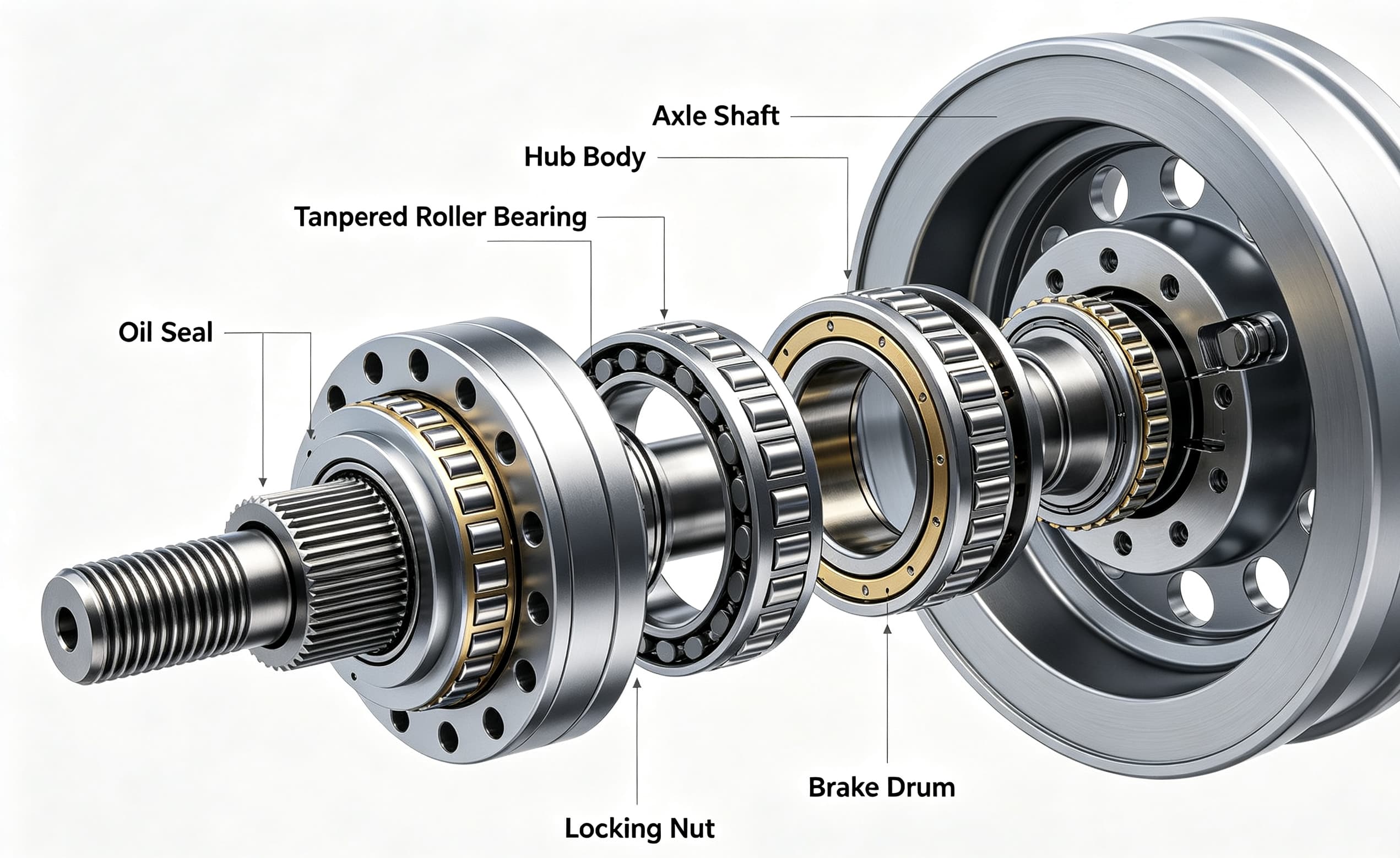
To accurately judge wheel hub faults and complete standardized replacement, technicians must first master the basic structure and operating principle of the heavy-duty truck wheel hub assembly. The wheel hub is not a single accessory but a complete wheel end assembly system composed of multiple core and auxiliary parts. Each component cooperates closely to complete load-bearing, rotating, lubricating, sealing, and sensing functions, and any link failure will affect the overall operating stability of the wheel end.
The core components of the truck wheel hub assembly include the hub main body, double-row tapered roller bearings, inner and outer hub oil seals, locking nut sets, flat gaskets, dust covers, ABS wheel speed sensors, and sensor magnetic rings. Different from passenger car integrated hub units, Chinese heavy-duty trucks mostly adopt split wheel end structures. This design features strong load-bearing capacity and convenient single-part replacement, but it puts forward higher requirements for assembly clearance, lubrication effect, and sealing performance.
The hub main body is made of high-strength alloy steel through integral forging and precision machining. Its flange surface is fixed with the rim through wheel bolts to bear the vertical load of the vehicle body and the impact load generated by road bumps. The inner bore of the hub body is equipped with front and rear double bearings, which are responsible for supporting the hub to rotate freely on the axle shaft. The double-row bearing structure can simultaneously bear radial load and axial thrust, adapting to the complex stress state of heavy trucks during straight driving, turning, and braking.
The hub oil seal is the key sealing component of the entire wheel end system. It is installed at the contact position between the hub and the axle tube. Its core functions are to lock the internal high-temperature lubricating grease to prevent leakage and block external rainwater, dust, sediment, and road salt from entering the bearing cavity. Good sealing performance ensures that the bearings are always in a well-lubricated and clean working environment, which is the core premise of long service life of wheel hubs.
The ABS wheel speed sensor installed on the hub is an important part of the vehicle active safety system. It cooperates with the magnetic ring on the bearing to collect real-time wheel speed signals and transmit data to the vehicle ECU. The system judges the wheel sliding state and adjusts the braking force to prevent wheel locking during emergency braking. Once the hub is deformed or the bearing is severely worn, the sensor signal will be abnormal, triggering the vehicle ABS fault light and losing active anti-lock protection.
During normal driving, the axle shaft remains stationary, and the hub and tire rotate around the axle shaft through bearings. The internal lubricating grease forms a uniform oil film between the bearing rollers and the raceway, reducing metal friction and taking away the heat generated by high-speed operation. Under full-load working conditions, the hub bears tens of tons of pressure. Relying on high-precision bearing cooperation and stable lubrication, it maintains stable rotation and ensures driving safety. Long-term overload, poor lubrication, and seal failure will break this stable working state and cause comprehensive hub failure.
If you need to match complete original and high-quality aftermarket wheel hub assemblies and supporting bearing seal accessories for SINOTRUK, SHACMAN, FAW, and FOTON trucks, you can check our full-range truck chassis system parts product catalog to realize one-stop parts matching and procurement.
Why Heavy-Duty Truck Wheel Hubs Are Prone to Premature Failure
Many fleet managers find that truck wheel hubs often fail ahead of schedule, even if they follow basic maintenance cycles. Most premature hub failures are not caused by natural aging, but by the unique harsh working conditions of heavy trucks, irregular driving habits, non-standard maintenance operations, and unqualified parts matching. Compared with ordinary commercial vehicles, Chinese heavy-duty trucks face more severe working challenges, which fundamentally increase the failure rate of wheel end components.
First, long-term overloading is the primary cause of accelerated wheel hub damage. Most freight trucks carry loads far exceeding the rated load for a long time to improve transportation benefits. Excessive load instantly increases the vertical pressure on the wheel hub and bearings, making the bearing roller stress exceed the design limit. Long-term overpressure operation will cause permanent deformation of the bearing raceway, fatigue peeling of the roller surface, and accelerated attenuation of lubricating grease performance. At the same time, overload will increase the vehicle’s inertia during braking and turning, generating huge axial shear force on the hub, which easily causes micro-deformation of the hub flange and bolt hole displacement.
Second, complex and harsh road conditions aggravate hub wear. Heavy trucks often run on mountain winding roads, wet slippery pavements, gravel roads, and ungraded construction roads. Potholes, road raised curbs, and uneven road surfaces generate frequent strong impact loads on the wheel hubs. Instant impact will cause gaps in the bearing fit, damage the tightness of the oil seal, and cause micro-cracks on the surface of the hub body. In rainy and snowy weather, rainwater and road salt easily penetrate into the hub cavity through the damaged seal, causing bearing rust, grease emulsification, and corrosion failure.
Irregular driving habits are another important hidden danger of hub failure. Frequent emergency braking, sharp turning, and high-speed crossing of road pits will cause instantaneous overload of the wheel hub and bearings. Continuous downhill braking will generate a lot of heat on the brake drum, and the high temperature will be transmitted to the hub cavity, causing high-temperature aging of the lubricating grease, loss of lubrication performance, and thermal deformation of bearing parts. Many drivers are used to long-term high-speed driving with heavy loads, which makes the hub work in a high-temperature and high-load state for a long time, greatly shortening the service life.
Non-standard maintenance and installation operations are the main artificial causes of hub failure. Many amateur technicians have irregular operation processes during hub maintenance and replacement. Excessively tight or loose locking nut torque, uneven bolt tightening sequence, uncleaned hub mounting surface impurities, and unreasonable bearing gap adjustment will all cause abnormal hub stress. Over-tightening the nut will cause bearing preload overload and accelerated wear; excessive looseness will lead to wheel swing, aggravated vibration, and eccentric wear. In addition, failing to replace aging oil seals and gaskets during maintenance, and using inferior lubricating grease will also lead to early failure of the wheel end system.
The quality of matching parts also determines the hub service life. Inferior refurbished wheel hubs, low-precision bearings, and poor-quality oil seals have unqualified material hardness and machining accuracy. Their high-temperature resistance, wear resistance, and sealing performance cannot adapt to heavy truck working conditions. Inferior bearings are prone to rapid fatigue wear, and inferior oil seals will age and leak oil in a short time, causing secondary damage to the entire hub assembly. Only OEM-grade high-precision parts can ensure long-term stable operation of the wheel end system.
Complete Warning Signs of Failing Truck Wheel Hubs (Early & Late Failure Symptoms)
Wheel hub failure has obvious staged warning signs. Early symptoms are subtle and easy to ignore, while late failures are extremely dangerous. Professional technicians can accurately judge the hub wear degree and failure stage through driving feeling, abnormal sound, visual inspection, and manual detection, so as to carry out maintenance and replacement in advance and avoid sudden road failures. We divide hub failure symptoms into early warning signs, mid-term abnormal faults, and late dangerous failure manifestations to facilitate hierarchical judgment and processing.
1. Early Warning Symptoms (Maintenance Reminder Stage)
Early wheel hub wear does not affect normal driving, but there are obvious subtle abnormal changes, which are the best time for maintenance and adjustment. The most typical early sign is faint continuous rolling noise from the wheel position. The sound is low-frequency and dull, and increases slightly with the increase of vehicle speed. It is different from brake squealing and engine noise. The noise will weaken slightly when driving straight and increase during slight turning, which is caused by minor wear of the bearing roller and raceway and insufficient local lubrication.
The second early feature is slight body jitter at high speed. When the vehicle speed reaches 60-80km/h, the body has subtle floating vibration, and the steering wheel has slight jitter, which disappears when the speed is reduced. This is caused by minor uneven wear of the bearing, which leads to tiny wheel runout and unbalanced rotation. In addition, the wheel hub temperature is slightly higher than normal after driving. After long-distance driving, touch the hub surface, and you can feel obvious temperature difference compared with other wheels, without overheating or burning smell, which indicates that the internal bearing friction resistance increases and the grease performance decreases.
Minor tire eccentric wear is also an important early warning. If the tire shows unilateral fine wear, irregular edge wear, or intermittent pattern wear without alignment faults, it is mostly caused by slight looseness of the wheel hub and unbalanced rotation track. Timely inspection and maintenance at this stage can completely restore the hub state and avoid further deterioration of faults.
2. Mid-Term Abnormal Faults (Must Stop for Inspection & Maintenance)
If early minor faults are ignored, wheel hub wear will continue to deteriorate and enter the mid-term failure stage, with obvious abnormal symptoms, which must be checked and maintained in time, otherwise it will quickly evolve into dangerous faults. At this stage, the wheel noise changes from low-frequency rolling sound to obvious rumbling and grinding sound. The noise is clear at all speeds, and increases sharply during turning and load climbing. This indicates that the bearing lubrication is insufficient, the roller and raceway have formed dry friction, and the wear gap is significantly increased.
Driving vibration becomes obvious and continuous. The steering wheel jitters violently during straight driving, and the body swings left and right during turning. The vehicle has floating and unstable feeling during high-speed driving, and the tracking performance deteriorates seriously. At the same time, the wheel has obvious looseness. After lifting the single wheel, there is obvious up and down swing and left and right clearance when shaking the wheel manually, which is the typical manifestation of excessive bearing wear gap.
Hub oil leakage is a typical mid-term failure feature. The aging and damaged hub oil seal can no longer play a sealing role. The internal high-temperature grease seeps out from the hub gap, adheres to the wheel hub and brake drum surface, and mixes with road dust to form obvious black oil dirt. Oil leakage will lead to rapid loss of internal lubricating grease, and external dust and sediment will enter the bearing cavity, accelerating bearing wear and corrosion, forming a vicious cycle of failure.
In addition, the vehicle will have slight braking deviation. When braking normally, the truck will automatically deviate to one side, which is caused by inconsistent rotation resistance and unbalanced stress of the hubs on both sides. At this stage, the vehicle cannot continue long-distance overload driving, and the hub assembly must be disassembled for inspection, grease replacement, and fault part maintenance.
3. Late Dangerous Failure Symptoms (Forbidden to Drive Immediately)
Late wheel hub failure is extremely dangerous, and the vehicle must stop driving immediately for maintenance, otherwise it will directly cause wheel locking, wheel detachment and major traffic accidents. The most serious late symptom is sharp metal friction and squealing sound from the wheel end, accompanied by violent body vibration and uncontrollable steering. The internal bearing is severely worn, the roller is deformed and peeled off, and the metal parts are in direct rigid friction.
Serious hub overheating is another dangerous signal. After driving for a short distance, the hub temperature rises sharply, and there is an obvious burning smell. In severe cases, the hub will turn red at high temperature, the grease is completely carbonized and failed, and the bearing is close to locking. Continuing to drive will cause the bearing to seize, the wheel to be locked suddenly, and the vehicle to lose control instantly.
Wheel swing and displacement are the final dangerous manifestations. The wheel has obvious large-amplitude swing, the gap is extremely large, and even the wheel position is slightly displaced during driving. At this time, the bearing has failed completely, the hub fixing structure is loose, and the risk of wheel falling off at any time is extremely high. In addition, the vehicle ABS fault light will be on continuously, and the active safety braking system fails completely, losing anti-lock protection function.
Classification & Root Cause Analysis of Common Truck Wheel Hub Failures
Combined with the actual maintenance cases of SINOTRUK, SHACMAN, FAW and FOTON heavy trucks, we classify all common wheel hub faults in detail, and conduct in-depth root cause analysis for each fault, so that technicians can accurately locate faults from the source, completely solve problems, and avoid repeated failures.
1. Wheel Hub Abnormal Noise Failure
Abnormal noise is the most frequent wheel hub fault, which can be divided into rolling noise, grinding noise, and impact noise according to different sound characteristics. The root causes of different noises are different. Low-frequency rolling noise is mainly caused by insufficient lubricating grease, grease aging and deterioration, and minor bearing wear. After long-term use, the grease loses high-temperature resistance, oxidizes and deteriorates, resulting in insufficient oil film thickness, increased friction resistance, and rolling noise during bearing operation.
Metal grinding noise is caused by serious bearing wear, roller peeling, raceway scratch damage, and foreign matter entering the bearing cavity. After the oil seal fails, external sediment and metal debris enter the hub cavity, forming abrasive particles. The hard particles rub between the bearing rollers and raceway for a long time, causing surface damage and continuous grinding noise. Impact noise is mostly caused by loose hub locking nuts, excessive bearing gap, and deformed bearing rollers. The loose parts produce periodic impact vibration during wheel rotation, forming regular impact noise.
2. Wheel Hub Oil Leakage Failure
Hub oil leakage is a typical sealing failure, which is divided into early slow oil seepage and later severe oil leakage. The core causes include oil seal aging and cracking, oil seal installation deviation, hub shaft surface scratch damage, and excessive internal hub pressure. The hub oil seal is made of rubber composite material, which will age, harden and lose elasticity after long-term high-temperature operation. The sealing lip cannot fit closely with the axle shaft, resulting in grease seepage.
Non-standard installation is the main artificial cause of oil leakage. Improper tool use during oil seal replacement causes extrusion damage to the oil seal edge, or the oil seal is installed obliquely, resulting in uneven stress and poor sealing. Scratches and burrs on the axle shaft surface will scratch the oil seal lip during rotation, destroying the sealing structure. In addition, excessive grease filling and blocked hub ventilation will cause excessive internal pressure, leading to grease overflow and oil leakage failure.
3. Hub Overheating & Grease Carbonization Failure
Continuous hub overheating is a comprehensive failure caused by excessive friction. The main root causes include too small bearing assembly gap, over-tightened locking nut, insufficient lubricating grease, deteriorated grease performance, and brake drag. Too small bearing gap will make the bearing in a pre-tight friction state for a long time, generating continuous high heat. Over-tightened locking nut will compress the bearing structure, increase friction resistance, and cause temperature rise.
Long-term lack of grease or use of inferior low-temperature grease will lead to rapid grease failure under high load and high temperature conditions. The grease is carbonized and blackened, completely losing lubrication effect, resulting in dry friction and sharp temperature rise. In addition, brake caliper jamming and incomplete brake return will cause long-term friction between the brake drum and brake pads. The high temperature is transmitted to the hub, causing hub overheating and accelerated grease carbonization.
4. Wheel Looseness & Excessive Swing Gap
Wheel looseness is mainly caused by excessive bearing wear gap, loose locking nut, fatigue failure of flat gasket, and deformed hub flange. After the bearing is worn for a long time, the roller and raceway fit gap increases, resulting in wheel swing. Long-term vibration will cause the locking nut to loosen gradually, further expanding the movement gap. Fatigue deformation of the flat gasket will lead to insufficient locking pretightening force, unable to fix the bearing position stably.
Overload impact for a long time will cause micro-deformation of the hub flange surface, uneven stress on the wheel bolts, and loose wheel fixation. If the wheel nuts are not tightened in place or not re-torqued after maintenance, the wheel will gradually loosen during driving, aggravating hub and bearing wear, forming a vicious cycle of failure.
5. ABS Sensor Abnormal & Fault Light On
The wheel hub integrates the ABS wheel speed sensor and magnetic ring. Bearing wear and hub deformation will directly affect the sensor working state. Excessive bearing gap will cause wheel runout, resulting in unstable sensor signal collection. Hub deformation and magnetic ring wear will cause signal loss and disorder, triggering the ABS fault light. In addition, hub oil leakage will cause grease to adhere to the sensor probe and magnetic ring, blocking signal induction and causing sensor failure.
Professional On-Site Fault Diagnosis & Inspection Methods
Before disassembling and replacing the wheel hub, technicians must conduct systematic on-site inspection and fault diagnosis to accurately locate the fault point, avoid blind disassembly, and save maintenance time and cost. The following inspection methods are in line with heavy truck factory maintenance standards, suitable for all Chinese heavy-duty disc brake and drum brake truck models.
First Step: Road Test Verification
Drive the vehicle on a flat open road for road test inspection. Keep straight driving at 40-60km/h to listen to wheel abnormal noise and feel body vibration. Then perform slow left and right steering respectively. The noise and vibration changes during steering can accurately judge the faulty wheel. The left turn aggravates the right hub fault noise, and the right turn aggravates the left hub fault noise, which is a professional judgment skill for hub bearing wear.
Second Step: Static Temperature Inspection
After parking the vehicle and cooling down slightly, touch the surface temperature of each wheel hub in turn. Compare the temperature difference of each hub. The hub with obvious overheating must have internal friction failure. It is necessary to focus on checking bearing wear, lubrication state and brake return state to eliminate brake drag interference.
Third Step: Wheel Looseness Manual Detection
Park the vehicle on flat ground, lift the single wheel with a hydraulic jack to make the tire completely off the ground. Hold the upper and lower sides of the tire tightly with both hands, and shake the wheel up and down vigorously. If there is obvious gap and swing, it proves that the bearing wear gap is excessive or the locking nut is loose. Then shake the wheel left and right to detect horizontal swing, so as to judge whether the hub flange is deformed or the bolt is loose.
Fourth Step: Visual Inspection of Oil Seal & Appearance
Observe the hub surface, brake drum and wheel rim for oil dirt accumulation. Check whether the hub oil seal position has grease seepage and overflow. Observe whether the hub body has cracks, deformation, rust and corrosion. Check the wheel bolt holes for burrs and deformation, and check the dust cover for damage and falling off.
Fifth Step: Sensor Signal Inspection
Turn on the vehicle power supply to check whether the ABS fault light is on. Use a professional truck diagnostic instrument to read wheel speed data. If the wheel speed signal is intermittent, missing or inconsistent with the actual vehicle speed, it proves that the hub sensor or magnetic ring is faulty.
Standard Full-Step Wheel Hub Replacement & Installation Process
Wheel hub replacement belongs to high-precision safety-level maintenance work. Non-standard installation will lead to repeated faults such as abnormal noise, vibration, oil leakage and loose wheels. This 16-step standardized process fully refers to SINOTRUK, SHACMAN, FAW and FOTON factory maintenance specifications, suitable for all mainstream Chinese heavy-duty truck wheel hub assembly replacement operations.
Step 1: Vehicle Fixed Safety Protection
Park the truck on flat and solid ground, turn off the engine, pull up the hand brake, and block the opposite wheels with wheel stoppers to prevent vehicle sliding. Turn on the double flash warning light to ensure maintenance safety. Do not carry out maintenance on sloped and soft ground to avoid vehicle rollover danger.
Step 2: Loosen Wheel Nuts in Advance
Use a professional torque wrench to loosen all wheel fixing nuts in cross order. Do not remove the nuts completely. Loosen them slightly to avoid wheel rotation after lifting the vehicle, which affects disassembly efficiency.
Step 3: Lift and Fix the Axle
Use a heavy-duty hydraulic jack to steadily lift the faulty wheel axle until the tire is completely off the ground. Place special heavy-duty jack stands under the axle for secondary fixing and support. Never work under the vehicle with only a jack to avoid safety accidents caused by jack failure.
Step 4: Remove the Wheel and Brake Drum
Completely remove the wheel nuts and take off the tire rim. Then remove the brake drum fixing bolts, take off the brake drum, and expose the complete wheel hub assembly, brake shoe and axle structure. Clean the surface dust and oil dirt with a wire brush to keep the working area clean.
Step 5: Remove Dust Cover and Locking Accessories
Pry open the hub dust cover with a flat screwdriver to expose the internal locking nut. Use a special nut wrench to remove the anti-loosening gasket, fixing nut and flat gasket in sequence, and place all accessories in order to avoid loss and wrong installation.
Step 6: Disassemble the Old Wheel Hub Assembly
Slowly pull out the entire wheel hub assembly outward along the axle shaft. During the pulling process, keep the hub balanced and avoid tilting and shaking to prevent scratching the axle shaft surface. After taking out the hub, place it flat on a clean workbench to prevent collision damage.
Step 7: Dismantle Internal Old Accessories & Clean
Remove the old inner and outer bearings, failed oil seals, aging gaskets and residual grease in the hub cavity. Thoroughly clean the hub inner cavity, bearing mounting groove and axle shaft surface with professional cleaning agent. Remove all old grease, metal debris, rust and dirt to ensure no impurities remain.
Step 8: Inspection of Axle Shaft & Matching Parts
Carefully inspect the axle shaft surface for scratches, burrs, deformation and corrosion. Check the bearing mounting position for wear and step difference. If the axle shaft is damaged, it must be repaired or replaced first, otherwise the new hub will leak oil and wear abnormally. Check the brake system for drag and failure, and eliminate hidden dangers in advance.
Step 9: Install New Bearings and Oil Seals
Select brand-matching high-precision bearings and oil seals. Fill the bearing roller gap and hub cavity with high-temperature resistant heavy-duty truck special lithium-based grease, ensuring uniform and full filling without excessive accumulation. Press the inner and outer bearings and new oil seals into the hub mounting position flatly and vertically with a professional press tool to avoid oblique installation and extrusion damage.
Step 10: Reset the Hub Assembly
Align the processed new hub assembly with the axle shaft, slowly push it inward horizontally, and keep the hub stable during the pushing process to avoid scratching the oil seal and axle shaft. Ensure the hub is completely in place and fits closely with the axle shaft positioning surface.
Step 11: Install Locking Accessories & Adjust Clearance
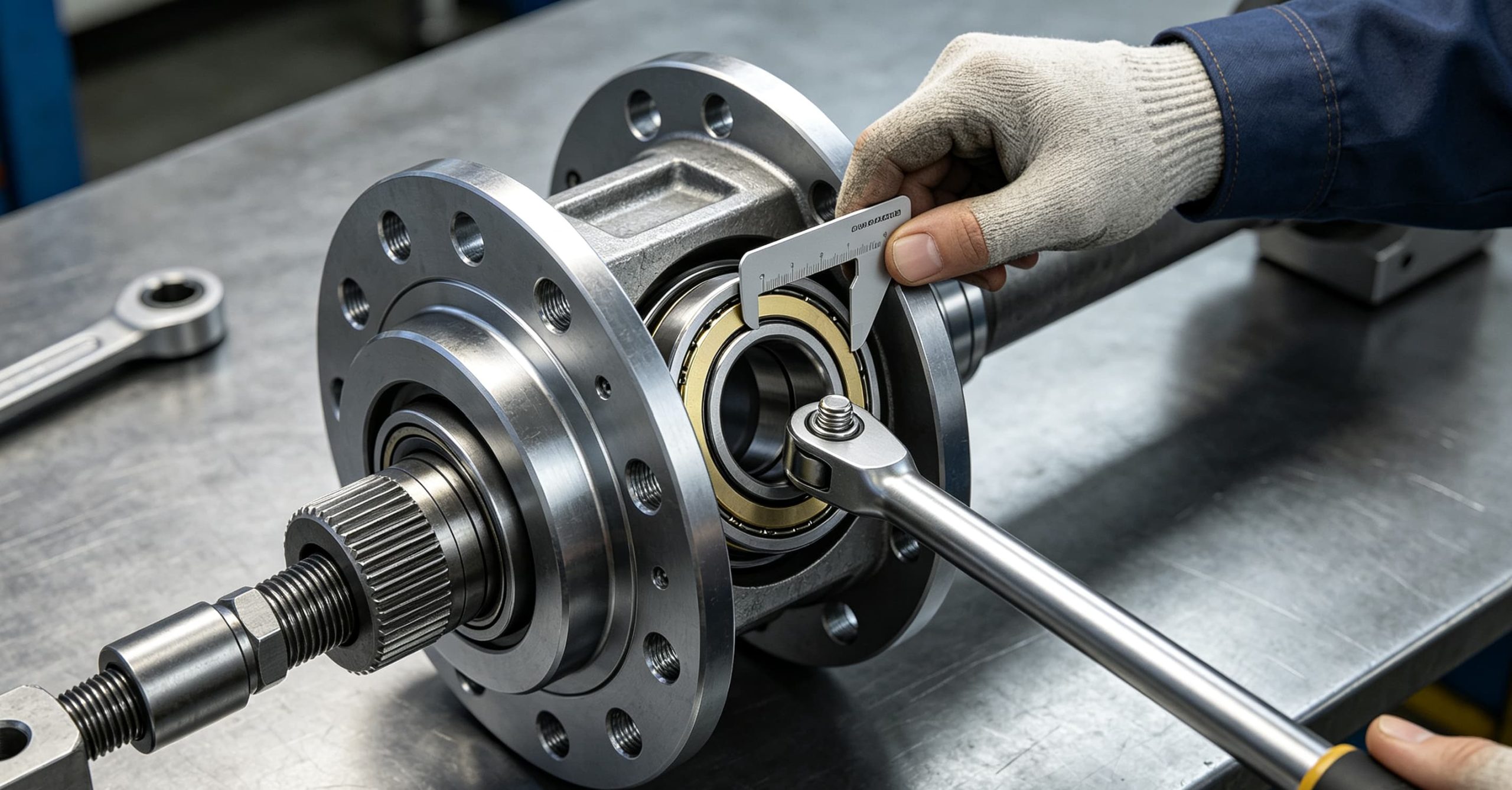
Install the flat gasket, locking nut and anti-loosening gasket in sequence. Adjust the bearing gap according to the factory standard parameters of the corresponding truck model. The gap must be moderate, not too tight or too loose. Too tight will cause overheating and wear, and too loose will cause vibration and noise. After adjustment, lock the anti-loosening device firmly to prevent nut loosening.
Step 12: Install Dust Cover & Seal
Install the hub dust cover in place to prevent external dust, rainwater and sediment from entering the hub cavity, and protect the internal bearings and lubricating grease from contamination.
Step 13: Reset Brake Drum and Wheel
Install the brake drum in place, tighten the fixing bolts, and check the brake drum rotation flexibility to ensure no jamming and friction. Align the tire rim with the hub flange, manually screw the wheel nuts in place, and fix them initially.
Step 14: Hierarchical Torque Tightening
Remove the jack stands and slowly lower the vehicle to the flat ground. Tighten the wheel nuts in cross order in two stages according to the factory standard torque value. Ensure uniform stress on all bolts to avoid hub deformation caused by uneven tightening force.
Step 15: Static Inspection & Commissioning
After installation, manually rotate the wheel to check the rotation flexibility. The wheel should rotate smoothly without jamming, abnormal resistance and periodic noise. Check the hub sealing position for grease overflow and oil leakage hidden dangers. Confirm the brake return is normal without drag friction.
Step 16: Road Test Verification
Drive the vehicle at low speed for road test. Run at 30-60km/h to check for abnormal noise, vibration and steering deviation. After driving for 10-20 kilometers, stop the vehicle to check the hub temperature. Slight temperature rise is normal, and obvious overheating indicates abnormal installation gap, which needs to be readjusted.
Common Post-Replacement Faults & Professional Solutions
Many truck owners still have various abnormal problems after replacing wheel hubs, most of which are caused by non-standard installation, unqualified parts and incomplete cleaning. We summarize all common post-replacement faults and targeted solutions to help technicians solve problems completely at one time and avoid repeated disassembly and maintenance.
1. New Hub Has Abnormal Rotation Noise
The main causes of noise after new hub replacement include insufficient grease filling, residual impurities in the hub cavity, unadjusted bearing gap, damaged new bearing, and oblique oil seal installation. Solution: Disassemble the hub again, thoroughly clean internal impurities, replenish high-temperature grease evenly, readjust the bearing gap to factory standard, check whether the new bearing is damaged, and reinstall the oil seal flatly to ensure vertical and accurate installation.
2. Hub Overheating After Replacement
Post-installation overheating is mostly caused by too small bearing gap, over-tightened locking nut, excessive grease filling, brake drag, and unsmooth axle shaft rotation. Solution: Loosen the locking nut appropriately to adjust the bearing gap to a reasonable range, clean excess residual grease, check and repair the brake return mechanism to eliminate drag friction, polish and repair axle shaft burrs to ensure smooth rotation.
3. New Hub Oil Leakage
Oil leakage of new hub is mainly caused by oil seal extrusion damage, oblique installation, axle shaft scratch damage, excessive internal grease pressure, and aging matching gaskets. Solution: Replace the damaged oil seal again, install it vertically and flatly, polish and repair axle shaft scratches, control grease filling amount, replace aging gaskets, and ensure good internal and external sealing of the hub.
4. High-Speed Vibration & Wheel Looseness
High-speed vibration after replacement is caused by uneven bolt tightening torque, unflat hub flange, residual impurities on the mounting surface, and insufficient locking nut pretightening force. Solution: Re-tighten wheel nuts with standard torque in cross order, polish the hub flange mounting surface to remove impurities and burrs, re-lock the hub fixing nut, and confirm no wheel swing gap.
5. ABS Fault Light Remains On After Replacement
The persistent ABS fault light is caused by displaced sensor position, contaminated magnetic ring, damaged sensor probe, and unstable signal line contact. Solution: Clean the grease and dirt on the magnetic ring and sensor probe, readjust the sensor installation gap, check and fix the signal line connector, and clear the fault code with a diagnostic instrument after ensuring normal signal collection.
Scientific Wheel Hub Maintenance Cycle & Daily Protection Rules
Forming standardized daily maintenance habits is the most effective way to extend wheel hub service life and reduce failure rate. Combined with the operating characteristics of Chinese heavy-duty trucks, we summarize industry-recognized maintenance cycles and daily protection specifications, which are suitable for fleet unified management and individual truck maintenance reference.
Daily Inspection (Before Each Departure)
Check whether the wheel nuts are loose, observe the hub surface for oil leakage, and confirm no abnormal wheel swing. Listen for abnormal noise during low-speed driving, and stop for inspection immediately if any abnormality is found.
Regular Inspection (Every 10,000 Kilometers)
Carry out manual wheel looseness detection, check hub sealing performance and temperature state, clean surface dust and oil dirt, and check the working state of ABS sensor. Eliminate minor hidden dangers in advance to avoid fault deterioration.
Grease Replacement & Comprehensive Maintenance (Every 40,000-60,000 Kilometers)
Disassemble the hub comprehensively, completely clean old deteriorated grease, replace new high-temperature resistant special grease, inspect bearing wear degree, replace aging oil seals and gaskets, adjust bearing gap, and complete full hub maintenance.
Overall Hub Assembly Replacement Cycle
Long-distance highway transport trucks: Replace the hub assembly every 150,000-200,000 kilometers. Mountain route and frequent braking trucks: Replace every 100,000-120,000 kilometers. Construction site short-distance heavy-load trucks: Replace every 80,000-100,000 kilometers. Fleets can adjust appropriately according to actual load rate and road conditions.
Daily Driving Protection Rules
Strictly avoid long-term overloading and frequent emergency braking. Slow down when passing potholes and rough road sections to reduce wheel impact load. Avoid sharp turning at high speed to reduce hub axial pressure. Clean hub dust and oil dirt regularly to keep the heat dissipation state good. Use regular high-temperature resistant grease and qualified matching parts to ensure long-term stable operation of the wheel end system.
How to Source High-Quality Truck Wheel Hub Assembly & Supporting Parts
The quality of wheel hub parts directly determines driving safety and service life. Inferior refurbished hubs and low-precision bearings will cause frequent failures and bring serious safety hazards. Choosing reliable suppliers and qualified OEM-grade parts is the core of fleet long-term safe operation and cost control.
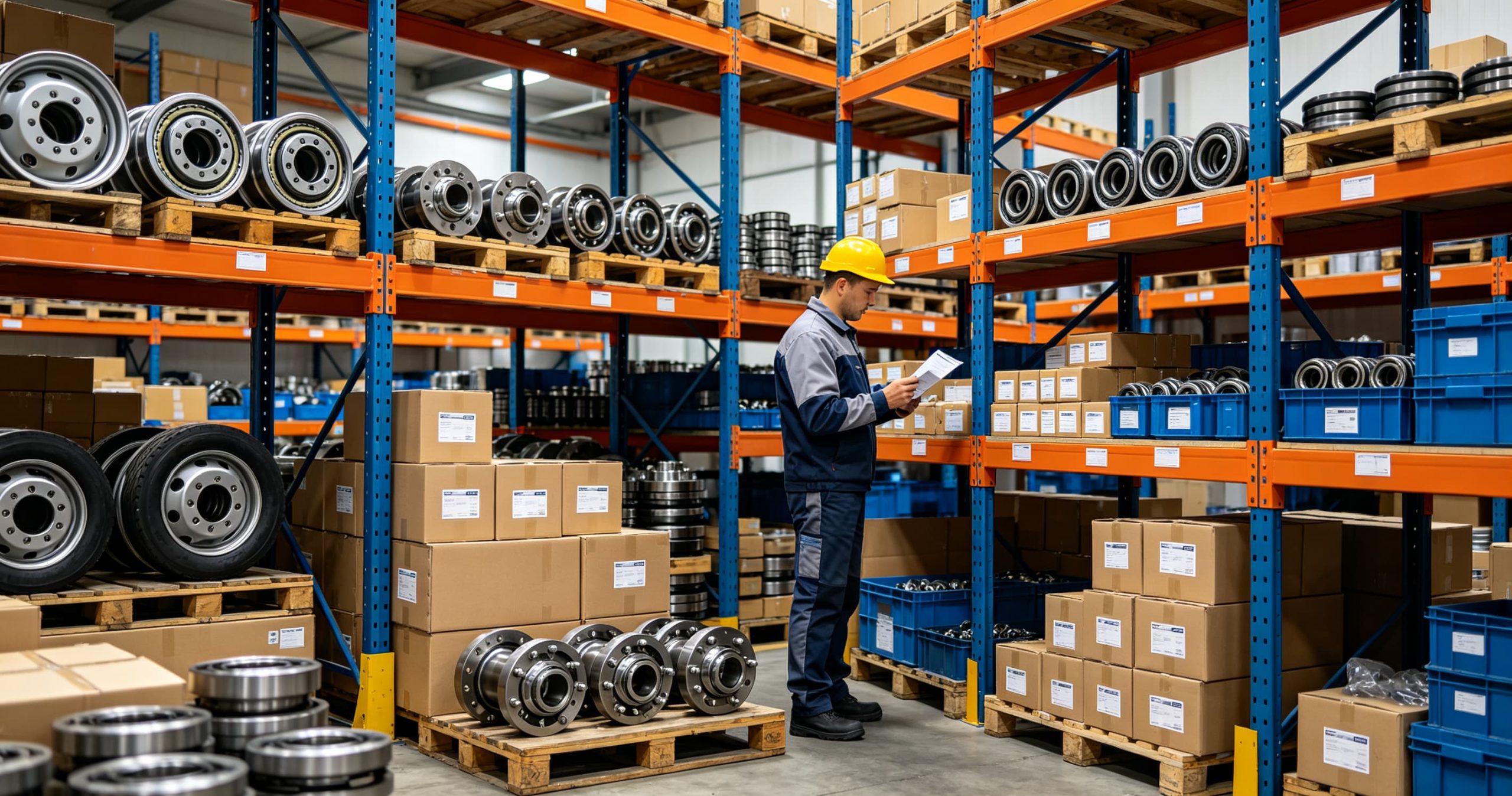
Mettlead is a professional Chinese heavy-duty truck spare parts manufacturer and exporter with 15 years of industry experience. We focus on full-series SINOTRUK, SHACMAN, FAW and FOTON truck chassis parts, brake parts, engine parts and electrical parts supply. We have a 12,000-square-meter standardized warehouse and strict pre-shipment full inspection system. All wheel hub assemblies, bearings, oil seals and supporting accessories are produced in strict accordance with OEM technical standards, with precise matching size, stable high-temperature resistance and wear resistance, completely adapting to the harsh working conditions of heavy trucks.
We support diversified procurement solutions including bulk FCL container orders, small-batch LCL shipments, sample customization and OEM processing. Our professional multilingual after-sales team provides 24-hour online technical support and quotation services. Complete export documents and efficient global logistics help international buyers optimize supply chains and reduce procurement costs steadily.
For model matching, bulk quotation, technical parameter consultation and after-sales service of truck wheel hub assemblies and full-series spare parts, you can contact our professional parts export team at any time. To view more chassis system supporting parts, please browse our Chinese heavy truck full brand spare parts product library.
FAQs About Truck Wheel Hub Problems & Replacement
Q1: Can I replace only single faulty wheel hub instead of all?
Yes. Wheel hub faults are mostly single-wheel independent failures. You only need to replace the faulty single hub assembly. However, it is necessary to comprehensively inspect the hubs of the same axle to check for potential wear and hidden dangers, so as to avoid simultaneous failure of other wheels in the later stage.
Q2: Is it necessary to replace bearings when replacing the wheel hub?
It is recommended to replace bearings, oil seals and grease synchronously. Bearings are precision wear parts. After long-term operation, even if there is no obvious fault, there will be subtle fatigue wear. Synchronous replacement can avoid secondary disassembly and maintenance in a short time, reducing vehicle downtime and maintenance costs.
Q3: Why does the new wheel hub still overheat after running for a period of time?
The main reasons include unreasonable bearing gap adjustment, insufficient or excessive grease filling, residual impurities in the hub cavity, brake drag failure, and unqualified parts quality. It is necessary to re-inspect and adjust the installation gap, clean internal impurities, replace standard grease and qualified parts, and eliminate brake system faults.
Q4: How long can a new truck wheel hub be used normally?
The service life depends on working conditions and maintenance quality. Under standard load, good road conditions and regular maintenance, the OEM-grade wheel hub can be used for 150,000-200,000 kilometers. Frequent overload, mountain road driving and irregular maintenance will greatly shorten the service life to less than 80,000 kilometers.
Q5: Are wheel hubs of different Chinese heavy truck brands universal?
Most are not universal. SINOTRUK, SHACMAN, FAW and FOTON have different wheel end structural designs, hub flange sizes, bearing models and installation parameters. Blindly using universal parts will cause poor fitting, abnormal noise, oil leakage and safety hazards. Parts must be matched according to the original OEM number and truck model.
Q6: What is the harm of ignoring minor wheel hub faults?
Minor hub faults will not disappear automatically, but will continue to accumulate and deteriorate. Early noise and vibration will evolve into serious bearing locking, wheel looseness and wheel detachment faults, directly causing traffic accidents. At the same time, it will accelerate tire eccentric wear, axle wear and brake system damage, bringing higher maintenance costs and safety risks.
Final Summary
The wheel hub assembly is the safety foundation of heavy-duty truck driving. Its stable operation directly determines the driving safety, transportation efficiency and maintenance cost of the entire vehicle. Most wheel hub failures are caused by ignored early warning signs, irregular driving habits, non-standard maintenance operations and unqualified parts matching. Mastering systematic fault identification, scientific diagnosis methods, standardized replacement processes and daily maintenance rules can completely avoid most hub faults.
For fleet managers and truck technicians, regular hub inspection and standardized maintenance are the most cost-effective safety management measures. Timely elimination of minor hidden dangers can avoid major safety accidents and high-cost secondary maintenance. Choosing OEM-grade high-quality wheel hub parts and standardized installation technology is the key to long-term stable operation of heavy trucks.
If you need high-quality matched wheel hub assemblies, bearings, oil seals and full-series spare parts for Chinese heavy-duty trucks, Mettlead professional heavy truck parts supplier provides one-stop procurement, technical guidance and global after-sales support for international customers. For more professional heavy truck maintenance guides and fault diagnosis tutorials, continue to follow our truck technical support category.


