
Brake pads are the core safety wear part of all heavy-duty trucks. They play a decisive role in safe driving for SINOTRUK, SHACMAN, FAW and FOTON truck owners and fleet managers. Worn brake pads will cause longer stopping distances, brake overheating and rotor damage. They may even lead to traffic accidents. Regular brake pad replacement avoids these risks and prevents expensive secondary maintenance costs.
This guide focuses on Chinese heavy-duty trucks. It covers brake pad wear symptoms, failure causes, standard replacement steps, post-installation tests and daily maintenance tips. Both new technicians and professional fleet maintenance staff can follow these standard operations to replace brake pads safely and economically.
To access more professional heavy truck maintenance tutorials and troubleshooting resources for all core vehicle systems, browse our truck technical support category.
Why Brake Pad Replacement Matters for Chinese Heavy-Duty Trucks
Heavy-duty trucks work in harsh conditions compared with ordinary vehicles. Most SINOTRUK HOWO, SITRAK, SHACMAN X3000, FAW J6/J7 and FOTON Auman trucks carry full loads. They often run on mountain roads, wet roads and construction sites. Frequent braking and high-load friction speed up brake pad wear greatly.
Many truck owners ignore minor brake pad wear because the truck can still brake normally. This is a dangerous mistake. Brake pads have a fixed safe thickness limit. Once worn beyond the limit, the friction force drops sharply. Emergency braking will fail easily under full-load conditions. Even a short braking delay may cause collisions, rollovers and cargo losses.
Timely brake pad replacement is the most cost-effective maintenance for heavy trucks. A set of qualified brake pads costs far less than repairing damaged brake rotors, calipers and wheel hubs. For fleet companies, standardized replacement cycles reduce vehicle downtime. They also improve operating efficiency and cut annual maintenance costs.
If you need matched original and high-quality aftermarket brake pads and full-series spare parts for all Chinese truck brands, check our complete SINOTRUK, SHACMAN, FAW and FOTON truck spare parts product lineup.
How Brake Pads Work in Heavy-Duty Truck Braking Systems
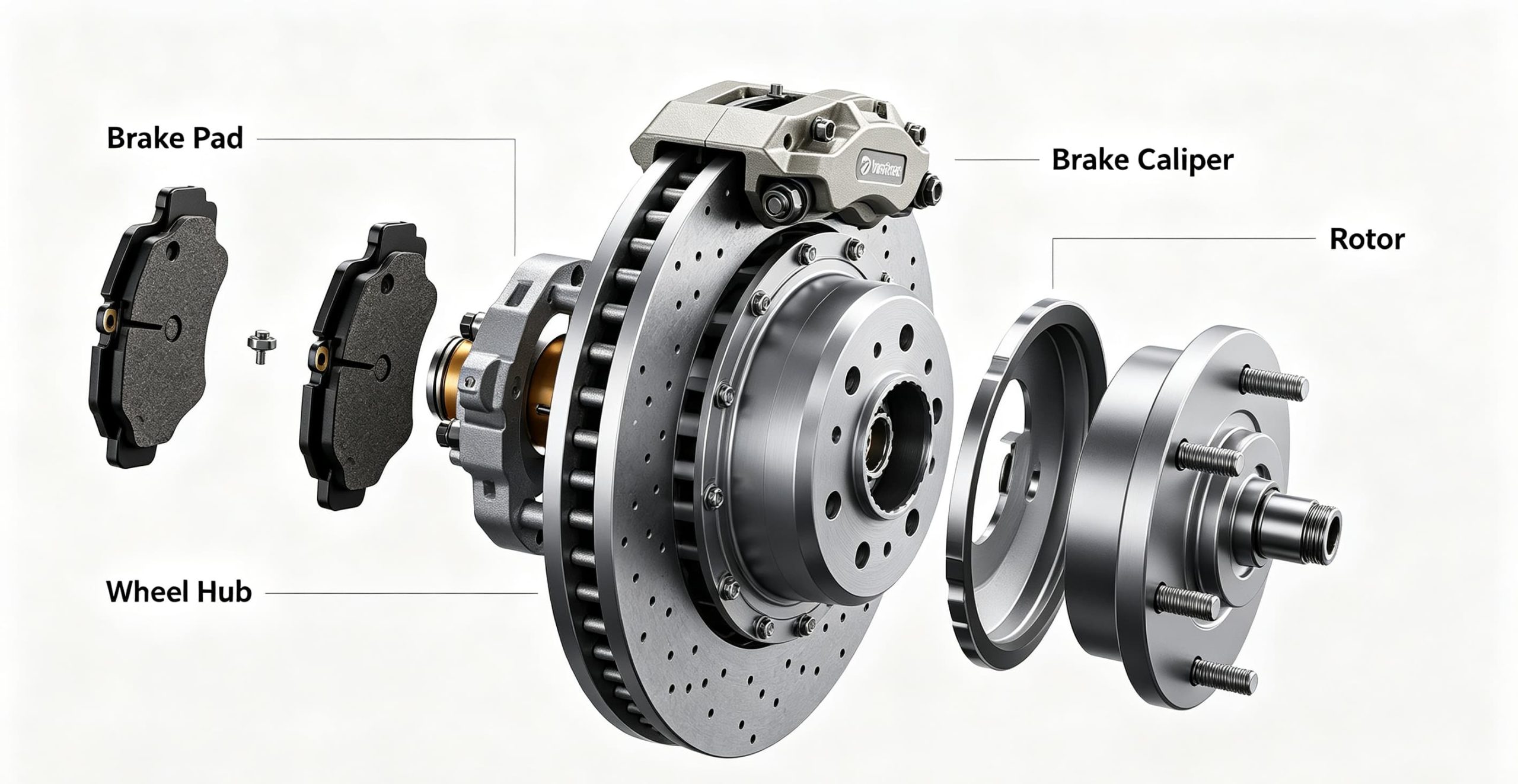
A complete truck disc brake system includes calipers, brake pads, rotors, cylinders and brake hoses. Brake pads are the only friction component that converts hydraulic power into braking force. They are the key part to control truck stopping.
When you step on the brake pedal, the hydraulic system pushes the caliper piston. The piston clamps the inner and outer brake pads tightly against the rotating rotor. The friction between pads and rotor consumes truck kinetic energy and slows down the wheels until the truck stops.
Continuous braking on downhill roads will generate huge heat. High temperature will carbonize the pad surface and reduce friction performance. This causes brake fading and soft braking. Replacing high-temperature resistant brake pads regularly can solve this problem fundamentally.
The brake pad is a core component of the entire vehicle braking system. To view all supporting parts of the truck brake system and other chassis, engine, and electrical system accessories, visit our heavy-duty truck braking system components catalog.
Common Warning Signs of Worn Brake Pads
Noise and Vibration During Braking
Most brake failures start with obvious early warning signs. You can judge brake pad wear easily through daily driving feelings. Do not wait for complete brake failure to take maintenance actions.
A sharp metallic squeal during braking is the most typical sign. Standard heavy truck brake pads are equipped with metal wear alarm pieces. When the friction material wears to the minimum thickness, the metal piece rubs the rotor and makes a harsh sound. This is a clear safety reminder. Continuing to drive will wear out the alarm piece and scratch the rotor severely.
Longer stopping distance and weak braking force are another obvious symptom. Thinned brake pads reduce friction area. The brake system cannot provide enough clamping force for safe stopping. This risk rises sharply on highways and downhill roads. Many trucks also produce body vibration and steering jitter during braking, which mainly comes from uneven pad wear and carbonized pad surfaces.
Heat and Visual Wear Symptoms
Overheated wheel hubs and burnt rubber smell mean abnormal brake pad friction. Worn or poorly reset pads keep rubbing the rotor during normal driving. This generates continuous high heat. It will cause rotor deformation, tire aging and even tire blowout risks.
A large amount of black brake dust on wheel rims also indicates aging brake pads. Low-quality or overused pads break down quickly and produce excessive dust. They will scratch the rotor surface and accelerate component damage.
If your truck pulls left or right while braking, the brake pads on both sides wear unevenly. Unbalanced braking force will cause steering deviation and bring huge safety risks in emergency braking. Besides, a softer brake pedal with longer travel proves pad wear. New truck brake pads are 15–20mm thick. You must replace them immediately when the remaining thickness is less than 8mm.
Fleet technicians and truck owners should check these signs regularly. Early maintenance avoids sudden breakdowns and expensive secondary damage.
Key Causes of Premature Brake Pad Wear
Improper Driving Habits and Overloading
Many truck owners think fast pad wear is normal for heavy trucks. In fact, most premature wear comes from bad driving habits and mechanical faults. Correct operation can greatly extend brake pad service life.
Frequent hard braking and emergency stops wear pads fastest. Overloaded trucks carry huge inertia. Sudden braking produces extreme friction and high temperature. It carbonizes the pad surface and destroys friction materials. Repeated downhill braking will further aggravate thermal recession and pad damage.
Hidden Mechanical Faults
Stuck caliper guide pins and failed reset springs are common hidden faults. They prevent brake pads from fully separating from the rotor after braking. Sustained slight friction causes uneven wear and overheated wheel hubs. This small fault is easy to ignore but leads to frequent brake failures.
Incorrect brake clearance also shortens pad life. Too small clearance causes continuous rubbing. Too large clearance increases braking load. Both conditions accelerate brake pad wear obviously.
Low-Quality Parts and Uncleaned Components
Low-cost unqualified brake pads have unstable friction materials. They cannot resist high temperature and are easy to crack and fade under heavy load. Meanwhile, residual rust and iron filings on the rotor act as abrasives. They will scratch new brake pads and cause uneven wear if not cleaned before installation.
Pre-Replacement Preparation: Tools, Safety and Parts Selection
Brake pad replacement is a safety-level maintenance work. Complete preparation ensures standard installation and avoids post-replacement noise, jitter and rapid wear.
Prepare professional tools in advance, including a hydraulic jack, jack stands, torque wrench, caliper reset tool, screwdrivers, pliers, feeler gauge, wire brush and brake cleaner. Standard tools protect caliper threads and brackets from damage during disassembly and installation.
Follow strict safety rules before operation. Park the truck on flat solid ground. Turn off the engine and pull the hand brake. Block the opposite wheels to prevent sliding. Loosen wheel nuts before lifting the truck. Always use jack stands for support; never work under a truck with only a jack. Wear masks and gloves to avoid inhaling harmful brake dust.
Choose brand-matching high-quality brake pads. SINOTRUK, SHACMAN, FAW and FOTON trucks have different pad sizes and installation structures. Universal pads cause poor fitting, braking deviation and hidden safety hazards. Qualified OEM-grade pads feature stable high-temperature resistance and low wear rate.
As an experienced Chinese truck parts exporter, we strictly screen factory sources and conduct full pre-shipment inspections for all brake parts to guarantee OEM-level quality and perfect model compatibility. To learn more about our long-term stable cooperation with global fleet companies, repair shops, and wholesale clients worldwide, explore our international truck parts wholesale cooperation cases.
Standard 12-Step Brake Pad Replacement Process
This step-by-step process fits all mainstream Chinese heavy-duty disc brake trucks, including SINOTRUK HOWO/SITRAK, SHACMAN X3000, FAW J6/J7 and FOTON Auman. All steps follow factory maintenance standards.
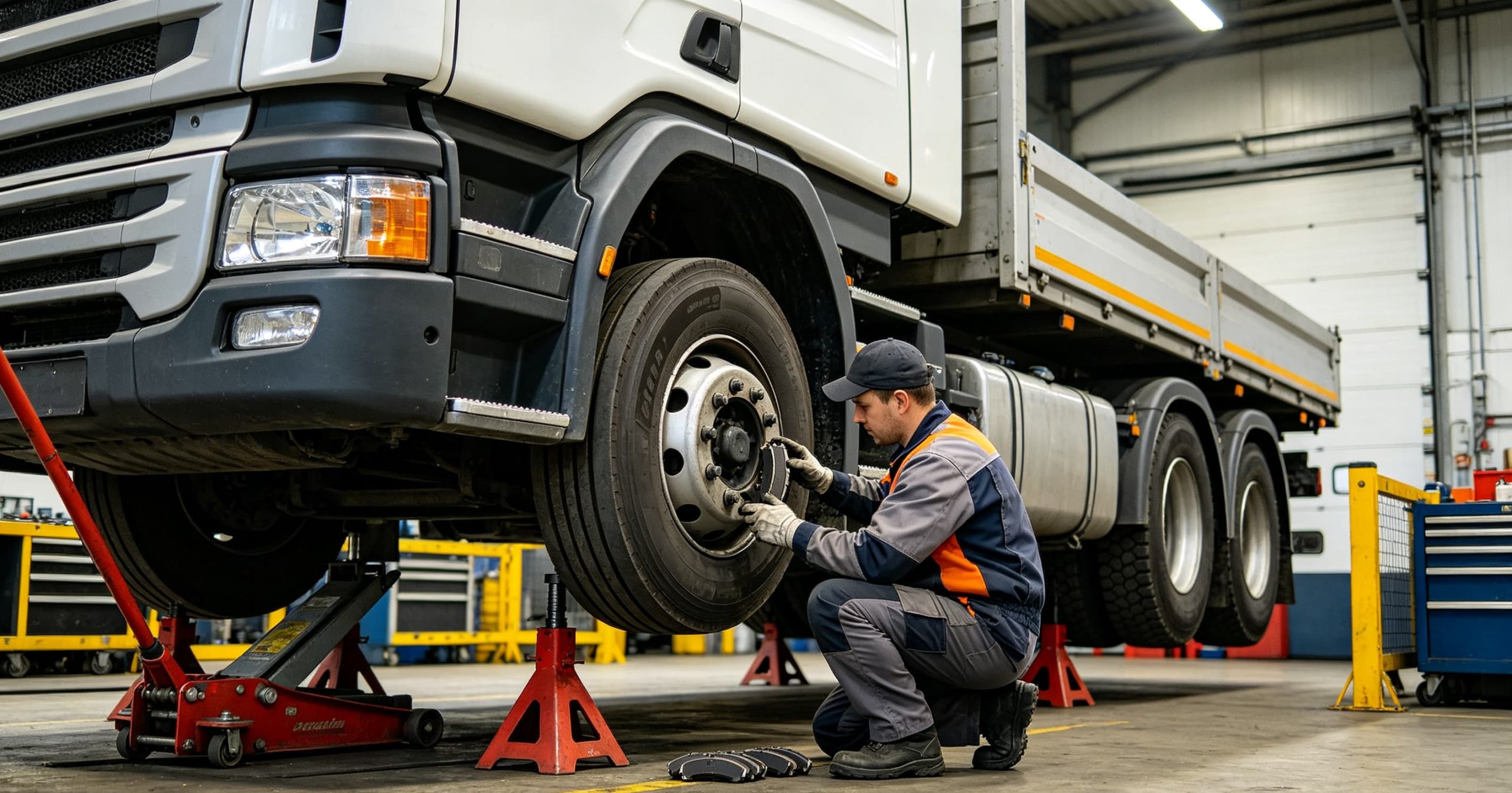
First, fix the truck and lift the axle safely. Park on flat ground, turn off the engine and engage the hand brake. Block the wheels to avoid movement. Loosen wheel nuts slightly, then lift the target axle with a hydraulic jack and fix it with jack stands.
Remove the wheel to expose the brake caliper, rotor and bracket. Clean all surface dust, oil and sludge with a wire brush and brake cleaner. A clean working surface ensures accurate inspection and clean installation.
Check the whole brake system before replacing pads. Inspect the rotor for scratches, deformation and cracks. Check brake hoses for aging and leakage. Test guide pins for flexibility and reset springs for elasticity. Replace damaged auxiliary parts in advance.
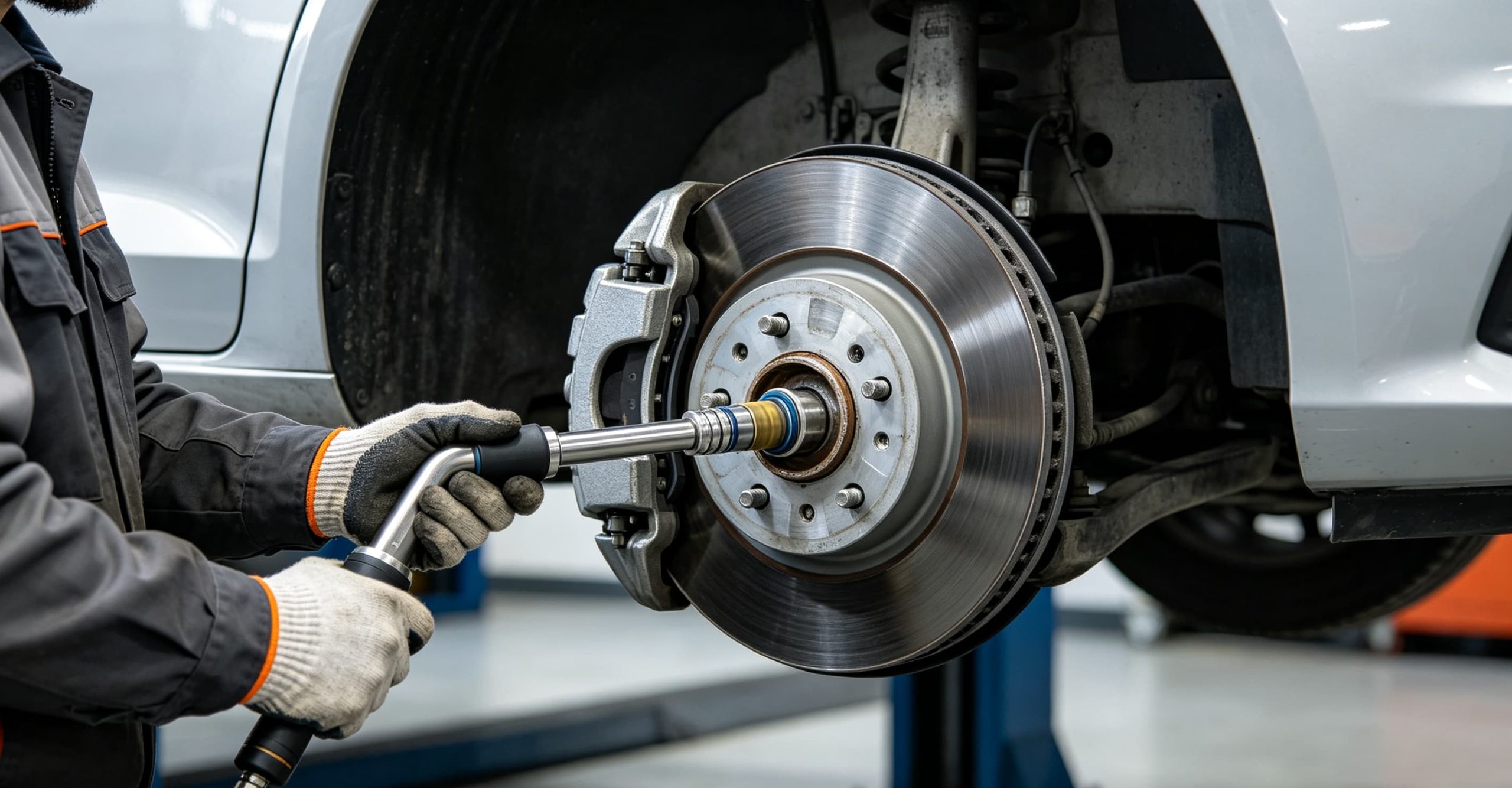
Reset the caliper piston slowly with a professional tool. Do not squeeze the piston with brute force, which will damage internal seals and cause fluid leakage. Observe the brake fluid tank to avoid overflow during resetting.
Remove old brake pads, wear alarm tabs, noise reduction shims and limit springs. Clean the bracket groove thoroughly to remove rust and sludge. Ensure new pads can slide freely without jamming.
Polish and clean the brake rotor repeatedly. Remove all oxide layers, rust and hard friction marks. Keep the rotor completely clean and dry for uniform friction with new pads.
Install new auxiliary parts first, including limit springs, shims and alarm pieces. Then place new brake pads into the bracket groove. Confirm the pads are fixed tightly and slide flexibly on both sides.
Reset and fix the brake caliper carefully. Avoid pinching brake hoses and sensor wires. Tighten guide pins and fixing bolts to factory standard torque to prevent loosening and deviation.
Adjust the gap between pads and rotor with a feeler gauge to meet factory parameters. Ensure the pads reset completely and do not rub the rotor in idle state.
Reinstall the wheel and tighten nuts in cross order. Lower the truck slowly and fasten all wheel nuts with a torque wrench for driving safety.
Press the brake pedal repeatedly on site to build stable hydraulic pressure. This eliminates idle stroke and makes new pads fit closely with the rotor.
Complete standard brake bed-in. Drive in a safe open area. Decelerate gently from 40km/h to 10km/h for 8 to 10 times. Avoid emergency braking and static braking during this period. This forms a uniform friction film and eliminates post-install noise and jitter.
Common Post-Replacement Faults and Solutions
Brake Noise and Vibration
Most post-install brake problems come from non-standard operation rather than defective parts. Squealing usually results from uncleaned rotors, missing shims or incomplete bed-in. You need to re-clean the rotor, check all accessories and finish full bed-in. Avoid heavy-load driving in the first 200 kilometers after replacement.
Braking jitter is caused by uneven rotor surfaces, inconsistent clearance or loose caliper bolts. Adjust the brake clearance, polish the rotor and retighten bolts to solve the vibration problem.
Fast Pad Wear and Weak Braking
If new pads wear rapidly, check for stuck guide pins, incomplete reset and too-tight clearance. Clean rotor impurities and lubricate guide pins to eliminate continuous friction.
Soft brake pedals and delayed response are caused by poor pad-rotor fitting or residual air in the pipeline. Press the brake pedal repeatedly to improve fitting. Bleed the brake system thoroughly if the delay is serious.
Standard Brake Pad Replacement Cycles
We summarize practical replacement cycles for Chinese heavy trucks based on actual working conditions. You can adjust the cycle according to road conditions, load weight and driving habits.
Long-distance highway trucks: Replace brake pads every 40,000–60,000 kilometers.
Mountain route trucks with frequent braking: Replace every 20,000–30,000 kilometers.
Construction site short-distance heavy-load trucks: Inspect every 10,000 kilometers and replace pads once they reach the wear limit.
Fleet companies are recommended to build unified maintenance records. Record replacement time and mileage to form standardized maintenance management.
How to Source High-Quality Truck Brake Pads
Stable high-quality spare parts are the key to safe and low-cost fleet operation. Inferior brake pads cause frequent faults, safety risks and customer complaints. Quality is far more important than low purchase price.
15-year Chinese truck brake parts manufacturer Mettlead specializes in full-series Chinese heavy truck spare parts export. We have a 12,000-square-meter professional warehouse and strict pre-shipment inspection standards. All brake parts match OEM technical standards and fit SINOTRUK, SHACMAN, FAW and FOTON trucks perfectly.
We support OEM customization, sample orders, small-batch LCL and full-container FCL shipments. Our 24-hour multilingual service and complete export documents help global buyers reduce procurement costs. For model matching, bulk quotations and technical support, feel free to reach our truck parts export specialists anytime.
We always insist on strict quality control and full model compatibility to provide reliable brake components for global repair shops and fleet companies.
FAQs About Truck Brake Pad Replacement
Q1: Can I replace only the worn single-side brake pads?
No. You must replace brake pads in pairs on the same axle. Asymmetric wear and different friction coefficients will cause braking deviation and safety hazards. Keep consistent braking performance on both sides.
Q2: Do I need to replace the brake rotor with new pads?
Not necessarily. You can reuse the rotor if it has no deep scratches, deformation or thermal cracks. Professional cleaning and polishing are enough. Replace the rotor only when it is severely damaged.
Q3: Why do new brake pads have weak braking force at first?
New pads and rotors have not formed a complete friction fit. Braking performance is unstable in the initial stage. The performance will return to optimal after 200 kilometers of running-in and standard bed-in.
Q4: How to extend brake pad service life?
Avoid overload driving and frequent emergency braking. Check caliper reset status and brake clearance regularly. Clean rotor dust and choose high-quality brake pads. Gentle driving habits can extend pad life by more than 30%.
Q5: Are truck brake pads universal for different Chinese brands?
Most are not universal. SINOTRUK, SHACMAN, FAW and FOTON have different brake system designs, pad sizes and installation structures. Universal pads cause poor fitting and hidden risks. Match parts by OEM number and truck model.
Final Summary
Brake pad replacement is a basic but vital safety maintenance item for Chinese heavy-duty trucks. Standard fault inspection, scientific installation and professional bed-in can eliminate most brake system faults. It reduces traffic accident risks and fleet maintenance costs effectively. Mastering standard replacement skills is essential for every truck technician and fleet manager.
If you need OEM-grade brake pads, complete brake system accessories and full-series Chinese truck spare parts, Mettlead global heavy truck parts supplier provides one-stop procurement, technical guidance and after-sales support for global clients.
For more professional heavy truck maintenance guides, fault diagnosis tutorials, and parts matching resources to optimize your fleet maintenance system, continue browsing our dedicated truck technical support category.


