
The fuel level sensor, often an overlooked component, plays a crucial role in the daily operation of any heavy-duty truck. It provides the driver with accurate information about the remaining fuel in the tank, preventing unexpected breakdowns and ensuring efficient route planning. When this sensor malfunctions, it can lead to inaccurate fuel gauge readings, ranging from a constantly full tank to an empty one, regardless of the actual fuel content. For operators and maintenance professionals dealing with robust Chinese trucks such as Sinotruk (HOWO), Shacman, FAW (Jiefang), Foton, and Dongfeng, understanding the intricacies of fuel level sensor problems and their effective resolution is paramount. This comprehensive guide will delve into the various types of fuel level sensors, common failure modes, diagnostic techniques, and step-by-step replacement procedures. Our aim is to equip you with the knowledge to maintain your fleet’s fuel system integrity, ensuring optimal performance and safety. For more general company information, please visit our Mettlead homepage or learn more about us on our about us page.
The Silent Guardian: Understanding Truck Fuel Level Sensors
Fuel level sensors are not merely simple gauges; they are sophisticated instruments designed to provide precise fuel level data to the truck’s instrument cluster and engine control unit (ECU). Their primary function is to ensure accurate fuel readings, which is vital for operational efficiency and preventing fuel-related issues. Furthermore, modern fuel systems often incorporate multiple types of sensors, each employing different technologies to achieve this goal. You can find more details on specific product systems on our product system page.
1. Types of Fuel Level Sensors in Heavy-Duty Trucks
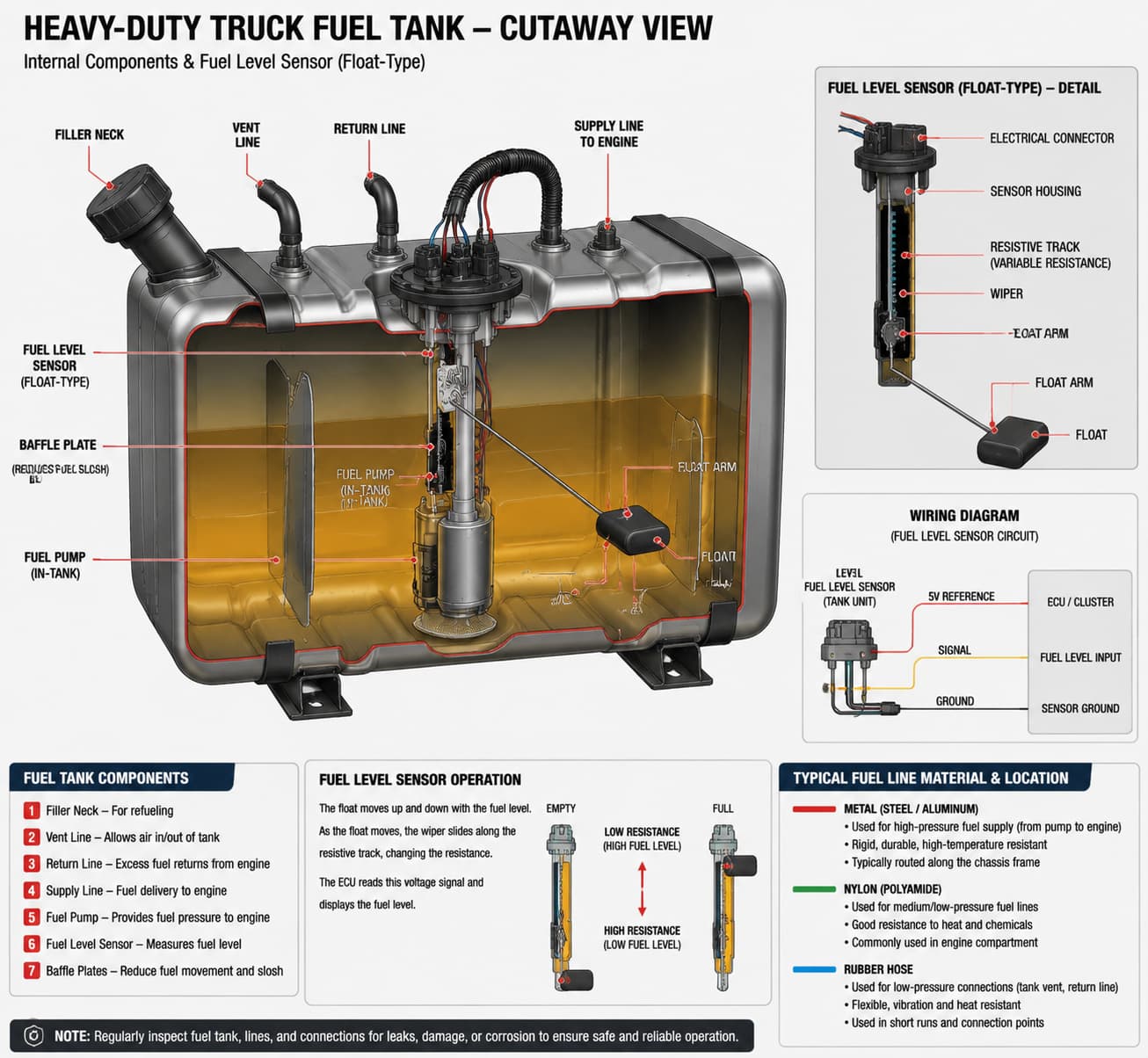
- Resistive (Float-Type) Sensors: These are the most common type, consisting of a float arm connected to a variable resistor. As the fuel level changes, the float moves, altering the resistance and sending a corresponding signal to the fuel gauge. They are simple, robust, and widely used in many heavy-duty trucks, including older models of Sinotruk (HOWO) and Shacman.
- Capacitive Sensors: These sensors use two concentric tubes that act as a capacitor. The fuel acts as a dielectric, and changes in fuel level alter the capacitance, which is then converted into a fuel level reading. They offer higher accuracy and are less prone to mechanical wear than float-type sensors.
- Ultrasonic Sensors: These non-contact sensors use ultrasonic waves to measure the distance to the fuel surface. They are highly accurate and durable as they have no moving parts in contact with the fuel. They are typically found in more advanced or specialized fuel tanks.
- Hall Effect Sensors: Some modern systems use Hall effect sensors, which detect changes in a magnetic field caused by the movement of a float. These offer good accuracy and durability.
2. How Fuel Level Sensors Communicate
Regardless of the technology, the fuel level sensor converts the physical fuel level into an electrical signal. This signal is then sent to the instrument cluster, where it is displayed on the fuel gauge, and often to the ECU for fuel management calculations. Consequently, any disruption in this signal path, whether due to sensor failure, wiring issues, or gauge malfunction, will result in inaccurate readings. This communication is critical for the sophisticated engine management systems in FAW and Foton trucks.
💡 Pro-Tip: Understanding Sensor Integration
Many fuel level sensors are integrated into the fuel pump assembly or the fuel sending unit, especially in modern trucks. Therefore, diagnosing a fuel level sensor issue might involve accessing the entire sending unit. Always consult the truck’s service manual for the exact configuration. This is particularly relevant for Dongfeng models.
Common Problems Affecting Truck Fuel Level Sensors
Fuel level sensors are exposed to harsh conditions within the fuel tank, making them susceptible to various issues that can lead to inaccurate readings. Understanding these problems is key to effective diagnosis and timely intervention. For further assistance, our technical support page is always available.
1. Electrical Malfunctions
Electrical issues are a primary cause of fuel level sensor failure:
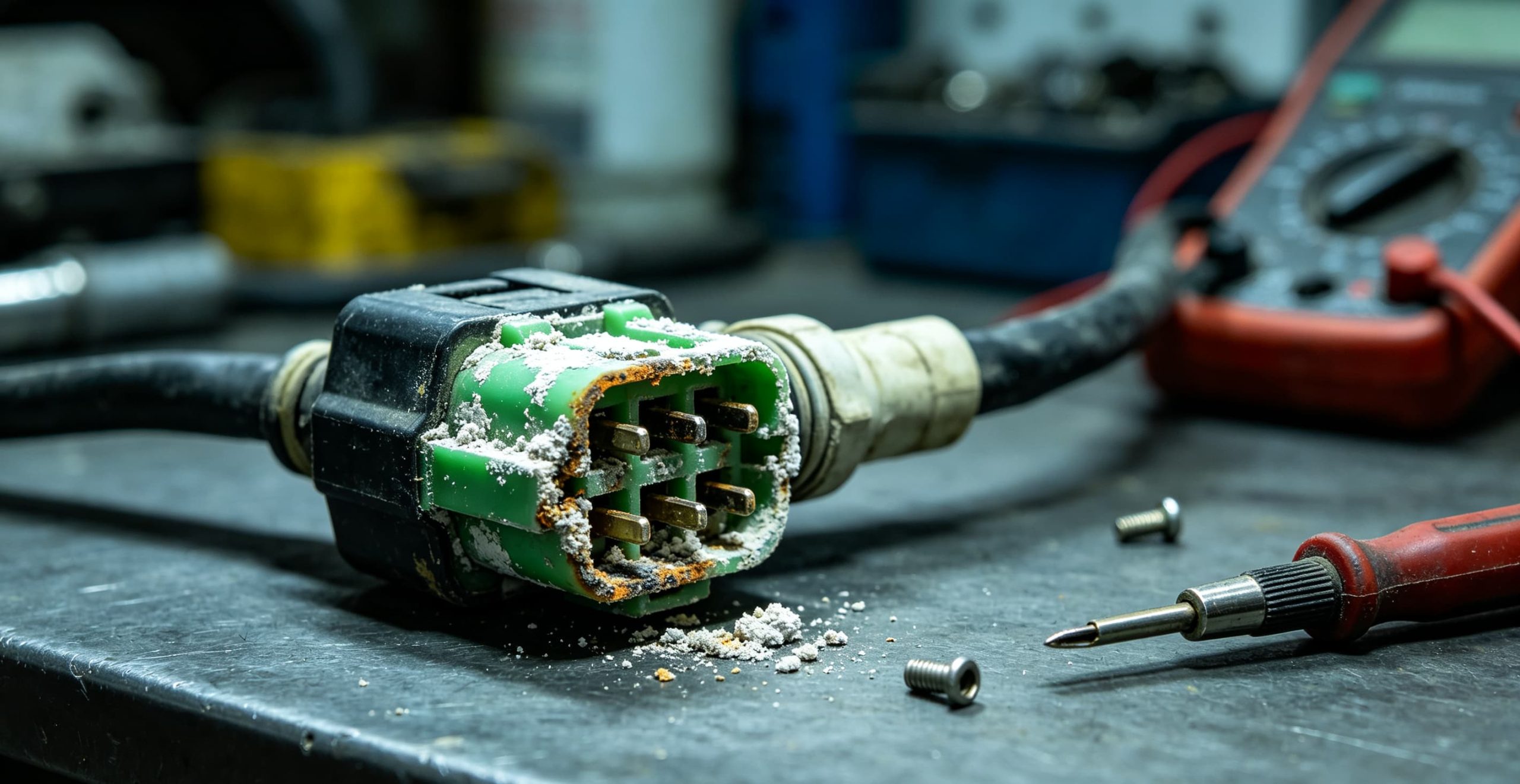
- Corrosion: Electrical contacts and wiring within the fuel tank are prone to corrosion due to exposure to fuel, moisture, and contaminants. This can lead to intermittent signals or complete circuit breaks.
- Open or Short Circuits: Damaged wiring, either within the sensor unit or in the harness connecting it to the gauge/ECU, can cause an open circuit (no signal) or a short circuit (incorrect signal).
- Resistor Failure (Resistive Type): The variable resistor in float-type sensors can wear out or become damaged, leading to inaccurate resistance readings. This often manifests as the gauge getting stuck at a certain level or jumping erratically.
2. Mechanical Failures (Float-Type Sensors)
For resistive float-type sensors, mechanical issues are common:
- Stuck or Damaged Float Arm: The float arm can become bent, jammed, or physically damaged, preventing it from moving freely with the fuel level. Debris in the tank can also impede its movement.
3. Contamination and Sludge Buildup
Over time, fuel tanks can accumulate dirt, sediment, and sludge. This contamination can interfere with the sensor’s operation, especially float-type sensors, by impeding the float’s movement or coating the resistive elements. Consequently, the sensor sends inaccurate signals to the gauge. This is particularly relevant for trucks operating in regions with lower fuel quality.
4. Wiring Harness Issues
Beyond the sensor itself, problems in the wiring harness connecting the sensor to the rest of the truck’s electrical system can cause inaccurate readings. These issues include:
- Chafed or Damaged Wires: Wires can become chafed or cut due to vibration, rubbing against chassis components, or rodent damage.
- Loose Connections: Connectors can become loose due to vibration or improper installation, leading to intermittent or lost signals.
- Corroded Terminals: Terminals at the sensor or instrument cluster can corrode, increasing resistance and distorting the signal.
⚠️ Caution: Fuel Tank Access Safety
Accessing the fuel level sensor often requires working near or inside the fuel tank. This involves significant safety risks, including fire, explosion, and exposure to hazardous fuel vapors. Always ensure the work area is well-ventilated and free from ignition sources. Disconnect the battery before starting work. Wear appropriate personal protective equipment (PPE), including safety glasses, chemical-resistant gloves, and respiratory protection if fuel vapors are present. Ensure the fuel tank is either nearly empty or properly drained before removal. Our technical support page offers valuable resources for safe repair practices.
Symptoms of a Failing Truck Fuel Level Sensor
Recognizing the symptoms of a failing fuel level sensor is crucial for timely diagnosis and preventing unexpected fuel-related issues. These symptoms primarily manifest as inaccurate or erratic fuel gauge readings. Here’s a breakdown of common indicators:
Symptom Primary Indication Possible Fuel Level Sensor Problem Inaccurate Fuel Gauge Reading Gauge consistently shows full, empty, or a specific level regardless of actual fuel. Stuck float, corroded resistor, electrical open/short. Erratic Fuel Gauge Movement Gauge needle jumps erratically, fluctuates wildly, or drops suddenly. Intermittent electrical connection, worn resistor, or partially stuck float. Fuel Gauge Stuck on Empty Gauge always reads empty, even after refueling. Open circuit, sunken float, or complete sensor failure. Fuel Gauge Stuck on Full Gauge always reads full, even after significant fuel consumption. Short circuit, float arm stuck at the top, or sensor failure. Check Engine Light (CEL) Illumination of the Check Engine Light with a related diagnostic trouble code (DTC). Sensor out of range, electrical fault, or communication error with ECU. Unexpected Fuel Starvation Truck runs out of fuel despite the gauge showing a significant amount remaining. Severely inaccurate sensor reading, often stuck at a higher level. 1. Inaccurate or Erratic Gauge Readings
This is the most direct symptom. The fuel gauge might consistently show a full tank, an empty tank, or a specific level, regardless of the actual fuel volume. Furthermore, the needle might jump erratically, fluctuate wildly, or drop suddenly, indicating an intermittent electrical connection or a worn resistive track. Consequently, this can lead to drivers misjudging their fuel reserves. This is a common issue in Sinotruk (HOWO) and Shacman trucks.
2. Fuel Gauge Stuck on Empty or Full
If the gauge always reads empty, even after refueling, it typically points to an open circuit in the sensor or wiring, or a float that has sunk. Conversely, if it’s always stuck on full, it could indicate a short circuit or a float arm that is physically jammed at the top. In addition, these conditions make it impossible to accurately monitor fuel levels. For troubleshooting these issues, our technical support page can offer valuable insights.
3. Check Engine Light (CEL) Illumination
Modern trucks often have diagnostic trouble codes (DTCs) related to fuel level sensor malfunctions. If the sensor sends signals that are out of the expected range, the ECU may trigger the Check Engine Light. Furthermore, scanning for DTCs with an OBD-II scanner is a crucial step in diagnosing these issues. Specifically, this is relevant for the advanced electronic systems in FAW and Foton trucks.
4. Unexpected Fuel Starvation
The most inconvenient and potentially dangerous symptom is running out of fuel when the gauge indicates there’s still plenty left. This happens when the sensor is severely inaccurate, often stuck at a higher reading than the actual fuel level. Consequently, drivers might unknowingly deplete their fuel supply, leading to breakdowns. This can be a major concern for the sophisticated engines in Dongfeng trucks.
💡 Pro-Tip: Cross-Reference with Fuel Log
If you suspect an inaccurate fuel gauge, keep a detailed fuel log. Record mileage and fuel added at each fill-up. Compare this data with your gauge readings over time. This can help confirm if the gauge is consistently off by a certain amount or if its behavior is erratic. This simple practice can save you from unexpected roadside stops.
Diagnosing Truck Fuel Level Sensor Problems: A Step-by-Step Guide
Accurately diagnosing a faulty fuel level sensor requires a systematic approach to differentiate it from other electrical or fuel system issues. Given that the sensor is often located inside the fuel tank, a thorough diagnostic process is essential to pinpoint the exact fault before undertaking the labor-intensive replacement. This is particularly true for sophisticated systems in Sinotruk (HOWO), Shacman, FAW, Foton, and Dongfeng trucks.
⚠️ Caution: Electrical and Fuel System Safety
Before performing any diagnostic or repair work on the fuel level sensor, always disconnect the truck’s battery to prevent electrical shorts and accidental fuel pump activation. Ensure the work area is well-ventilated and free from ignition sources. Wear appropriate PPE, including safety glasses and fuel-resistant gloves. If working near or inside the fuel tank, ensure it is nearly empty or properly drained. Our technical support page offers valuable resources for safe repair practices.
1. Check for Diagnostic Trouble Codes (DTCs)
The first step in modern truck diagnostics is to connect an OBD-II scanner (or manufacturer-specific diagnostic tool) to the truck’s diagnostic port. Check for any stored or pending DTCs related to the fuel level sensor or fuel gauge circuit. Common codes might include P0460 (Fuel Level Sensor Circuit Malfunction) or similar. Furthermore, these codes can provide a starting point for your investigation.
2. Verify Fuel Gauge Operation
Before assuming the sensor is faulty, ensure the fuel gauge itself is working correctly. Some trucks have a built-in instrument cluster self-test function that cycles all gauges. If the fuel gauge moves correctly during this test, the problem is likely with the sensor or its wiring. Conversely, if the gauge remains stuck, the issue might be with the gauge or the instrument cluster itself.
3. Inspect Wiring and Connections
Visually inspect the wiring harness leading to the fuel level sensor, typically located on top of or inside the fuel tank. Look for:
- Chafed, Cut, or Damaged Wires: Pay attention to areas where the harness might rub against the chassis or other components.
- Corroded or Loose Connectors: Disconnect and inspect the electrical connector at the fuel level sensor and any intermediate connectors. Clean any corrosion and ensure a tight fit.
- Ground Connection: Verify that the sensor has a clean and secure ground connection. A poor ground can cause erratic readings.
4. Perform Resistance Test (for Resistive Sensors)
For resistive (float-type) fuel level sensors, you can test their resistance directly. You’ll need a multimeter.
- Access Sensor: Disconnect the electrical connector from the fuel level sensor.
- Measure Resistance: Connect the multimeter leads to the sensor’s terminals.
- Simulate Fuel Levels: Manually move the float arm through its full range of motion (from empty to full) while observing the multimeter. The resistance should change smoothly and consistently. Compare the readings to the truck’s service manual specifications (e.g., X ohms at empty, Y ohms at full).
Erratic readings, open circuits (infinite resistance), or short circuits (zero resistance) indicate a faulty sensor. Consequently, this test is highly effective for diagnosing issues in Sinotruk (HOWO) and Shacman trucks.
5. Voltage Drop Test
A voltage drop test can help identify excessive resistance in the wiring or connections between the sensor and the gauge/ECU. This test is performed with the circuit active.
- Connect Multimeter: Connect the multimeter in parallel across sections of the wiring (e.g., between the sensor output and the gauge input).
- Observe Voltage: With the ignition on, observe the voltage drop. Any significant voltage drop (typically more than 0.2-0.5 volts) indicates excessive resistance in that section of the wiring.
🔍 Technical Deep-Dive: CAN Bus Communication
In many modern heavy-duty trucks, especially those from FAW, Foton, and Dongfeng, the fuel level sensor may communicate with the ECU and instrument cluster via a Controller Area Network (CAN bus). In such systems, a sensor fault might not be a simple resistance issue but a data communication error. Diagnosing these requires a specialized scan tool capable of reading CAN bus data and identifying network faults. Furthermore, a faulty sensor might send corrupted data packets, leading to erratic gauge behavior or DTCs.
Replacing the Truck Fuel Level Sensor: A Step-by-Step Guide
Replacing a faulty fuel level sensor is a common repair, but it requires careful attention to safety and proper procedures, as it often involves working directly with the fuel tank. The exact steps may vary slightly depending on the truck model and sensor type. For high-quality replacement parts, always check our product brand page.
⚠️ Caution: Fuel Tank Removal/Access
Many fuel level sensors are integrated into the fuel sending unit, which is typically accessed by removing the fuel tank. This is a heavy and potentially dangerous procedure. Ensure the tank is as empty as possible, use proper lifting equipment, and have assistance if needed. Never work under a fuel tank supported only by a jack. Always follow the manufacturer’s specific instructions for fuel tank removal and installation. Our technical support page offers valuable resources for safe repair practices.
1. Preparation and Safety First
- Park Safely: Park the truck on a level surface, engage the parking brake, and block the wheels.
- Disconnect Battery: Disconnect both positive and negative battery terminals to prevent electrical shorts.
- Relieve Fuel Pressure: If applicable, relieve fuel system pressure according to the truck’s service manual.
- Drain Fuel Tank (if necessary): If the sensor is accessed from the top of the tank and the tank is full, it may be necessary to drain some fuel to prevent spillage. If the tank needs to be removed, it should be as empty as possible.
- Gather Tools: Collect all necessary tools, including wrenches, sockets, screwdrivers, a multimeter, and specialized fuel line disconnect tools if required. Have a new fuel level sensor and any necessary gaskets or O-rings ready.
2. Accessing the Fuel Level Sensor
The method of accessing the sensor varies:
- In-Tank Access (Top): Some trucks allow access to the fuel sending unit (which contains the sensor) from the top of the fuel tank, often under the truck bed or through an access panel.
- Tank Removal: In many heavy-duty trucks, especially those with large, saddle-style tanks, the entire fuel tank may need to be removed from the chassis to access the sending unit. This is a more involved process.
3. Disconnecting and Removing the Old Sensor
- Disconnect Electrical Connector: Carefully disconnect the electrical connector from the fuel sending unit.
- Disconnect Fuel Lines: Disconnect any fuel lines (supply, return, vent) attached to the sending unit. Be prepared for some fuel spillage and use appropriate catch pans.
- Remove Retaining Ring/Bolts: The sending unit is typically held in place by a large retaining ring that needs to be rotated or by several bolts. Use the appropriate tool for removal.
- Carefully Extract: Gently pull the old sending unit out of the fuel tank. Be careful not to bend the float arm or damage the fuel pump (if integrated).
4. Installing the New Fuel Level Sensor
- Inspect Tank Interior: While the tank is open, inspect the interior for any debris or contamination. Clean if necessary.
- Install New Gasket/O-ring: Always use a new gasket or O-ring with the new sending unit to ensure a proper seal and prevent fuel leaks.
- Insert New Sensor: Carefully insert the new fuel level sensor (or sending unit) into the fuel tank, ensuring the float arm moves freely and does not snag on anything.
- Secure Unit: Secure the sending unit with the retaining ring or bolts, ensuring it is properly seated and tightened to specifications.
- Reconnect Fuel Lines and Electrical Connector: Reconnect all fuel lines and the electrical connector. Double-check all connections for tightness.
5. Post-Installation Checks
- Reconnect Battery: Reconnect the truck’s battery terminals.
- Prime Fuel System: If the fuel lines were disconnected, prime the fuel system according to the manufacturer’s instructions to remove any air.
- Check for Leaks: Turn the ignition to the ‘ON’ position (without starting the engine) to activate the fuel pump and pressurize the system. Carefully inspect all connections around the new sensor for any fuel leaks.
- Test Gauge: Start the engine and observe the fuel gauge. It should now provide an accurate reading. Drive the truck for a short period to confirm consistent operation.
💡 Pro-Tip: Calibrating New Sensors
Some modern fuel level sensors, especially those communicating via CAN bus, may require calibration after replacement using a manufacturer-specific diagnostic tool. Always consult the truck’s service manual to determine if calibration is necessary for your specific model. This is particularly relevant for FAW and Foton trucks.
Preventive Maintenance for Truck Fuel Level Sensors
While fuel level sensors are generally robust, proactive maintenance can extend their lifespan and ensure accurate readings. For more insights into maintaining your fleet, explore our customer success cases.
1. Use Clean Fuel
The most effective preventive measure is to always use clean, high-quality fuel. Contaminated fuel can lead to sludge buildup and corrosion within the fuel tank, directly affecting the sensor’s operation. Furthermore, regularly check the fuel tank for signs of water contamination or debris.
2. Regular Fuel Filter Replacement
While not directly protecting the sensor, a clean fuel filter ensures the overall health of the fuel system, preventing contaminants from circulating and potentially reaching the sensor. Consequently, this contributes to a cleaner fuel tank environment.
3. Inspect Wiring and Connections
During routine maintenance, visually inspect the external wiring harness and connectors leading to the fuel tank for any signs of damage, chafing, or corrosion. Ensure all connections are tight and secure. In addition, apply dielectric grease to connectors to prevent moisture intrusion and corrosion.
4. Avoid Running on Low Fuel Consistently
While not always avoidable, consistently running the fuel tank very low can expose the fuel level sensor’s resistive elements (in float-type sensors) to air and contaminants more frequently, potentially accelerating wear and corrosion. Furthermore, it can also strain the fuel pump. Specifically, this is vital for the demanding engines in Sinotruk (HOWO) and Shacman trucks.
Advanced Diagnostic Techniques for Complex Fuel Level Sensor Issues
While basic multimeter tests and visual inspections can identify many fuel level sensor problems, some issues, particularly those involving modern electronic systems or intermittent faults, require more advanced diagnostic techniques. These methods are crucial for accurately pinpointing problems in sophisticated trucks like those from FAW, Foton, and Dongfeng.
1. Oscilloscope Analysis
An oscilloscope is an invaluable tool for diagnosing intermittent or waveform-related issues. It allows you to visualize the electrical signal from the fuel level sensor in real-time, providing a much more detailed view than a multimeter. Furthermore, you can observe:
- Signal Stability: Look for any sudden drops, spikes, or erratic patterns in the waveform that might indicate a loose connection, worn resistive track, or internal sensor fault.
- Noise and Interference: An oscilloscope can reveal electrical noise or interference that might be corrupting the sensor signal, leading to inaccurate gauge readings.
- Smoothness of Signal Transition: As the float arm is manually moved, the oscilloscope should show a smooth, linear change in voltage or resistance. Any jumps or flat spots indicate a problem with the sensor’s internal components.
💡 Pro-Tip: Simulating Fuel Level Changes
When using an oscilloscope or multimeter to test a fuel level sensor, it’s often beneficial to simulate fuel level changes. If the sensor is removed from the tank, you can manually move the float arm. If the sensor is still in the tank, you might need to add or remove small amounts of fuel (safely) to observe the sensor’s response across its full range. This helps confirm the sensor’s linearity and responsiveness.
2. Scan Tool Data Stream Analysis
For trucks equipped with CAN bus systems, a professional diagnostic scan tool is essential. It allows you to access the live data stream from the ECU, including the fuel level sensor’s reported value. Consequently, you can compare the sensor’s digital reading with the actual fuel level and the gauge display. Look for:
- Discrepancies: A significant difference between the actual fuel level and the sensor’s reported value indicates a sensor or wiring issue.
- Intermittent Readings: Observe if the digital reading fluctuates erratically, even when the fuel level is stable. This points to an intermittent fault.
- DTCs: Confirm any stored or pending Diagnostic Trouble Codes related to the fuel level sensor. These codes often provide specific clues about the nature of the fault.
3. Power and Ground Integrity Check
A fuel level sensor, like any electrical component, requires a stable power supply and a clean ground connection to function correctly. Use a multimeter to:
- Check Power Supply: Verify that the sensor is receiving the correct voltage (typically 5V or 12V, depending on the system) at its power input terminal.
- Check Ground Continuity: Ensure the sensor’s ground wire has good continuity to the chassis ground. High resistance in the ground circuit can lead to inaccurate readings.
Furthermore, poor power or ground connections can mimic sensor failure, making these checks critical before condemning the sensor itself. For more details on electrical system diagnostics, refer to our technical support page.
🔍 Technical Deep-Dive: Fuel Tank Design and Sensor Placement
Heavy-duty truck fuel tanks, especially those in Sinotruk (HOWO) and Shacman, are often large and may have internal baffles to prevent fuel sloshing. The placement of the fuel level sensor is critical to ensure it accurately measures the fuel volume, even during vehicle movement. Some trucks may even use multiple sensors in different compartments of a split tank, with their signals averaged by the ECU. Understanding the specific tank design of your truck model is crucial for accurate diagnosis and replacement. You can find more information about specific product systems on our product system page.
Choosing the Right Replacement Fuel Level Sensor
When it comes to replacing a fuel level sensor, selecting the correct part is paramount for accurate readings and long-term reliability. The market offers various options, from OEM (Original Equipment Manufacturer) parts to aftermarket alternatives. For high-quality replacement parts, always check our product brand page.
1. OEM vs. Aftermarket Sensors
- OEM Sensors: These are identical to the parts originally installed in your truck. They guarantee perfect fitment, compatibility, and performance, as they are manufactured to the truck manufacturer’s exact specifications. However, they often come at a higher cost.
- Aftermarket Sensors: These are produced by independent manufacturers. Quality can vary significantly. High-quality aftermarket sensors can offer a cost-effective alternative to OEM parts, providing comparable performance and durability. Conversely, low-quality aftermarket sensors may lead to premature failure or inaccurate readings.
💡 Pro-Tip: Prioritize Quality for Critical Components
For critical components like fuel level sensors, especially in heavy-duty commercial vehicles, prioritizing quality over initial cost is always recommended. A cheaper, unreliable sensor can lead to repeated breakdowns, inaccurate fuel management, and ultimately higher operational costs. Invest in reputable brands or OEM-equivalent parts to ensure peace of mind and optimal fleet performance. Mettlead offers a range of high-quality parts for HOWO, Shacman, FAW, Foton, and Dongfeng trucks.
2. Compatibility and Specifications
Always ensure the replacement sensor is compatible with your specific truck make, model, and year. Check the part number against the original part or consult your truck’s service manual. Key specifications to consider include:
- Sensor Type: Resistive, capacitive, ultrasonic, or Hall effect.
- Resistance Range (for resistive sensors): Ensure the new sensor’s resistance values at empty and full match the original specifications.
- Connector Type: The electrical connector must match the truck’s wiring harness.
- Mounting Style: The physical mounting mechanism (e.g., retaining ring, bolt pattern) must be identical.
Troubleshooting Common Pitfalls During Fuel Level Sensor Replacement
Even with a clear guide, unexpected issues can arise during replacement. Here’s a table outlining common problems and their solutions:
Problem Possible Cause Solution New Sensor Reads Inaccurate Incorrect sensor type/resistance, wiring issue, float arm snagged, calibration needed. Verify part number, re-check wiring, ensure float moves freely, perform calibration if required. Fuel Leak After Replacement Damaged or improperly seated gasket/O-ring, retaining ring not tightened, fuel line not secure. Inspect and replace gasket/O-ring, ensure retaining ring is properly tightened, re-secure fuel lines. Engine Cranks but Won’t Start Fuel lines not properly reconnected, air in fuel system, fuel pump not priming. Check all fuel line connections, prime the fuel system, check fuel pump operation. Check Engine Light On (New DTC) New sensor not recognized, wiring issue, calibration required, unrelated fault. Scan for new DTCs, verify wiring, perform calibration, diagnose new DTC. ⚠️ Caution: Fuel System Contamination
When working on the fuel system, it is critical to prevent contamination. Even small particles of dirt or debris can clog fuel filters or injectors, leading to significant engine problems. Ensure all tools and work surfaces are clean. Cap off open fuel lines immediately. Use clean rags and avoid introducing foreign materials into the fuel tank or lines. For more information on maintaining fuel system integrity, please visit our technical support page.
By following these advanced diagnostic techniques and troubleshooting tips, you can effectively address even the most complex fuel level sensor issues, ensuring your heavy-duty trucks, including those from HOWO, Shacman, FAW, Foton, and Dongfeng, operate with reliable fuel level indications. For customer success stories and insights into how our solutions benefit fleets, explore our cooperative case studies.
Conclusion
An accurate fuel level sensor is more than just a convenience; it’s a critical component for efficient operation and preventing costly breakdowns in heavy-duty trucks. By understanding the different types of sensors, recognizing common failure symptoms, employing systematic diagnostic techniques, and adhering to best practices for replacement and preventive maintenance, you can significantly enhance the reliability and longevity of your fleet. Furthermore, proactive management of your truck’s fuel level sensor ensures that your Sinotruk (HOWO), Shacman, FAW, Foton, or Dongfeng trucks remain on the road, operating efficiently and safely. For more information about our company and commitment to quality, visit our Mettlead homepage. If you need to reach us, please visit our contact us page.

-
Frequently Asked Questions (FAQs) about Truck Fuel Level Sensors
Q1: Why is my truck’s fuel gauge showing empty even after I’ve filled the tank?A1: This is a common symptom of a faulty fuel level sensor, often indicating an open circuit in the sensor or its wiring, or a float that has sunk to the bottom of the tank. The sensor is unable to send a signal indicating a full tank.
Q2: Can a dirty fuel tank affect the fuel level sensor?A2: Yes, absolutely. Sediment, dirt, or sludge buildup in the fuel tank can physically impede the movement of a float-type sensor’s arm or coat the resistive elements, leading to inaccurate readings. It can also damage the sensor over time.
Q3: Is it possible to repair a fuel level sensor, or does it always need replacement?A3: In some cases, minor issues like corroded electrical contacts or a stuck float arm can be cleaned or freed, effectively repairing the sensor. However, if the resistive track is worn, the float is leaking, or there’s internal electrical damage, replacement of the entire sending unit is usually the most reliable solution.
Q4: How do I know if the problem is with the fuel level sensor or the fuel gauge itself?A4: You can often differentiate by performing a resistance test on the sensor (if it’s a resistive type) or by checking for diagnostic trouble codes. If the sensor provides correct resistance readings across its range, or if the gauge moves during an instrument cluster self-test, the problem might be with the gauge or wiring to the gauge. Otherwise, the sensor is likely at fault.
Q5: What safety precautions should I take when replacing a fuel level sensor?A5: Safety is paramount. Always disconnect the battery, ensure the work area is well-ventilated and free from ignition sources, and wear appropriate PPE (safety glasses, fuel-resistant gloves). If the fuel tank needs to be removed, ensure it is as empty as possible and use proper lifting equipment. Relieve fuel system pressure if applicable.
Q6: Where can I find reliable replacement fuel level sensors for Chinese heavy-duty trucks?A6: For reliable, high-quality replacement fuel level sensors for HOWO, Shacman, FAW, Foton, and Dongfeng trucks, you should source from reputable suppliers like Mettlead. We offer a wide range of genuine and OEM-equivalent components designed to meet the demanding specifications of heavy-duty applications. Visit our product brand page to explore our offerings.
-


