
In the complex electrical architecture of a heavy-duty truck, the voltage regulator stands as a silent guardian. It ensures a stable and consistent power supply to all electrical components and, crucially, to the battery. For fleet managers, owner-operators, and maintenance professionals dealing with robust Chinese trucks like **Sinotruk (HOWO)**, **Shacman**, **FAW (Jiefang)**, **Foton**, and **Dongfeng**, understanding the intricacies of voltage regulator failure is paramount. A malfunctioning voltage regulator can lead to a cascade of electrical problems, from dimming lights to complete system shutdowns, impacting operational efficiency and safety. This comprehensive guide will delve into the vital role of the voltage regulator, detail the common symptoms and underlying causes of its failure, provide step-by-step diagnostic procedures, and offer practical repair and replacement advice. Our aim is to empower you with the knowledge to maintain your heavy-duty vehicles with precision and expertise, ensuring reliable performance and extended component lifespan.
Understanding the Truck Voltage Regulator: The Electrical System’s Conductor
The voltage regulator is a critical component within the truck’s charging system. It works in conjunction with the alternator to maintain a steady output voltage, typically between 13.5 and 14.8 volts for 12V systems (or 27.0 to 29.6 volts for 24V systems). This stability is essential for the proper functioning of all electrical accessories and for preventing overcharging or undercharging of the battery.
Function and Importance
The primary functions of a truck voltage regulator include:
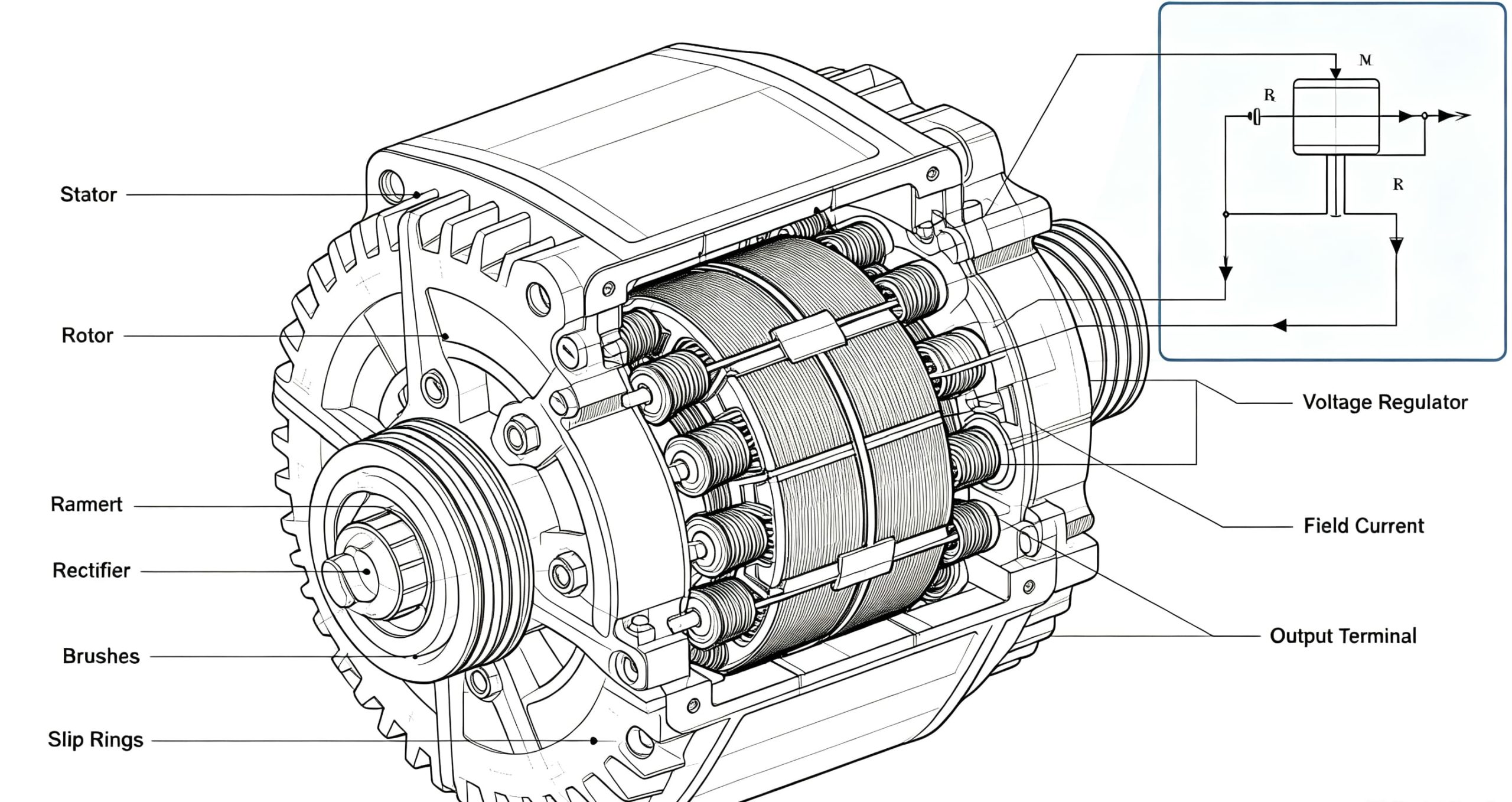
- Maintaining Stable Voltage: The alternator’s output voltage fluctuates with engine RPM and electrical load. The voltage regulator constantly monitors the system voltage and adjusts the alternator’s magnetic field strength (by controlling the field current to the rotor) to keep the output within a narrow, safe range.
- Protecting Electrical Components: Without a regulator, voltage spikes could damage sensitive electronic control units (ECUs), lights, radio, and other electrical accessories. Consistent voltage protects these components, extending their lifespan.
- Optimizing Battery Charging: The regulator ensures the battery receives the correct charging voltage and current. Overcharging can boil off electrolyte and damage battery plates, while undercharging leads to a discharged battery and reduced battery life.
- Load Response: Modern regulators are designed to respond quickly to changes in electrical load (e.g., turning on headlights, operating a liftgate), ensuring the system can meet demand without significant voltage drops.
For heavy-duty trucks, which often feature extensive electrical systems, multiple batteries, and operate under continuous high loads for long durations, the voltage regulator is a robust, high-precision unit. Its reliable operation is critical for vehicle safety, performance, and compliance with modern emission standards. A failing voltage regulator can quickly lead to a cascade of electrical issues, impacting everything from engine performance to driver comfort and safety.
💡 Pro-Tip: Integrated vs. External Regulators
Heavy-duty trucks can have either an **integrated voltage regulator** (part of the alternator assembly) or an **external voltage regulator** (a separate component mounted on the chassis or firewall). Most modern trucks, including **HOWO** and **Shacman** models, utilize integrated regulators for compactness and efficiency. Understanding your truck’s specific configuration is the first step in diagnosis.
Key Components and Types of Voltage Regulators
While the specific design varies, most voltage regulators, whether integrated or external, contain similar core components and operate on similar principles:
- Sensing Circuit: Monitors the system voltage, typically at the battery or a dedicated sensing terminal.
- Control Circuit: Processes the voltage signal and determines the necessary adjustment to the alternator’s field current.
- Output Stage (Transistor/MOSFET): Controls the flow of current to the alternator’s rotor field windings. By rapidly switching this current on and off, the regulator precisely controls the magnetic field strength and thus the alternator’s output voltage.
- Heat Sink: Dissipates heat generated by the electronic components, especially the output transistor, to prevent overheating and premature failure.
🔍 Technical Deep-Dive: Pulse Width Modulation (PWM)
Modern voltage regulators often use Pulse Width Modulation (PWM) to control the alternator’s output. Instead of simply turning the field current on or off, PWM rapidly switches the current at a fixed frequency, varying the
duration (pulse width) of the ‘on’ time. A longer ‘on’ time means a stronger magnetic field and higher output. This allows for very precise control of the alternator’s output voltage and current, making the charging system more efficient and responsive. This advanced control is common in modern **Foton** and **Dongfeng** heavy-duty trucks to optimize fuel efficiency and reduce emissions.
Common Voltage Regulator Problems and Their Symptoms
A failing voltage regulator can manifest in various ways, often impacting the entire electrical system of a heavy-duty truck. Recognizing these symptoms early is crucial for timely diagnosis and repair, preventing further damage or complete vehicle breakdown. Understanding these signs is vital for fleet managers and technicians working with **Sinotruk (HOWO)**, **Shacman**, **FAW**, **Foton**, and **Dongfeng** trucks.
| Problem Type | Key Symptoms | Underlying Regulator Failure Mode |
|---|---|---|
| Undercharging | Battery warning light ON, dim lights, electrical accessories malfunction, dead battery, slow cranking. | Regulator not sending enough current to alternator field, open circuit in regulator, faulty sensing circuit. |
| Overcharging | Battery warning light ON (sometimes), bright lights (burning out), burning smell from battery, battery swelling/leaking, rapid battery fluid loss, premature bulb failure. | Regulator sending too much current to alternator field, short circuit in regulator, faulty sensing circuit. |
| Erratic Charging/Voltage Fluctuations | Flickering lights, intermittent electrical component operation, gauges fluctuating, engine running rough, battery light flickering. | Intermittent connection, faulty internal components, poor ground, thermal issues within regulator. |
| No Charging | Battery warning light ON, complete battery discharge, truck dies while running. | Complete internal failure of regulator, open circuit in field control, severe short. |
1. Battery Warning Light Illuminated
This is often the first and most direct indicator of a charging system problem. The battery warning light (often shaped like a battery icon) on the dashboard illuminates when the vehicle’s charging system is not operating within its normal parameters. This means the voltage is either too low (undercharging) or too high (overcharging). While it’s called a battery light, it actually signals an issue with the entire charging system, with the voltage regulator being a prime suspect. For **FAW** and **Foton** trucks, this light demands immediate attention.
2. Dim or Overly Bright Lights
The voltage regulator directly controls the output voltage to the truck’s electrical system. If it fails, the voltage can become unstable. If the regulator is undercharging, headlights, dashboard lights, and interior lights will appear dim or flicker, especially at idle. Conversely, if the regulator is overcharging, lights might appear unusually bright and burn out prematurely. This symptom is particularly noticeable in **Shacman** trucks, where consistent lighting is crucial for night operations.
3. Electrical Component Malfunctions
Modern heavy-duty trucks rely heavily on stable voltage for their sophisticated electronic systems. A faulty voltage regulator can cause a wide range of electrical malfunctions:
- Erratic Gauge Readings: Speedometer, tachometer, or fuel gauges may fluctuate wildly.
- Radio/Infotainment Issues: The radio might cut out, experience static, or behave erratically.
- HVAC Problems: Climate control systems may not function correctly or consistently.
- ECU Faults: Electronic Control Units (ECUs) are highly sensitive to voltage fluctuations. An unstable voltage supply can cause ECUs to log fault codes, leading to engine performance issues, limp mode, or even complete engine shutdown. This is a critical concern for **Sinotruk (HOWO)** vehicles, which feature advanced engine management systems.
4. Dead or Damaged Battery
The battery is directly affected by the voltage regulator’s performance. An undercharging regulator will lead to a chronically discharged battery, resulting in repeated dead batteries and difficulty starting the truck. This significantly shortens battery lifespan. Conversely, an overcharging regulator is even more destructive. It can cause the battery to overheat, boil its electrolyte, swell, leak, and ultimately fail catastrophically. Overcharging can also lead to an increased risk of battery explosion due to hydrogen gas buildup. Always check the battery for signs of swelling or leakage if overcharging is suspected.
5. Burning Smell or Smoke
An electrical burning smell, often described as burnt plastic or wiring, can emanate from the alternator or battery area. This is a serious symptom indicating excessive heat generated by overcharging or an internal short circuit within the regulator or alternator. In extreme cases, smoke might be visible. This demands immediate attention to prevent electrical fires, especially in the demanding operational environments of **Dongfeng** trucks.
6. Engine Performance Issues
While not always immediately obvious, a failing voltage regulator can indirectly cause engine performance problems. Unstable voltage can disrupt the operation of engine sensors, fuel injectors, and the engine control unit (ECU). This can lead to:
- Rough idling or stalling.
- Misfires or reduced engine power.
- Illuminated Check Engine Light (CEL) due to various fault codes related to electrical system instability.
⚠️ Caution: Electrical System Overload
Ignoring symptoms of a faulty voltage regulator can lead to severe damage to your truck’s entire electrical system. Overcharging can destroy batteries and sensitive electronics, while undercharging can leave you stranded. Always address charging system warnings promptly to prevent more costly repairs and ensure vehicle safety.
Causes of Voltage Regulator Failure
Voltage regulators are robust components, but they are subjected to harsh operating conditions within a heavy-duty truck. Understanding the common causes of their failure can help in both diagnosis and preventive maintenance, extending the lifespan of your charging system components, particularly for **Sinotruk (HOWO)**, **Shacman**, and **FAW** trucks.
1. Heat and Thermal Stress
Heat is the primary enemy of electronic components. The voltage regulator, especially if integrated into the alternator, operates in close proximity to the engine, where temperatures can be extremely high. Constant exposure to high temperatures, coupled with the heat generated by the regulator itself as it controls current, can lead to:
- Component Degradation: Over time, high temperatures can degrade the semiconductor materials (diodes, transistors) and solder joints within the regulator.
- Thermal Cycling: Repeated heating and cooling cycles cause materials to expand and contract, leading to fatigue and eventual failure of connections or components.
- Overload: If the alternator is consistently working at its maximum output due to high electrical loads, the regulator will also be under constant stress, generating more heat.
2. Vibration and Physical Shock
Heavy-duty trucks operate in environments with significant vibration and occasional physical shocks. These forces can:
- Loosen Connections: Voids or cracks in solder joints or loose electrical connections within the regulator.
- Component Damage: Physical damage to the circuit board or individual components.
- Housing Cracks: Cracks in the regulator’s housing, allowing moisture and contaminants to enter.
3. Electrical Overloads and Spikes
The electrical system of a truck is susceptible to various electrical stresses:
- Jump Starting Errors: Incorrect jump-starting procedures (e.g., reversing polarity) can send damaging voltage spikes through the system, frying the regulator.
- Short Circuits: Short circuits elsewhere in the electrical system can cause current surges that overwhelm and damage the regulator.
- Faulty Battery: A shorted or internally damaged battery can draw excessive current, putting undue strain on the regulator.
- Alternator Issues: A failing alternator (e.g., shorted stator windings) can send unregulated voltage to the regulator, causing it to fail.
4. Moisture and Contamination
Exposure to water, road salt, dirt, and other contaminants can lead to corrosion of electrical contacts and internal components. This is particularly relevant for external voltage regulators or alternators with compromised seals. Corrosion increases resistance, leading to overheating and intermittent failures.
5. Age and Wear
Like all electronic components, voltage regulators have a finite lifespan. Over time, internal components simply wear out or degrade due to continuous operation, heat, and electrical stress. This is a natural process, and older trucks, especially high-mileage **Foton** or **Dongfeng** models, are more prone to such failures.
💡 Pro-Tip: Preventative Measures
To extend the life of your voltage regulator, ensure proper battery maintenance, avoid incorrect jump-starting, and address any electrical shorts promptly. For trucks operating in harsh environments, consider additional protection for exposed electrical components. Regularly inspect wiring harnesses for chafing or damage.
Diagnosing Truck Voltage Regulator Problems: A Step-by-Step Guide
Accurate diagnosis is critical to avoid unnecessary part replacement and ensure efficient repairs. A systematic approach will help pinpoint whether the voltage regulator itself is faulty, or if the problem lies elsewhere in the charging system (e.g., battery, cables, alternator). For heavy-duty trucks, especially those from **Sinotruk (HOWO)**, **Shacman**, **FAW**, **Foton**, and **Dongfeng**, a robust diagnostic process is essential.
⚠️ Caution: Safety First!
Before attempting any diagnostic or repair work on your truck’s electrical system, always disconnect the negative battery terminal. This prevents accidental short circuits, electrical shocks, and potential damage to sensitive electronic components. Wear appropriate personal protective equipment (PPE), including safety glasses and gloves. When testing, be aware of rotating parts and high current.
1. Initial Visual Inspection
Begin with a thorough visual inspection of the entire charging circuit:
- Battery Terminals and Cables: Check for corrosion, looseness, or damage. Corroded terminals can significantly impede current flow. Ensure cables are securely fastened to the battery, alternator, and chassis ground.
- Alternator Belt: Inspect the serpentine belt for proper tension, cracks, fraying, or glazing. A slipping belt will prevent the alternator from generating sufficient output.
- Wiring and Connectors: Inspect all wires connected to the alternator and voltage regulator for fraying, cuts, burns, or loose connections. Pay close attention to the small gauge wires that provide the sensing voltage and field current.
- Physical Damage: Look for any signs of physical damage to the alternator or regulator housing, such as cracks, dents, or signs of overheating. Check the battery for swelling or leakage.
2. Battery Test
A weak or faulty battery can mimic voltage regulator symptoms. Always ensure the battery is in good condition before condemning the regulator. Use a professional battery load tester to assess its capacity. A fully charged 12V battery should read around 12.6 volts (or 25.2 volts for a 24V system) with the engine off. If the battery is weak or fails the load test, recharge it fully and retest. If it still fails, replace the battery.
3. Voltage Output Test (Engine Running)
This is the most direct way to assess the charging system’s performance. You will need a digital multimeter. The table below provides a quick reference for expected voltage readings:
| Test Condition | Expected Voltage (12V System) | Expected Voltage (24V System) | Indication |
|---|---|---|---|
| Engine Off (Fully Charged Battery) | ~12.6V | ~25.2V | Healthy Battery |
| Engine Idling (No Load) | 13.5V – 14.8V | 27.0V – 29.6V | Normal Charging |
| Engine Idling (High Load) | 13.0V – 14.8V | 26.0V – 29.6V | Normal Charging (slight drop acceptable) |
| Voltage Below Range | <13.5V (no load) | <27.0V (no load) | Undercharging (Regulator/Alternator issue) |
| Voltage Above Range | >14.8V | >29.6V | Overcharging (Regulator issue) |
- Connect Multimeter: Set your multimeter to DC voltage (VDC). Connect the positive lead to the positive battery terminal and the negative lead to the negative battery terminal.
- Start Engine: Start the truck and let it idle.
- Read Voltage: Observe the voltage reading. It should fall within the normal charging range (e.g., 13.5-14.8V for 12V systems).
- Apply Load: Turn on various electrical accessories (headlights, HVAC fan on high, radio) to simulate a load. The voltage should remain within the specified range, possibly dropping slightly but quickly recovering.
- Increase RPM: Briefly increase engine RPM to around 1500-2000. The voltage should remain stable and not exceed the upper limit (e.g., 14.8V for 12V systems).
4. AC Ripple Test (Diode Check)
While primarily an alternator diode test, excessive AC ripple can also indicate a problem that the voltage regulator is struggling to compensate for, or it can be a symptom of a regulator that is not properly filtering the rectified AC. This test requires a multimeter with an AC voltage (VAC) setting.
- Connect Multimeter: Set your multimeter to AC voltage (VAC). Connect the positive lead to the positive battery terminal and the negative lead to the negative battery terminal.
- Start Engine: Start the truck and let it idle.
- Read AC Voltage: The reading should be very low, ideally less than 0.5 VAC. A higher AC voltage indicates faulty alternator diodes, which can put undue stress on the voltage regulator.
🔍 Technical Deep-Dive: Understanding AC Ripple
The alternator produces alternating current (AC), which is then converted to direct current (DC) by the rectifier (diode bridge). AC ripple refers to the small, unwanted AC component that remains in the DC output after rectification. A healthy charging system should have minimal AC ripple. Excessive ripple can cause electrical noise, interfere with sensitive electronics, and lead to premature failure of components, including the voltage regulator itself. Modern **HOWO** and **Shacman** trucks with advanced ECUs are particularly sensitive to ripple.
5. Field Current Test
This test measures the current flowing to the alternator’s rotor field windings, which is directly controlled by the voltage regulator. This test is more advanced and may require specific wiring diagrams or specialized tools, especially for integrated regulators. An inductive amp clamp can be used on the field wire (if accessible) to measure current. The field current should vary as the electrical load changes, indicating the regulator is actively working. If the field current is consistently high (overcharging) or consistently low/zero (undercharging/no charging), it points to a regulator fault.
Repairing and Replacing Truck Voltage Regulators
Once the diagnostic process has confirmed a faulty voltage regulator, the next step is repair or replacement. The approach depends on whether the regulator is integrated into the alternator or is a separate external unit. For heavy-duty trucks, particularly those from **Sinotruk (HOWO)**, **Shacman**, and **FAW**, the trend is towards integrated regulators, making alternator replacement a common solution.
1. Integrated Voltage Regulator Replacement (Alternator Replacement)
For most modern heavy-duty trucks, the voltage regulator is an integral part of the alternator assembly. If the regulator is deemed faulty, the most common and often most practical repair involves replacing the entire alternator assembly. This ensures that all charging system components (alternator, regulator, rectifier, brushes, bearings) are new and functioning optimally.
- Disconnect Battery: Always start by disconnecting the negative battery terminal to prevent accidental shorts.
- Locate and Access Alternator: The alternator is typically mounted on the engine block. Access may require removing other components (e.g., air intake, fan shroud) depending on the truck model (e.g., **FAW Jiefang** or **Foton Auman**).
- Relieve Belt Tension: Use a serpentine belt tensioner tool to relieve tension on the alternator belt, then remove the belt.
- Disconnect Wiring: Carefully disconnect all electrical connections from the alternator: the large battery cable (B+), the small ignition switch wire, and any sensing wires. Note their positions or take photos.
- Remove Mounting Bolts: Support the alternator, then remove the mounting bolts that secure it to the engine block. Heavy-duty alternators can be heavy, so ensure you have proper support.
- Remove Old Alternator: Carefully maneuver the old alternator out of its mounting location.
- Install New Alternator: Position the new alternator in place and loosely install the mounting bolts. Ensure proper alignment.
- Reconnect Wiring: Reconnect all electrical wires to the new alternator, ensuring connections are clean and tight.
- Install Belt and Tension: Reinstall the serpentine belt and tension it correctly according to manufacturer specifications.
- Tighten Mounting Bolts: Torque the mounting bolts to the manufacturer’s specifications.
- Reconnect Battery and Test: Reconnect the negative battery terminal. Start the engine and perform the voltage output test (as described in the diagnostic section) to confirm proper operation.
💡 Pro-Tip: Inspect Drive Belt and Pulleys
When replacing the alternator, it’s an excellent opportunity to inspect the serpentine drive belt for wear, cracks, or glazing. Also, check all associated pulleys (tensioner, idler, crankshaft) for excessive play or noise. Replacing a worn belt or faulty pulley at this time can prevent future charging system issues and save on labor costs, especially for **Shacman** or **Dongfeng** trucks.
2. External Voltage Regulator Replacement (if applicable)
Some heavy-duty trucks, particularly older models or specific configurations, may use an external voltage regulator mounted on the firewall or frame rail, separate from the alternator. In such cases, only the regulator needs to be replaced.
- Disconnect Battery: Always disconnect the negative battery terminal.
- Locate External Regulator: Identify the external voltage regulator, typically a small box-like component with several wires connected to it.
- Disconnect Wiring: Carefully disconnect all wires from the old regulator. Label them if necessary to ensure correct reconnection.
- Remove Old Regulator: Unbolt the old regulator from its mounting location.
- Install New Regulator: Mount the new regulator securely.
- Reconnect Wiring: Reconnect all wires to their correct terminals on the new regulator. Ensure all connections are clean and tight.
- Reconnect Battery and Test: Reconnect the negative battery terminal and test the charging system (voltage output test) to confirm proper operation.
⚠️ Caution: Wiring Specifics
External voltage regulators often have specific wiring configurations. Incorrectly connecting wires can damage the new regulator, the alternator, or other electrical components. Always refer to the truck’s wiring diagram or service manual for precise connection details, especially for less common **Foton** or **FAW** models.
Preventive Maintenance for Voltage Regulator Longevity
Proactive maintenance is key to extending the life of your truck’s voltage regulator and preventing unexpected electrical system failures. Regular checks and good practices can significantly reduce the likelihood of premature failure, especially for heavy-duty trucks from **Sinotruk (HOWO)**, **Shacman**, **FAW**, **Foton**, and **Dongfeng** that endure demanding operational cycles.
1. Regular Battery and Cable Inspection
Since the voltage regulator directly manages battery charging, maintaining the battery and its cables is paramount. Regularly:
- Check battery terminals for corrosion and cleanliness. Clean them with a wire brush and apply anti-corrosion grease.
- Ensure battery cables are securely fastened to the battery posts, alternator, and chassis ground. Loose connections create resistance and heat, which can strain the regulator.
- Test battery voltage and perform a load test periodically to ensure it can accept and hold a charge. A weak battery can cause the regulator to work harder.
2. Inspect Alternator Belt and Pulleys
The alternator, and thus the voltage regulator, relies on the serpentine belt for power. Periodically inspect the belt for proper tension, cracks, fraying, or glazing. A slipping belt leads to undercharging, forcing the regulator to try and compensate, potentially leading to premature wear. Also, check all associated pulleys for excessive play or noise.
3. Inspect Wiring and Connections
Periodically inspect all wiring connected to the alternator and voltage regulator. Look for:
- Frayed, cracked, or damaged insulation.
- Loose or corroded terminals.
- Signs of overheating (discoloration or melted insulation).
Ensure the small gauge sensing and field wires are intact and securely connected. Any damage should be repaired promptly.
4. Avoid Electrical Overloads
Minimize unnecessary electrical loads, especially when the engine is idling or at low RPMs. Avoid running numerous high-draw accessories for extended periods without the engine running. While the regulator is designed to manage loads, consistent overloading can accelerate its degradation.
5. Address Charging Issues Promptly
Do not ignore early signs of charging problems, such as a flickering battery light, dimming lights, or erratic electrical behavior. Addressing these issues early can prevent a complete failure of the voltage regulator or other charging system components and potentially save on more expensive repairs down the line. Early diagnosis often leads to simpler, less costly fixes.
💡 Pro-Tip: Quality Replacement Parts
When replacement is necessary, always opt for high-quality voltage regulators or complete alternator assemblies from reputable suppliers. For **HOWO**, **Shacman**, **FAW**, **Foton**, and **Dongfeng** trucks, choosing parts that meet or exceed OEM specifications ensures durability and reliable performance, minimizing future breakdowns and maximizing uptime. Substandard parts are a false economy.
Troubleshooting Common Pitfalls During Voltage Regulator Replacement
Even with a clear guide, technicians can encounter common issues during the replacement of a voltage regulator or alternator. Being aware of these pitfalls can save significant time and effort, especially when working on diverse heavy-duty truck models like **HOWO**, **Shacman**, **FAW**, **Foton**, and **Dongfeng**.
| Pitfall | Description | Solution |
|---|---|---|
| New Alternator/Regulator Still Not Charging | After installing a new unit, the battery warning light remains on, or voltage output is incorrect. | Re-check all wiring connections for tightness and corrosion. Ensure the alternator belt is properly tensioned. Test the battery again. Verify the small gauge excitation/sensing wire is receiving power from the ignition. Sometimes, a new alternator needs a brief high RPM run to ‘excite’ it. |
| Incorrect Belt Tension | Belt is too loose (slipping, squealing) or too tight (stressing bearings). | Always use a belt tension gauge or follow manufacturer specifications for tensioning. A slipping belt causes undercharging; an overtightened belt can damage alternator and engine accessory bearings. |
| Damaged Wiring During Installation | Wires get pinched, cut, or terminals bent during alternator/regulator installation. | Carefully route and secure all wiring. Double-check all connections before tightening mounting bolts. Inspect for any signs of damage after installation. |
| Faulty New Part (DOA) | Rarely, a brand new alternator or regulator can be defective out of the box. | If all other diagnostics point to a healthy system, and the new part still doesn’t work, consider the possibility of a |
Conclusion
The voltage regulator, though often unseen, is a cornerstone of a heavy-duty truck’s electrical health. Understanding its critical function, recognizing the diverse symptoms of its failure, and knowing the underlying causes are essential for effective maintenance. By diligently following the diagnostic steps and repair guidelines outlined in this comprehensive guide, and by adhering to a regimen of preventive maintenance, you can significantly extend the lifespan of your truck’s charging system. This proactive approach not only saves on costly repairs and downtime but also ensures that your **Sinotruk (HOWO)**, **Shacman**, **FAW**, **Foton**, or **Dongfeng** trucks are always ready to hit the road, delivering consistent performance and reliability. Investing in quality parts and knowledgeable maintenance is an investment in the longevity and efficiency of your fleet.
Frequently Asked Questions (FAQs) about Truck Voltage Regulators
A1: The most common symptoms include an illuminated battery warning light on the dashboard, dim or overly bright headlights/dashboard lights, erratic electrical component behavior (e.g., fluctuating gauges, radio issues), and a dead or damaged battery (either undercharged or overcharged). In severe cases, you might notice a burning smell from the battery or alternator.
A2: Absolutely. A voltage regulator that undercharges the battery will lead to a chronically discharged battery, shortening its lifespan. More dangerously, an overcharging regulator can cause the battery to overheat, boil its electrolyte, swell, leak, and even explode due to excessive hydrogen gas buildup. This can lead to catastrophic battery failure and potential safety hazards.
A3: In most modern heavy-duty trucks, the voltage regulator is integrated into the alternator assembly. If the regulator fails, the most common and practical solution is to replace the entire alternator. For older trucks or specific configurations with external voltage regulators, the regulator can be replaced as a separate component. Component-level repair of the internal electronics of a regulator is generally not feasible or cost-effective.
A4: The primary test involves using a digital multimeter to perform a voltage output test with the engine running. Connect the multimeter to the battery terminals and observe the voltage at idle and under load. A healthy system should show a stable voltage between 13.5-14.8V (for 12V systems) or 27.0-29.6V (for 24V systems). Readings consistently below or above this range indicate a faulty regulator. An AC ripple test can also help identify diode issues that stress the regulator.
A5: Common causes include excessive heat and thermal stress from engine operation, constant vibration and physical shock, electrical overloads or spikes (e.g., from incorrect jump-starting or short circuits), moisture and contamination leading to corrosion, and simply age-related wear and tear. Trucks operating in harsh environments or with high electrical loads are more susceptible.
A6: While the fundamental principles are universal, Chinese heavy-duty trucks like **HOWO**, **Shacman**, **FAW**, **Foton**, and **Dongfeng** often operate in diverse and challenging conditions. It’s crucial to use high-quality, genuine, or OEM-equivalent replacement parts designed to withstand these environments. Always refer to the specific service manuals for these brands for precise diagnostic values and torque specifications, as variations can exist.
A7: Yes, indirectly. Modern heavy-duty trucks have sophisticated Electronic Control Units (ECUs) that are highly sensitive to voltage fluctuations. If the voltage regulator is failing and causing undercharging, overcharging, or erratic voltage, the ECU may detect these anomalies and log various fault codes related to the electrical system, which can trigger the Check Engine Light (CEL).
A8: An **integrated voltage regulator** is built directly into the alternator assembly, making it a compact unit. Most modern heavy-duty trucks use this type. An **external voltage regulator** is a separate component mounted elsewhere on the chassis or firewall, connected to the alternator via wiring. Older trucks or some specialized applications might use external regulators. The diagnostic and replacement procedures differ based on the type.


