
Why Proper Diesel Engine Care Is the Backbone of Fleet Profitability
A well-maintained powertrain is the single most valuable asset in any heavy-haul operation. According to the American Trucking Associations’ 2025 fleet cost report, unplanned engine failures cost operators an average of $1,800 per incident in towing, parts, and lost revenue. Over a 15-year career advising fleet managers across three continents, I have seen the same pattern repeatedly: operators who follow structured service protocols cut total cost of ownership by 20–35%.
This guide consolidates field-tested strategies for keeping your powerplant running reliably across hundreds of thousands of miles. Whether you manage a single owner-operator rig or a 200-truck fleet, the principles below apply universally.
Building a Structured Service Schedule
Interval-Based vs. Condition-Based Maintenance
Traditional interval-based servicing uses mileage or calendar triggers. Condition-based maintenance leverages oil sampling, telematics, and sensor data to service components only when needed. The ideal approach blends both: fixed intervals for consumables and data-driven decisions for major assemblies.
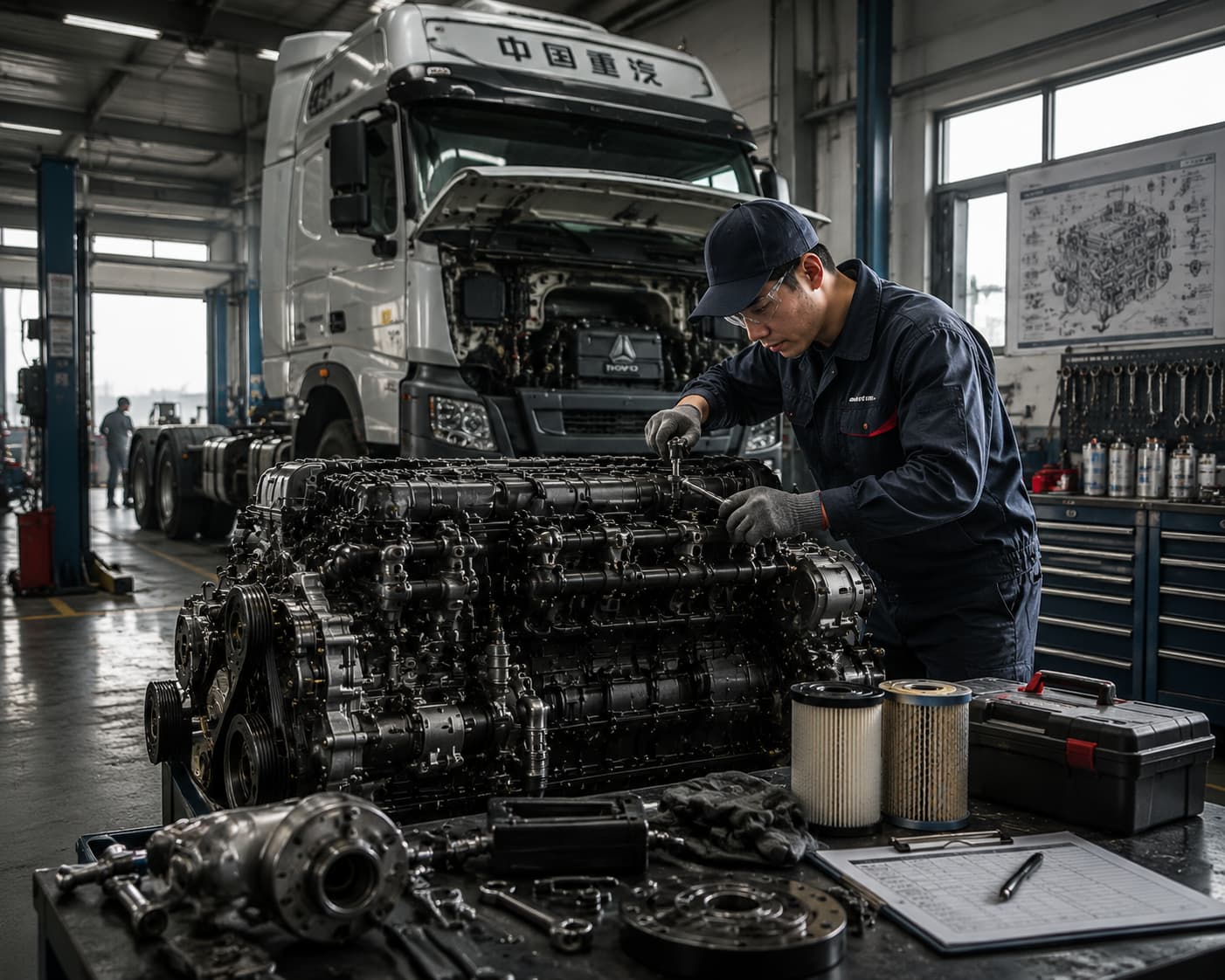
A preventive maintenance schedule for heavy duty diesel truck engines 2026 should align with OEM recommendations while accounting for real-world operating conditions such as terrain, ambient temperature, and payload frequency. Fleets operating in extreme dust or heat typically shorten filter intervals by 20%.
Recommended Maintenance Intervals
| Service Item | Standard Interval | Severe-Duty Interval | Key Indicator |
|---|---|---|---|
| Engine oil & filter | 25,000–40,000 mi | 15,000–20,000 mi | Oil analysis TBN < 3 |
| Fuel filters (primary + secondary) | 30,000 mi | 15,000–20,000 mi | Pressure differential > 3 psi |
| Coolant system inspection | 50,000 mi | 30,000 mi | SCA/pH test out of spec |
| Valve lash adjustment | 300,000 mi | 200,000 mi | Audible tappet noise |
| Turbocharger inspection | 200,000 mi | 150,000 mi | Boost pressure drop > 5% |
| DPF regeneration / cleaning | 200,000 mi | 100,000–150,000 mi | Back-pressure alarm |
Adhering to a disciplined diesel engine maintenance schedule prevents small issues from cascading into catastrophic failures. Document every service event in a centralized fleet management system for trend analysis.
Lubrication System: The Lifeblood of Longevity
Choosing the Right Oil
Modern Class 8 engines demand oils meeting API CK-4 or FA-4 specifications. CK-4 provides backward compatibility for older platforms, while FA-4 offers lower viscosity for improved fuel economy in newer designs. Always verify OEM approval codes on every drum or tote before use.
When researching the best diesel engine oil and filter recommendations for semi trucks, prioritize products with proven shear stability and oxidation resistance. Full synthetic formulations consistently outperform conventional oils in extended-drain programs, delivering 30–50% longer intervals when supported by oil analysis.
Oil Analysis as a Diagnostic Tool
Sampling every oil change reveals wear metal trends, coolant contamination, fuel dilution, and additive depletion. A single $25 test can identify a failing injector sleeve or worn liner before damage spreads. Trending data over multiple samples provides far more insight than any single snapshot.
Fuel System Integrity: Protecting Precision Components
Common Fuel-Related Failures
High-pressure common rail injectors operate at pressures exceeding 30,000 psi. Contaminants as small as 4 microns can score injector plungers, leading to poor atomization, increased emissions, and power loss. Water ingress accelerates microbial growth that clogs filters and corrodes steel lines.
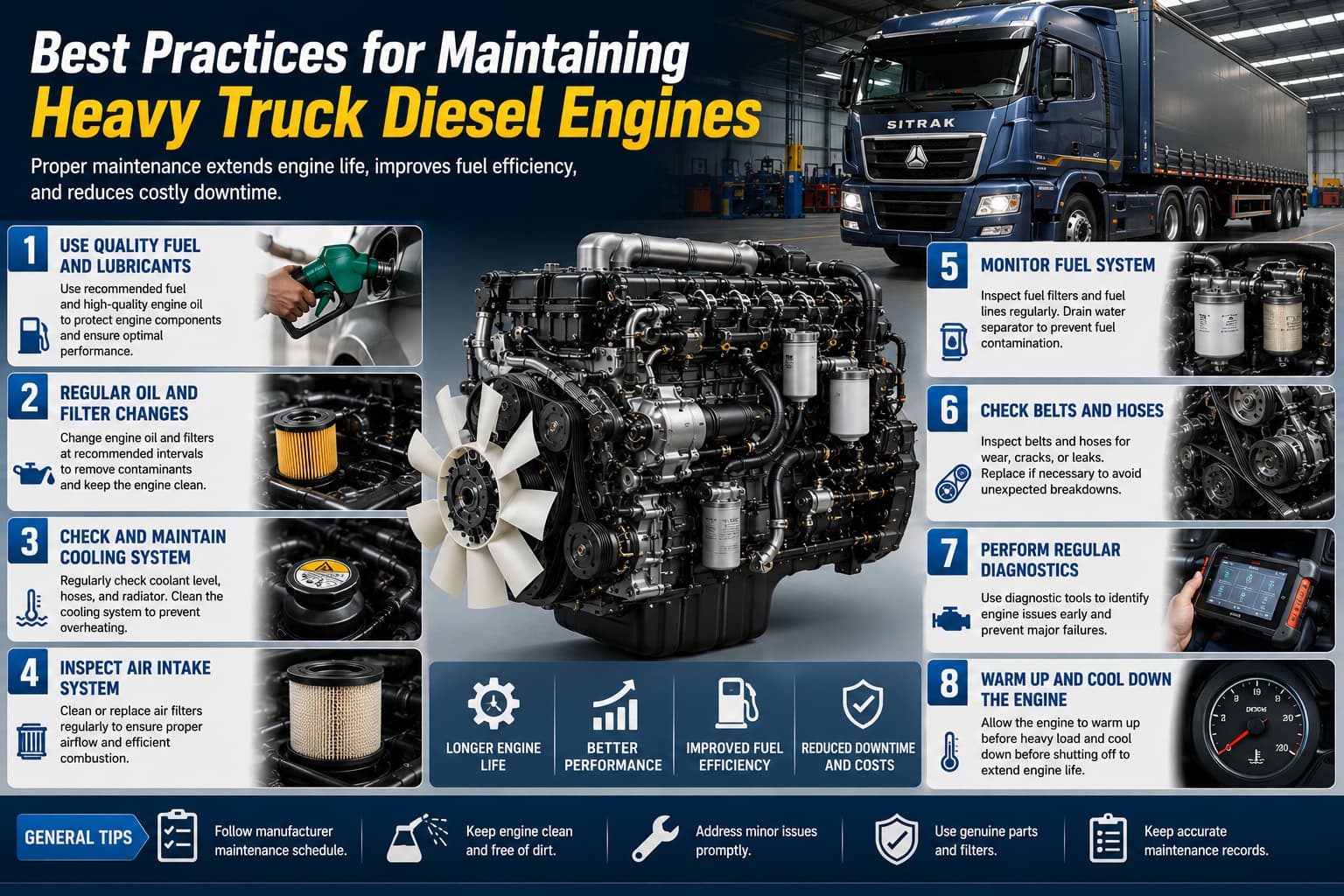
Fuel system maintenance tips for heavy haul diesel engines center on three priorities: use high-efficiency filtration rated at 2–4 microns absolute, drain water separators daily during humid seasons, and treat stored fuel with biocides semi-annually. These steps protect high-value injection hardware from premature wear.
Fuel System Cleaning Protocols
Periodic fuel system cleaning removes varnish and carbon deposits from injector nozzles, restoring spray patterns and combustion efficiency. Ultrasonic cleaning followed by flow-bench testing is the gold standard for injector reconditioning. Operators report 3–5% fuel economy gains after professional cleaning at the 400,000-mile mark.
Cooling System Management: Preventing Thermal Catastrophes
Root Causes of Overheating
Engine overheating prevention begins with understanding heat rejection capacity. A typical 13-liter diesel produces enough waste heat to warm a small building. Restricted airflow through clogged charge-air coolers, degraded coolant chemistry, and failed water pumps are the top three culprits in thermal events.
Inspecting hoses, clamps, and the radiator core for debris should be part of every pre-trip routine. Supplemental coolant additives (SCAs) must be maintained within specification to prevent liner pitting—a form of cavitation erosion that can breach cylinder walls within 200,000 miles if neglected.
Coolant Testing and Replacement
| Coolant Type | Service Life | Additive Maintenance | Test Method |
|---|---|---|---|
| Conventional (IAT) | 2 years / 250,000 mi | SCA at every filter change | Test strips / refractometer |
| Extended Life (OAT/HOAT) | 5 years / 600,000 mi | Extender at 300,000 mi | Lab analysis recommended |
 Common Diesel Engine Problems in Heavy Trucks and Diagnostic Approaches
Troubleshooting Framework
Experienced technicians follow a structured fault-tree approach. Understanding common diesel engine problems in heavy trucks and how to fix them requires systematic elimination rather than parts-swapping guesswork. Below is a diagnostic overview of frequent issues encountered in the field.
| Symptom | Probable Cause | Diagnostic Step | Corrective Action |
|---|---|---|---|
| White smoke at startup | Low compression / injector timing | Relative compression test | Cylinder kit replacement or injector recalibration |
| Loss of power under load | Turbo lag or restricted intake | Boost pressure measurement | Turbo rebuild or air filter replacement |
| Excessive oil consumption | Worn valve seals or piston rings | Crankcase pressure test | Top-end overhaul |
| Rough idle / misfiring | Injector imbalance | Electronic cylinder cutout test | Injector replacement or nozzle cleaning |
| Coolant loss (no visible leak) | Internal head gasket breach | Combustion gas test on coolant | Head gasket replacement, surface check |
The Cost of Delayed Repairs
A $400 injector replacement ignored for 30,000 miles can contaminate the DPF, damage the turbo, and dilute crankcase oil—turning a minor fix into a $12,000 catastrophe. Proactive heavy duty truck repair philosophy always costs less than reactive emergency work.
How to Extend the Operational Life Beyond One Million Miles
Reaching seven-figure mileage is no longer exceptional; it is achievable for any operator committed to disciplined service. Understanding how to extend the lifespan of commercial diesel truck engines comes down to five pillars: proper break-in procedures, consistent fluid analysis, thermal management, clean fuel delivery, and using OEM-grade replacement components.
Mid-life overhauls at 500,000–700,000 miles—including in-frame kits with new liners, pistons, rings, and bearings—effectively reset wear clocks. Paired with injector and turbo reconditioning, these rebuilds deliver near-factory performance at a fraction of new-engine cost.
Replacement Parts Quality Matters
Inferior aftermarket components introduce unpredictable failure modes. Counterfeit filters with weak media allow bypass contamination; low-grade gaskets fail under thermal cycling. Always source components from verified suppliers who stock parts organized by product category system for easy cross-referencing to your engine platform.
For operators running Sinotruk, Weichai, or other Chinese-manufactured powertrains, access to genuine Truck parts ensures dimensional accuracy and metallurgical consistency that generic alternatives cannot guarantee.
Leveraging Technology and Expert Support
Telematics and Predictive Analytics
Modern engine control modules generate thousands of data points per second. Fleet telematics platforms aggregate fault codes, fuel consumption patterns, and thermal profiles to flag anomalies before they escalate. Integrating these insights with your service schedule creates a truly predictive maintenance model.
Working With Specialist Partners
When diagnostic challenges exceed in-house capability, engaging knowledgeable partners accelerates resolution. Our technical support team assists fleet managers worldwide with troubleshooting, parts identification, and service procedure guidance. Selecting parts from a verified product category brand catalog ensures compatibility and warranty coverage.
Real-world results validate this approach. Our published cooperative case studies demonstrate measurable uptime improvements achieved by fleets adopting structured maintenance programs with genuine OEM components.
Oil Change Intervals: Getting the Balance Right
Extending oil change intervals without supporting data is a gamble. Conversely, changing oil too frequently wastes money and creates unnecessary environmental liability. The optimal approach uses baseline OEM recommendations modified by oil analysis trends specific to your operating profile.
Fleets running long-haul highway routes in moderate climates often achieve 40,000-mile drains with full synthetic CK-4 oils. Vocational trucks in stop-and-go, high-idle applications may need service at half that distance. Let the data—not marketing claims—drive your decision.
Summary and Next Steps
Protecting your diesel powertrain investment requires discipline, quality components, and data-driven decision-making. The strategies outlined above—structured scheduling, rigorous fluid management, clean fuel delivery, thermal control, and genuine parts sourcing—collectively minimize unplanned downtime and maximize asset value.
If you need guidance tailoring a maintenance program to your specific fleet or sourcing verified components for your engine platform, contact us for a personalized consultation. Our team brings decades of combined experience supporting commercial operators worldwide.

Frequently Asked Questions
How often should I change the oil in a heavy-duty diesel engine?
Oil drain intervals depend on operating conditions, oil type, and filtration quality. Most OEMs recommend 25,000–40,000 miles for highway applications. Use oil analysis to fine-tune intervals based on actual additive depletion and contamination levels rather than relying solely on mileage.
What are the signs that my diesel engine fuel injectors need replacement?
Symptoms include rough idle, black or white exhaust smoke, measurable power loss, and increased fuel consumption. A cylinder contribution test using diagnostic software pinpoints which injectors are underperforming. Replace injectors in complete sets when mileage exceeds 500,000 miles to maintain balanced combustion.
Can I mix different coolant types in my truck engine?
Mixing conventional IAT coolant with OAT or HOAT formulations depletes additives and can cause gel formation that clogs passages. Always flush the system completely before switching coolant chemistry. When in doubt, consult the engine manufacturer’s maintenance manual for approved products.
How do I prevent turbocharger failures in heavy-haul applications?
Allow the engine to idle for 30–60 seconds after heavy load before shutting down, permitting the turbo to cool and oil to circulate. Ensure air filtration is in good condition, check for intake and exhaust leaks regularly, and use oil that maintains viscosity at high turbo bearing temperatures.
What is the most cost-effective way to reach one million miles on a diesel engine?
Invest in scheduled mid-life overhauls, maintain impeccable fluid cleanliness, and never delay repairs on known faults. The cumulative cost of disciplined preventive care is consistently 40–60% lower than the expense of reactive breakdowns and premature engine replacement.


