Understanding the Abnormal Combustion Noise in Diesel Powertrains
If you’ve noticed a persistent metallic rapping or hammering sound from under the hood, you’re likely dealing with diesel engine knocking—a symptom that signals abnormal combustion inside the cylinders. This issue affects everything from light-duty pickups to heavy-haul trucks, and ignoring it can lead to catastrophic internal damage. With over 15 years of diagnosing powertrain faults across commercial fleets, I’ve traced this problem to a handful of recurring root causes.
The sound itself results from uncontrolled pressure spikes during the combustion cycle. Fuel ignites too early, too aggressively, or in the wrong pattern, creating shockwaves that slam against cylinder walls and piston crowns. Understanding the mechanism is the first step toward an effective repair.
Primary Causes of Abnormal Combustion Noise
1. Faulty or Worn Fuel Injectors
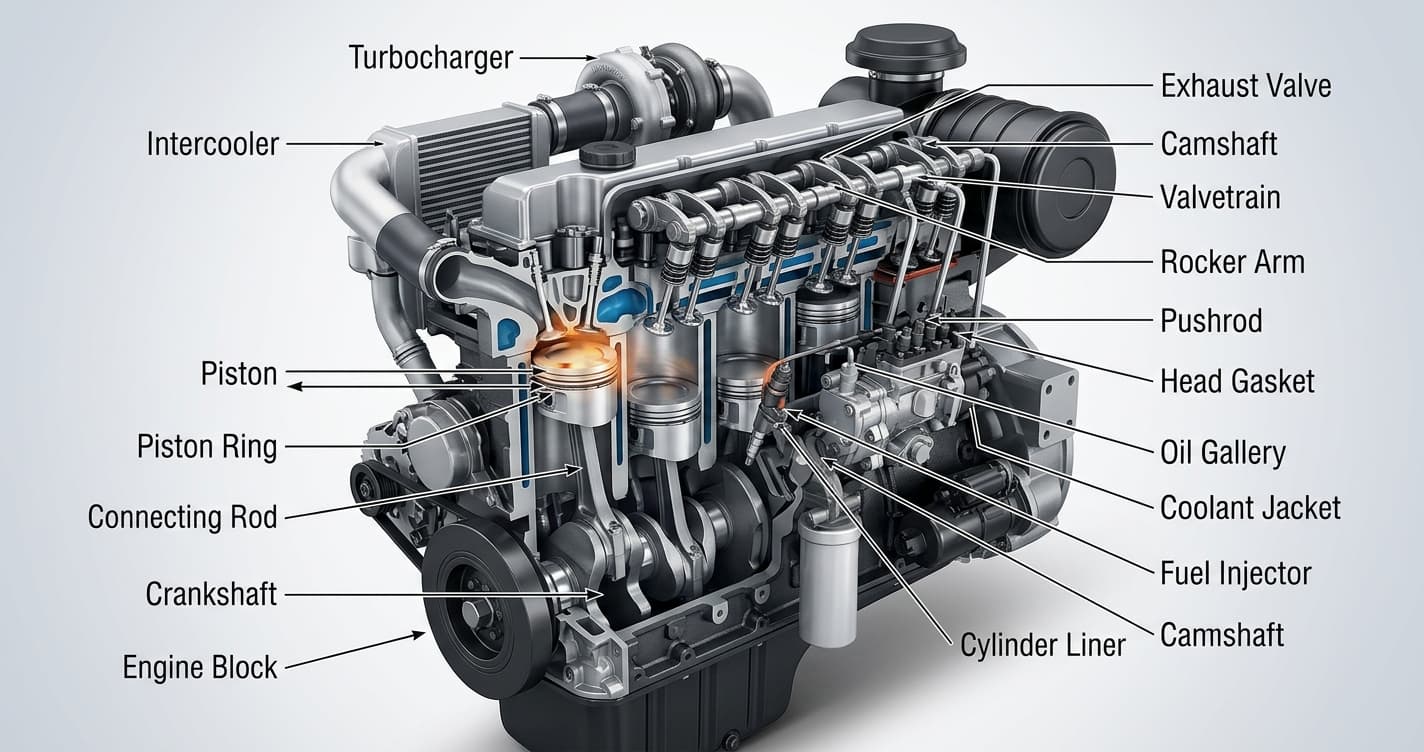
Injectors that dribble, over-deliver, or spray in a distorted pattern are the single most common cause. When atomization quality degrades, fuel pools on the piston crown and detonates violently rather than burning progressively. Many operators report a diesel engine knocking sound at idle that worsens over time—this almost always points to injector wear.
A 2024 study by the SAE International found that injectors exceeding 300,000 km without overhaul showed a 40% increase in combustion noise amplitude. Replacement or professional reconditioning resolves the issue in most cases.
2. Incorrect Injection Timing
When fuel enters the cylinder too early in the compression stroke, it ignites before the piston reaches top dead center. The resulting pressure spike produces the characteristic metallic rap. This is especially noticeable as a diesel engine knocking when cold start condition, because cold metal clearances and thicker oil amplify the effect.
Timing drift can result from worn timing gears, stretched chains, or ECU calibration errors after sensor replacement.
3. Low Cetane Fuel Quality
Cetane number directly controls ignition delay. Fuel with a cetane rating below 45 extends the delay period, allowing more fuel to accumulate before ignition—then it all fires at once. Operators seeking to reduce truck fuel consumption often experiment with cheaper fuel sources, inadvertently introducing low-quality diesel into the system.
4. Carbon Deposits and Combustion Chamber Hot Spots
Accumulated carbon creates localized hot spots that pre-ignite fuel before the injector even fires. This produces erratic, multi-point combustion events. Heavy-duty vehicles running extended intervals between maintenance are particularly susceptible.
5. Mechanical Wear — Bearings, Wrist Pins, and Pistons
Worn connecting rod bearings or piston pin bushings create mechanical knock that mimics combustion noise. The key differentiator: mechanical knock typically changes with engine speed regardless of load, while combustion-related noise intensifies under load. Understanding diesel engine knocking under load causes helps technicians isolate the true fault.
Diagnostic Flowchart: Systematic Troubleshooting
| Step | Action | Tool Required | Expected Finding |
|---|---|---|---|
| 1 | Isolate cylinder — disconnect injectors one at a time | Basic hand tools | Noise disappears when faulty cylinder is disabled |
| 2 | Check injector spray pattern | Injector test bench | Uneven spray, dribble, or low pressure |
| 3 | Verify injection timing | Timing light / diagnostic scanner | Advance beyond OEM spec |
| 4 | Fuel quality test | Cetane test kit | Cetane below 45 |
| 5 | Oil pressure and bearing clearance check | Plastigage / oil pressure gauge | Excessive clearance or low pressure |
| 6 | Borescope combustion chamber | Industrial borescope | Heavy carbon deposits or piston damage |
This systematic approach prevents unnecessary parts replacement. In fleet environments focused on fleet fuel management, minimizing diagnostic time directly impacts uptime and operating costs.
Real-World Case: HOWO 371 Tipper Truck Fleet in West Africa
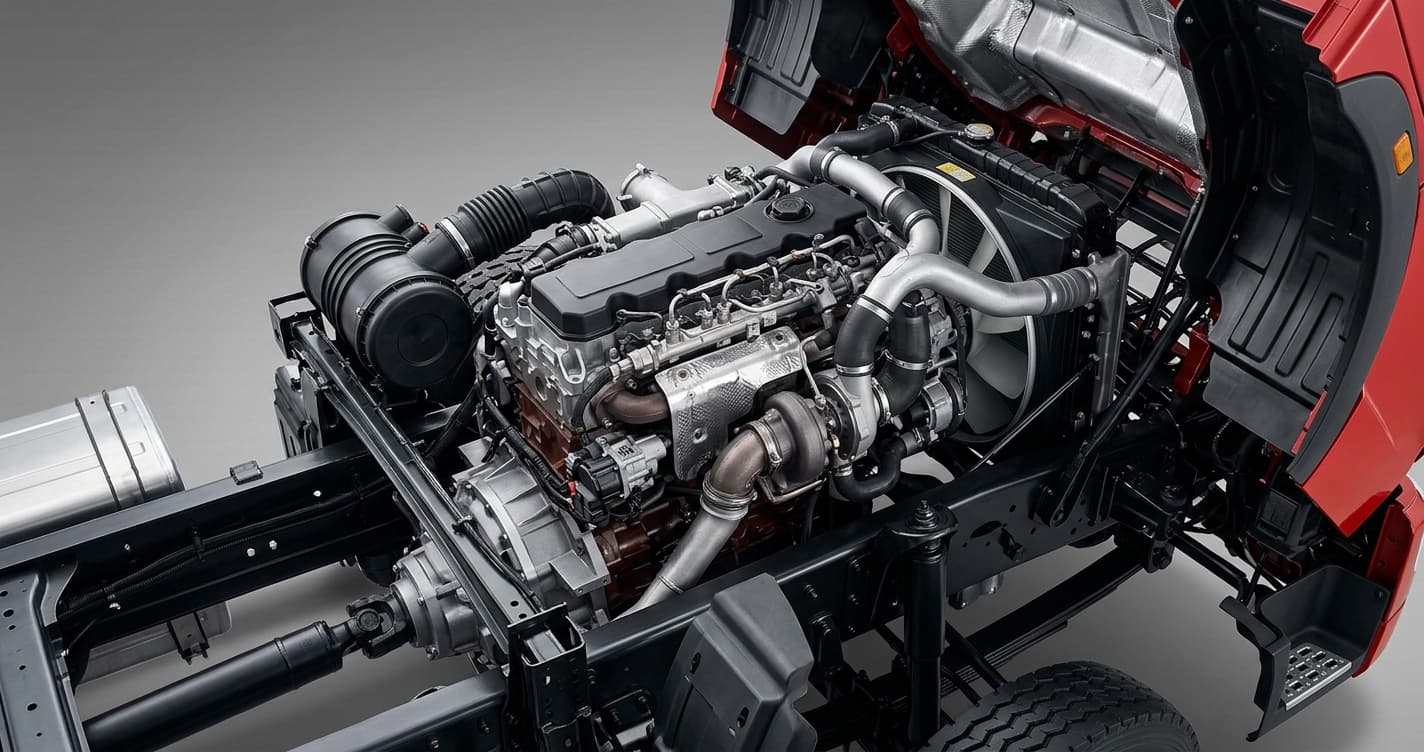
A mining contractor operating twelve Sinotruk HOWO 6×4 tippers reported persistent combustion noise across multiple units after 180,000 km. Initial assumptions pointed to low-quality regional fuel. However, our technical support team’s remote diagnosis revealed a batch of aftermarket injectors with incorrect nozzle hole geometry.
After switching to OEM-specification injectors, the noise disappeared entirely. The sinotruk howo 371 fuel consumption per km also improved by 6%, dropping from 38 L/100km to approximately 35.7 L/100km—demonstrating how combustion quality directly affects diesel fuel efficiency.
This case reinforced a critical lesson: the cheapest replacement part often costs more in fuel waste and accelerated wear. For operators tracking howo dump truck diesel consumption rate 2025 benchmarks, injector quality is a non-negotiable factor.
Proven Solutions and Repair Strategies
Injector Replacement or Reconditioning
For engines beyond 250,000 km, full injector replacement is recommended over reconditioning. Modern common-rail systems demand micron-level precision that worn components cannot reliably deliver. Operators who experienced diesel engine knocking after fuel injector replacement likely received substandard aftermarket units—always verify part specifications against OEM data.
Timing Correction
Electronic engines require ECU recalibration using manufacturer-approved diagnostic tools. Mechanical engines need physical timing gear inspection and adjustment. Either way, restoring correct timing eliminates the root cause of pre-ignition knock.
Fuel Quality Management
Using reputable fuel sources and adding cetane-boosting additives can resolve noise caused by ignition delay. Based on diesel truck fuel additives reviews from commercial fleet operators, products containing 2-ethylhexyl nitrate consistently improve combustion smoothness. This also supports broader truck fuel efficiency tips 2026 strategies.
Carbon Removal
Chemical decarbonization through the intake manifold, or walnut-shell blasting for severe cases, restores combustion chamber geometry. This is particularly effective on engines with high idle hours.
How Combustion Quality Impacts Operating Economics
| Condition | Fuel Consumption Impact | Estimated Annual Cost Increase (per truck) |
|---|---|---|
| Worn injectors (poor atomization) | +8–15% | $3,200–$6,000 |
| Timing 3° advanced | +5–10% | $2,000–$4,000 |
| Low cetane fuel (<42) | +4–7% | $1,600–$2,800 |
| Heavy carbon deposits | +3–6% | $1,200–$2,400 |
For fleet managers using a truck fuel cost per mile calculator, these percentages translate directly into margin erosion. Addressing abnormal combustion noise isn’t just a maintenance issue—it’s a financial imperative. The sinotruk howo a7 fuel efficiency tips recommended by experienced operators always begin with ensuring clean, properly timed combustion.
Selecting the Right Replacement Components
Component quality determines whether a repair holds long-term. When sourcing parts for a diesel engine, verify that injectors, timing components, and fuel system parts meet original equipment specifications. Inferior components may temporarily silence the noise but often fail within 50,000 km.
We supply genuine and OEM-equivalent parts across multiple product category brand lines, covering complete fuel systems available in our product category system catalog. Our inventory supports Sinotruk, Weichai, and other major Chinese truck platforms where sinotruk diesel engine performance depends on precise component matching.
Operators managing howo 6×4 tipper truck fuel cost per kilometer will find that investing in quality injectors and timing components pays for itself within 3–4 months through reduced consumption alone. For those running high-horsepower configurations, monitoring sinotruk howo 420 hp fuel consumption liters per 100km against baseline data helps detect developing issues before they become audible.
Prevention: Keeping Combustion Noise-Free
- Replace injectors at OEM-recommended intervals (typically 200,000–300,000 km for heavy-duty applications)
- Use fuel with cetane ratings above 48 where available
- Monitor injection timing during every major service
- Perform combustion chamber decarbonization every 100,000 km
- Track fuel consumption trends—rising consumption often precedes audible knock by weeks
These practices support how to reduce truck fuel consumption goals while simultaneously preventing mechanical damage. Operators using best fuel cards for truck drivers can leverage transaction data to spot consumption anomalies early.
Our cooperative case studies show that fleets implementing proactive injector management reduce unplanned downtime by up to 30% annually. Heavy duty truck mileage between overhauls also increases significantly when combustion quality is maintained.
When to Seek Professional Help
If you’ve completed basic diagnostics without isolating the cause, or if the noise appeared suddenly after a repair, professional intervention is warranted. Understanding how to fix diesel engine knocking noise requires both diagnostic equipment and hands-on experience with your specific engine platform.
Our team provides remote diagnostic support and parts sourcing for commercial vehicle operators worldwide. Learn more about us and our capabilities, or contact us directly for technical consultation on your specific application. We specialize in chinese truck operating costs optimization through correct parts selection and fuel consumption optimization strategies.
Frequently Asked Questions
Is it safe to continue driving with a knocking diesel engine?
Short distances at low load are generally acceptable for reaching a repair facility. However, sustained operation under load risks piston crown erosion, bearing failure, or crankshaft damage. The longer you drive, the more expensive the eventual repair becomes.
Can bad fuel alone cause the knocking sound?
Yes. Fuel with extremely low cetane ratings (below 40) can produce audible combustion noise even in a mechanically perfect engine. Draining the tank and refilling with high-quality fuel—ideally with a cetane booster—will confirm or eliminate this as the cause within minutes of running.
Why does the noise disappear after the engine warms up?
Cold metal clearances are larger, amplifying pressure waves. As components expand to operating temperature, clearances tighten and oil film thickness stabilizes, dampening the sound. This doesn’t mean the problem is gone—it’s simply masked by thermal expansion.
How much does it typically cost to fix this issue?
Costs range from $50 for a cetane additive treatment to $2,000+ for a full set of common-rail injectors on a six-cylinder heavy-duty engine. Timing corrections typically fall in the $200–$500 range including labor. Bearing replacement requiring engine disassembly can exceed $5,000.
Could aftermarket injectors cause the problem to return?
Absolutely. Substandard aftermarket injectors with incorrect spray angles, wrong flow rates, or poor nozzle machining are a leading cause of recurring combustion noise. Always source injectors that match OEM specifications for nozzle type, opening pressure, and flow rate. This applies equally to heavy-duty vehicle mileage optimization—correct injectors are foundational to both quiet operation and commercial truck diesel economy.


