
Why Fuel Efficiency Matters More Than Ever for Truck Owners
If you’ve ever watched the numbers climb on a diesel pump and felt your wallet physically wince, you’re not alone. With average per-mile operating costs rising steadily since 2023, the question of which truck squeezes the most distance from every gallon has become genuinely urgent. Whether you run a single pickup or manage a fleet of heavy-duty rigs, understanding truck fuel dynamics can save you thousands annually.
Over my fifteen years analyzing commercial and consumer vehicle performance, I’ve seen manufacturers make extraordinary leaps in powertrain technology. Yet many owners still leave money on the table by overlooking simple operational adjustments. This guide combines real-world data, manufacturer specs, and field-tested strategies to help you identify the most efficient option for your needs.
How We Define “Most Fuel Efficient” Across Truck Classes
Efficiency isn’t a single number—it depends on class, payload, terrain, and driving behavior. A half-ton pickup achieving 30 MPG highway lives in a different universe than a Class 8 semi averaging 7 MPG loaded. To make fair comparisons, we segment by gross vehicle weight rating (GVWR) and intended use case.
For light-duty trucks (Class 1–3), EPA combined ratings provide a reasonable baseline. For heavy-duty vehicles, the metric shifts to gallons per 100 miles or ton-miles per gallon, which accounts for cargo weight. Both matter, and both appear in our analysis below.
Light-Duty Trucks: The Efficiency Leaders
The light-duty segment has seen the most dramatic improvements thanks to turbo-diesel options, hybrid powertrains, and aerodynamic redesigns. Based on EPA data and independent testing through early 2026, here are the standout performers:
| Model | Powertrain | Combined MPG (EPA) | Best Use Case |
|---|---|---|---|
| Ford Maverick Hybrid | 2.5L Hybrid | 37 | Urban hauling, light payloads |
| Ram 1500 EcoDiesel | 3.0L V6 Diesel | 26 | Highway towing, mixed use |
| GMC Canyon AT4 | 2.7L Turbo | 24 | Mid-size versatility |
| Toyota Tundra i-FORCE MAX | 3.4L Twin-Turbo Hybrid | 22 | Full-size with hybrid boost |
| Chevrolet Silverado Diesel | 3.0L Duramax | 27 | Long-haul highway cruising |
The Ford Maverick Hybrid continues to dominate the efficiency conversation in this class. Its unibody construction and Atkinson-cycle engine deliver numbers that would have seemed impossible for a truck a decade ago. However, its 1,500-lb payload limit means it won’t suit everyone.
Heavy-Duty and Commercial Trucks: Where Every Fraction Counts
In the Class 7–8 segment, even a 0.5 MPG improvement translates to tens of thousands of dollars saved per vehicle annually. According to the American Transportation Research Institute’s 2025 operational cost report, diesel expenses represent roughly 24% of total marginal costs for long-haul carriers.
| Model | Configuration | Avg MPG (Loaded) | Notable Technology |
|---|---|---|---|
| Freightliner Cascadia | Sleeper, Aero Package | 8.2 | Integrated Detroit Powertrain |
| Kenworth T680 FUELOGY | Day Cab / Sleeper | 7.9 | PACCAR MX-13 engine |
| Volvo VNL 860 | Sleeper, I-Save | 8.0 | Turbo-compounding, predictive cruise |
| Peterbilt 579EV | Electric (Regional) | Equivalent ~17 MPG | Zero-emission, 150-mile range |
The Freightliner Cascadia with its full aerodynamic package currently leads the diesel segment. Its integrated powertrain approach—where engine, transmission, and axle are designed as a single system—eliminates the efficiency losses that come from mixing components from different manufacturers.
The Technology Behind Superior Mileage
Understanding what makes one vehicle sip while another guzzles requires looking under the hood—and beyond it. Modern efficiency gains come from multiple systems working in concert, not a single magic bullet.
Aerodynamics: The Silent Savings Machine
At highway speeds, aerodynamic drag accounts for up to 50% of energy expenditure in a Class 8 tractor-trailer. Manufacturers have responded with underbody fairings, trailer tails, and cab designs sculpted in wind tunnels. The Freightliner Cascadia’s coefficient of drag has dropped 12% compared to its 2018 predecessor.
For pickup owners, tonneau covers alone can improve highway economy by 5–10% by reducing turbulence in the bed. It’s one of the cheapest modifications with the fastest payback period.
Powertrain Integration and Predictive Systems
Volvo’s I-Save system uses GPS topography data to adjust engine torque and transmission shift points before the driver even sees a hill. This predictive approach to fuel consumption optimization eliminates the wasteful throttle surges that occur when a cruise control system reacts to speed changes after they happen.
Similarly, the PACCAR MX-13 engine in Kenworth and Peterbilt models uses variable geometry turbocharging and asymmetric turbo-compounding to recover exhaust energy. These aren’t marketing gimmicks—independent testing by the North American Council for Freight Efficiency (NACFE) confirms 3–5% real-world gains from these systems alone.
Tire Technology and Rolling Resistance
Low rolling resistance tires can improve heavy-duty vehicle mileage by 3% or more. Automatic tire inflation systems maintain optimal pressure regardless of temperature swings, preventing the gradual under-inflation that silently drains efficiency over weeks. For fleets, this is one of the highest-ROI investments available.
Proven Strategies to Reduce Consumption
Owning an efficient vehicle is only half the equation. Driver behavior and maintenance practices determine whether you achieve—or fall short of—rated performance. Here’s what actually works, based on fleet telemetry data and controlled studies.
Speed Management
Every 1 MPH above 55 costs approximately 0.1 MPG in a loaded Class 8 vehicle. For a truck covering 120,000 miles annually, dropping from 68 to 62 MPH saves roughly 1,000 gallons per year. Speed limiters and progressive shifting policies remain the single most effective fleet fuel management tool available to operators.
Idle Reduction
Long-haul trucks idle an average of 1,800 hours annually, burning approximately one gallon per hour. Auxiliary power units (APUs), battery-electric HVAC systems, and electrified parking spaces at truck stops can eliminate 40–90% of idle consumption. The payback period for a quality APU typically falls under 18 months.
Maintenance Discipline
Clogged air filters, degraded injectors, and misaligned axles create invisible efficiency losses that compound over time. A comprehensive preventive maintenance program—including regular injector flow testing and DPF cleaning—keeps engines operating at peak thermal efficiency. For guidance on maintaining your systems, explore our technical support resources.
Route Optimization and Load Planning
Modern route planning software factors in elevation changes, traffic patterns, and even wind direction to minimize energy expenditure. Combined with proper load distribution (keeping weight centered and low), these digital tools consistently deliver 4–8% savings without any hardware changes. Understanding how to reduce truck fuel consumption starts with smarter logistics before the key even turns.
Fuel Cards and Cost Tracking: Managing the Financial Side
Efficiency isn’t just about MPG—it’s about cost per mile. The best fuel cards for truck drivers offer per-gallon discounts at major truck stop chains, real-time transaction monitoring, and integration with fleet management software. Cards from networks like EFS, Comdata, and RTS provide 5–15 cents per gallon in savings, which compounds dramatically across a fleet.
A reliable truck fuel cost per mile calculator should account for base price, card discounts, DEF consumption, and idle burn. Many fleet management platforms now include this functionality natively, giving dispatchers real-time visibility into which drivers and routes are most economical.
Additives: Do They Actually Work?
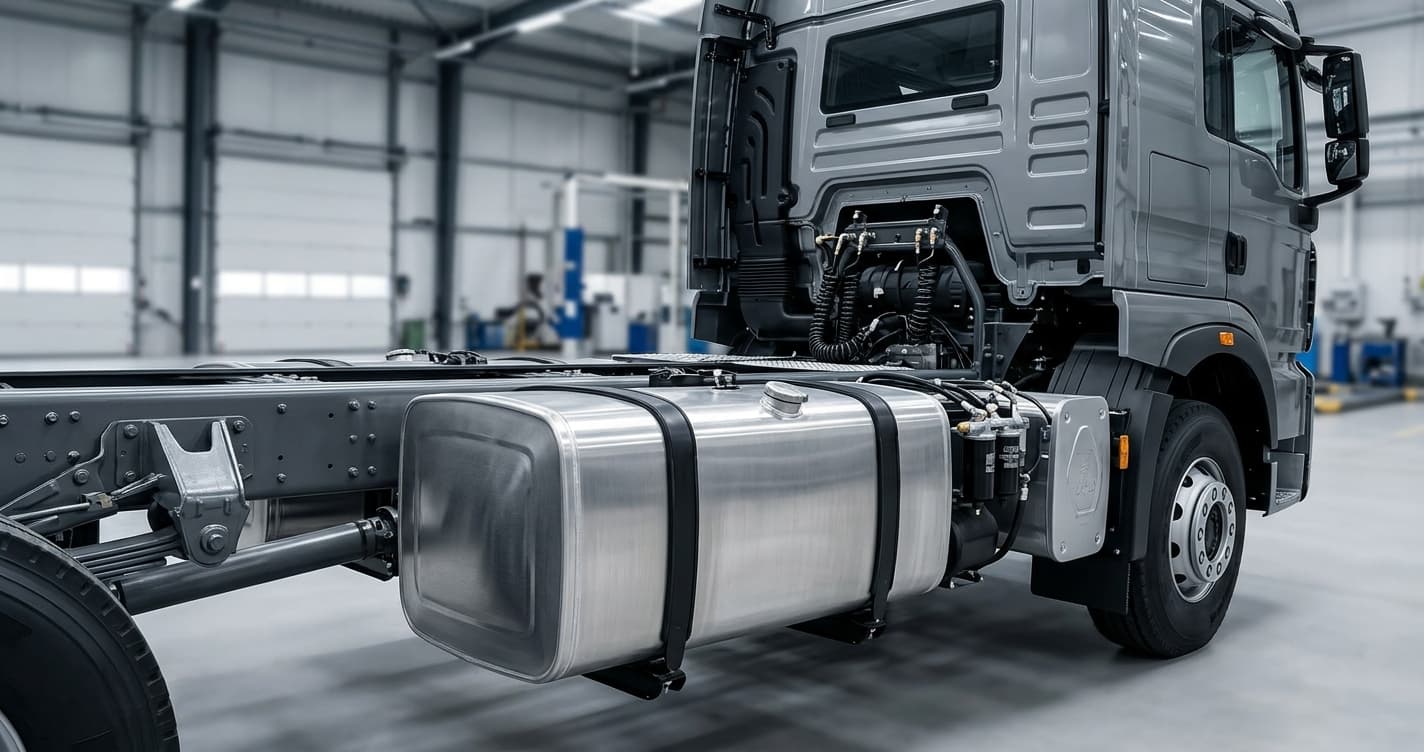
The aftermarket additive space is crowded with bold claims and thin evidence. However, certain categories have legitimate science behind them. Based on independent diesel truck fuel additives reviews and SAE-published studies, here’s what holds up:
- Cetane boosters: Can improve combustion completeness by 1–3%, most effective in regions with lower-quality base diesel.
- Lubricity additives: Protect injectors and pumps in ULSD (ultra-low sulfur diesel), extending component life rather than directly improving economy.
- Cold-flow improvers: Prevent gelling in winter, maintaining consistent diesel fuel efficiency in sub-zero conditions.
- Detergent packages: Keep injectors clean, preserving spray patterns critical to complete combustion.
The key takeaway: additives maintain efficiency rather than magically creating it. They’re insurance against degradation, not performance enhancers. Choose products meeting ASTM standards and avoid anything promising more than 5% improvement—those claims rarely survive controlled testing.
Electric and Alternative Fuel Trucks: The Emerging Landscape
Battery-electric trucks like the Tesla Semi, Freightliner eCascadia, and Volvo VNR Electric are redefining what “efficiency” means. Measured in energy cost per mile, electric drivetrains are 3–4x more efficient than diesel combustion. However, range limitations, charging infrastructure gaps, and higher upfront costs currently restrict them to regional and last-mile applications.
Hydrogen fuel cell trucks from Nikola and Hyundai are targeting the long-haul segment where batteries struggle. As of early 2026, commercial hydrogen remains expensive, but infrastructure investments from both government and private sectors suggest meaningful cost reductions by 2028–2030. For operators exploring these emerging technologies, reviewing options by product category brand helps compare available solutions.
Real-World Case Study: Fleet Efficiency Transformation
A mid-size regional carrier operating 85 Class 8 tractors implemented a comprehensive efficiency program in 2024. Their approach combined driver training, aerodynamic retrofits, predictive maintenance scheduling, and route optimization software. Results after 12 months:
- Fleet average improved from 6.4 to 7.3 MPG (14% gain)
- Annual diesel spend reduced by $1.2 million
- Driver retention improved 22% (less fatigue from speed management)
- Maintenance costs dropped 8% due to gentler driving patterns
No single intervention delivered these results—it was the combination that created compounding benefits. This mirrors what we consistently see in cooperative cases across the industry: holistic approaches outperform silver-bullet solutions every time.
Choosing the Right Efficient Truck for Your Needs
The “most efficient” truck is ultimately the one that matches your operational profile. A Maverick Hybrid is useless if you need to tow 10,000 lbs. A Cascadia is overkill for local delivery routes where an electric medium-duty truck would excel. Consider these factors in order of importance:
- Payload and towing requirements — This eliminates options immediately.
- Daily range and route type — Highway vs. urban vs. mixed determines optimal powertrain.
- Total cost of ownership — Include maintenance, DEF, downtime, and resale value.
- Available infrastructure — Electric only works with reliable charging access.
For those evaluating components and systems for their vehicles, browsing by product category system provides a structured way to compare options. And if you need personalized guidance for your specific operation, don’t hesitate to contact us directly.
Truck Fuel Efficiency Tips for 2026 and Beyond
The landscape continues evolving rapidly. Here are the most impactful truck fuel efficiency tips 2026 brings to the table, based on emerging technology and regulatory changes:
- EPA Phase 3 greenhouse gas standards now require new heavy-duty vehicles to achieve significantly lower CO₂ emissions, pushing manufacturers toward further aerodynamic and powertrain improvements.
- Platooning technology (trucks drafting in close formation using V2V communication) is entering limited commercial deployment, offering 4–10% savings for following vehicles.
- Waste heat recovery systems are moving from prototype to production, capturing exhaust thermal energy to generate supplemental electrical power.
- AI-driven predictive maintenance platforms now identify efficiency-robbing component degradation weeks before traditional inspection methods.
Staying informed is itself an efficiency strategy. The operators who adapt earliest capture the largest competitive advantage. Learn more about us and how we support professionals navigating these transitions.
Frequently Asked Questions
What is the most fuel efficient full-size truck available today?
Among full-size pickups, the Chevrolet Silverado 1500 with the 3.0L Duramax diesel and the Ram 1500 EcoDiesel lead the segment with EPA-rated combined figures of 26–27 MPG. For those prioritizing efficiency above towing capacity, the Ford Maverick Hybrid at 37 MPG combined offers unmatched numbers, though it’s technically a compact truck.
How much can driving habits realistically improve my mileage?
Conservative driving—maintaining steady speeds, progressive acceleration, and anticipating stops—typically improves real-world economy by 15–25% compared to aggressive driving. In commercial fleets, driver training programs consistently deliver 8–12% improvements within the first three months, with gains sustained through ongoing coaching and telemetry feedback.
Are diesel trucks still more efficient than gasoline models for heavy work?
Yes, for sustained heavy loads and highway driving, commercial truck diesel engines remain 20–30% more thermally efficient than gasoline equivalents. The higher energy density of diesel (approximately 13% more BTUs per gallon) compounds this advantage. However, for light-duty mixed use with minimal towing, modern gasoline turbo engines and hybrids have largely closed the gap.
Do aerodynamic modifications void my truck’s warranty?
Generally, bolt-on aerodynamic accessories like tonneau covers, cab fairings, and trailer skirts do not void warranties unless they directly cause a failure. Under the Magnuson-Moss Warranty Act, manufacturers must prove that an aftermarket part caused the specific damage being claimed. However, always verify with your dealer and keep installation documentation.
How do I calculate my actual cost per mile for comparison purposes?
Divide your total expenditure on diesel (including DEF and additives) by miles driven over the same period. For a complete picture, add maintenance costs, tire wear, and depreciation. Most fleet management platforms automate this calculation. A realistic loaded Class 8 figure ranges from $0.40–$0.65 per mile for energy alone, while light-duty pickups typically fall between $0.12–$0.22 depending on regional pricing and driving conditions.


