Let’s paint a picture. Your fleet of 50 Sinotruk HOWOs is scattered across three depots, and half of them need brake drums yesterday. Meanwhile, those parts are sitting in a warehouse thousands of kilometers away, completely unaware that your drivers are twiddling their thumbs. Here’s the thing — bulk truck parts don’t teleport. They take a journey, a real one, with stages, checkpoints, and the occasional holiday-induced nap along the way.
Think of your supply chain as a relay race your parts run before they finally meet your trucks. Some legs are quick sprints; others feel more like a leisurely stroll through customs. Either way, understanding the timeline is the difference between a fleet that runs and a fleet that rusts.
So let’s break it down. In this guide, we’ll walk through real timelines for heavy truck parts wholesale orders, unpack the common delays that catch buyers off guard, and — most importantly — show you exactly how to shorten your wait. No fluff, no guesswork, just practical answers from 15 years in the trenches.
Why Lead Time Matters More Than You Think for Fleet Maintenance Parts Supply
The Hidden Cost of Downtime
Every day a truck sits idle, it’s not just parked — it’s bleeding money. Fuel contracts still tick, drivers still draw wages, and customers still expect their deliveries on time. Industry estimates suggest one idle heavy-duty truck can cost a fleet operator between $500 and $1,000 per day in lost revenue. Multiply that across several vehicles, and suddenly a two-week delay on brake components feels less like an inconvenience and more like a financial emergency.
On top of that, downtime has a compounding effect. One truck out of service means others pick up the slack, accelerating their own wear cycles. Before long, you’re not ordering parts for one vehicle — you’re scrambling for an entire fleet’s worth. Consequently, understanding and managing your bulk truck parts delivery time isn’t just logistics — it’s survival math.
Bulk Orders ≠ Retail Orders — Here’s the Difference
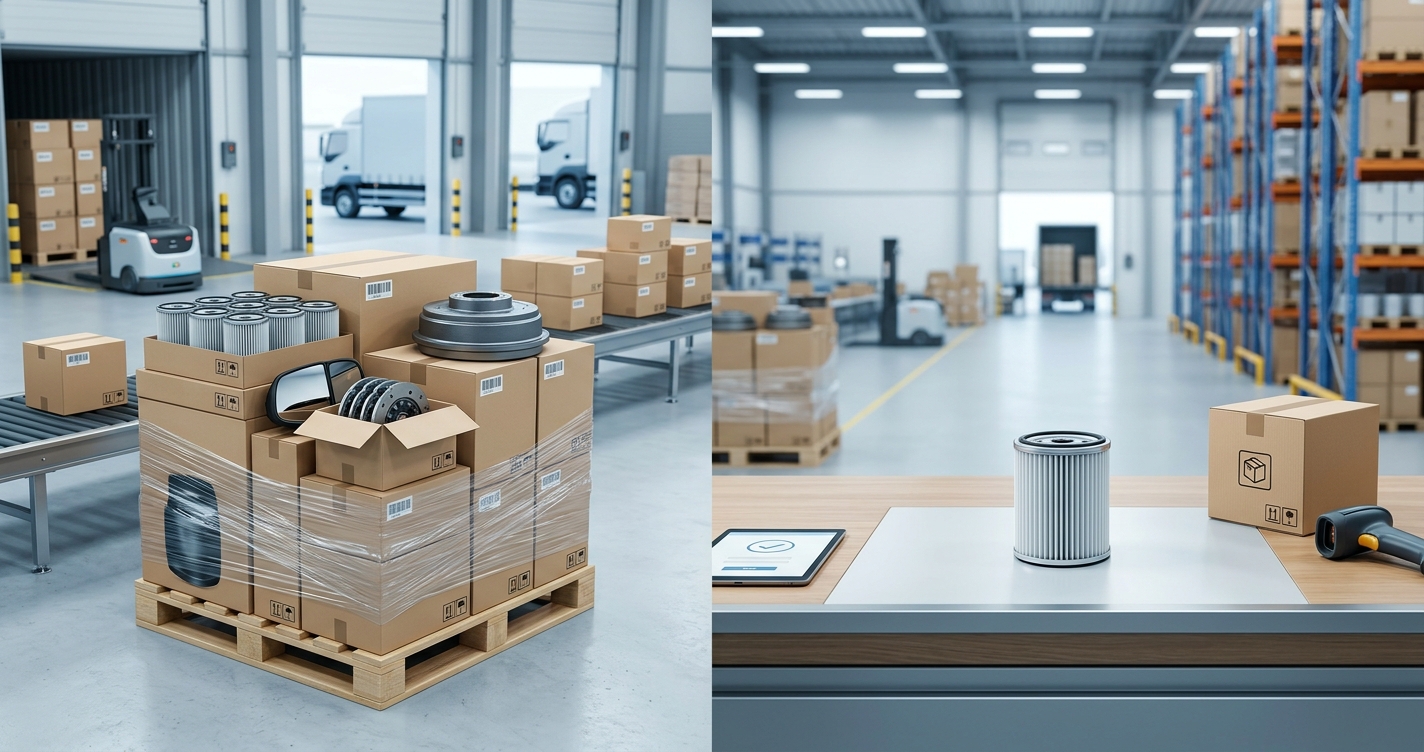
Buying a single oil filter online? Ordering 500 filters alongside brake drums, clutch plates, and cabin mirrors for a mixed fleet? That’s a different animal entirely. Wholesale truck components ordering involves MOQ verification, quality inspection batches, customs documentation, and shipping consolidation — each adding its own slice of time to the process.
In other words, the complexity scales with the order. More SKUs mean more coordination. More coordination means more opportunities for delays if you’re not working with the right partner. That said, this complexity is also where the savings live. Bulk purchasing unlocks pricing tiers and shipping efficiencies that single-piece orders simply can’t match. The key is understanding how parts are organized — by system, by brand, by application — so your order flows smoothly from the start. Exploring how parts are categorized by truck system can dramatically speed up your ordering process.
Typical Lead Time Breakdown — From Order to Delivery
The 5 Stages of a Bulk Truck Parts Order
Every wholesale order follows a predictable path. Knowing these stages helps you set realistic expectations and identify where time can be saved. Here’s what the journey looks like:
| Stage | What Happens | Typical Duration |
|---|---|---|
| 1. Order Confirmation & MOQ Check | Verify specs, quantities, and compatibility with your fleet models | 1–2 days |
| 2. Production / Warehouse Picking | Manufacturing new parts or pulling from existing stock | 7–20 days (stock) / 25–45 days (custom) |
| 3. Quality Inspection & Packaging | QC checks, export-grade packing, labeling | 2–5 days |
| 4. Shipping & Logistics | Sea freight, air freight, or rail transport | 15–40 days (varies by destination) |
| 5. Customs Clearance & Last Mile | Import documentation processing, local delivery | 3–10 days |
Think of it like cooking a big meal — prep, cook, plate, serve. Skip a step and someone’s getting raw chicken. Similarly, rushing through quality inspection to save two days can cost you weeks in returns and replacements down the line. The total timeline for a typical stock order lands between 28 and 55 days, while custom or made-to-order parts can stretch to 60–90 days.
Stock Parts vs. Made-to-Order Parts — A Critical Distinction
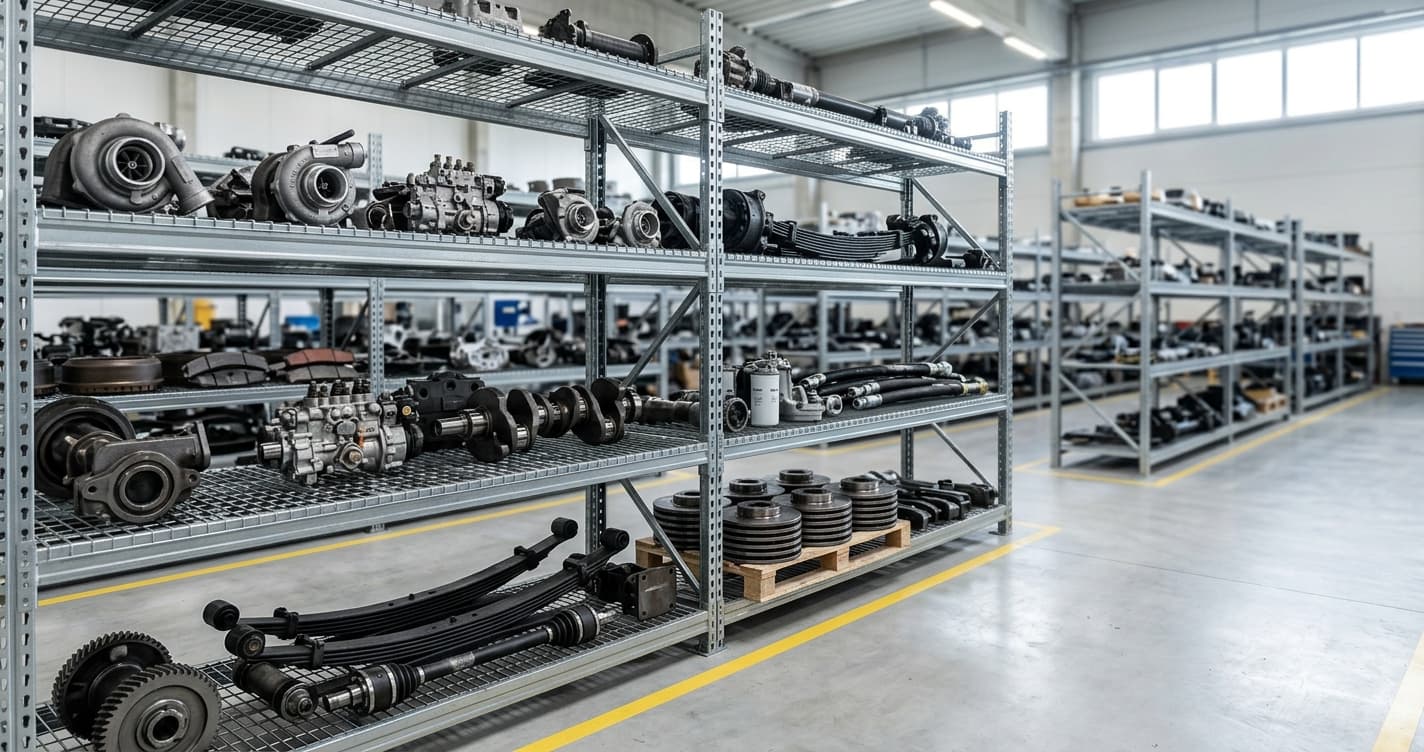
Here’s where things get interesting. Commonly ordered items — Shacman brake pads, FAW engine filters, Dongfeng cabin parts, Sinotruk HOWO clutch assemblies — are frequently held in ready stock by experienced distributors. Choosing stock items can cut your lead time by 50% or more, since you skip the entire production stage.
However, custom or rare specifications tell a different story. A specific Foton Auman transmission gear or a non-standard JAC cabin assembly requires production scheduling, raw material sourcing, and dedicated QC runs. These parts need patience and advance planning. Knowing which Chinese truck brands are stocked by your supplier helps you plan accordingly and avoid surprises.
What Affects Your Bulk Truck Parts Delivery Time? (Common Variables)
Order Volume & Complexity
A straightforward order of 200 identical brake drums ships faster than a mixed order spanning engine components, suspension parts, electrical systems, and cabin accessories across three different truck brands. Larger orders with mixed SKUs require more warehouse coordination, additional QC checkpoints, and careful container planning. As a result, consolidation time increases proportionally with complexity.
Seasonality & Factory Schedules
China’s manufacturing calendar has predictable peaks and valleys that directly impact your fleet maintenance parts supply timeline. Factories don’t just slow down during holidays — they shut down completely, sometimes for two to three weeks. Meanwhile, the weeks before and after these closures see a surge of orders as buyers rush to beat the gap.
| Period | Impact on Lead Time | Recommended Action |
|---|---|---|
| Jan–Feb (Chinese New Year) | +10–20 days | Place orders by early December |
| May (Labor Day week) | +3–5 days | Minimal impact; plan slightly ahead |
| October (National Day) | +7–10 days | Order by mid-September |
| Nov–Dec (Peak export season) | +5–10 days | Confirm stock availability early |
Smart fleet buyers treat this calendar like a weather forecast — you can’t change it, but you can absolutely prepare for it.
Shipping Method Selection
Your choice of transport mode creates the biggest single variable in total delivery time. Sea freight remains the most economical option for heavy duty truck components, but it’s also the slowest at 20–40 days depending on destination. Air freight slashes transit to 5–7 days, yet the cost per kilogram makes it impractical for heavy items like engine blocks or axle assemblies. Rail transport, particularly along China-Europe and China-Central Asia corridors, offers a middle ground — roughly 15–20 days at moderate cost.
Ultimately, the right choice depends on urgency, part weight, and your margin tolerance. Many experienced buyers use a hybrid approach: sea freight for planned replenishment and air freight only for emergency stock-outs.
Destination Country Customs Complexity
Not all borders are created equal. Some markets — particularly in Africa, Southeast Asia, and Central Asia — have well-established import channels for Chinese truck parts, with familiar documentation requirements and efficient clearance processes. Others require additional certifications, translated documents, or pre-shipment inspections that add days to your timeline.
Working with a supplier who understands your specific market’s import requirements prevents last-minute documentation scrambles. This brings us to the problems most buyers actually face — and more importantly, how to solve them.
Common Problems with Bulk Truck Parts Lead Times — And How to Solve Them
Problem 1 — “My Order Keeps Getting Delayed”
Why it happens: Incomplete specifications, payment processing delays, or your supplier doesn’t maintain safety stock for high-demand items. Sometimes it’s a combination of all three, creating a cascading delay that pushes your delivery back weeks.
How to solve it: Provide complete part numbers and vehicle model details upfront — no ambiguity. Use a reliable truck parts vendor with dedicated stock for fast-moving items. Additionally, confirm production status weekly rather than waiting for updates passively. If you’re experiencing repeated delays, oursupport team can help diagnose the bottleneck and get your orders back on track.
Problem 2 — “I Received Wrong or Low-Quality Parts”
Why it happens: Miscommunication between OEM-equivalent and generic aftermarket specs is the most common culprit. In some cases, suppliers cut corners on aftermarket truck parts quality to hit lower price points without informing the buyer.
How to solve it: Request QC photos and measurement verification before shipment. Work exclusively with distributors who maintain transparent inspection processes and can show you exactly what’s being packed. Starting with a trial order to verify compatibility before committing to bulk volumes is always wise. See how other fleet operators have navigated this challenge in our customer success stories.
Problem 3 — “I Can’t Get a Clear Timeline from My Supplier”
Why it happens: Many middlemen don’t have direct factory relationships. They’re relaying information through multiple layers, which means they genuinely can’t provide real-time updates because they don’t have them.
How to solve it: Partner with a commercial vehicle parts distributor that maintains direct factory access and provides milestone updates at every stage — order confirmed, in production, QC passed, shipped, tracking number issued. Transparency isn’t a bonus feature; it’s a baseline requirement. With 15 years of direct factory relationships, a good partner eliminates the guessing game entirely.
Problem 4 — “Shipping Costs Eat Into My Margins on Wholesale Orders”
Why it happens: Poor container utilization is the silent margin killer. Choosing air freight unnecessarily, shipping half-empty containers, or placing multiple small orders instead of consolidating — all of these inflate your per-unit logistics cost.
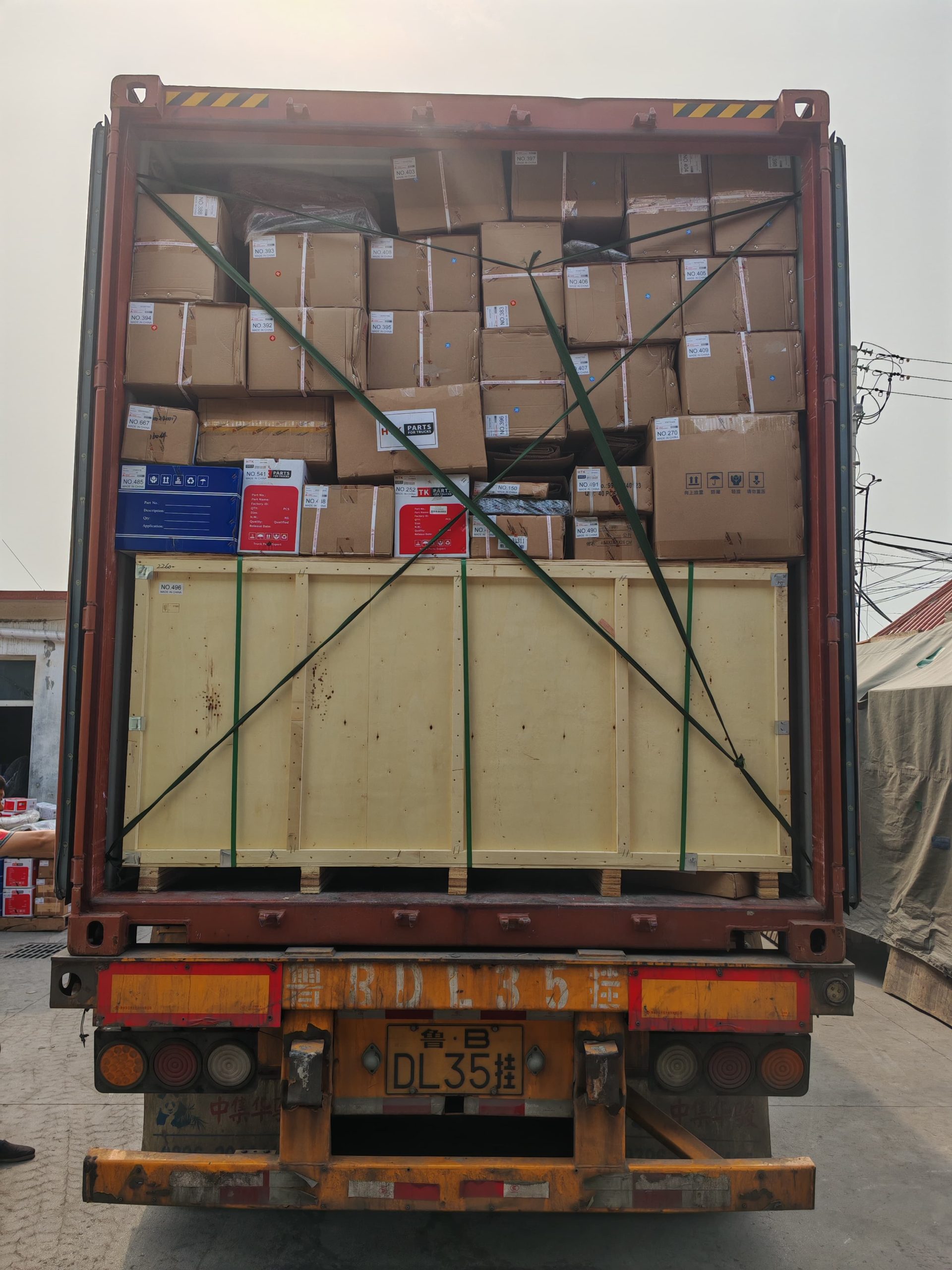
How to solve it: Work with suppliers who actively optimize container loading. Combine orders across part categories — engine, braking, cabin, suspension — to fill containers efficiently. A well-packed 40-foot container can carry parts for an entire quarter’s maintenance schedule, spreading shipping costs thin across hundreds of components.
Problem 5 — “I Need Parts Urgently but Can’t Afford Air Freight Every Time”
Why it happens: No forward planning or safety stock strategy. When every order is reactive, every shipment becomes an emergency — and emergencies are expensive.
How to solve it: Establish a quarterly ordering rhythm based on your fleet’s maintenance patterns. Keep a buffer stock of fast-moving items like filters, brake pads, and belts. Your supplier should help you identify which parts move fastest based on your specific fleet composition and operating conditions. Prevention is always cheaper than panic.
How to Shorten Your Bulk Truck Parts Purchasing Timeline
Strategy 1 — Build a Forecasting Rhythm
Plan orders 60–90 days ahead based on fleet maintenance schedules and historical consumption data. If you know your Shacman fleet burns through brake pads every 40,000 kilometers, you can calculate exactly when the next batch needs to arrive — and order accordingly. Forecasting transforms you from a reactive buyer into a strategic one.
Strategy 2 — Choose a Supplier with Ready Stock
Suppliers specializing in Chinese truck brands — Sinotruk, Shacman, FAW, Dongfeng, Foton, JAC — with maintained warehouse inventory can cut 20–30 days off your total lead time. Instead of waiting for production, your order moves straight to QC and shipping. Browse available product brands to see what’s ready for immediate dispatch.
Strategy 3 — Consolidate Orders by System
Rather than ordering brake parts one month and engine parts the next, consolidate by truck system. One comprehensive order covering braking, powertrain, and electrical components ships together in a single container. This reduces shipping frequency, lowers per-unit logistics costs, and simplifies your receiving process.
Strategy 4 — Establish a Long-Term Partnership
Repeat buyers aren’t just customers — they’re partners. Long-term relationships unlock priority production slots, better pricing tiers, and dedicated account managers who proactively flag potential delays before they impact your schedule. Furthermore, established partners understand your fleet composition, your preferred specs, and your delivery patterns, which eliminates repetitive back-and-forth on every order.
FAQ — Bulk Truck Parts Lead Time Questions Answered
How long does it take to receive bulk truck parts from China?
Typically 25–55 days total, depending on stock availability, order complexity, and shipping method. Stock items ship faster since they skip production time entirely. Custom or made-to-order parts require additional manufacturing time, potentially extending the timeline to 60–90 days for specialized components.
Can I get heavy truck parts wholesale with faster delivery?
Yes. Air freight cuts transit time to 5–7 days, and working with suppliers who maintain ready stock eliminates the production wait entirely. The tradeoff is higher shipping cost per kilogram, which makes air freight most practical for smaller, high-value, or urgently needed components rather than full container loads.
What’s the minimum order quantity for bulk truck parts?
MOQs vary significantly by part type and supplier. Small components like filters, gaskets, and seals may start at 100+ pieces. Larger items such as bumpers, radiators, and cabin assemblies may start at 10–20 units. A flexible supplier adjusts MOQs based on relationship history and order frequency.
How do I avoid receiving wrong parts in a bulk order?
Provide VIN numbers or exact OEM part numbers with every order. Request pre-shipment QC photos showing part measurements and markings. Starting with a trial order to verify compatibility before scaling up to full bulk volumes is the safest approach for new part numbers or new suppliers.
Which Chinese truck brands have the best parts availability for wholesale?
Sinotruk HOWO, Shacman, FAW, Dongfeng, and Foton have the largest aftermarket ecosystems with the most readily available components for fleet maintenance parts sourcing. JAC and CAMC parts are also widely available, though with slightly smaller aftermarket networks for certain specialized components.
Is it better to order from a factory or a distributor?
For most fleet buyers, a specialized commercial vehicle parts wholesale distributor offers superior service. Distributors consolidate multiple factory sources, handle quality control, and manage logistics end-to-end. Direct factory orders make sense only at very high volumes for single-brand fleets where you need exclusively one manufacturer’s components in massive quantities.
Ready to Get a Clear Timeline for Your Next Order?
Your trucks have places to be. Your parts shouldn’t keep them waiting.
Getting heavy truck parts wholesale doesn’t have to involve guesswork, vague timelines, or crossed fingers. With the right partner, every order comes with clear milestones, honest timelines, and proactive communication from confirmation to delivery.
We have 15 years of hands-on experience in the Chinese truck parts export industry, serving fleet operators across the globe who need the right parts, on time, without the runaround. Contact us at Mettlead — we’ll give you a practical, workable solution tailored to your fleet’s specific needs. The most reasonable wholesale pricing for Chinese brand truck parts, globally. No inflated quotes, no mystery timelines — just reliable truck parts vendor selection made simple.
Whether you’re maintaining a fleet of Sinotruk HOWOs in Africa, Shacman trucks in Southeast Asia, or Dongfeng vehicles in Central Asia, we’ve built the supply chain relationships and stock depth to keep your wheels turning. Visit our homepage to learn more about how we work, or reach out directly — your next order’s timeline starts with a single conversation.


