Picture this: a fleet manager orders brake drums from an unfamiliar supplier. Two weeks pass. The parts finally arrive — only to reveal they don’t fit Sinotruk HOWO models. Now three trucks sit idle in the yard, bleeding money every single day. Sound familiar?
Choosing a heavy truck parts supplier shouldn’t feel like rolling dice at a casino. Fortunately, it doesn’t have to. With the right framework, you can turn this decision into a science rather than a gamble.
Think of supplier selection like choosing a long-term business partner. You want reliability, honesty, and someone who actually picks up the phone when things go sideways. So let’s walk through exactly how to make that choice — with confidence, clarity, and maybe even a little fun along the way.
Why Your Choice of Heavy Truck Parts Supplier Actually Matters
The Real Cost of a Bad Supplier
A cheap quote means nothing if the parts arrive late, don’t fit, or fail prematurely. In reality, the hidden costs of a poor supplier relationship stack up fast — unplanned downtime, mismatched components, warranty disputes, and cascading fleet delays.
Industry data consistently shows that unplanned truck downtime costs fleet operators between $500 and $1,000 per vehicle per day. Multiply that across several trucks, and a single bad order can wipe out months of savings from that “great deal” you found online.
As a result, this decision deserves a structured approach. Simply picking the cheapest option on a sourcing platform is not fleet maintenance parts sourcing — it’s wishful thinking. Working with a proven commercial vehicle parts distributor who understands your needs saves far more than it costs.
What Makes Heavy Duty Truck Components Different
Heavy-duty parts are not generic off-the-shelf items. Tolerances are tighter, material grades are more demanding, and compatibility requirements vary significantly across brands and model years.
Chinese truck brands — Sinotruk, Shacman, FAW, Dongfeng, Foton, JAC, and Beiben — each have unique engineering specifications. A brake lining designed for a Shacman F3000 won’t necessarily fit a FAW J6P, even if they look similar on paper. This is precisely why specialized knowledge matters when sourcing heavy duty truck components.
A supplier who truly understands these brands can navigate cross-references, identify superseded part numbers, and flag compatibility issues before they become your problem. You can explore the range of Chinese truck brands we cover to see what comprehensive brand expertise looks like in practice.
7 Key Criteria for Evaluating a Heavy Truck Parts Supplier
1. Product Range and Brand Coverage
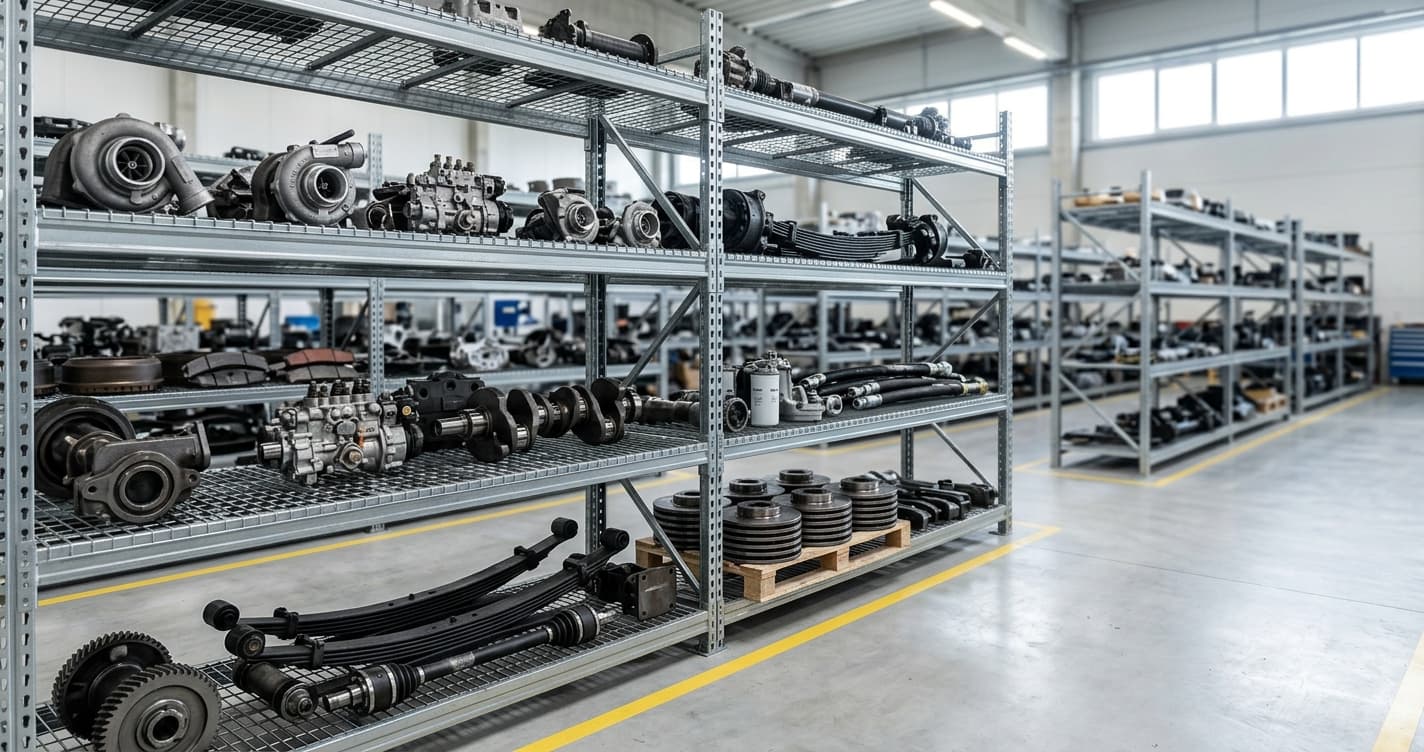
First and foremost, does the supplier cover the brands and systems your fleet actually uses? A truly capable heavy truck parts supplier should handle everything from engine components to cabin parts across multiple Chinese truck brands.
Moreover, coverage should extend across vehicle systems — not just one category. Below is a quick checklist to evaluate brand and system coverage:
| Brand | Engine Parts | Brake System | Suspension | Cabin Parts |
|---|---|---|---|---|
| Sinotruk (HOWO) | ✓ | ✓ | ✓ | ✓ |
| Shacman | ✓ | ✓ | ✓ | ✓ |
| FAW | ✓ | ✓ | ✓ | ✓ |
| Dongfeng | ✓ | ✓ | ✓ | ✓ |
| Foton | ✓ | ✓ | ✓ | ✓ |
| JAC | ✓ | ✓ | ✓ | ✓ |
| Beiben | ✓ | ✓ | ✓ | ✓ |
If a supplier can check every box on this table, that’s a strong indicator of genuine specialization. Browse our product systems page and brand catalog to see how full coverage works in practice.
2. Quality Verification and Aftermarket Standards
How do you actually verify aftermarket truck parts quality before committing to a large order? Start by asking for certifications, OE-matching specifications, and material testing reports.
Beyond documentation, watch for common red flags: suppliers who avoid quality questions, refuse to provide batch photos, or can’t explain their sourcing process. A trustworthy supplier treats quality inquiries as normal business — not as an inconvenience.
In contrast, a reliable partner will proactively share their QC workflow and welcome your scrutiny. That transparency is worth more than any discount.
3. Industry Experience and Track Record
Years in the business translate directly into practical knowledge — understanding model-year changes, knowing which parts have been discontinued, and maintaining accurate cross-reference databases that prevent ordering errors.
Here’s the thing: a supplier with 15 years of experience has already made the mistakes you’re trying to avoid. They’ve seen the fitment issues, navigated the supply chain disruptions, and built the relationships with factories that ensure consistent quality.
You can learn more about our company background and experience, or see how we’ve helped real customers solve real problems on our success stories page.
4. Pricing Transparency and Value
Let’s be honest — everyone wants competitive pricing. However, the cheapest quote and the best value are rarely the same thing.
Reasonable pricing means consistency, no hidden fees, logical volume structures, and clear explanations of what you’re paying for. When a supplier can articulate why a part costs what it does — material grade, manufacturing process, quality testing — that’s a sign of integrity.
The right heavy truck parts supplier doesn’t just give you a number. They explain the reasoning behind it, so you can make informed decisions for your fleet budget.
5. Communication and Response Speed
Speed matters in this industry. When a truck is down, you need answers fast — not a three-day email silence followed by a vague reply.
Evaluate how quickly a supplier responds to technical questions. Can they confirm fitment before shipping? Do they understand the difference between a WD615 and a WD618 engine? These details separate a knowledgeable partner from a generic trader.
If your supplier ghosts you after payment, that’s not a partner — that’s a bad date. You deserve better.
6. Logistics Capability and Delivery Reliability
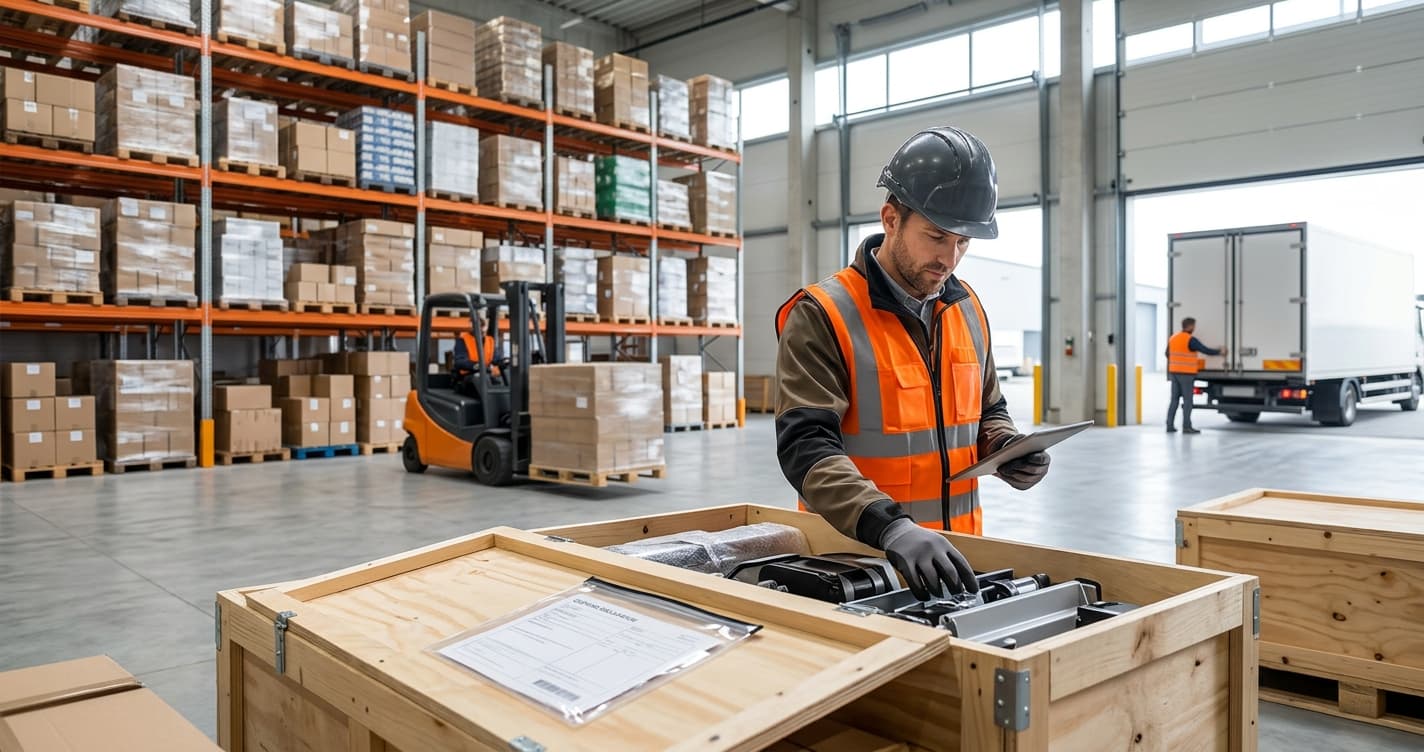
Warehousing capacity, shipping flexibility, packaging quality, and customs documentation support all factor into delivery reliability. A supplier who sources everything per-order will almost always be slower than one with genuine warehouse stock.
Typical lead times from China-based parts suppliers range from 3 to 15 days for stocked items, and 20 to 45 days for made-to-order components. Knowing which category your parts fall into helps set realistic expectations.
Additionally, proper packaging prevents transit damage — a frequently overlooked factor that can turn a perfect order into a costly headache.
7. After-Sales Support and Problem Resolution
What happens when something goes wrong? Because eventually, something will. The true measure of a supplier isn’t perfection — it’s how they handle imperfection.
Look for clear return policies, accessible technical support, and straightforward warranty handling. A supplier who disappears when problems arise is a liability, not a partner. Meanwhile, one who steps up and resolves issues quickly becomes invaluable to your operation.
This is where reliable truck parts vendor selection truly pays off. Visit our support page to see how proper after-sales service should work.
Common Problems When Sourcing Heavy Truck Parts (And How to Solve Them)
Problem 1 — “I Received the Wrong Part”
Why it happens: Vague part descriptions, no VIN or model confirmation, and suppliers who lack brand-specific expertise all contribute to this frustrating scenario.
How to solve it: Always confirm orders with a part number, vehicle model, and production year. More importantly, work with suppliers who proactively request this information rather than shipping based on assumptions. A good supplier asks questions before packing — not after you’ve filed a complaint.
Problem 2 — “Quality Doesn’t Match the Sample”
Why it happens: Bait-and-switch tactics, inconsistent sourcing channels, or the absence of a proper quality control system can all lead to disappointing deliveries.
How to solve it: Request batch inspection photos for every order, ask detailed questions about the QC process, and start with trial orders before committing to large volumes. Consistency over time is the real test of aftermarket truck parts quality.
Problem 3 — “Delivery Keeps Getting Delayed”
Why it happens: Some suppliers don’t hold real inventory. Instead, they rely entirely on third-party sourcing, which introduces unpredictable delays and poor logistics planning.
How to solve it: Before ordering, ask directly about stock availability. Prefer suppliers who maintain their own warehouse and can provide honest lead time estimates. Transparency about timelines — even when the news isn’t ideal — is always better than empty promises.
Problem 4 — “I Can’t Get Technical Support After Purchase”
Why it happens: Many suppliers are purely traders with no technical background. Once the invoice is paid, they have neither the knowledge nor the motivation to help with fitment or installation questions.
How to solve it: Choose a supplier with in-house technical staff who genuinely understand heavy duty truck components. They should be able to troubleshoot fitment issues, suggest alternatives, and guide installation when needed. That’s the difference between a vendor and a partner.
If you’re experiencing this right now, our technical support team and contact page are built exactly for this purpose.
Problem 5 — “Pricing Changes Every Time I Order”
Why it happens: Unstable sourcing channels, currency fluctuations passed directly to the buyer, and the absence of any pricing structure create this unpredictable experience.
How to solve it: Establish a long-term relationship with a supplier who offers consistent pricing frameworks for repeat customers. Stability in pricing reflects stability in sourcing — and that’s exactly what your fleet budget needs.
Supplier Evaluation Comparison Table
Use this table as a quick-reference tool when comparing potential suppliers. It distills the key criteria into actionable questions and clear signals:
| Evaluation Criteria | Questions to Ask | Green Flag | Red Flag |
|---|---|---|---|
| Product Range | “Do you cover Sinotruk, Shacman, FAW, Dongfeng parts?” | Full brand + system coverage | Only vague “all brands” claims |
| Quality Control | “Can you share your QC process or test reports?” | Documented process with photos | Avoids the question entirely |
| Experience | “How long have you specialized in Chinese truck parts?” | 10+ years with specific brand knowledge | New company, generic trading background |
| Communication | “Can you confirm fitment before I order?” | Technical confirmation within 24 hours | Slow or non-technical replies |
| Logistics | “Do you have warehouse stock or source per order?” | Own inventory with clear lead times | Vague timelines and excuses |
| After-Sales | “What’s your process if a part doesn’t fit?” | Clear return/exchange policy | No policy or immediate blame-shifting |
How to Build a Long-Term Relationship With Your Supplier
Start With a Trial Order
Rather than committing to a massive first order, test the waters with a small, mixed order across different systems. This lets you evaluate packaging quality, order accuracy, communication responsiveness, and delivery speed — all without significant financial risk.
Think of it as a first date. You’re getting to know each other before making any big commitments.
Establish Clear Communication Channels
Agree early on preferred contact methods, expected response times, and whether you’ll have a dedicated account manager. Clear expectations prevent misunderstandings and build trust over time.
Similarly, document your agreements. A quick email summary after each call keeps both parties aligned and accountable.
Share Your Fleet Information
The more your supplier knows about your fleet — brands, models, operating conditions, maintenance cycles — the better they can recommend parts and anticipate your needs before you even ask.
Think of it like a good mechanic who knows your truck inside and out. The more context they have, the faster and more accurately they can serve you. That kind of proactive partnership is what separates adequate fleet maintenance parts sourcing from truly excellent supply chain management.
FAQ — Choosing a Heavy Truck Parts Supplier
How do I verify if a supplier’s parts are genuine quality?
Request OE part number cross-references, material certifications, and batch inspection photos. A trustworthy supplier welcomes these questions openly. Beyond that, trial orders with independent inspection provide the most reliable verification before scaling up your purchases.
Should I choose a manufacturer or a trading company?
Both can work well depending on your needs. What matters more is specialization, technical knowledge, and after-sales capability. A specialized trading company with 15 years of experience often outperforms a factory that lacks export service infrastructure or multi-brand coverage.
What Chinese truck brands should a good supplier cover?
At minimum, expect coverage of Sinotruk (HOWO), Shacman, FAW, Dongfeng, Foton, JAC, and Beiben. Broader coverage typically indicates deeper industry connections and more reliable sourcing channels across the Chinese truck parts ecosystem.
How important is supplier location?
Proximity to major Chinese truck parts manufacturing hubs — such as Jinan, Shiyan, and Changchun — often translates to faster sourcing, better factory relationships, and more competitive pricing. Location alone isn’t decisive, but it’s a meaningful advantage.
Can I get a custom parts solution for my fleet?
Experienced suppliers can absolutely provide tailored sourcing based on your fleet composition, usage patterns, and budget requirements. This is where long-term relationships and shared fleet data become especially valuable — your supplier becomes an extension of your maintenance planning team.
Ready to Find a Supplier Who Actually Understands Your Needs?
Choosing the right heavy truck parts supplier isn’t just about finding parts — it’s about finding a partner who makes your operation run smoother, your maintenance more predictable, and your budget more manageable.
With 15 years of hands-on experience in Chinese brand truck parts, we’ve helped fleet operators across the globe find exactly what they need — no guesswork, no wasted time. We know Sinotruk from Shacman, WD615 from WD618, and we understand that your trucks can’t wait.
Contact us at Mettlead, and we’ll provide a practical, workable solution tailored to your fleet. You’ll get the most reasonable pricing for genuine Chinese brand truck components, backed by people who actually know these trucks inside and out.
Visit our homepage to learn more, check out our customer success stories to see real results, or simply reach out directly — we’re here, and we pick up the phone.


