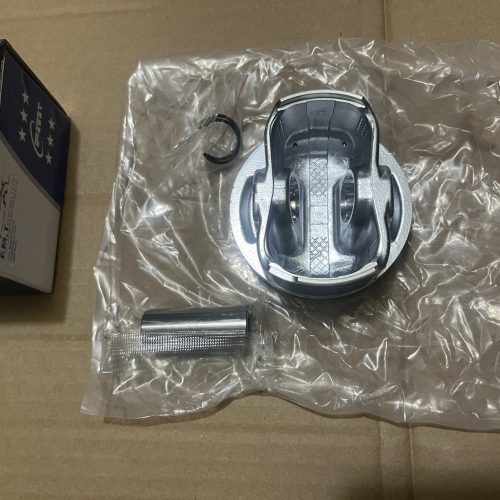
The piston is a core component of truck engines, responsible for converting the pressure generated by fuel combustion into mechanical energy that drives the crankshaft to rotate. It operates in extremely harsh environments—exposed to high temperatures (up to several hundred degrees Celsius), high pressure from combustion, and constant friction against the cylinder wall—making its durability and performance critical for engine reliability.
As a key part of the engine’s power system, the piston’s performance directly affects the engine’s power output, fuel efficiency, and overall service life. For global truck fleets, whether operating long-haul routes, construction sites, or urban deliveries, piston failures can lead to significant operational issues, including engine power loss, increased fuel consumption, and even severe engine damage that requires costly overhauls and prolonged downtime.
Common piston issues include wear, scuffing, cracks, and piston ring damage. These problems are typically caused by poor fuel quality (contaminated or low-grade fuel), insufficient lubrication, engine overheating, improper maintenance, or long-term overloading. Addressing these issues early is key to avoiding more serious engine damage.
As a professional Chinese truck parts supplier and exporter, we produce high-standard truck pistons tailored to global fleet needs. Made of high-grade alloy materials (such as aluminum-silicon alloys), our pistons undergo strict heat treatment and precision machining processes, ensuring excellent high-temperature resistance, wear resistance, and structural stability. To browse our full range of truck pistons and find the right fit for your engine model, visit our product page.
This article shares practical maintenance tips and failure prevention methods to help fleet managers, drivers, and technicians protect their engine pistons and reduce operational costs. For personalized technical support tailored to your fleet’s specific operating conditions, contact our team anytime.
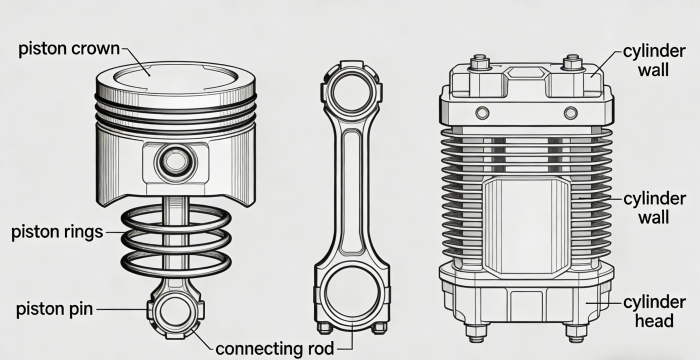
Truck piston structure and engine cylinder position
Common Piston Failures & Prevention Tips
Understanding common piston failures and their root causes is essential for proactive prevention. Below are the most frequent piston issues and actionable tips to avoid costly downtime and engine damage.
1. Piston Wear & Scuffing
Wear and scuffing are the most common piston failures, often caused by insufficient lubrication (low oil levels or poor oil quality), poor fuel quality (which can leave deposits), or engine overheating. Scuffing occurs when the piston surface rubs directly against the cylinder wall (due to broken oil film), damaging both the piston and cylinder wall and leading to increased friction and reduced engine efficiency. To prevent this, use high-quality fuel and lubricants that meet manufacturer standards, and avoid long-term overloading to prevent engine overheating. Our pistons have a special wear-resistant coating that reduces friction and wear, extending service life. For compatible high-quality engine lubricants, visit ourengine oil product page.
2. Piston Cracks
Long-term exposure to high pressure and frequent temperature changes can cause piston cracks, which may eventually lead to piston breakage and complete engine failure. Key causes include engine overheating (due to faulty cooling systems), detonation (from poor fuel quality or incorrect ignition timing), and improper installation. Regularly inspect the piston for cracks during engine maintenance—pay close attention to the piston crown and skirt, where cracks are most likely to form—and replace it immediately if any damage is found. Our pistons are rigorously tested for high-pressure and high-temperature resistance, significantly reducing the risk of cracks. Learn more about our quality testing process on our quality control page.
3. Piston Ring Damage
Piston rings play a vital role in sealing the combustion chamber, transferring heat from the piston to the cylinder wall, and regulating oil consumption. Damage to piston rings—such as wear, deformation, or breakage—leads to poor sealing, reduced engine power, increased fuel consumption, and oil leakage into the combustion chamber. To prevent this, replace piston rings regularly according to maintenance schedules and ensure proper installation by professional technicians. For urgent replacement needs, contact our sales team for fast, global delivery. Learn more about our emergency parts service on our support page.
⚙️ 1. How Truck Pistons Work in Diesel Engines
A piston operates within the cylinder liner and moves up and down in response to combustion pressure. During each combustion cycle, fuel ignites in the combustion chamber, generating high-pressure gas that pushes the piston downward.
This linear motion is transferred to the crankshaft through the connecting rod, creating rotational power. At the same time, piston rings maintain compression, control oil consumption, and regulate heat transfer between the piston and cylinder wall.
The piston system relies heavily on thermal balance and lubrication stability. If either combustion temperature or oil film control becomes unstable, friction increases rapidly, leading to wear on both piston surfaces and cylinder liners.
⚠️ 2. Early Symptoms of Piston Wear
Piston damage usually develops gradually rather than suddenly. One of the earliest signs is a slight reduction in engine compression efficiency, which may appear as weak acceleration or reduced power output under load.
As wear progresses, engine oil consumption may increase due to reduced sealing efficiency of piston rings. This is often accompanied by visible exhaust changes, such as blue or dark smoke during acceleration.
In more advanced stages, abnormal knocking or tapping noises may appear, especially during cold starts. This indicates increased clearance or mechanical instability inside the cylinder chamber.
🟡 3. Causes of Piston Damage (Failure Mechanism Upgrade)
Piston damage in diesel engines is rarely caused by a single factor. Instead, it is the result of a gradual failure process involving thermal stress, lubrication breakdown, and combustion imbalance.
When engine temperature rises beyond normal operating range, the piston expands faster than the cylinder liner. This reduces clearance and increases friction between the two surfaces. If lubrication is insufficient at the same time, the protective oil film becomes unstable, leading to metal-to-metal contact.
In addition, poor fuel combustion or injector malfunction can create uneven pressure distribution inside the combustion chamber. This causes localized stress on the piston crown, which gradually leads to cracking, scoring, or deformation.
🔍 4. Diagnostic & Inspection Process
In professional maintenance environments, piston inspection is not based on visual symptoms alone but on a combination of performance testing and mechanical analysis.
Technicians usually begin by checking engine compression levels across all cylinders. A noticeable imbalance often indicates piston ring wear or cylinder sealing issues. Oil consumption trends are also analyzed, as increased oil burning is a common indicator of piston or ring degradation.
In more advanced inspections, engine disassembly may be required to evaluate piston surface conditions, including scoring patterns, thermal discoloration, and ring groove wear. These physical indicators help determine whether the damage is caused by overheating, lubrication failure, or long-term fatigue.
💰 5. Cost Impact on Fleet Operations
Although piston components themselves are relatively small compared to the entire engine, piston failure can lead to extremely high repair costs. This is because piston damage is often accompanied by cylinder liner wear, ring failure, and in severe cases, crankshaft system stress.
When piston performance declines, fuel efficiency drops and engine power output becomes unstable. For fleet operators, this results in higher fuel consumption, reduced operational efficiency, and increased downtime.
In severe failure cases, full engine overhaul may be required, which significantly increases both repair costs and vehicle downtime. This is why preventive maintenance is always more cost-effective than reactive repair strategies.
🔥 6. Fleet-Level Maintenance Strategy
Effective piston maintenance in fleet operations requires coordination between drivers, technicians, and fleet managers. Drivers are responsible for identifying early operational symptoms such as power loss, abnormal smoke, or unusual engine noise.
Technicians focus on diagnostic accuracy, including compression testing, oil analysis, and internal engine inspection when necessary. Their role is to identify whether piston wear is in early or advanced stages.
Fleet managers are responsible for long-term maintenance planning, ensuring that oil quality, fuel standards, and service intervals are properly controlled. When all three levels work together, piston failure risk can be significantly reduced.
Effective Maintenance Methods for Pistons
Proactive maintenance is the most cost-effective way to extend piston life and avoid failures. Follow these simple, effective methods to protect your engine pistons.
1. Choose High-Quality Pistons
High-quality pistons are the foundation of reliable engine operation. Our truck pistons meet international OEM standards, are compatible with various engine models (including Shacman, Sinotruk, and other major brands), and are designed to withstand harsh operating conditions. Visit our OEM-grade piston product page for model matching and detailed specifications.
2. Use High-Quality Fuel & Lubricants
Poor fuel and lubricants are major causes of piston wear and damage. Follow the manufacturer’s recommendations for fuel and lubricant grades, and avoid using low-grade or contaminated fuel. High-quality lubricants form a protective oil film that reduces friction between the piston and cylinder wall, while clean fuel prevents deposits that can cause scuffing and overheating.
3. Regular Engine Inspection
Incorporate piston inspection into your routine engine maintenance. Check the piston’s condition (for wear, scuffing, or cracks), piston ring seal, and cylinder wall wear. Early detection of problems allows for timely repairs or replacements, avoiding more serious engine damage and costly downtime.
4. Avoid Engine Overheating
Ensure the engine’s cooling system works normally—regularly check coolant levels, clean radiators, and inspect cooling fans. Avoid long-term overloading, which increases engine heat output, and prevent detonation by using high-quality fuel and maintaining proper ignition timing. These steps protect the piston from excessive heat and reduce failure risks.
Why Choose Our Truck Pistons
We have rich experience in truck piston production and export, establishing a strict quality control system from raw material procurement to product delivery. Our pistons are widely recognized by global fleets for their excellent high-temperature resistance, wear resistance, and stable performance, adapting to diverse operating environments worldwide.
We provide customized solutions for different engine models, fast international shipping to meet your urgent needs, and professional after-sales support. Learn more about our truck piston solutions on our solutions page or contact our sales team for a quote today.
❓ Frequently Asked Questions (FAQ)
What causes piston damage in a truck engine?
Piston damage in truck engines is usually the result of multiple long-term stress factors rather than a single failure event. In most diesel engines, pistons operate under extremely high combustion pressure and temperature conditions, which makes them highly dependent on stable lubrication and proper cooling.
When engine oil becomes degraded or insufficient, the protective oil film between the piston and cylinder wall weakens. This leads to increased friction and localized overheating. Over time, this heat stress causes the piston material to expand unevenly, which can result in scoring, cracking, or deformation.
In addition, poor fuel combustion and injector imbalance can create uneven pressure distribution inside the combustion chamber. This increases mechanical stress on specific areas of the piston crown, accelerating fatigue and long-term structural weakening.
What are the early signs of piston wear?
Early piston wear is often subtle and develops gradually, making it difficult to detect without close observation of engine behavior. One of the first indicators is a reduction in engine compression efficiency, which may present as weaker acceleration or loss of power under load.
As wear progresses, oil consumption may gradually increase because piston rings can no longer maintain a proper sealing effect. This leads to partial oil burning inside the combustion chamber, often resulting in blue or dark exhaust smoke.
In more advanced stages, drivers may notice abnormal engine noise or slight knocking sounds, especially during cold starts or rapid acceleration. These symptoms indicate that piston clearance or surface condition has already begun to deteriorate.
Can overheating damage truck pistons?
Yes, overheating is one of the most damaging conditions for truck pistons. When engine temperature rises beyond the normal operating range, the piston expands faster than the cylinder liner. This reduces clearance and increases friction between the two surfaces.
If lubrication is not sufficient under these conditions, the oil film breaks down, leading to direct metal contact. This causes rapid wear and localized surface damage on the piston.
Repeated overheating cycles can also weaken the structural integrity of the piston crown, eventually leading to cracking or permanent deformation. In heavy-duty engines, sustained overheating significantly shortens piston lifespan.
How can piston failure affect engine performance?
Piston failure has a direct impact on engine efficiency, power output, and fuel consumption. When piston sealing is compromised, compression pressure inside the combustion chamber decreases, which reduces combustion efficiency.
As a result, the engine must consume more fuel to maintain the same power output, leading to higher operating costs. At the same time, uneven combustion can cause vibration, unstable idling, and increased exhaust emissions.
In severe cases, piston damage can spread to cylinder liners and connecting components, leading to major engine failure and requiring full overhaul or replacement.
What is the best way to prevent piston damage in fleet trucks?
Preventing piston damage requires maintaining stable engine operating conditions over time. The most important factor is ensuring proper lubrication through regular oil changes using the correct viscosity grade and high-quality engine oil.
It is also important to maintain efficient cooling system performance, as excessive heat is one of the primary causes of piston expansion and wear. Monitoring engine temperature during heavy-load operation helps prevent overheating conditions.
For fleet operations, preventive maintenance schedules should be based on actual operating environments rather than fixed mileage alone. Trucks operating in high-load or high-temperature environments require more frequent inspection and servicing.
Why is piston failure expensive to repair?
Piston failure is expensive because it often leads to secondary damage in other engine components. Once piston integrity is compromised, cylinder liners, piston rings, and sometimes even crankshaft components may also be affected.
Additionally, piston failure usually requires engine disassembly, which increases labor costs and downtime. In severe cases, the engine may require a full overhaul rather than a simple part replacement.
For fleet operators, this not only increases repair costs but also reduces vehicle availability, directly affecting logistics efficiency and operational profitability.