Truck Suspension: Essential Care & Component Guide
What Is Truck Suspension?
For heavy-duty trucks, the suspension system is more than just a set of parts—it’s the backbone of a smooth, safe ride. It holds up the truck’s weight, along with its cargo, and soaks up the bumps and vibrations from rough roads.
Without a reliable suspension, driving would be uncomfortable at best and dangerous at worst. It also protects the truck’s chassis and cargo from damage, which saves fleet operators time and money in repairs.
If you want to learn more about how it works and its basic structure, you can visit our truck suspension knowledge center for easy-to-understand explanations.
Key Parts of a Truck Suspension System
A suspension system isn’t a single part—it’s a team of components working together. Each one has a specific job, and when they all function well, the truck runs smoothly and safely. Let’s break down the most important ones.
Control Arms
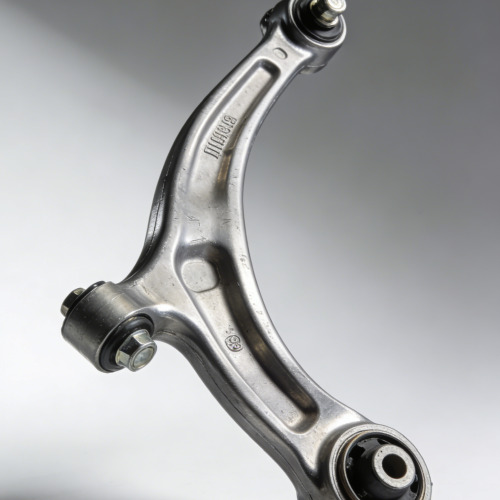
Control arms are critical connecting components that link the truck’s chassis to the steering knuckle. They enable precise wheel movement and maintain proper alignment, which is essential for stable handling, especially during turns and rough road conditions.
Our control arms are made from reinforced high-strength steel, designed to withstand heavy loads and harsh working environments. If you need reliable replacements, check out our premium truck suspension control arms.
High-quality Truck Suspension Control Arms
Sway Bars (Anti-Roll Bars)
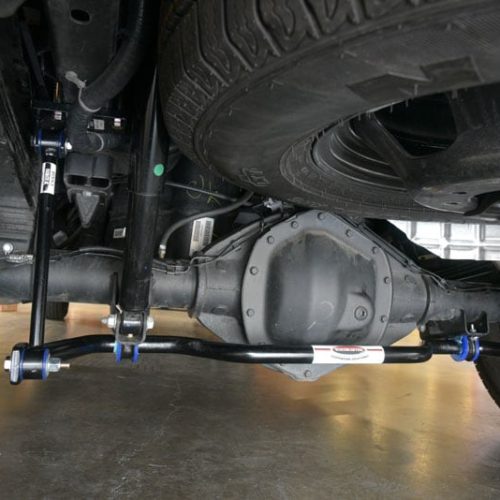
Sway bars, also known as anti-roll bars, work to minimize body roll when the truck turns. By connecting the suspension on opposite sides of the vehicle, they distribute lateral force evenly, improving stability and reducing uneven tire wear.
Our sway bars are crafted from high-tensile steel to resist bending and fatigue, ensuring long-lasting performance. For enhanced handling and stability, take a look at our truck suspension sway bars.
Durable Truck Suspension Sway Bars
Coil Springs
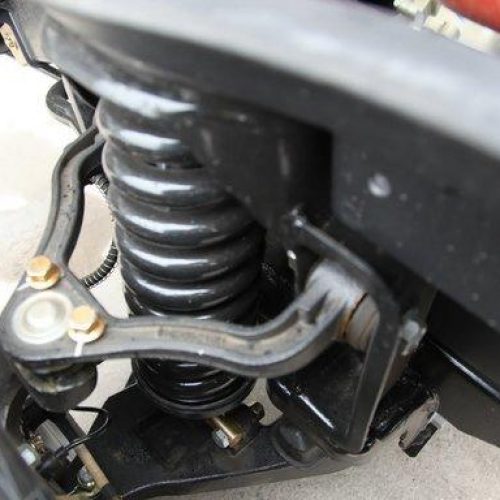
Coil springs are essential load-bearing components that provide vertical support for the truck and its cargo. They work with other suspension parts to absorb road shocks, maintain ride height, and ensure consistent contact between the tires and the road.
Our coil springs are engineered for durability and consistent performance, fitting most mainstream heavy-duty truck models. They can withstand repeated compression and heavy loads without losing elasticity.
Truck Suspension Coil Springs
Truck Suspension Problems and How to Fix Them
Trucks work hard, so it’s no surprise that suspension parts can wear out over time. The good news is that most common problems are easy to spot and fix—if you know what to look for.
Abnormal Noises While Driving
If you hear creaks, squeaks, or clunks while driving, it’s likely a sign of worn control arm bushings, loose sway bar connections, or damaged coil springs. Start by checking all the suspension connections—if any are loose, tighten them up.
If the noise doesn’t go away, take a closer look at the control arms, sway bars, and coil springs for wear. If they’re damaged, replace them. For professional help, you can consult our truck suspension repair service.
Uneven Ride Height
Uneven ride height is often caused by worn or damaged coil springs, which can affect the truck’s stability and tire wear. You’ll notice one side of the truck sitting lower than the other, or a noticeable sag when carrying cargo.
The fix for uneven ride height is to replace the damaged coil springs with high-quality replacements. This will restore proper ride height and ensure the truck runs smoothly and safely.
Simple Maintenance Tips for Your Truck Suspension
Taking good care of your suspension doesn’t have to be complicated. A few simple checks and habits can go a long way in extending its life and keeping your truck safe.
Check for Wear Regularly
Every few weeks, take a few minutes to look at your suspension parts. Check for cracks in the control arms and coil springs, loose sway bar connections, and wear on control arm bushings. Catching problems early saves you from costly repairs later.
Keep Parts Lubricated
Lubricate the moving parts of the suspension, such as control arm joints and sway bar links, according to the truck’s manual. This reduces friction, prevents wear, and keeps everything moving smoothly.
🟡 How Truck Suspension System Works Under Load
The truck suspension system operates as a dynamic load-balancing mechanism that continuously adjusts to road conditions, vehicle weight, and driving forces.When a truck moves over uneven terrain, vertical force generated by road impact is first absorbed by the springs, which compress to reduce shock intensity. This energy is then controlled by shock absorbers, which regulate rebound motion and prevent excessive bouncing.
At the same time, control arms and bushings maintain wheel alignment and ensure that lateral movement is controlled. This allows the tires to maintain consistent contact with the road surface, which is essential for stability, braking performance, and steering control.Without this coordinated system, every road impact would directly transfer to the chassis, causing instability and accelerated component wear.
🔍 Suspension Failure Mechanism
Truck suspension components degrade gradually due to continuous mechanical stress, vibration cycles, and environmental exposure.Shock absorbers are typically the first components to lose performance. As internal hydraulic fluid deteriorates, damping efficiency decreases, resulting in excessive vehicle bouncing and reduced stability.
Rubber bushings also experience long-term degradation. Constant pressure and vibration cause hardening, cracking, and deformation, which reduces their ability to absorb micro-movements between suspension components.
Springs may lose elasticity over time, especially under heavy-load conditions. This leads to uneven vehicle height and poor weight distribution across axles.These small inefficiencies accumulate over time, eventually affecting overall vehicle handling and safety.
🔧 Diagnostic Logic
In real maintenance environments, suspension problems are diagnosed through a combination of visual inspection and dynamic performance evaluation.Technicians first observe vehicle behavior during motion, checking for symptoms such as excessive bouncing, body roll during cornering, or uneven tire wear patterns.
Shock absorber performance is then evaluated for oil leakage or reduced damping resistance. Any visible leakage is a strong indicator of internal seal failure.
Bushings and mounting points are inspected for cracks, looseness, or deformation. Even minor bushing wear can significantly affect wheel alignment and handling stability.In more advanced cases, alignment testing is used to determine whether suspension geometry has been compromised.
💰 Fleet Cost Impact Module
Although suspension systems are designed for durability, failure can create significant operational costs in commercial fleet environments.When suspension components degrade, tire wear increases due to poor alignment and uneven load distribution. This leads to more frequent tire replacements and higher maintenance expenses.
Reduced suspension performance also increases fuel consumption, as vehicle stability and rolling efficiency are negatively affected.
In severe cases, suspension failure can cause vehicle downtime, which directly impacts delivery schedules and fleet productivity. For commercial operators, these indirect costs often exceed the actual repair cost of the suspension components.
Why Choose Our Suspension Solutions
We understand that heavy-duty trucks need tough, reliable suspension parts. That’s why we focus on making high-quality components that can handle the demands of daily heavy use.
All our parts go through strict quality checks to ensure they’re durable and perform well. We offer a full range of suspension parts, from control arms to coil springs, and provide one-stop procurement for fleets.
Our team of experts is also here to help with maintenance advice and after-sales support. For personalized solutions, visit our truck suspension solutions page or contact us directly.
❓ Frequently Asked Questions (FAQ)
What is a truck suspension system and how does it work?
A truck suspension system is a complex mechanical assembly designed to manage road impact forces, maintain vehicle stability, and ensure safe and controlled driving under various load conditions.
The system works by absorbing vertical and lateral forces generated from road surfaces before they reach the vehicle chassis. When a truck travels over uneven terrain, the springs compress to absorb shock energy, while shock absorbers control the rebound motion to prevent excessive bouncing.
At the same time, components such as control arms and bushings maintain wheel alignment and ensure that the tires remain in consistent contact with the road surface. This coordination is essential for maintaining braking efficiency, steering control, and overall vehicle safety.
Without a properly functioning suspension system, road impact would directly transfer to the chassis, resulting in instability, poor handling, and accelerated wear on other vehicle components.
What are the most common causes of suspension failure in trucks?
Suspension failure in trucks is typically caused by long-term exposure to mechanical stress, heavy load conditions, and continuous road vibration.One of the primary causes is shock absorber degradation. Over time, the internal hydraulic fluid loses its damping efficiency, and seals may wear out, reducing the ability to control suspension movement effectively.
Rubber bushings also degrade due to repeated compression and environmental exposure. Heat, pressure, and vibration cause them to harden, crack, or deform, which reduces their ability to absorb micro-movements between suspension components.
In addition, springs may lose elasticity under continuous heavy loading. This leads to uneven vehicle height and improper load distribution across axles.These factors do not usually cause sudden failure but gradually reduce suspension performance over time until the system becomes inefficient or unstable.
What are the early warning signs of suspension problems?
Early suspension problems usually develop gradually and become more noticeable as component wear increases.One of the earliest signs is reduced ride comfort, where the vehicle feels significantly harsher when passing over uneven road surfaces. This indicates that shock absorbers are no longer effectively controlling impact energy.
Another common symptom is excessive bouncing after hitting bumps. This occurs when shock absorbers fail to dampen rebound motion properly.Uneven tire wear is also a strong indicator of suspension issues, often caused by misalignment or weakened structural support within the system.
In more advanced stages, drivers may notice body roll during cornering, unstable steering response, or increased vibration at higher speeds. These symptoms suggest that multiple suspension components are already affected and system balance is compromised.
Can a bad suspension system affect driving safety?
Yes, a faulty suspension system can significantly impact driving safety because it directly affects vehicle stability, braking performance, and steering control.When suspension components wear out, tire contact with the road surface becomes inconsistent. This reduces traction, especially during braking or emergency maneuvers, increasing stopping distance and reducing control.
A damaged suspension system can also lead to uneven weight distribution, which affects cornering stability and increases the risk of vehicle rollover in extreme cases, particularly under heavy load conditions.Because suspension systems play a key role in maintaining vehicle balance, even partial failure can create safety risks if not addressed in time.
How often should truck suspension systems be inspected?
The inspection frequency of truck suspension systems depends on driving conditions, load intensity, and road quality.For vehicles operating under standard highway conditions, regular inspection during scheduled maintenance is generally sufficient. However, for trucks operating in construction, mining, or heavy freight environments, more frequent inspections are required due to increased mechanical stress.
Inspection typically includes checking shock absorbers for leakage, evaluating bushings for cracks or deformation, inspecting springs for sagging, and assessing overall wheel alignment.
In modern fleet operations, condition-based maintenance is often used, where suspension performance is monitored continuously and inspections are performed based on actual wear conditions rather than fixed mileage intervals.
What happens if suspension problems are ignored?
If suspension problems are ignored, small mechanical issues will gradually develop into more serious system failures due to continuous stress accumulation.As shock absorbers lose efficiency, vibration increases and is transferred to other components such as tires, steering systems, and chassis structures. This accelerates overall vehicle wear.
Poor suspension performance also leads to uneven tire wear, reduced fuel efficiency, and increased driver fatigue due to unstable vehicle behavior.In severe cases, continued operation with a damaged suspension system can result in significant safety risks and expensive repairs, as multiple interconnected components may be affected simultaneously.
Why do suspension components wear out faster in heavy-duty trucks?
Suspension components in heavy-duty trucks wear out faster because they operate under significantly higher stress levels compared to light-duty vehicles.These trucks carry heavier loads, operate for longer durations, and often travel on uneven or unpaved roads. This creates continuous compression and rebound cycles in the suspension system, accelerating fatigue in shock absorbers, springs, and bushings.
In addition, constant exposure to vibration and heat buildup further accelerates material degradation, especially in rubber-based components.Over time, this combination of mechanical stress and environmental exposure leads to faster performance decline and shorter component lifespan.
What are the most expensive consequences of suspension failure?
The most expensive consequences of suspension failure are usually indirect rather than the suspension repair itself.When suspension systems fail, tire wear increases significantly due to poor alignment and uneven load distribution. This leads to more frequent tire replacement costs.
Fuel consumption may also increase because unstable vehicle dynamics reduce driving efficiency. Additionally, steering and chassis components may experience extra stress, leading to secondary damage.In fleet operations, the most significant cost is vehicle downtime. When a truck is out of service for suspension repair, it directly affects delivery schedules, operational efficiency, and revenue generation.