In the global road transportation network, heavy-duty commercial trucks serve as the backbone of logistics delivery. Their operational safety is directly tied to the lives and property of all road users. As the core safety component of heavy trucks, the air brake system will easily lead to catastrophic traffic accidents once it malfunctions or fails. According to data from the Large Truck Crash Causation Study (LTCCS) in the United States, brake-related issues are the direct cause or major contributing factor for approximately 29% of large truck accidents. This figure fully proves that the reliability of the air brake system plays a decisive role in road safety.
Based on technical documents released by authoritative crash forensics institutions and professional legal research organizations, this article thoroughly dissects the working logic of heavy-duty truck air brake systems, comprehensively analyzes the core mechanisms behind brake failure, brake imbalance and brake fade, sorts out fault causes, maintenance loopholes, regulatory requirements and emergency response solutions. It builds a full-dimensional safety prevention and control system covering technology, management, laws and emergency handling, providing a comprehensive reference for transportation companies, drivers, accident investigators and road safety administrators.
I. Heavy-Duty Truck Air Brake System: Essential Differences from Hydraulic Brakes and Core Working Principles
To understand the root causes of air brake failure, it is first necessary to clarify the fundamental differences between heavy-duty truck air brake systems and hydraulic brake systems used in passenger vehicles. This is the basic premise for recognizing brake faults.
(1) Core Differences Between Air Brakes and Hydraulic Brakes
Hydraulic brake systems are widely adopted by passenger cars, which transmit pressure through brake fluid to push brake pads against brake discs or drums to generate friction for deceleration. In contrast, heavy-duty trucks with a gross vehicle weight up to 80,000 pounds (about 36 tons), and legally permitted maximum weight exceeding 100,000 pounds (about 45 tons), must be equipped with air brake systems. The two types of braking systems differ completely in power source, braking logic and safety design.
- Different power sources: Hydraulic brakes rely on the driver’s pedal force plus vacuum assist. Air brakes are driven by an engine-powered air compressor to generate high-pressure air with a standard operating pressure of 100 to 120 psi. Compressed air acts as the main braking energy, and drivers only need to control airflow without applying excessive pedal force.
- Different braking logic: Hydraulic brakes work on the principle of “applying pressure to brake, losing pressure to fail”. Air brakes adopt a fail-safe spring brake design. During normal driving, high-pressure air holds powerful springs in a released state. Once the air pressure drops too low, air lines rupture or system faults occur, the springs will automatically engage and clamp the brakes, realizing the fail-safe protection of “automatic braking upon system failure”.
- Different system redundancy: Air brake systems are equipped with multiple redundant designs including dual-circuit air supply, air reservoir storage, low-pressure alarm and spring brakes. Even if a single component breaks down, the basic braking capacity can still be retained. This is the key reason why complete and catastrophic brake failure rarely occurs on heavy-duty trucks.
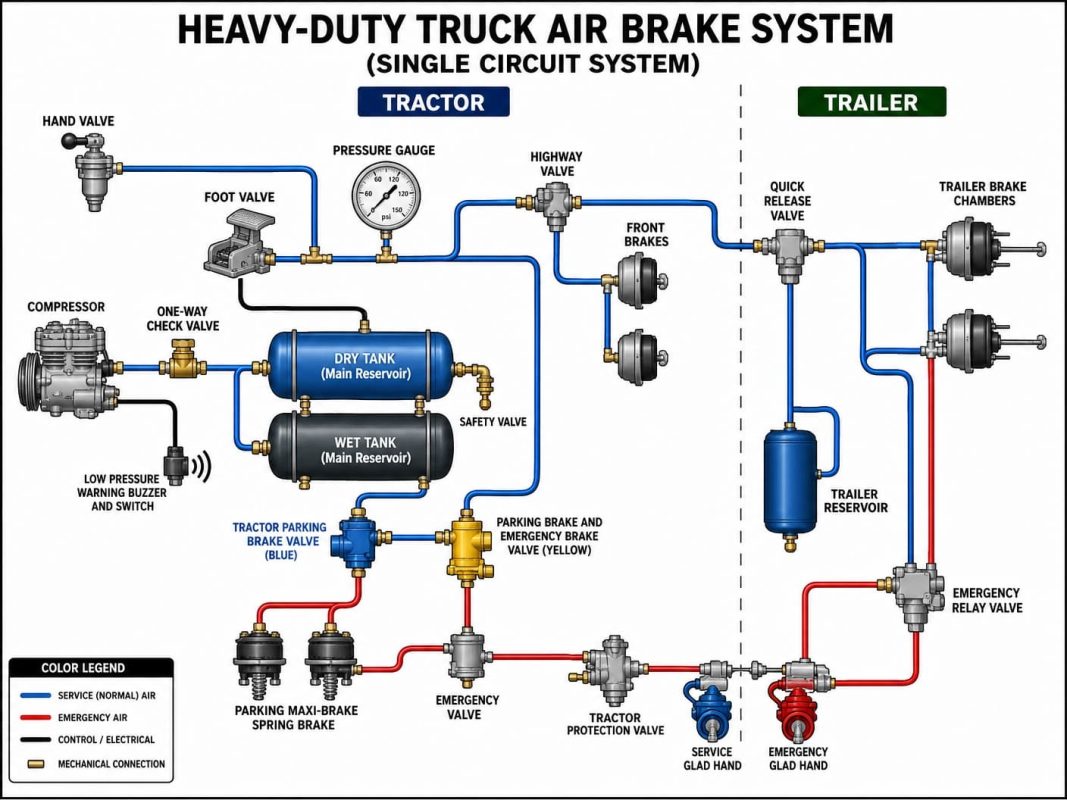
(2) Core Components and Working Process of the Air Brake System
The air brake system of heavy-duty trucks is a sophisticated pneumatic-mechanical linkage system. All core components work in coordination, and none can be missing. The complete working process is as follows:
- Air supply unit: The engine drives the air compressor to produce high-pressure air. The air is dehumidified and degreased by an air dryer before being stored in air reservoirs. A pressure regulator maintains the air pressure within the range of 85 to 135 psi to ensure stable system pressure.
- Control and transmission unit: Brake pedals (foot valves), various control valves and air lines form a control network. It receives braking commands from the driver and distributes high-pressure air to brake chambers on each wheel accurately.
- Actuating unit for braking: High-pressure air enters the brake chamber, pushing the push rod and brake slack adjuster to rotate the S-cam. The S-cam expands brake shoes to make them closely contact the brake drum, generating friction to produce braking force and slow down or stop the vehicle.
- Safety protection unit: Low-pressure warning devices, dual-circuit protection valves and spring brake chambers form a safety line of defense. The alarm will activate when air pressure falls below the safe threshold. In extreme cases, spring brakes will lock the wheels forcibly to prevent vehicle loss of control.
This system is designed for maximum reliability. However, in actual operation, hidden dangers such as inadequate maintenance, improper operation and component aging will gradually disable the safety redundancy, eventually leading to degraded braking performance or complete brake failure.
II. Core Understanding of Air Brake Failure: Not Total Malfunction, but Performance Degradation
In truck accident investigations, drivers often claim that “the brakes suddenly failed completely” to evade responsibility. Nevertheless, professional crash forensics conclusions clearly point out that complete catastrophic failure of air brake systems is extremely rare. More than 90% of so-called “brake failure” is essentially insufficient braking performance caused by inadequate maintenance.
(1) Pseudo-Failure: Real Scenarios of Braking Performance Degradation
Even with maintenance defects, air brake systems can generally retain basic braking capacity to handle routine operations such as yielding to traffic and low-speed deceleration. But performance defects will be fully exposed under high-demand braking conditions including emergency braking, traveling on long downhill sections and operating under heavy loads:
- When the driver presses the brake pedal fully, the vehicle decelerates far less than expected, and the braking distance increases significantly.
- Drivers subjectively feel that “the brakes do not work at all”, while the braking system is actually still functioning, yet unable to deliver sufficient braking force for emergency situations.
- The state of “working normally for daily use but failing to cope with emergencies” is the most dangerous hidden brake hazard and the primary trigger of accidents.
(2) True Failure: Extreme Scenarios of Complete Brake Failure
Genuine total brake failure only happens when the system suffers comprehensive and destructive faults, which is a low-probability extreme event:
- Large-scale rupture of air lines or explosion of air reservoirs causes the air pressure to drop to zero instantly, disabling both service brakes and spring brakes simultaneously.
- Critical components such as brake control valves and brake chambers become completely stuck or fractured, making it impossible to transmit braking commands.
- Malfunction of the air dryer leads to accumulated moisture, which freezes in winter and blocks all air lines, cutting off airflow for braking entirely.
Crash forensics data shows that such total failure accounts for less than 10% of all brake-related accidents. Almost all such cases result from long-term neglect of faults and illegal operation, rather than sudden unexpected incidents.
III. The Top Threat to Air Brakes: Brake Imbalance – Mechanisms, Types and Accident Triggers for Loss of Control
Brake imbalance is the most common, concealed and dangerous fault of air brake systems. It is the leading cause of truck brake failure, vehicle sideslip, trailer swing and jackknifing, bringing far greater risks than the failure of a single component.
(1) Definition and Root Causes of Brake Imbalance
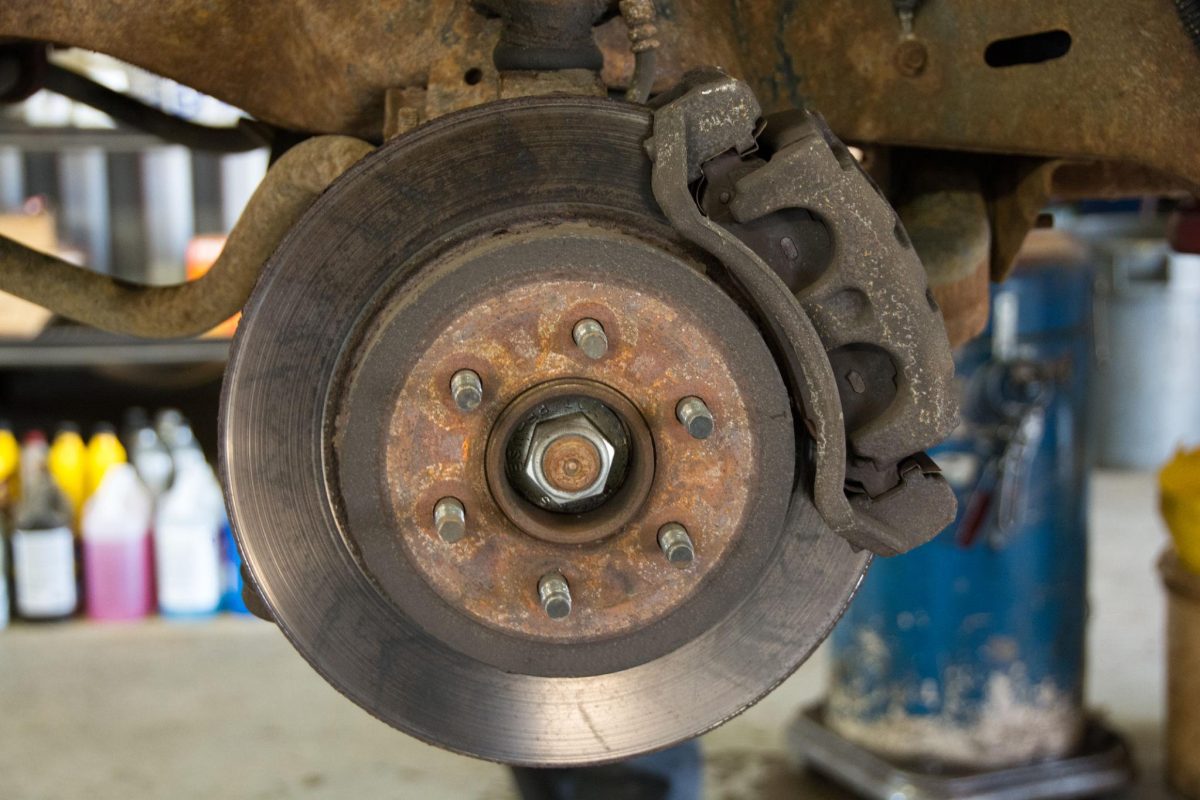
Brake imbalance refers to uneven distribution of braking force among all wheels of the truck. Some wheels produce excessive braking force while others have insufficient braking power, resulting in asynchronous deceleration and wheel lockup during braking. Its root causes fall into two categories:
- Maintenance defects: Only one wheel’s brake is repaired without inspecting and servicing the opposite wheel on the same axle, leading to inconsistent brake shoe clearances, friction coefficients and actuating force.
- Mismatched components: Mixing brake parts of different specifications or varying wear levels, such as combining new and old brake shoes or installing slack adjusters with different strokes.
- Improper load distribution: Uneven cargo loading on the trailer causes excessive load on certain axles and unbalanced braking load.
(2) Two Main Types of Brake Imbalance
Brake imbalance is not a single type of fault. It is divided into torque imbalance and air pressure imbalance, which differ greatly in causes, scope of impact and fault manifestations.
| Type of Imbalance | Root Cause | Scope of Impact | Fault Manifestation |
|---|---|---|---|
| Torque Imbalance | Mismatched mechanical components, improper adjustment and uneven wear | Single wheel or wheel position | Excessively strong or weak braking on an individual wheel, prone to independent wheel lockup |
| Air Pressure Imbalance | Uneven air pressure distribution in the air circuit, air line leakage and valve faults | Single axle or a group of connected axles | Asynchronous braking of all wheels on the axle, large gap in braking force between axles |
(3) Fatal Accident Patterns Caused by Brake Imbalance
Brake imbalance directly undermines vehicle braking stability. Under emergency braking, on wet road surfaces or long downhill sections, it will easily trigger two deadly loss-of-control situations:
- Tractor Jackknifing: The braking force of the tractor drive axle is far greater than that of the trailer axles. The drive axle locks up first and loses steering stability. The inertia of the trailer pushes the tractor to rotate around the fifth wheel, forming a folded shape and resulting in instantaneous loss of control.
- Trailer Swingout: The trailer axles generate more braking force than the tractor. The trailer wheels lock up and lose stability, swinging sideways while being towed by the tractor, crossing adjacent lanes and causing chain collisions.
In addition, brake imbalance will trigger a series of secondary severe faults. Wheels with excessive braking force work under continuous overload, leading to a sharp temperature rise and further causing brake fade, or even cracked brake drums, burned brake shoes and tire fires. Meanwhile, imbalance extends the overall braking distance and turns routine braking into a dangerous operation.
(4) Intuitive Criteria for Judging Brake Imbalance
In accident investigations and daily maintenance, the wear condition of brake shoes can be used to quickly identify brake imbalance. If the wear rate of brake shoes on the two wheels of the same axle varies obviously, with some severely worn and others barely worn, brake imbalance can be confirmed.
Title 49 CFR Part 392.6 of the United States federal regulations clearly stipulates that drivers must conduct daily vehicle inspections and record hazards such as brake imbalance. Vehicles with unrectified faults are prohibited from traveling on roads. However, this regulation is often ignored in actual operation.
IV. The Second Major Cause of Air Brake Failure: Brake Fade – Collapse of Braking Capacity Caused by High Temperature
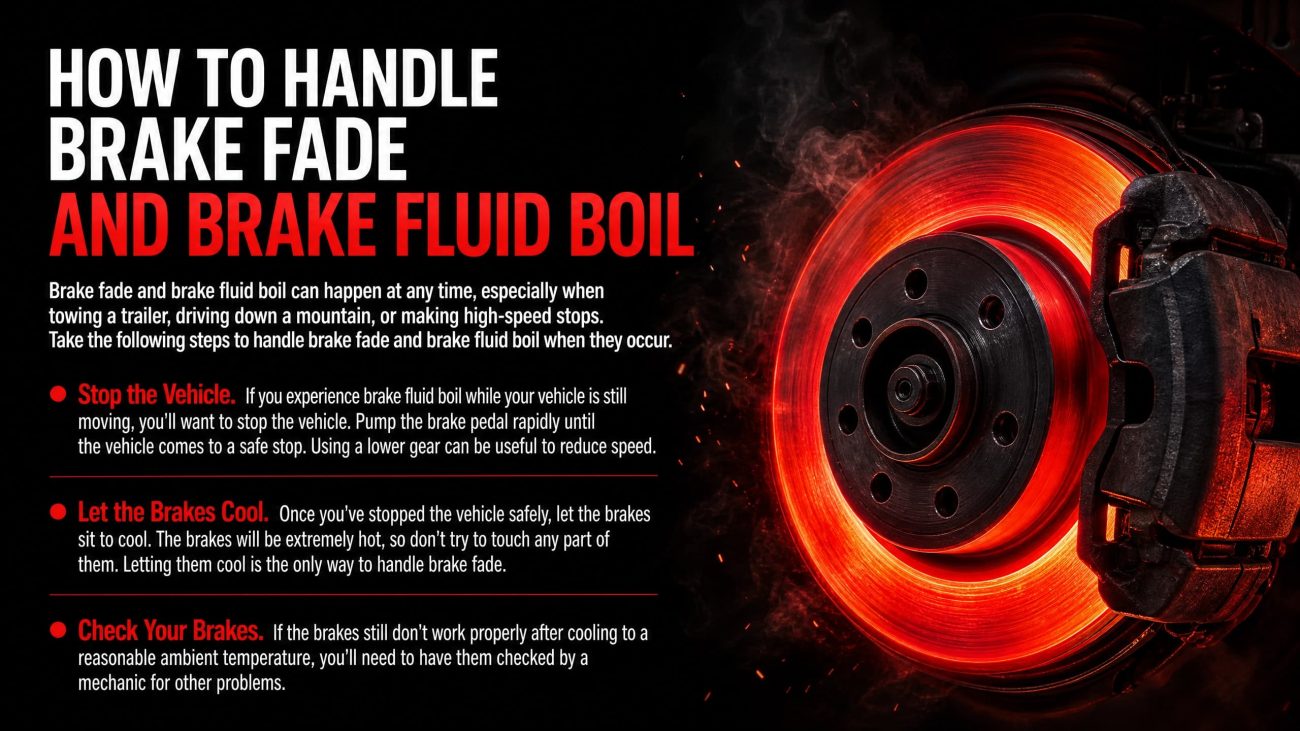
Brake fade is a fault specific to scenarios involving long downhill driving, heavy loads and frequent braking. It refers to the temporary and sharp decline of braking capacity of the system due to overheating, which is a functional failure rather than physical damage to components.
(1) Core Mechanism of Brake Fade
Braking is essentially the conversion of kinetic energy into heat. When heavy-duty trucks run under heavy loads, the heat generated during braking is far more than that of passenger vehicles. When heat accumulates beyond the critical value, two fatal changes will occur:
- Glazing of brake shoes: The surface of friction materials vitrifies under high temperature, resulting in a dramatic drop of friction coefficient and insufficient braking force.
- Thermal expansion of brake drums: The metal brake drum expands and increases in diameter when heated. The gap between brake shoes and the drum becomes larger, and the push rod stroke is insufficient to fully expand the shoes to fit the drum tightly.
At this moment, even if the driver depresses the brake pedal to the fullest, the braking system cannot output effective braking force, and the vehicle glides out of control. This is what drivers describe as “the brakes do not work”.
(2) Factors Aggravating Brake Fade
- Overloading: Vehicles operating beyond the rated load lead to an exponential increase of braking load. Heat generation far outpaces heat dissipation.
- Improper operation: Drivers keep pressing the brake pedal continuously when traveling down long slopes instead of using engine braking and intermittent braking.
- Brake imbalance: Overloaded braking on partial wheels causes concentrated heat buildup and accelerates brake fade.
- Poor heat dissipation: Blocked heat dissipation holes on brake drums or overly enclosed wheel hubs prevent heat from being released.
It is worth noting that brake fade is reversible. The braking performance can be restored after the system cools down. Nevertheless, the emergency response window is extremely short once brake fade occurs, leaving almost no time to avoid accidents.
V. Common Mechanical Faults Leading to Air Brake Failure: List of Core Component Faults and Hazards
Apart from the two systematic faults of brake imbalance and brake fade, the failure of individual core components of the air brake system will also directly cause degraded braking performance. The following is a list of the most common mechanical faults found in accidents and their hazards.
(1) Air Circuit Faults: Damage to the Lifeline of Braking Power
Air brake systems rely on stable air pressure. Faults in the air circuit will directly cut off the power source for braking.
- Air line leakage or rupture: Wear, aging and loose joints of air lines cause air pressure loss. Minor leakage reduces braking force, while severe rupture leads to instant zero air pressure and complete brake failure.
- Malfunction of air dryer: The dryer fails to remove moisture and oil from compressed air. Moisture freezes in winter and blocks air lines, while oil corrodes valves and causes poor lubrication, resulting in stuck valve parts.
- Faulty pressure regulator and safety valve: Excessively high air pressure damages components, while excessively low air pressure fails to drive the brakes. If the low-pressure alarm also malfunctions, drivers cannot detect hidden hazards in a timely manner.
(2) Faults of Braking Actuating Components: Failure to Execute Braking Commands
- Faulty brake slack adjuster: It cannot maintain a reasonable gap between brake shoes and brake drums. An excessively large gap leads to slow brake response and insufficient braking force, while an excessively small gap causes brake drag and overheating.
- Excessively worn brake shoes: Depletion of friction materials results in a sharp drop of braking force. Direct metal-on-metal friction will crack and damage brake drums.
- Cracked or deformed brake drums: High temperature and impact damage brake drums, leading to instant brake failure, wheel lockup and loss of control during braking.
- Faulty brake chamber: Ruptured diaphragms or stuck push rods prevent air pressure from being converted into mechanical thrust, causing brake failure on one or multiple wheels.
(3) Hidden Dangers Caused by Illegal Modifications: Man-Made Brake Disasters
To cut maintenance costs, some transportation companies illegally weaken the front axle brakes. This practice is intended to extend the service life of brake shoes, but it destroys the overall vehicle brake balance, greatly increases braking distance and is strictly prohibited by regulations.
VI. Root Cause of Air Brake Failure: Inadequate Maintenance – Prevalent Industry Loopholes and Regulatory Requirements
Authoritative crash forensics conclusions unanimously confirm that more than 80% of heavy-duty truck air brake failures stem from inadequate or improper maintenance, rather than natural aging of components. Operating vehicles with faulty brake systems is a long-standing severe safety hazard in the transportation industry.
(1) The Most Lethal Maintenance Misconception: Brake Imbalance Caused by Single-Point Repair
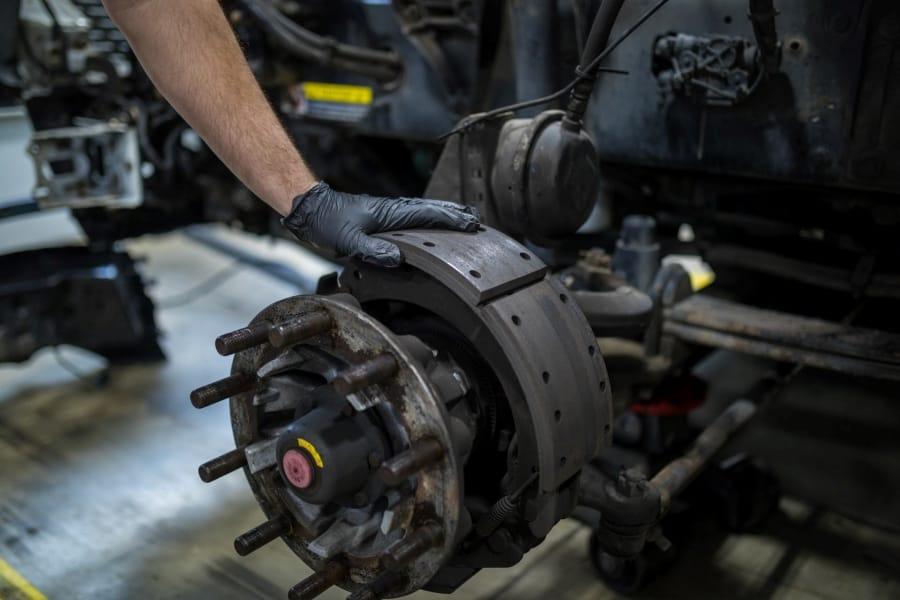
This is the most common and concealed maintenance loophole in the industry. When a fault occurs on a single wheel brake, maintenance workers only repair the faulty wheel without inspecting and servicing the opposite wheel on the same axle, let alone conducting overall brake balance adjustment for the entire vehicle.
- In the short term, the brake of the single wheel returns to normal and the vehicle can be put back into service.
- In the long run, inconsistent braking force between the two wheels on the same axle gradually forms brake imbalance, which becomes increasingly serious with repeated single-point repairs.
- Eventually, the entire braking system can generate force but operates unevenly, turning into a ticking time bomb for accidents.
Vehicle owners refuse to repair fault-free wheels to save costs, which is the main reason for the widespread existence of this problem. Such “cost-saving repairs” are actually the most dangerous safety hazards.
(2) Mandatory Maintenance Requirements: Strict Rules Set by FMCSA and Federal Regulations
The Federal Motor Carrier Safety Administration (FMCSA) of the United States has formulated zero-tolerance mandatory maintenance standards for air brake systems. The core requirements are as follows:
- Daily inspection obligation: Drivers must conduct comprehensive pre-trip and post-trip inspections, including air pressure monitoring, air line leakage checks, travel inspection of brake slack adjusters, brake shoe wear inspection and low-pressure alarm testing. All hidden hazards must be recorded and repaired, and vehicles with faults are banned from road operation.
- Systematic maintenance plan: Transportation companies must establish regular inspection, component replacement and brake balance adjustment schedules performed by professional technicians, and keep complete maintenance records.
- Brake balance requirements: Wheels on the same axle must be repaired and adjusted synchronously to ensure even distribution of braking force. Single-point repair is prohibited.
- Component standard requirements: All brake components must be of matching specifications and qualified quality. Mixing used parts and non-standard components is forbidden.
(3) Current Industry Situation: Safety Crisis Caused by Low Compliance Rate of Maintenance
Despite strict regulations, compliant maintenance is far from the industry norm in actual operation. A large number of trucks operate without regular inspections, maintenance records are falsified, maintenance personnel lack professional qualifications, and faulty vehicles travel on roads illegally. In accident investigations, uniform brake skid marks from all wheels of an 18-wheel truck are barely seen at accident scenes. This detail directly proves the prevalence of brake imbalance and inadequate maintenance.
VII. Emergency Response to Brake Failure: Life-Saving Operation Guidelines for Drivers
When brake failure occurs suddenly, the driver’s operation determines the outcome of the accident. Correct emergency handling is the only chance to survive. The following is the standardized emergency procedure released by authoritative institutions.
(1) Mandatory Correct Operations
- Stay calm and avoid panic. Panic is the biggest obstacle to effective emergency response.
- Downshift step by step to use engine braking. Shift gears down gradually to utilize the resistance of engine compression for deceleration. Do not skip gears to prevent engine over-revving and damage.
- Activate the engine retarder (Jake Brake) to assist deceleration and reduce reliance on friction brakes.
- Use the parking brake cautiously. Apply the parking brake gradually and intermittently after the vehicle speed drops. Never lock the wheels at once to avoid wheel lockup and vehicle loss of control.
- Locate an emergency escape route quickly. Steer to emergency lanes, truck escape ramps or open areas. Turn the steering wheel gently and avoid sharp turns that may cause rollover.
- Warn surrounding vehicles. Turn on hazard warning lights, sound the horn and flash brake lights to alert nearby vehicles to yield.
- Utilize truck escape ramps. Uphill gravel escape ramps on long downhill sections are the final safety barrier for out-of-control vehicles. Drive into the ramp without hesitation.
(2) Fatal Mistakes That Must Be Avoided
- Turning off the engine. Engine shutdown results in loss of power steering assist and engine braking, leaving the vehicle completely out of control.
- Shifting to neutral gear. This disconnects the engine from the wheels, allowing the vehicle to coast freely with continuously increasing speed.
- Pulling the parking brake hard at high speed. Instant wheel lockup will cause trailer swing, jackknifing and rollover.
- Making sharp turns. Heavy trucks have a high center of gravity, and sharp steering maneuvers easily lead to rollover and worsen accidents.
VIII. Liability Determination for Brake Failure Accidents: Multiple Parties Held Liable and Evidence Chain
Liability for accidents caused by brake failure does not solely rest on drivers. It is a multi-party liability system involving drivers, transportation companies, repair shops, component manufacturers and loading enterprises. Liability is determined based on maintenance and operational faults.
(1) Core Liable Parties and Basis for Accountability
- Driver liability: Drivers bear fault liability for failing to complete daily inspections, ignoring brake hazards, operating brakes improperly (holding the brake continuously on long downhills) and driving overloaded vehicles.
- Transportation company liability: Companies are primarily liable for failing to establish a sound maintenance system, forcing drivers to operate faulty vehicles, poor overload management and insufficient staff training.
- Repair shop liability: Repair shops assume joint and several liability for improper maintenance, single-point repair, using inferior components and failing to eliminate hidden hazards.
- Component manufacturer liability: Manufacturers bear product liability if design defects or manufacturing flaws of brake components lead to failure.
- Loading enterprise liability: Overloading and uneven cargo distribution increase braking load and trigger brake imbalance, making loading companies partially liable.
(2) Core Evidence Chain for Accident Investigation
Complete technical evidence is required to determine liability for brake failure accidents. Professional accident investigators collect the following key materials:
- Test reports of the vehicle brake system. Professional institutions disassemble and inspect the system to identify brake imbalance, component faults and signs of brake fade.
- Maintenance records. Verify whether inspections and repairs are conducted in compliance with regulations, whether records are falsified and whether hidden hazards are rectified.
- Driver logbooks. Confirm the implementation of daily inspections, fatigue driving and improper operation.
- Data from on-board black boxes. Restore vehicle speed, brake operation, engine status and air pressure data before the accident.
- On-site traces. Brake skid marks, vehicle trajectories and cargo distribution verify brake imbalance and overloading.
- Compliance assessment against regulations. Identify violations in maintenance, operation and loading by referring to U.S. federal regulations.
IX. Full Lifecycle Safety Prevention and Control for Air Brake Systems: Eliminate Failures from the Source
Air brake failure is not inevitable. Hidden dangers can be eliminated fundamentally and a full lifecycle safety prevention and control system can be established through standardized maintenance, standardized operation, professional inspection and strict supervision.
(1) Daily Operation: The First Line of Defense by Drivers
- Strictly conduct pre-trip and post-trip brake inspections without omission or falsification.
- Refuse overloading and uneven cargo loading to avoid excessive braking load.
- Adopt combined engine braking and intermittent braking when traveling down long slopes. Never hold the brake pedal continuously.
- Stop the vehicle for maintenance immediately upon detecting abnormal air pressure, brake pulling, soft braking, abnormal noise or overheating. Never operate a faulty vehicle.
(2) Maintenance Management: Core Responsibility of Transportation Companies
- Implement the system of synchronous maintenance for the entire vehicle brake system. Always inspect and repair wheels on the same axle together, and ban single-point repair.
- Replace wearing parts such as brake shoes, brake drums, air lines and slack adjusters regularly. Do not use components beyond their service life.
- Employ professional technicians to conduct regular brake balance tests, air line tightness tests and air pressure system debugging.
- Keep complete maintenance records for regulatory inspection and prohibit record falsification.
(3) Professional Inspection: Accurate Hazard Elimination Before Accidents
Professional brake inspection institutions provide non-destructive full-system inspections. Only one air line and brake dust cover need to be removed to complete the following tests without disassembling core components:
- Functional tests for all valves, gauges, alarm devices and air supply systems.
- Accurate positioning of brake imbalance, uneven air pressure and component faults.
- Braking force calculation and braking efficiency evaluation, with professional inspection reports issued to eliminate hidden hazards in advance.
(4) Regulatory Supervision: Reinforce the Bottom Line of Industry Safety
Regulatory authorities should strengthen roadside inspections, focusing on investigating hidden dangers including brake imbalance, air line leakage and faulty slack adjusters, as well as overloading. Impose severe penalties on non-compliant companies and drivers to push for regulatory compliance.
Conclusion: Air Brake Safety – No Trivial Matters, Only Full Responsibility
The air brake system of heavy-duty trucks is a well-designed system with sufficient safety redundancy. Its failure is never an unexpected accident, but the inevitable result of neglecting maintenance, violating operating rules and taking chances. Every hidden danger including brake imbalance, brake fade and component faults represents disregard for life safety.
For transportation companies, compliant maintenance is not an extra cost, but the bottom line for survival. For drivers, daily inspections are not a burden, but a guarantee for personal safety. For regulators, strict law enforcement is not a restriction, but a bounden duty. Only by adhering to the principle of no trivial matters in brake safety and zero loopholes in maintenance can the air brake system function as a reliable safety barrier, safeguard every trip and put an end to tragedies caused by brake failure.
There is no room for luck in road safety. The reliability of air brakes lies in every inspection, every maintenance work and every standardized operation. This is not only a technical conclusion, but also a principle related to lives.


