Your Shacman truck doesn’t complain. It hauls, climbs, brakes, and turns — day after day, load after load. But beneath that tough exterior, the chassis is quietly doing the heavy lifting. And like any hardworking team member, it deserves attention before it decides to take an unscheduled vacation.
This guide walks you through every major system in the Shacman truck chassis — from frame rails to steering linkage — so you know what to inspect, when to replace, and how to source the right parts without the guesswork.
Understanding Shacman Truck Chassis Architecture
What Makes Up the Chassis System
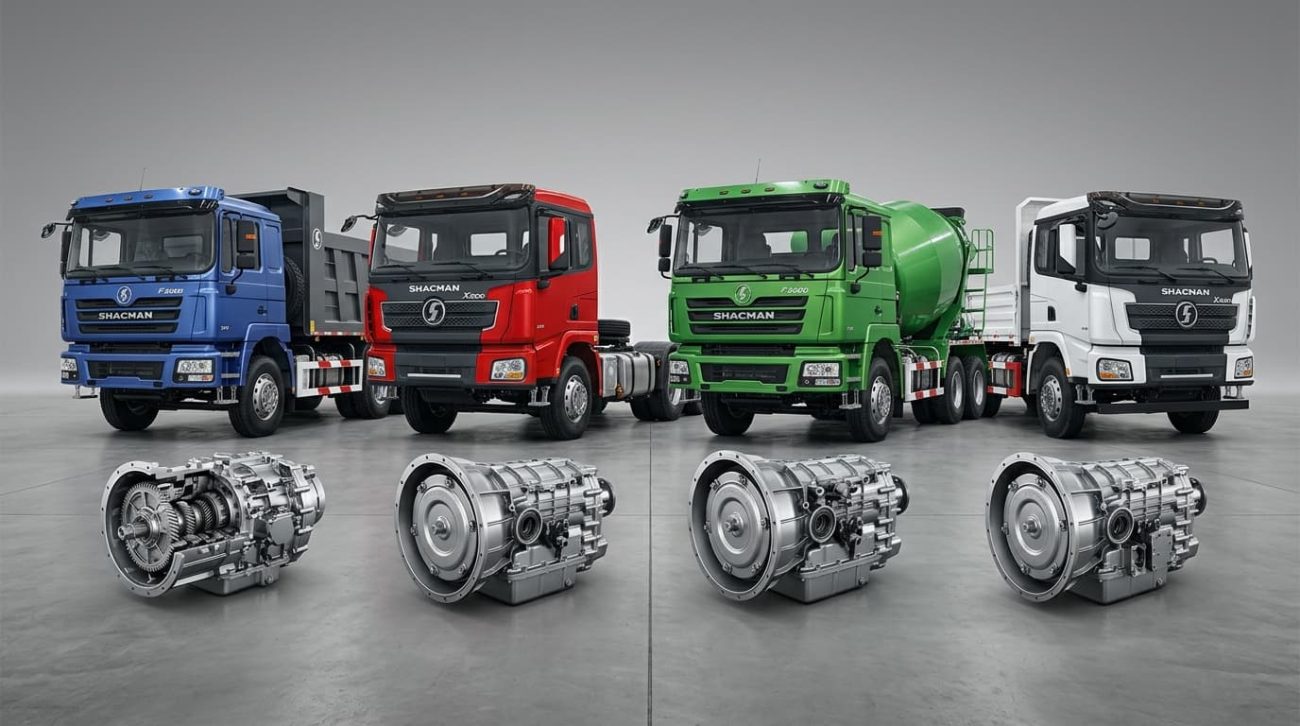
Think of the chassis as your truck’s skeleton — except this skeleton also has to carry 40 tonnes up a mountain without flinching. It’s a coordinated system of frame, suspension, axles, brakes, and steering, all working together like a well-rehearsed crew.
Each subsystem depends on the others. A worn suspension bushing doesn’t just rattle the cab — it shifts loads onto the frame, accelerates tire wear, and makes the steering work overtime. Understanding how these parts interact is the first step toward smarter maintenance.
Why Chassis Health Matters for Fleet Performance
Chassis condition connects directly to three things fleet managers care about most: uptime, safety, and total cost of ownership. A cracked cross member or a lazy slack adjuster doesn’t send you a calendar invite before causing problems.
Shacman truck frame components don’t ask for days off, but they do wear out. Catching wear early — before it cascades into adjacent systems — is what separates a well-run fleet from one that lives at the repair shop.
Shacman Truck Frame Components
Frame Rail Specifications and Variants
Shacman offers different frame rail configurations across its model range. The F2000 series uses a standard C-channel design suited for medium-duty applications. The F3000 steps up with thicker flanges and higher-grade steel for construction and mining work.
The X3000 platform introduces optimized frame rail profiles with high-strength low-alloy (HSLA) steel rated at 700 MPa yield strength. This allows thinner, lighter rails without sacrificing load capacity — a meaningful advantage for long-haul operators watching payload limits.
Frame rail widths typically range from 850mm to 900mm (outside dimension), with section heights between 280mm and 320mm depending on the model and intended application.
Cross Members and Mounting Brackets
Cross members are the unsung heroes of structural rigidity. They tie the frame rails together, distribute torsional loads, and provide mounting points for everything from the engine to the fifth wheel.
Common failure points include the front cross member (which absorbs engine vibration daily) and rear cross members on tipper trucks that endure repeated shock loading. Weld cracks at gusset plates are your early warning system — catch them before they propagate.
| Component | Material | Typical Lifespan (km) | Replacement Indicator |
|---|---|---|---|
| Main frame rail | High-strength steel | 800,000+ | Cracking, deformation |
| Front cross member | Cast steel | 400,000 | Corrosion, bolt fatigue |
| Rear cross member | Stamped steel | 500,000 | Misalignment, weld cracks |
| Engine mounting bracket | Forged steel | 300,000 | Vibration increase |
Heavy Duty Truck Suspension Parts
Front Suspension System
Shacman’s front suspension relies on leaf spring packs paired with hydraulic shock absorbers and a stabilizer bar. The parabolic spring design — standard on F3000 and X3000 models — handles the mood swings of rough terrain with more grace than traditional multi-leaf setups.
Parabolic springs use fewer, tapered leaves with gaps between them, reducing inter-leaf friction and improving ride quality. They’re lighter too, which means more payload capacity where it counts. Shock absorbers on the front axle typically use a twin-tube design rated for the specific axle load of each model.
Rear Suspension — Air and Mechanical Options
The rear suspension is where Shacman gives you choices. Mechanical leaf spring setups dominate in mining and construction — they’re tough, cheap to repair, and don’t mind being covered in mud. Air suspension, on the other hand, pampers sensitive cargo and keeps ride height consistent regardless of load.
For mixed-use fleets, the hybrid approach (mechanical springs with air-assist) offers a middle ground. You get the durability of steel with adjustable load leveling when you need it.
| Suspension Type | Best Application | Maintenance Frequency | Cost Level |
|---|---|---|---|
| Multi-leaf spring | Mining, construction | Every 50,000 km | Low |
| Parabolic spring | Long-haul freight | Every 80,000 km | Medium |
| Air suspension | Sensitive cargo | Every 40,000 km | High |
| Composite (hybrid) | Mixed-use fleets | Every 60,000 km | Medium-High |
U-Bolts, Bushings, and Spring Pins
These are the small parts that quietly hold everything together — until they don’t. U-bolts clamp the spring pack to the axle seat, and they need to stay at spec torque (typically 450–550 Nm for Shacman rear applications). Loose U-bolts let the axle shift, and a shifted axle makes your truck track like a confused crab.
Rubber bushings in the spring eyes deteriorate from heat, oil contamination, and simple age. When they go, you’ll hear clunking over bumps and notice vague handling. Spring pins (center bolts) keep the leaf pack aligned — a sheared pin means the axle can walk sideways under braking. Check these during every scheduled service.
Shacman Axle Assembly
Front Steer Axle Components
The front steer axle is where precision matters most. Kingpins, steering knuckles, wheel hubs, and tapered roller bearings all work together to let you point several tonnes of truck exactly where you want it.
Kingpin wear is the most common issue — you’ll notice it as increased steering free play and uneven front tire wear. Shacman uses pressed-in kingpins with grease nipples; regular lubrication (every 10,000 km or less in dusty conditions) extends their life dramatically. Wheel bearing preload should be checked whenever hubs are serviced — too tight generates heat, too loose invites wobble.
Rear Drive Axle Breakdown
Inside the rear drive axle lives the differential housing, ring and pinion gear set, and half shafts (axle shafts). Shacman offers both single-reduction axles for highway work and double-reduction (hub reduction) axles for heavy off-road applications.
Double-reduction axles multiply torque at the wheel hub, allowing a smaller, lighter differential while still delivering massive pulling power. The trade-off is more components to service and slightly higher maintenance costs. For mining and construction fleets, the durability advantage is worth it.
Axle Ratio Selection Guide
Choosing the right axle ratio is a balancing act between speed, fuel economy, and pulling power. Here’s how the common Shacman ratios stack up:
| Axle Ratio | Top Speed Potential | Fuel Efficiency | Best Use Case |
|---|---|---|---|
| 3.7:1 | High | Excellent | Highway freight |
| 4.1:1 | Moderate | Good | Mixed routes |
| 4.8:1 | Lower | Fair | Hilly terrain |
| 5.73:1 | Low | Lower | Off-road/mining |
Commercial Vehicle Brake System
Foundation Brake Components
The foundation brakes are where kinetic energy meets friction — and friction always wins. Shacman trucks use S-cam drum brakes with cast iron drums, composite brake linings, automatic or manual slack adjusters, and spring brake chambers.
These parts earn their keep every single stop. Brake linings wear predictably, but S-cam bushings and rollers often get overlooked. A seized S-cam doesn’t apply force evenly across the lining, leading to tapered wear and reduced stopping power. Keep them greased and free-moving.
Air Brake System Architecture
Shacman’s air brake system follows a dual-circuit design — front and rear circuits operate independently. If one circuit gets lazy (or develops a leak), the other still provides stopping power. It’s a safety philosophy built into the plumbing.
The system starts at the engine-driven compressor, passes through an air dryer (which removes moisture before it can corrode everything downstream), fills multiple reservoirs, and distributes air through relay valves, quick-release valves, and brake chambers. The governor maintains system pressure between 8 and 12 bar.
ABS and Auxiliary Braking
Electronic ABS modules on Shacman trucks use wheel speed sensors mounted at each hub to detect lock-up and modulate brake pressure accordingly. Sensor air gaps (typically 0.5–1.5mm) need periodic checking — too wide and the sensor can’t read the tone ring.
Auxiliary braking options include exhaust brakes (butterfly valve in the exhaust manifold) and hydraulic retarders. These systems dramatically reduce foundation brake wear on long descents. A well-functioning retarder can handle 60–80% of braking energy on downhill grades, letting your brake linings live much longer lives.
| Brake Component | Inspection Interval | Critical Wear Limit | Failure Risk |
|---|---|---|---|
| Brake drum | 30,000 km | 2mm over nominal | Cracking |
| Brake lining | 20,000 km | 3mm remaining | Fade, scoring |
| Slack adjuster | 15,000 km | >20mm pushrod stroke | Delayed braking |
| Air dryer cartridge | 60,000 km | Moisture in tanks | System corrosion |
Truck Steering Linkage Parts
Power Steering Gear Box
The power steering gear box is where precision meets brute force. Shacman uses a recirculating ball mechanism — hundreds of small steel balls circulate between the worm shaft and the ball nut, converting rotational input into linear force with minimal friction.
The sector shaft (output shaft) connects to the pitman arm and must maintain tight mesh with the ball nut. Excessive play here shows up as vague on-center steering feel. Adjustment is possible within limits, but once the gear teeth are worn, replacement is the only real fix.
Drag Links, Tie Rods, and Ball Joints
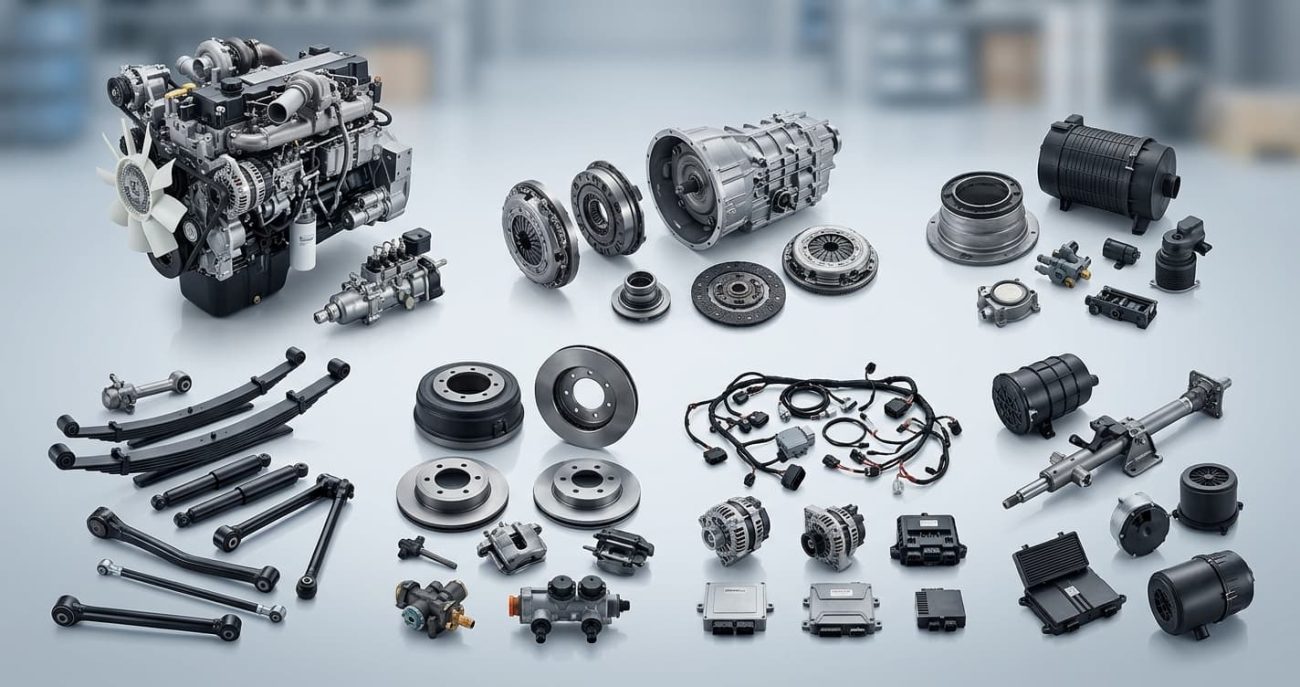
From the pitman arm, force travels through the drag link to the steering knuckle, then across the tie rod to the opposite knuckle. Every connection point uses a ball joint — and every ball joint is a potential source of play.
Acceptable free play at the steering wheel rim is typically under 25mm (about one inch). If you’re measuring more than that, start checking ball joints from the pitman arm forward. Worn boots let dirt in and grease out — once contamination enters a ball joint, its days are numbered. Replace boots at the first sign of cracking.
Steering Pump and Hydraulic Lines
The vane-type power steering pump delivers fluid at approximately 100–150 bar operating pressure, with flow rates matched to engine speed. Shacman specifies ATF or dedicated power steering fluid — never mix types, and never run the system low.
Signs your steering pump is about to retire early include whining at full lock, heavy steering when cold, and foamy fluid in the reservoir (indicating air ingestion). High-pressure hoses should be inspected for chafing, bulging, and weeping at crimped fittings. A burst steering hose at highway speed is not the kind of excitement anyone needs.
Sourcing Genuine vs. Aftermarket Shacman Chassis Parts
OEM Part Number Cross-Reference
Shacman part numbers follow a structured format that encodes the system, assembly, and specific component. Learning to decode these numbers — or working with a supplier who already has — eliminates the guesswork from ordering.
Cross-referencing is especially important when sourcing Shacman Truck Chassis Parts from aftermarket suppliers. The same physical part may carry different numbers depending on the model year or market. Always confirm against the chassis VIN and original configuration to avoid expensive return shipments.
Quality Tiers Comparison
Not all aftermarket parts are created equal. The market generally breaks into three tiers, and knowing which tier suits which application can save both money and headaches. For reliable sourcing of Shacman Truck Chassis Parts, working with certified suppliers who provide material documentation makes a real difference.
| Factor | OEM Genuine | Premium Aftermarket | Economy Aftermarket |
|---|---|---|---|
| Fitment accuracy | Exact | 95%+ | 80-90% |
| Material certification | Full | Partial | Rare |
| Warranty | 12+ months | 6-12 months | 0-3 months |
| Price vs. OEM | 100% | 50-70% | 20-40% |
| Recommended for | Critical systems | General replacement | Emergency only |
Preventive Maintenance Schedule for Chassis Parts
Inspection Intervals by Component Group
A practical maintenance calendar keeps your chassis from surprising you with unscheduled drama. The table below gives you a framework — adjust intervals based on operating conditions. Dusty mining sites and rough construction roads accelerate wear significantly compared to paved highway routes.
Daily checks take five minutes and catch problems before they strand you. Monthly services go deeper. Major overhauls are planned events — not emergencies.
| System | Daily Check | Monthly Service | Major Overhaul |
|---|---|---|---|
| Frame and mounts | Visual cracks | Torque check | 500,000 km |
| Suspension | Leaf condition | Bushing play | 200,000 km |
| Axles | Leak check | Bearing temp | 300,000 km |
| Brakes | Stroke test | Lining measure | 150,000 km |
| Steering | Free play | Fluid level | 250,000 km |
FAQ
How often should Shacman truck chassis parts be inspected?
Perform a daily walk-around to catch obvious issues like leaks, cracks, or loose components. A full chassis inspection — covering frame, suspension, axles, brakes, and steering — should happen every 20,000 to 30,000 km, or according to your fleet maintenance policy. Harsh operating environments may require shorter intervals.
Are aftermarket Shacman truck frame components reliable?
Premium aftermarket parts from certified suppliers perform well for non-critical applications like mounting brackets and cross members. However, safety-critical systems — brakes, steering linkage, and structural frame rails — warrant OEM or equivalent-certified parts with full material traceability. The cost difference is small compared to the risk.
What are the signs of worn heavy duty truck suspension parts?
Watch for uneven tire wear, increased cab vibration, sagging ride height on one side, clunking noises over bumps, and visible bushing deterioration (cracking, bulging, or separation from the metal sleeve). Any of these symptoms means inspection is overdue — not upcoming.
How do I find the correct Shacman axle assembly part number?
Start with the VIN plate on the chassis — it encodes the axle configuration. Cross-reference with the original parts catalog for your specific model and build date. If in doubt, consult the dealer network or a specialist supplier who can match the chassis configuration code to the correct assembly.
Can I upgrade my commercial vehicle brake system components?
Yes — common upgrades include switching from manual to automatic slack adjusters, installing higher-performance brake linings, and adding a hydraulic retarder for mountain routes. Always ensure upgrades comply with local vehicle regulations and that the air system capacity supports any additional components.
What causes premature failure in truck steering linkage parts?
The usual culprits are contaminated grease (from torn boots), missed lubrication intervals, chronic overloading, and repeated road shock from poor surfaces. Ball joints and tie rod ends are particularly sensitive — once dirt enters the joint, abrasive wear accelerates rapidly. Preventive greasing and boot inspection are your best defenses.
Take Action: Keep Your Shacman Running Strong
Your Shacman chassis doesn’t need sympathy — it needs the right parts at the right time. Proactive sourcing beats roadside surprises every single time, and the difference between planned maintenance and emergency repairs is measured in thousands of dollars and days of lost revenue.
Ready to get ahead of wear and keep your fleet rolling? Request a chassis parts quote today, connect with a Shacman parts specialist, or download a maintenance checklist tailored to your operating conditions. Whether you need a single kingpin or a complete axle assembly, having a reliable supply chain in place means your trucks stay where they belong — on the road, earning.
Contact us now to discuss your Shacman truck chassis parts requirements and get pricing for your specific model and application. Your workhorse deserves a partner who shows up prepared.


