
Understanding the Economics of Long Haul Trucking
Long haul trucking forms the backbone of freight transportation across continents, moving approximately 72% of all goods by weight in the United States alone. For fleet operators and independent owner-operators, understanding the true cost structure of over-the-road driving is essential to building a sustainable business. This guide breaks down the financial realities, maintenance best practices, and efficiency strategies that separate profitable operations from those that struggle to survive.
Whether you are researching how to start a long haul trucking business or looking to optimize an existing fleet, the information below draws from industry data and real-world operational experience spanning more than a decade of commercial vehicle logistics.
The True Cost Breakdown of Interstate Freight Operations
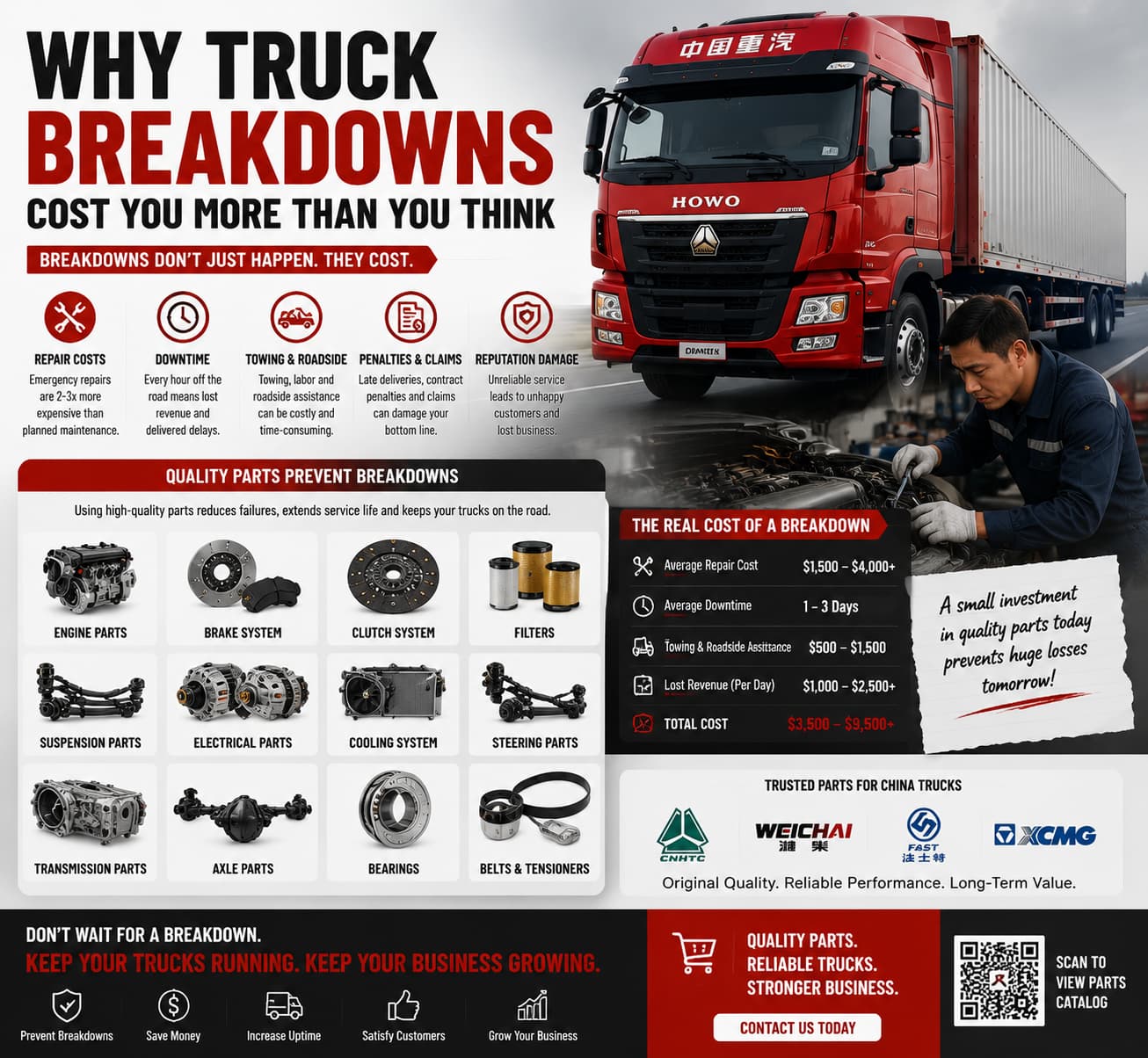
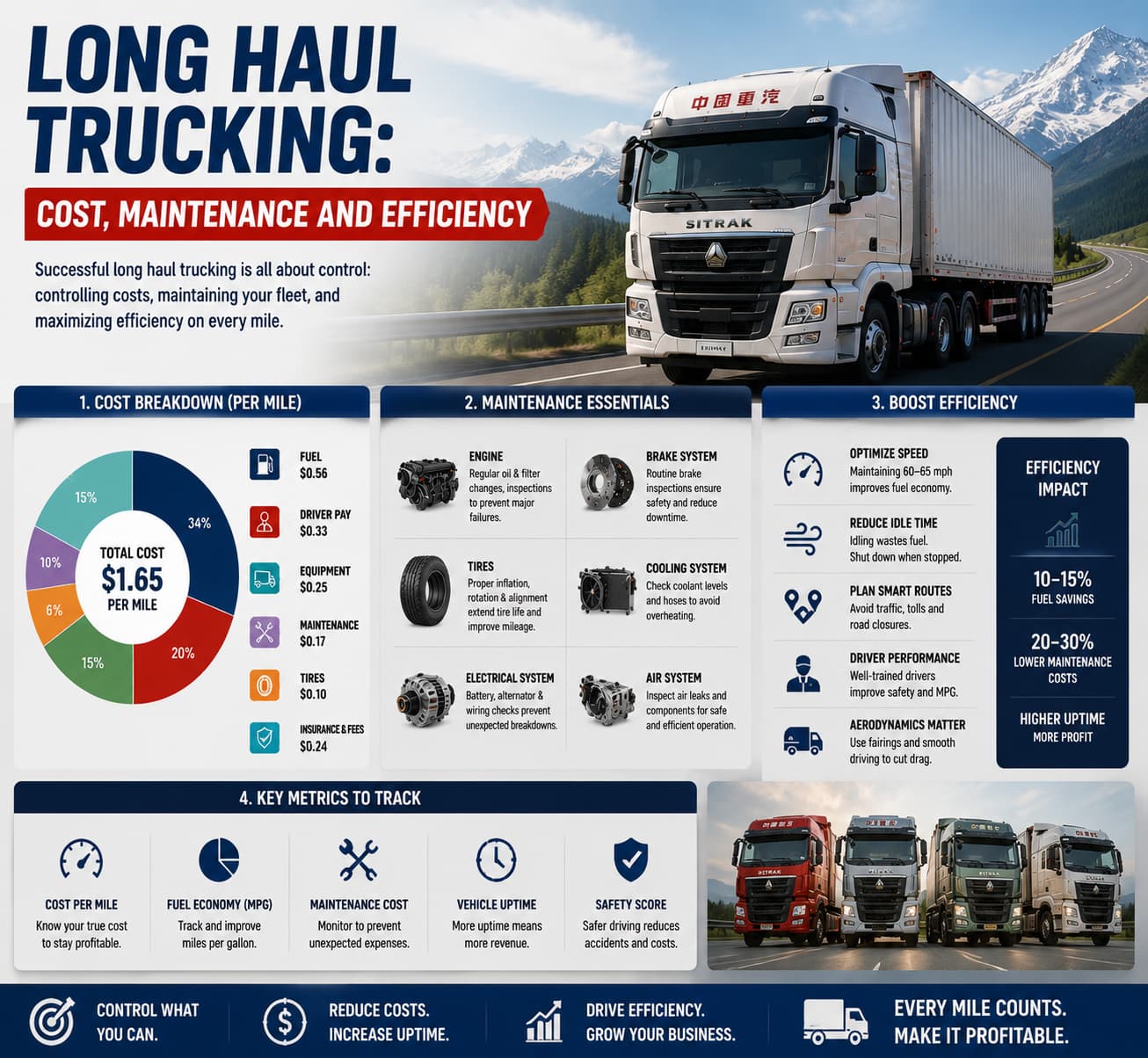
Operating costs for cross-country freight hauling have risen steadily. According to the American Transportation Research Institute’s 2025 operational cost report, the average marginal cost per mile reached $2.27, up from $2.01 in 2022. These figures encompass fuel, driver wages, insurance, maintenance, and administrative overhead.
Many new entrants underestimate the total cost of ownership. A single Class 8 tractor-trailer unit requires an initial investment between $150,000 and $200,000 for a new model, with used units ranging from $45,000 to $90,000 depending on mileage and condition. However, the purchase price represents only a fraction of lifetime expenses.
| Cost Category | Average Cost Per Mile (USD) | Percentage of Total |
|---|---|---|
| Fuel | $0.58 | 25.6% |
| Driver Wages & Benefits | $0.72 | 31.7% |
| Truck & Trailer Lease/Purchase | $0.34 | 15.0% |
| Repair & Maintenance | $0.20 | 8.8% |
| Insurance | $0.19 | 8.4% |
| Tires | $0.05 | 2.2% |
| Permits, Tolls & Other | $0.19 | 8.3% |
Beware of Low-Price Traps in Vehicle Acquisition
A common pitfall for new operators involves purchasing heavily discounted trucks from unverified sellers. These vehicles often carry hidden mechanical issues—worn engine components, compromised transmissions, or corroded frames—that generate repair bills exceeding the initial savings within months. Always request complete maintenance records and conduct independent inspections before purchasing.
When sourcing truck parts or complete vehicles, verify the supplier’s track record, warranty terms, and after-sales support infrastructure. Reputable suppliers provide transparent pricing that reflects genuine quality rather than artificially low figures designed to attract uninformed buyers.
Maintenance Strategies That Protect Your Investment
Preventive maintenance is the single most effective lever for controlling operational costs in interstate shipping. A well-maintained truck averages 500,000 to 1,000,000 miles before requiring a major overhaul, while neglected vehicles often fail catastrophically before reaching 300,000 miles.
Scheduled Maintenance Intervals
Industry best practice follows a tiered maintenance schedule. Oil and filter changes every 25,000 miles, transmission service every 100,000 miles, and comprehensive inspections at 50,000-mile intervals form the foundation. Compliance with truck driver hours of service regulations also reduces mechanical stress by preventing continuous high-load operation.
| Maintenance Task | Interval (Miles) | Estimated Cost (USD) |
|---|---|---|
| Oil & Filter Change | 25,000 | $300–$500 |
| Brake Inspection & Adjustment | 30,000 | $150–$400 |
| Tire Rotation & Alignment | 50,000 | $200–$600 |
| Transmission Service | 100,000 | $800–$1,500 |
| Coolant System Flush | 60,000 | $200–$350 |
| DPF Cleaning | 200,000 | $500–$1,000 |
Choosing Reliable Parts Suppliers
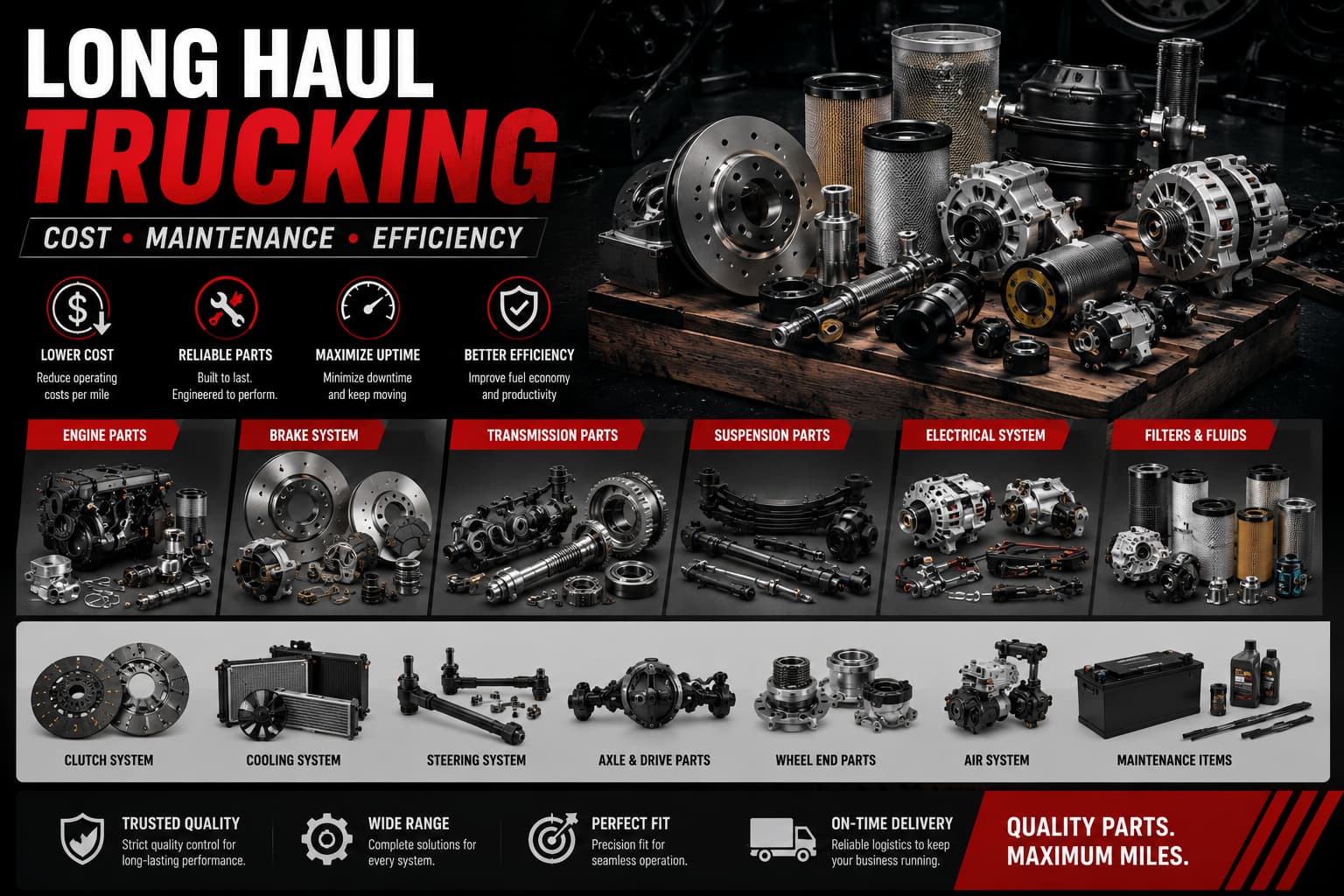
The quality of replacement components directly impacts vehicle longevity and safety. When comparing suppliers, evaluate them across multiple dimensions: OEM certification, material specifications, warranty coverage, and delivery reliability. Browse options by product category brand or by product category system to find components matched to your specific vehicle platform.
Low-cost aftermarket parts may seem attractive initially, but inferior metallurgy in brake components or substandard seals in engine gaskets create safety hazards and accelerate wear on adjacent systems. Always cross-reference part numbers and demand material certifications from your vendor.
Maximizing Fuel Efficiency on Extended Routes
Fuel represents the second-largest expense category for cross-country haulers. With diesel prices fluctuating between $3.50 and $4.80 per gallon throughout 2025 and into 2026, even marginal efficiency improvements translate into significant annual savings. A fleet averaging 100,000 miles per truck annually saves approximately $7,000 per unit for every 1 MPG improvement.
Aerodynamic and Operational Improvements
Modern aerodynamic devices—trailer skirts, boat tails, and gap reducers—can improve fuel economy by 5% to 12% combined. Speed management remains equally critical; fuel consumption increases exponentially above 55 mph, with each additional 1 mph above that threshold costing roughly 0.1 MPG.
Route optimization software now incorporates elevation data, weather patterns, and real-time traffic to recommend the most fuel-efficient paths across long haul trucking routes across the United States. These tools typically deliver 3% to 7% fuel savings compared to traditional routing methods.
Tire Management and Rolling Resistance
Properly inflated tires reduce rolling resistance by up to 3%, and automatic tire inflation systems maintain optimal pressure continuously. Low rolling resistance tire compounds, while 10% to 15% more expensive upfront, pay for themselves within 50,000 miles through fuel savings alone.
The Lifestyle Factor: Retention and Recruitment
Driver shortage remains a persistent challenge in the industry. Understanding the long haul trucking lifestyle pros and cons helps fleet managers design compensation packages and schedules that improve retention. Extended time away from home, irregular sleep patterns, and limited access to healthy food represent the primary drawbacks cited by drivers.
Conversely, competitive pay, independence, and the opportunity to travel attract many to the profession. Those searching for long haul trucking jobs near me 2026 will find that carriers offering predictable home time, modern equipment, and health benefits consistently outperform competitors in recruitment. Companies recognized among long haul trucking companies that pay the most typically offer $0.55 to $0.75 per mile for experienced drivers, plus performance bonuses.
Technology Integration for Operational Excellence
Telematics, electronic logging devices (ELDs), and predictive maintenance platforms have transformed fleet management. These systems collect real-time data on engine performance, driver behavior, and vehicle location, enabling proactive decision-making rather than reactive problem-solving.
Predictive analytics can identify failing components 2 to 4 weeks before breakdown occurs, reducing roadside failures by up to 40%. For operators seeking technical support in implementing these systems or diagnosing complex mechanical issues, partnering with knowledgeable suppliers who understand both hardware and software integration is essential.
Real-World Case Study: Fleet Optimization Results
A mid-size carrier operating 85 trucks across the southwestern United States implemented a comprehensive efficiency program in early 2025. By combining aerodynamic retrofits, predictive maintenance, and driver coaching, they achieved a 14% reduction in cost per mile within 12 months. Their breakdown rate dropped from 2.3 incidents per truck annually to 0.8, and driver turnover fell by 22%.
This cooperative case demonstrates that systematic investment in quality components and data-driven management produces measurable returns. The carrier reported a full ROI on their technology investment within 9 months.
Supplier Evaluation: A Critical Business Decision
Selecting the right parts and service suppliers can make or break an operation’s profitability. Beyond price, evaluate suppliers on response time, inventory depth, technical expertise, and geographic coverage. A supplier who delivers the correct part within 24 hours prevents $1,000+ per day in lost revenue from idle equipment.
Industry insight: The cheapest quote often becomes the most expensive decision. A $50 savings on a water pump that fails prematurely can generate $5,000 in towing, emergency repair, and lost load revenue. Prioritize total cost of ownership over purchase price.
To learn more about supplier credentials and service capabilities, visit our about us page. For specific inquiries regarding parts availability or fleet support programs, contact us directly for a consultation.
Frequently Asked Questions
What is the average cost per mile for operating a heavy-duty freight truck?
Based on 2025 industry data, the average all-in cost per mile is approximately $2.27. This includes fuel, driver compensation, insurance, maintenance, and equipment costs. Individual operations may range from $1.80 to $2.80 depending on equipment age, route efficiency, and maintenance practices.
How often should commercial trucks receive preventive maintenance?
A comprehensive inspection should occur every 50,000 miles, with oil changes at 25,000-mile intervals and brake checks every 30,000 miles. Transmission and coolant services follow longer intervals of 100,000 and 60,000 miles respectively. Adhering to these schedules prevents costly breakdowns and extends vehicle lifespan significantly.
What are the biggest hidden costs new fleet operators overlook?
Insurance premiums for new carriers often exceed expectations by 30% to 50%. Deadhead miles (driving empty), detention time at loading docks, and regulatory compliance costs (permits, IFTA reporting, ELD subscriptions) are frequently underestimated. Additionally, tire replacement at $500 to $700 per tire across 18 positions adds up quickly.
How can I identify unreliable parts suppliers before making a purchase?
Red flags include pricing significantly below market average (often indicating counterfeit or substandard materials), lack of warranty documentation, no verifiable business address, and inability to provide OEM cross-reference numbers. Request material test certificates, check for industry certifications, and start with small orders to verify quality before committing to large purchases.
What fuel efficiency improvements offer the fastest return on investment?
Speed reduction (governing trucks to 62 mph) costs nothing and saves 5% to 8% on fuel immediately. Tire pressure monitoring systems offer ROI within 3 to 6 months. Aerodynamic trailer skirts typically pay for themselves within 12 to 18 months. Driver coaching programs focused on progressive shifting and idle reduction show results within weeks of implementation.


