
How to Identify Original Truck Parts: Essential Guide
In the field of heavy-duty truck operation and maintenance, identifying original truck parts is not only a key part of ensuring driving safety but also a critical measure to avoid economic losses caused by counterfeit products.
For fleet managers, repair technicians, and truck operators, mastering the skills to distinguish genuine parts from counterfeits is essential to maintaining vehicle reliability and reducing long-term operational costs.
This guide focuses on practical and operable methods to help you accurately identify original truck parts, avoid common identification mistakes, and ensure that every part you choose meets the quality standards required for heavy-duty operations.
It covers core identification steps, common pitfalls, and the unique value of original parts, providing a one-stop reference for all those involved in truck maintenance and operation.
1. Why Identifying Original Truck Parts Matters
For heavy-duty truck operations, the quality of parts directly determines the safety, reliability, and service life of the vehicle.
Counterfeit or low-quality parts not only fail to meet the operational requirements of heavy-duty work but also easily lead to vehicle breakdowns, road safety hazards, and increased maintenance costs.
In contrast, original truck parts are produced in strict accordance with industry standards and vehicle model specifications, ensuring perfect compatibility and stable performance
Choosing original parts can effectively reduce the frequency of vehicle failures, extend the service life of the fleet, and ultimately reduce long-term operational costs.
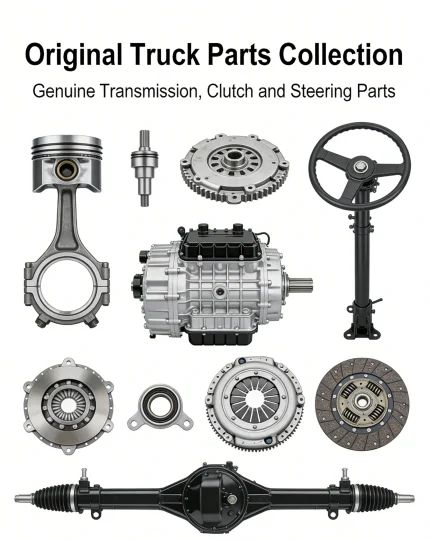
Genuine Transmission, Clutch and Steering Parts
2. Key Steps to Identify Original Truck Parts
Identifying original truck parts does not require advanced professional knowledge, but it does need careful observation and scientific verification.
The following key steps will help you quickly distinguish genuine parts from counterfeits and ensure that you choose the right parts for your truck.
2.1 Check Brand Markings and Serial Numbers
One of the most direct ways to identify original truck parts is to check the brand markings and serial numbers. Original parts have clear, standardized brand logos that are etched or stamped on the surface, with no blurriness or misspellings.
Each original part is also equipped with a unique serial number, which is the “identity card” of the part.
You can enter this serial number on the official verification page of the brand to confirm the part’s authenticity—original parts will show detailed information such as production date, model matching, and quality inspection results.
while counterfeit parts often lack valid serial numbers or have blurred, unrecognizable markings. For detailed verification steps, visit our part verification guide (non-keyword anchor).
2.2 Inspect Material Quality and Craftsmanship
Original truck parts are made of high-strength, wear-resistant materials that can withstand the harsh working environment of heavy-duty trucks, such as high temperatures, vibration, and friction.
When you hold an original part, you can feel its solid weight and fine texture, with no rough edges, burrs, or uneven surfaces.
In contrast, counterfeit parts often use cheap, low-quality materials, which are light in weight, rough in surface, and even have obvious defects such as uneven welding or incomplete processing.
For example, original clutch parts have a uniform texture and stable performance, while counterfeit clutch parts are easy to wear and deform after a short period of use.
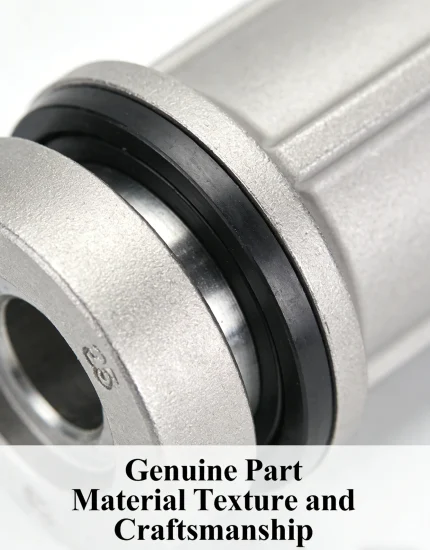
Genuine Part Material Texture and Craftsmanship
2.3 Verify Model Compatibility
Original truck parts are developed for specific truck models, with perfect compatibility—no additional modification is needed during installation.
You can use the official part number query tool to confirm whether the part matches your truck’s make and model, ensuring that it fits perfectly with the vehicle’s original components.
Counterfeit parts often claim to be “universally applicable” but cannot achieve precise matching, which may lead to installation difficulties, abnormal vehicle operation, or even damage to other components.
Access our part compatibility tool (non-keyword anchor) to check matching quickly.
3. Common Mistakes to Avoid When Identifying Original Parts
Many people easily fall into misunderstandings when identifying original truck parts, which leads to the purchase of counterfeit products. Here are the most common mistakes to avoid to help you make the right choice:
- Mistake 1: Ignoring packaging details. Original parts come in standardized packaging with clear brand logos, detailed installation instructions, and warranty certificates, while counterfeit parts often have simple, shoddy packaging with missing information.
Learn more about original part packaging via our packaging guide (non-keyword anchor).
- Mistake 2: Focusing only on price. Original parts are reasonably priced due to strict quality control, while counterfeit parts are often cheap but have hidden safety hazards and short service life.
- Mistake 3: Skipping serial number verification. Even if a part looks genuine, you should still verify its serial number through official channels to avoid buying counterfeits.
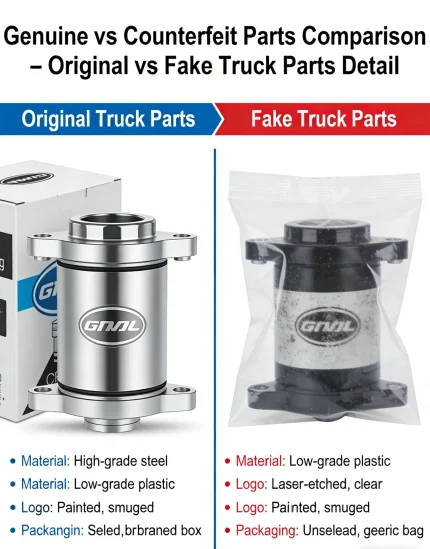
Original vs Fake Truck Parts Detail
4. The Value of Choosing Original Truck Parts
Choosing original truck parts is not only a guarantee of vehicle safety but also a wise investment in long-term operations.
Original parts have strict quality control, stable performance, and a formal warranty, allowing you to get professional after-sales service and technical support when problems occur.
In addition, original parts can maintain the optimal performance of the vehicle, reduce fuel consumption and maintenance costs, and help your fleet achieve more efficient and safe operation.
Whether you are a fleet manager or a repair technician, choosing original parts is the most cost-effective and reliable choice.
For more professional guidance on identifying original truck parts, you can visit our genuine parts resource center (non-keyword anchor) or contact our expert team for a one-on-one consultation.
We will provide you with accurate verification methods and professional suggestions to help you avoid counterfeit parts and protect your operational interests.