Symptoms of a Failing Brake Master Cylinder: How to Diagnose and Replace
In the complex architecture of a heavy-duty truck's braking system, the brake master cylinder serves as the central command unit. It is the critical component responsible for converting the mechanical force exerted by the driver's foot on the brake pedal into hydraulic pressure. This pressure is then distributed through the brake lines to the wheel cylinders or brake calipers, ultimately bringing the massive weight of a commercial vehicle to a safe and controlled stop. When this vital component begins to falter, the entire braking system is compromised, posing severe risks to the driver, the cargo, and public safety. For fleet managers and maintenance professionals, understanding the intricacies of the brake master cylinder and recognizing the early warning signs of failure is an absolute necessity.
As a specialized supplier of premium truck components, we recognize that the reliability of the braking system is the foundation of commercial vehicle operation. This comprehensive guide is meticulously crafted to provide you with an in-depth understanding of brake master cylinder failures. We will explore the operational mechanics of this component, detail the unmistakable symptoms that indicate a malfunction, and outline the professional procedures for diagnosis and replacement. Our goal is to equip you with the technical knowledge required to maintain optimal fleet safety and operational efficiency. For a broader overview of the essential braking system components we provide, we encourage you to explore our System Products Page.
Understanding the Brake Master Cylinder: The Heart of the System
To effectively diagnose a failing brake master cylinder, one must first understand its internal mechanics and its role within the broader braking ecosystem. While the fundamental principle remains the same across various vehicle types, the demands placed on a master cylinder in a heavy-duty commercial truck are exponentially higher than those in a passenger car.
The Mechanics of Hydraulic Pressure Generation
The brake master cylinder is essentially a highly precision-engineered hydraulic pump. It consists of a robust housing, typically cast iron or high-grade aluminum, containing a cylindrical bore. Inside this bore, one or more pistons move back and forth. When the driver depresses the brake pedal, a pushrod forces the primary piston forward within the bore. This movement compresses the brake fluid ahead of the piston, generating high-pressure hydraulic force.
Modern heavy-duty trucks utilize a dual-circuit (or tandem) master cylinder design for enhanced safety. This design incorporates two separate pistons within the same bore, creating two independent hydraulic circuits. Typically, one circuit controls the front brakes, while the other controls the rear brakes. In the event of a leak or failure in one circuit, the other circuit remains operational, ensuring that the vehicle retains at least partial braking capability. The integrity of the internal rubber seals, known as primary and secondary cups, is paramount. These seals prevent fluid from bypassing the pistons and ensure that maximum pressure is transmitted to the brake lines.
Adapting International Standards for Chinese Truck Excellence
The global landscape of braking system technology is heavily influenced by established international standards. However, the true test of a component's quality lies in its ability to perform flawlessly within specific operational contexts. Our expertise lies in bridging the gap between these global technical benchmarks and the specific, often rigorous requirements of leading Chinese truck manufacturers.
Whether your fleet consists of the robust Sinotruk (HOWO) models designed for heavy construction, the versatile Shacman trucks navigating diverse terrains, or the reliable FAW (Jiefang), Foton, and Dongfeng vehicles dominating long-haul logistics, the brake master cylinder must be perfectly calibrated to the vehicle's weight distribution and braking dynamics. We provide master cylinders that are not merely "compatible" but are engineered to match or exceed the performance characteristics required by these specific brands. This deep understanding of cross-brand compatibility and our commitment to sourcing components optimized for the demanding environments where Chinese trucks excel is the cornerstone of our professional service. For a comprehensive look at the brands we support, visit our Product Brands Page.
The Role of Proportioning and Metering Valves
Beyond simply generating pressure, the master cylinder assembly often works in concert with, or directly incorporates, proportioning and metering valves. These components are crucial for maintaining vehicle stability during heavy braking. The proportioning valve reduces hydraulic pressure to the rear brakes during hard stops, preventing the rear wheels from locking up before the front wheels, which bear the brunt of the weight transfer. The metering valve, typically found in disc/drum setups, slightly delays the application of the front disc brakes until the rear drum brakes have overcome the tension of their return springs and engaged the drums. This ensures that all brakes apply simultaneously. When diagnosing master cylinder issues, it is essential to consider the function of these integrated valves, as their failure can mimic master cylinder problems, leading to erratic braking behavior or premature wheel lockup.
Unmistakable Symptoms of a Failing Brake Master Cylinder
A failing brake master cylinder rarely fails catastrophically without warning. It typically exhibits progressive symptoms that, if recognized early, can prevent complete brake failure. These symptoms are often related to internal seal degradation or external fluid leaks.
The Spongy or Sinking Brake Pedal
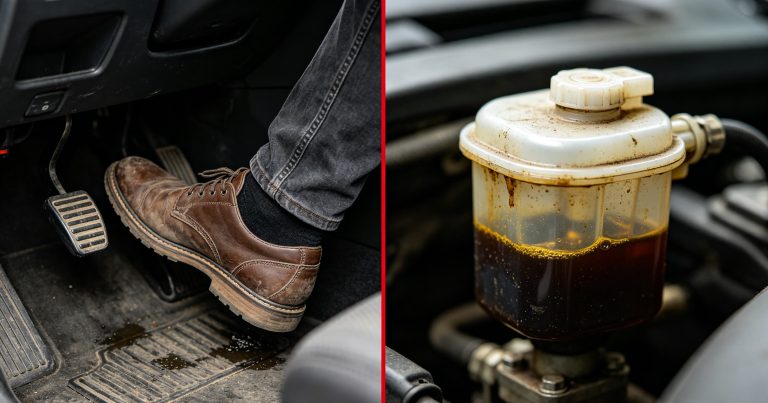
Perhaps the most common and alarming symptom of a failing master cylinder is a change in the feel of the brake pedal. A healthy braking system should provide a firm, consistent resistance when the pedal is depressed. If the pedal feels "spongy," "mushy," or lacks its usual firmness, it is a strong indicator that hydraulic pressure is not being maintained.
More critically, if you apply steady pressure to the brake pedal while the vehicle is stationary (such as at a red light) and the pedal slowly sinks towards the floorboard, this is a classic sign of internal seal failure within the master cylinder. The primary or secondary cups are allowing brake fluid to bypass the piston, resulting in a gradual loss of hydraulic pressure even though there may be no visible external leak. This condition severely compromises the vehicle's stopping power and requires immediate attention.
Contaminated or Low Brake Fluid
The condition and level of the brake fluid within the master cylinder reservoir can provide valuable diagnostic clues. A consistently low fluid level, requiring frequent top-ups, indicates a leak somewhere in the system. While this leak could be at a wheel cylinder, caliper, or brake line, the master cylinder itself is a prime suspect, particularly at the rear seal where it mounts to the brake booster.
Furthermore, the appearance of the brake fluid is telling. Healthy brake fluid is typically clear or slightly amber. If the fluid in the reservoir appears dark, murky, or contains visible particulate matter, it suggests that the internal rubber seals of the master cylinder are deteriorating and breaking down. This contamination not only indicates impending master cylinder failure but can also damage other sensitive components within the braking system, such as ABS valves.
Unpredictable Braking Behavior
A failing master cylinder can also manifest as unpredictable or erratic braking behavior. If the vehicle pulls to one side during braking, it may indicate that one of the circuits in a dual-circuit master cylinder is failing, causing an imbalance in hydraulic pressure between the front and rear, or left and right brakes. Additionally, if the brakes seem to engage too early or too late in the pedal travel, or if the braking force feels inconsistent, the master cylinder's internal valving or pistons may be sticking or failing to return to their rest positions correctly. For more detailed troubleshooting scenarios, our Technical Support Page offers extensive resources.
The Impact of Extreme Temperatures on Seal Integrity
The operational environment of a heavy-duty truck exposes the brake master cylinder to extreme temperature fluctuations. In sub-zero climates, the rubber seals (primary and secondary cups) within the master cylinder can become stiff and lose their elasticity. This loss of flexibility compromises their ability to maintain a tight seal against the cylinder bore, leading to internal fluid bypass and a spongy pedal, particularly when the vehicle is first started in the morning. Conversely, in high-heat environments or during prolonged, heavy braking on steep descents, the brake fluid temperature can soar. If the fluid has absorbed moisture over time, this heat can cause the moisture to boil, creating vapor pockets within the master cylinder and brake lines. This condition, known as vapor lock, results in a sudden and complete loss of hydraulic pressure, causing the brake pedal to go straight to the floor. Recognizing how environmental factors exacerbate master cylinder wear is crucial for proactive fleet maintenance.
Professional Diagnosis of Master Cylinder Issues
Accurate diagnosis is essential to ensure that the correct component is replaced and that the underlying issue is fully resolved. Misdiagnosing a master cylinder failure can lead to unnecessary expenses and continued safety risks.
Visual Inspection and Fluid Analysis
The diagnostic process should always begin with a thorough visual inspection. Examine the exterior of the master cylinder, particularly the area where it mounts to the brake booster or firewall. Look for any signs of dampness, fluid streaks, or peeling paint, which are clear indicators of an external leak from the rear seal.
Next, inspect the brake fluid reservoir. Check the fluid level and its condition. As mentioned earlier, dark or contaminated fluid is a strong indicator of internal seal degradation. It is also crucial to inspect the entire braking system—including brake lines, hoses, wheel cylinders, and calipers—to rule out leaks elsewhere that could be causing the low fluid level or spongy pedal.
The Pedal Pressure Test
The pedal pressure test is a definitive method for diagnosing internal master cylinder leaks. With the engine off, pump the brake pedal several times to deplete any residual vacuum in the brake booster. Then, apply firm, steady pressure to the pedal and hold it for several minutes.
If the pedal remains firm and holds its position, the master cylinder's internal seals are likely intact. However, if the pedal slowly sinks towards the floor under steady pressure, and no external leaks have been found in the system, it is almost certain that the master cylinder has an internal leak. The fluid is bypassing the piston seals, preventing the system from maintaining hydraulic pressure. Our Cooperative Case Studies highlight successful diagnostic and repair strategies implemented by our clients.
Advanced Diagnostic Tools: Pressure Gauges
While the pedal pressure test is a fundamental diagnostic step, professional technicians often employ hydraulic pressure gauges for a more precise assessment. By installing pressure gauges at the master cylinder outlet ports and at the wheel cylinders or calipers, technicians can measure the exact hydraulic pressure generated and distributed throughout the system.
If the gauge at the master cylinder shows a lower-than-specified pressure when the pedal is depressed, or if the pressure drops while the pedal is held steady, it confirms an internal leak within the master cylinder. Furthermore, comparing the pressure readings between the front and rear circuits can help identify issues with the proportioning valve or a failure in one half of a dual-circuit master cylinder. This data-driven approach eliminates guesswork and ensures that the master cylinder is indeed the culprit before a replacement is undertaken.
The Replacement Process: Ensuring System Integrity
Replacing a brake master cylinder is a critical procedure that must be executed with precision and care. The integrity of the entire braking system depends on the correct installation and bleeding of the new component.
Bench Bleeding: A Critical First Step
Before installing a new master cylinder into the vehicle, it is absolutely essential to perform a procedure known as "bench bleeding." This process removes the air trapped within the internal bore and passages of the new master cylinder.
Bench bleeding involves securing the master cylinder in a vise, filling the reservoir with fresh brake fluid, and routing temporary bleeder tubes from the outlet ports back into the reservoir. The piston is then slowly and repeatedly actuated using a dowel or specialized tool until no more air bubbles are seen emerging from the bleeder tubes. Failing to bench bleed the master cylinder will introduce a significant amount of air into the vehicle's brake lines, making it nearly impossible to achieve a firm brake pedal and severely compromising braking performance.
Installation and System Bleeding
Once the master cylinder has been properly bench bled, it can be installed in the vehicle. Carefully disconnect the brake lines from the old unit, being prepared to catch any spilled fluid. Remove the mounting nuts and detach the old master cylinder from the brake booster.
Install the new master cylinder, ensuring that the pushrod from the brake booster engages correctly with the primary piston. Reconnect the brake lines, taking care not to cross-thread the fittings. Tighten all connections to the manufacturer's specified torque.
After installation, the entire braking system must be thoroughly bled to remove any remaining air. This typically involves bleeding each wheel cylinder or caliper in a specific sequence, usually starting with the wheel furthest from the master cylinder. This process requires fresh brake fluid and careful attention to ensure that the master cylinder reservoir does not run dry during the bleeding procedure. For expert advice on compatibility and selection, do not hesitate to Contact Us.
The Importance of Correct Pushrod Adjustment
A frequently overlooked but critical step during master cylinder installation is the adjustment of the brake booster pushrod. The pushrod connects the brake pedal linkage (via the booster) to the primary piston of the master cylinder. If the pushrod is adjusted too short, there will be excessive free play in the brake pedal before the brakes engage. Conversely, if the pushrod is adjusted too long, it will constantly apply slight pressure to the master cylinder piston, preventing the compensating ports from opening. This traps hydraulic pressure in the brake lines, causing the brakes to drag, overheat, and potentially lock up.
Technicians must use a specialized pushrod depth gauge to measure the distance from the booster mounting face to the tip of the pushrod, and compare this measurement to the depth of the piston recess in the new master cylinder. Precise adjustment ensures that the master cylinder functions exactly as designed, providing immediate braking response without residual drag.
Quality Matters: Sourcing Reliable Master Cylinders
In the realm of heavy-duty commercial vehicles, the reliability of brake components is not merely a matter of performance; it is a matter of life and death. The difference between a high-quality brake master cylinder and a substandard one can have profound implications for fleet safety and operational continuity.
The Anatomy of a Premium Master Cylinder
A truly high-quality brake master cylinder is defined by its material integrity and manufacturing precision. The housing must be cast from high-grade iron or aluminum alloys capable of withstanding extreme hydraulic pressures without flexing or fracturing. The internal bore must be precision-machined and honed to an exacting micro-finish to ensure a perfect seal with the piston cups and to minimize wear over time.
Equally critical is the quality of the internal rubber components. The primary and secondary cups must be manufactured from advanced elastomers designed to resist degradation from brake fluid, extreme temperature fluctuations, and constant friction. We meticulously vet our sources to ensure these stringent standards are met, offering only components that have proven their durability and reliability in the most demanding real-world scenarios.
The Hidden Costs of Substandard Parts
While the initial procurement cost of a cheaper, substandard master cylinder might seem attractive, the long-term consequences are invariably more expensive. Inferior master cylinders are prone to premature seal failure, internal scoring, and external leaks. This leads to increased vehicle downtime, higher labor costs for repeated replacements, and potential damage to other expensive braking system components.
More critically, compromised braking performance directly impacts safety, significantly increasing the risk of accidents and potential liability. Our focus as a specialized supplier is on providing components that offer superior longevity and consistent, reliable performance, thereby enhancing the safety profile of your fleet and reducing your total cost of ownership. We believe in providing solutions that contribute to your operational efficiency, not detract from it. For more insights into our quality assurance processes, visit our About Us page.
The Value of Comprehensive Technical Support
Sourcing a high-quality brake master cylinder is only part of the equation; having access to expert technical support is equally vital. The complexities of modern heavy-duty braking systems mean that even experienced technicians can encounter challenges during diagnosis or installation. As a dedicated supplier, we don't just ship parts; we provide comprehensive technical backing.
Our team of specialists is available to assist with cross-referencing OEM part numbers, verifying compatibility with specific Chinese truck models (such as HOWO, Shacman, or FAW), and providing guidance on proper installation and bleeding procedures. We understand that minimizing vehicle downtime is your top priority, and our technical support is designed to help you resolve issues quickly and accurately. By partnering with us, you gain an extension of your own maintenance team, ensuring that every brake master cylinder replacement is performed to the highest standards of safety and reliability.
Frequently Asked Questions (FAQ) about Brake Master Cylinders
This section addresses common technical queries regarding brake master cylinders, their performance, and maintenance, compiled from years of professional interaction with fleet managers and technicians.
What is the difference between a single-circuit and a dual-circuit master cylinder?
A single-circuit master cylinder uses one piston to pressurize the entire braking system. If a leak occurs anywhere in the system, all braking power is lost. A dual-circuit (or tandem) master cylinder, standard on modern heavy-duty trucks, uses two pistons within the same bore to create two independent hydraulic circuits (typically front and rear). If one circuit fails, the other remains operational, providing partial braking capability and significantly enhancing safety.
How often should the brake fluid in the master cylinder be replaced?
Brake fluid is hygroscopic, meaning it absorbs moisture from the air over time. This moisture lowers the fluid's boiling point and promotes internal corrosion within the master cylinder and other components. For heavy-duty commercial vehicles, it is generally recommended to flush and replace the brake fluid every 1 to 2 years, or according to the specific intervals outlined in the vehicle manufacturer's maintenance schedule. Regular fluid replacement is a critical preventative maintenance step that significantly extends the life of the master cylinder.
Can a failing master cylinder cause the brakes to drag or lock up?
Yes, although less common than a sinking pedal, a failing master cylinder can cause brakes to drag. If the internal compensating port (which allows fluid to return to the reservoir when the pedal is released) becomes blocked by debris or a swollen seal, hydraulic pressure can remain trapped in the brake lines. This residual pressure keeps the brake shoes or pads applied against the drum or rotor, causing them to drag, overheat, and potentially lock up.
Is it possible to rebuild a brake master cylinder instead of replacing it?
While rebuild kits containing new seals and pistons are available for some master cylinders, rebuilding is generally not recommended for heavy-duty commercial applications. The internal bore of the master cylinder often develops microscopic scoring or pitting over time. Simply replacing the rubber seals will not address this bore wear, and the rebuilt unit is highly likely to fail prematurely. Given the critical safety function of the master cylinder, replacing the entire unit with a high-quality new component is the most reliable and cost-effective solution in the long run.
What type of brake fluid should be used when replacing a master cylinder?
It is imperative to use only the specific type of brake fluid recommended by the vehicle manufacturer (e.g., DOT 3, DOT 4, or DOT 5.1). Mixing different types of brake fluid, particularly silicone-based (DOT 5) with glycol-based (DOT 3/4/5.1) fluids, can cause severe damage to the rubber seals within the master cylinder and the entire braking system. Always consult the vehicle's service manual or the cap of the master cylinder reservoir for the correct fluid specification.
How can I ensure the replacement master cylinder is compatible with my specific Chinese truck model?
Ensuring compatibility goes beyond simply matching the physical dimensions. The replacement master cylinder must have the correct bore size, stroke length, and port configurations to match the specific braking dynamics of your vehicle. As a specialized supplier, we maintain extensive cross-reference databases and possess deep technical knowledge of Chinese truck brands like Sinotruk, Shacman, FAW, Foton, and Dongfeng. By providing us with your vehicle's specific details or the OEM part number, we can ensure you receive a master cylinder engineered for a precise technical match and optimal performance.