How to Choose the Best Diesel Nozzle for Maximum Fuel Efficiency
In the world of heavy-duty diesel engines, fuel efficiency isn't just a buzzword—it's the backbone of a successful operation. While many fleet managers focus on big-ticket items, it's often the smallest components that dictate the real-world performance of a truck. The diesel nozzle, the precision-engineered tip of the fuel injector, is one such component. Selecting the right nozzle is a strategic decision that directly influences how a vehicle breathes, burns, and performs under load.

As a dedicated supplier of high-grade truck components, we understand that our clients aren't just looking for parts; they are looking for reliability and technical expertise. This guide breaks down the complexities of diesel nozzle selection, focusing on technical characteristics and practical maintenance strategies that keep engines running at peak efficiency. For those looking to optimize their entire fuel delivery setup, our System Products Page offers a curated selection of compatible components.
Understanding Diesel Nozzles: The Gateway to Efficient Combustion
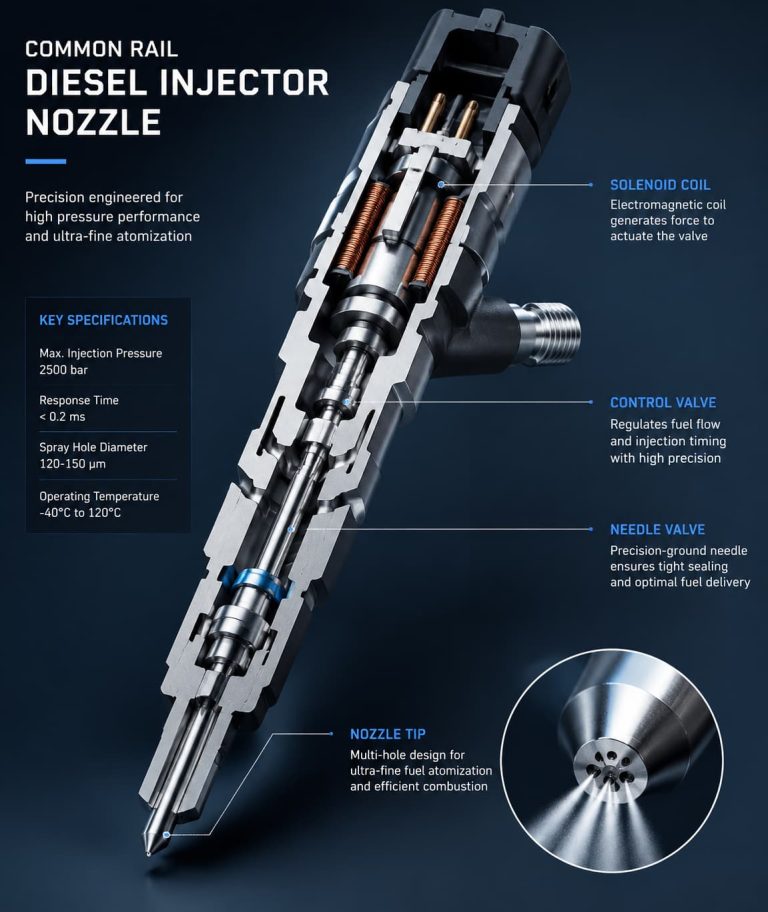
At its core, a diesel nozzle is a high-pressure gatekeeper. It must withstand extreme heat and pressure while delivering fuel in a perfectly timed, finely atomized spray. This isn't just about spraying fuel; it's about engineering a combustion event that extracts every possible bit of energy from every milligram of diesel.
The Critical Role of Atomization and Spray Pattern
Efficiency starts with atomization. When fuel leaves the nozzle, it needs to break into a mist so fine that it can mix instantly with the superheated, compressed air in the cylinder. If the droplets are too large, they won't burn completely, leading to soot buildup and wasted energy. A high-quality nozzle ensures "super-atomization," creating a massive surface area for ignition. This process happens in microseconds, requiring the nozzle to open and close with incredible speed and consistency.
The spray pattern is equally vital. It must be matched precisely to the shape of the piston bowl. If the spray is too wide or too narrow, fuel can hit the cylinder walls—a phenomenon known as wall impingement—which causes oil dilution and carbon deposits. Our technical team focuses on sourcing nozzles that maintain consistent spray geometry even after millions of cycles. This consistency is what prevents "hot spots" in the combustion chamber, which can lead to catastrophic piston failure. For a deeper look at the injectors that house these nozzles, see our Common Rail Injector: Technical Guide.
Types of Diesel Nozzles and Their Technical Trade-offs
Choosing the right type of nozzle requires an understanding of the engine's specific architecture. While older designs relied on simpler mechanics, modern high-performance engines demand much more. The evolution of nozzle technology has been driven by the need for higher injection pressures and more precise timing to meet stringent emission standards while maintaining power.
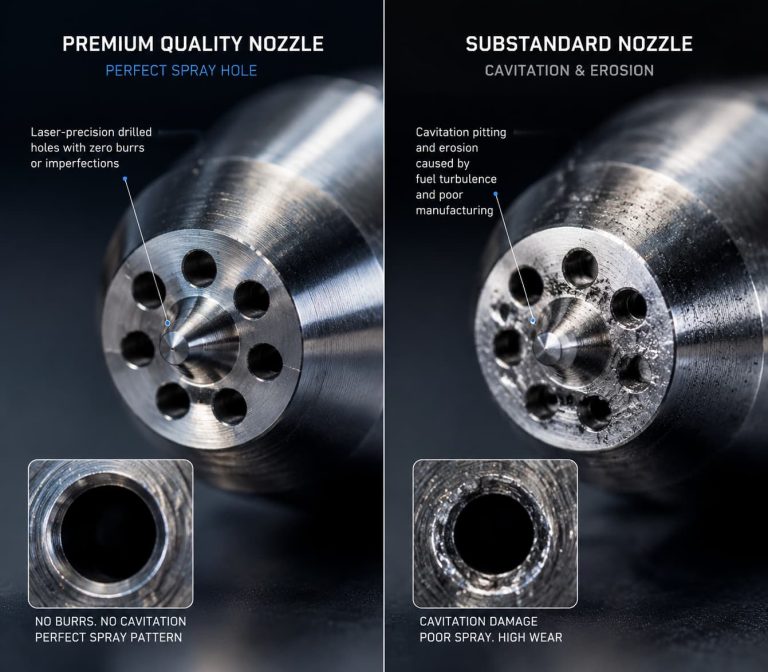
Hole-Type Nozzles are the standard for modern direct-injection engines. These nozzles feature multiple microscopic holes, often smaller than a human hair, drilled at precise angles. The sheer precision required to manufacture these holes is what separates a premium component from a substandard one. The number and size of these holes are optimized to balance flow rate with atomization quality. In a common rail system, these holes must withstand pressures that would slice through solid steel, making the quality of the internal finish paramount.
Pintle-Type Nozzles are typically found in older indirect-injection engines. They use a needle that moves within a larger opening to create an annular spray. While robust and less sensitive to fuel quality than hole-type nozzles, they lack the surgical precision required for the high-pressure demands of modern common rail systems. They are generally more durable in harsh environments but cannot match the efficiency of modern direct-injection setups.
We specialize in identifying the most reliable versions of these components from world-class brands. You can browse our vetted selection on the Product Brands Page.
Key Factors Influencing Diesel Nozzle Performance and Fuel Efficiency
Performance is a product of precision. When we evaluate nozzles for our inventory, we look beyond the part number to the technical nuances that define long-term efficiency. We consider the entire lifecycle of the part, from initial fitment to end-of-life performance degradation.
Nozzle Hole Geometry and Micro-Precision
The geometry of the nozzle holes is the most critical factor in fuel delivery. It's not just about the diameter; it's about the "K-factor" (the rounding of the hole's entry) and the taper of the hole itself. These micro-features determine the flow coefficient and the turbulence of the fuel as it exits. Even a deviation of a few microns in the hole angle can cause the fuel spray to miss its target in the combustion chamber, leading to immediate efficiency losses.
A premium nozzle uses advanced manufacturing techniques like hydro-eroding to smooth these internal passages. This reduces friction and prevents the formation of "sac volume" fuel—fuel that stays in the nozzle after injection and burns incompletely. This level of detail is why our clients trust our quality control. We don't just supply parts; we provide technical assurance that the components will perform as expected. To learn more about our commitment to sourcing excellence, visit our About Us page.
Material Integrity and Wear Resistance
The environment inside a diesel cylinder is brutal. Nozzles are subjected to rapid pressure spikes and temperatures that would melt many metals. Therefore, the alloy used must be exceptional. We prioritize nozzles made from high-chrome, high-nickel steels that offer superior resistance to cavitation—the "pitting" effect caused by the rapid collapse of vapor bubbles in the fuel. Cavitation can destroy a nozzle tip from the inside out, leading to distorted spray patterns long before the part actually fails.
Furthermore, the heat treatment of the needle and seat must be perfect. If the seat is too soft, it will deform, leading to "nozzle bounce" or leakage. If it's too brittle, it will crack under the constant hammering of the needle. Our rigorous vetting process ensures that every part we supply meets these demanding mechanical standards. We look for manufacturers who use vacuum heat treatment and cryogenic processing to ensure the stability of the metal. If you have specific technical questions, feel free to Contact Us.
Operational Challenges: Adapting to Environment and Load
Efficiency isn't a static number; it changes based on where and how the truck is being driven. A nozzle that performs well in a temperate climate might struggle in extreme cold or high-altitude environments.
The Impact of Ambient Temperature on Injection
In extreme cold, diesel fuel becomes more viscous, which changes how it atomizes. A high-quality nozzle must be able to maintain its spray characteristics even when the fuel is thicker. Conversely, in high-heat environments, the nozzle's internal components can expand, potentially changing the needle lift and injection timing. We source components that are tested across a wide thermal range to ensure that your fuel efficiency doesn't drop just because the weather changes.
Altitude and Air Density Considerations
At high altitudes, the air is less dense, meaning there is less oxygen available for combustion. To maintain efficiency, the injection system must adapt by providing a finer spray that can find every available oxygen molecule. This puts even more pressure on the nozzle's ability to atomize fuel. For fleets operating in mountainous regions, choosing a nozzle with superior micro-precision is not just an option—it's a requirement for staying profitable.
Technical Installation: Ensuring a Perfect Fit
Even the best nozzle will fail if it's not installed correctly. We often see efficiency issues that are caused not by the part itself, but by the way it was fitted to the engine.
The Importance of Cleanliness During Assembly
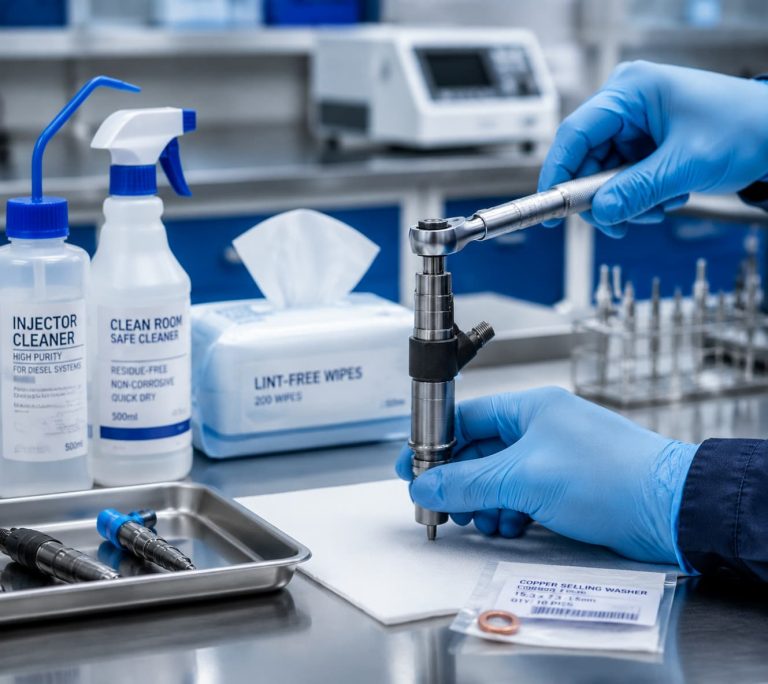
When replacing nozzles, the smallest speck of dust can be catastrophic. If a particle gets trapped between the nozzle and the injector body, it can cause a fuel leak or prevent the nozzle from seating correctly. This leads to "after-drip," where fuel enters the cylinder at the wrong time. We always advise our clients to perform nozzle replacements in a "clean room" environment and to use specialized lint-free wipes and cleaning agents.
Torque Specifications and Sealing
Over-tightening a nozzle can distort the internal needle guide, while under-tightening can lead to combustion gas leakage. Both scenarios destroy fuel efficiency. Using a calibrated torque wrench and following the manufacturer's exact specifications is vital. Additionally, the copper sealing washer must always be replaced with a new one of the correct thickness. A reused or incorrect washer can change the "nozzle protrusion" into the cylinder, which completely alters the spray pattern relative to the piston bowl.
The Impact of Fuel Quality and Contamination on Nozzle Performance
Even the best-engineered nozzle is at the mercy of the fuel it sprays. Contamination is the number one enemy of fuel efficiency in diesel engines. In modern high-pressure systems, the fuel itself acts as the lubricant for the moving parts within the injector and nozzle.
Particulate Contamination acts like liquid sandpaper. Microscopic grit can erode the sharp edges of the nozzle holes, subtly changing the spray pattern over time. You might not notice it day-to-day, but your fuel consumption will slowly climb as the atomization quality degrades. This erosion also increases the flow rate of the nozzle, leading to over-fueling and higher exhaust temperatures.
Water Contamination is even more dangerous. It lacks the lubricity of diesel, causing the needle to seize or gall. In high-pressure systems, water can cause instant cavitation damage, ruining a nozzle in hours. Water also promotes the growth of diesel "bugs"—microbial life that creates a thick sludge capable of clogging even the best filters.
This is why we emphasize the importance of high-quality filtration. A good filter is an insurance policy for your nozzles. We always advise our clients to use multi-stage filtration with high-efficiency water separators. For more maintenance tips and technical advice, check out our Technical Support Page.
Deep Dive: The Science of Fuel Atomization and Combustion Efficiency
To get the most out of your engine, you have to understand the micro-physics of the injection event. It's a dance of pressure, time, and temperature. The goal is to turn a liquid into a gas as quickly and completely as possible.
The Physics of High-Pressure Injection
In a modern system, fuel is pushed through the nozzle at supersonic speeds. This creates intense shear forces that "shred" the liquid fuel into droplets. The efficiency of this shredding is what determines how much air the fuel can find in the cylinder. A well-designed nozzle maximizes this air-fuel mixing, ensuring that every molecule of fuel finds its oxygen partner. This results in a cleaner burn, more torque, and less soot in your DPF. The timing of this event is measured in milliseconds, and any delay or inconsistency can lead to "diesel knock" and increased mechanical stress.
Spray Penetration and Air Entrainment
It's a delicate balance: the fuel must travel far enough into the cylinder to find air (penetration), but not so far that it hits the piston or walls. At the same time, the spray must pull in air as it travels (entrainment). A premium nozzle is designed with these fluid dynamics in mind, ensuring a "soft" injection that minimizes engine noise while maximizing thermal efficiency. This is particularly important for modern "quiet" diesel engines where noise, vibration, and harshness (NVH) are key performance metrics. We see the results of this precision in our Cooperative Case Studies, where clients report smoother engine operation and improved driver comfort after switching to our high-grade parts.
Technical Specifications and Their Influence on Performance
When you're looking at spec sheets, focus on the details that matter for your specific application. Understanding these numbers is the key to matching the right part to your engine's needs.
Flow Rate and Calibration are the "DNA" of the nozzle. For an engine to run efficiently, every cylinder must receive the exact same amount of fuel. This requires nozzles with extremely tight flow tolerances. We ensure that our sets are closely matched to prevent cylinder imbalance, which is a major cause of vibration and fuel waste. An imbalanced engine doesn't just vibrate; it wears out its bearings and crankshaft prematurely.
Opening and Closing Pressures are equally vital. The needle must lift and seat with microsecond precision. Any delay in closing leads to "after-drip," where fuel enters the cylinder too late to burn efficiently. This wasted fuel just turns into smoke and carbon. By sourcing from manufacturers with superior spring and needle designs, we provide parts that maintain their calibration longer, even under the stress of heavy-duty operation.
Advanced Maintenance: Beyond the Basics
To truly maximize the life of your diesel nozzles, you need to go beyond simple filter changes. A proactive approach to fuel system health can save you thousands in avoided repairs.
Regular Fuel System Audits are essential. This involves checking for air leaks in the fuel lines, which can cause "air-locking" and inconsistent injection. It also means monitoring the return flow from the injectors. Excessive return flow is often a sign that the internal seals or the nozzle seat are starting to wear. By catching these issues early, you can plan your maintenance rather than reacting to an on-road failure.
Using High-Quality Fuel Additives can also play a role. While they can't fix a broken nozzle, detergent-based additives can help prevent the buildup of carbon deposits on the nozzle tip. This keeps the spray holes clear and maintains the original spray pattern for a longer period. However, be wary of "miracle" products; stick to reputable brands that are compatible with modern common rail systems. Our Technical Support Page provides more in-depth guidance on these advanced techniques.
Maximizing Fuel Efficiency: Selection and Maintenance Strategies
Efficiency is a long game. It's about making the right choice at the start and following through with diligent care. It requires a mindset that values long-term performance over short-term savings.
Strategic Selection means looking past the lowest price. A cheap nozzle is often a "copy" that looks right on the outside but lacks the internal micro-precision and material quality of a genuine high-grade part. As a specialized supplier, we do the heavy lifting of vetting manufacturers so you don't have to. We focus on parts that offer the best "total cost of ownership"—meaning they save you more in fuel and downtime than they cost in the first place. We look for parts that have been tested in real-world conditions, not just in a lab. Explore our trusted brands on the Product Brands Page.
Proactive Maintenance is the other half of the equation. This means using the highest quality filters available and changing them before they reach their limit. It also means monitoring your engine's performance. If you see a slight increase in smoke or a dip in MPG, don't wait. Addressing a nozzle issue early can save your entire fuel system from contamination. A failing nozzle can often "leak" fuel into the cylinder after the engine is turned off, leading to "hydro-locking" and catastrophic engine failure. Our Technical Support Page is a great resource for troubleshooting these early warning signs.
Environmental Stewardship and Regulatory Compliance
In today's industry, being "green" and being "efficient" are the same thing. A clean-burning engine is an efficient engine. Regulatory pressure is only going to increase, and staying ahead of the curve is a smart business move.
Reducing Particulate Matter (PM) is a direct result of better atomization. When fuel burns completely, there's less soot to clog your DPF. This means fewer regenerations, less backpressure on the engine, and better fuel economy. It also means less wear and tear on your turbocharger, which is often the first victim of excessive soot buildup. Lowering Nitrogen Oxides (NOx) is also a benefit of precise injection timing. By optimizing the combustion temperature through better fuel delivery, you reduce the formation of NOx at the source, making your SCR system's job much easier.
By choosing high-quality nozzles, you're not just helping your bottom line; you're ensuring your fleet stays compliant with increasingly strict emission standards. This reduces the risk of fines and helps maintain the resale value of your vehicles. If you're looking for parts that help meet specific environmental targets, Contact Us for a consultation. We stay up-to-date on the latest regulations so we can help our clients make informed decisions.
The Future of Diesel Injection Technology
The world of diesel technology isn't standing still. We are seeing a move toward even higher pressures and even more complex injection strategies.
Digital Injection and Closed-Loop Control are becoming more common. This involves sensors within the injector that provide real-time feedback to the ECU about the injection event. This allows the engine to compensate for wear and fuel quality on the fly. While these systems are more complex, they offer unprecedented levels of efficiency and performance.
Alternative Fuels like HVO (Hydrotreated Vegetable Oil) and biodiesel blends are also changing the demands on nozzles. These fuels have different viscosities and chemical properties, requiring nozzles that are specifically designed to handle them without degrading. As a forward-thinking supplier, we are constantly monitoring these trends to ensure we can provide our clients with the parts they need for the future. You can stay updated on these developments through our Technical Support Page.
Frequently Asked Questions (FAQ) about Diesel Nozzles and Fuel Efficiency
This section addresses common technical queries regarding diesel nozzle performance and its impact on engine efficiency. We've compiled these based on years of feedback from our professional clients.
How exactly does a nozzle's design change fuel efficiency?
The nozzle is the final point of control in the combustion cycle. Its design—specifically the hole size, angle, and internal finish—determines the quality of the fuel mist. If the mist is fine and well-distributed, it burns fast and clean, pushing the piston down with maximum force. If the nozzle is poorly designed or worn, you get "heavy" droplets that burn slowly and incompletely. This wasted energy doesn't move the truck; it just turns into heat and soot. Our focus is on providing nozzles with optimized fluid dynamics to ensure that every injection event is as efficient as possible. We prioritize parts that use advanced flow-shaping technology to maximize air-fuel mixing.
What are the real-world signs that my nozzles are losing efficiency?
The most common "silent" sign is a gradual increase in fuel consumption. You might also notice more frequent DPF regenerations, as the engine produces more soot due to incomplete combustion. In more advanced stages of wear, you'll see visible exhaust smoke—black smoke usually means too much fuel or poor atomization, while white smoke can mean raw fuel is passing through. Rough idling and a loss of "snap" in throttle response are also key indicators. A "hazy" exhaust at idle is another classic sign that the nozzles are no longer seating perfectly. If you're seeing these signs, it's worth checking your injectors before they cause more expensive damage.
Why should I choose a specialized supplier over a general parts dealer?
A general dealer sells thousands of parts but may not understand the technical nuances of fuel injection. We specialize in this field. We understand the difference between a standard part and a high-performance one. We vet our sources for material quality, manufacturing precision, and real-world durability. When you buy from us, you're getting more than a part; you're getting our technical expertise and our commitment to quality. We act as your technical filter, ensuring that only the best components make it into your engines. Check out our About Us page to see why expertise matters in this specialized industry.
Is it possible to clean nozzles, or should they always be replaced?
While some surface deposits can be removed with high-quality additives, internal mechanical wear cannot be "cleaned" away. If the nozzle hole has been eroded by particulates or the needle seat has been damaged by cavitation, no amount of cleaning will restore its original spray pattern. The precision of these parts is so high that even microscopic damage is enough to ruin efficiency. In these cases, replacement is the only way to recover your engine's original fuel economy. We always recommend a professional diagnostic to see if a nozzle is truly worn before making a replacement. We can help you interpret these diagnostic results to make the most cost-effective decision.
How does "nozzle bounce" affect my fuel economy?
Nozzle bounce happens when the needle valve doesn't seat cleanly after injection. It "bounces" off the seat, allowing a small, uncontrolled amount of fuel to dribble into the cylinder at the wrong time. This fuel enters too late to contribute to power, so it just burns into soot and smoke. This not only wastes fuel but also leads to rapid carbon buildup on the nozzle tip, which eventually blocks the spray holes. High-quality nozzles use superior spring materials and precision-ground needles to eliminate this issue. This is one of the many "hidden" technical details that separate premium parts from cheap imitations.
How can I be sure the nozzles I buy are truly high quality?
Quality in this industry is about traceability and reputation. We only source from manufacturers with proven track records and rigorous quality management systems. We look for parts that use premium materials like high-chrome steel and advanced finishing techniques like hydro-eroding. We also look for manufacturers who perform 100% end-of-line testing to ensure every part meets its spec. When you work with us, we provide the technical assurance that the parts meet the high standards required for modern heavy-duty engines. Browse our Product Brands Page to see the quality of manufacturers we partner with. We are committed to transparency and are happy to share technical data about the parts we supply.