
Why Diesel Powertrains Demand Proactive Attention
A diesel engine is renowned for its durability and torque output, making it the backbone of commercial trucking and heavy machinery worldwide. However, even the most robust compression-ignition powerplant will develop issues without proper care. According to a 2025 fleet maintenance survey by the American Trucking Associations, unplanned downtime costs operators an average of $760 per vehicle per day. Understanding the diesel engine working principle explained in simple terms—air compression ignites fuel without spark plugs—helps owners recognize why specific failure modes occur.
This guide draws on over 15 years of hands-on diagnostics experience to walk you through the most frequent faults, their root causes, and actionable solutions. Where replacement parts are needed, we point you toward reliable sourcing options so you can get back on the road quickly.
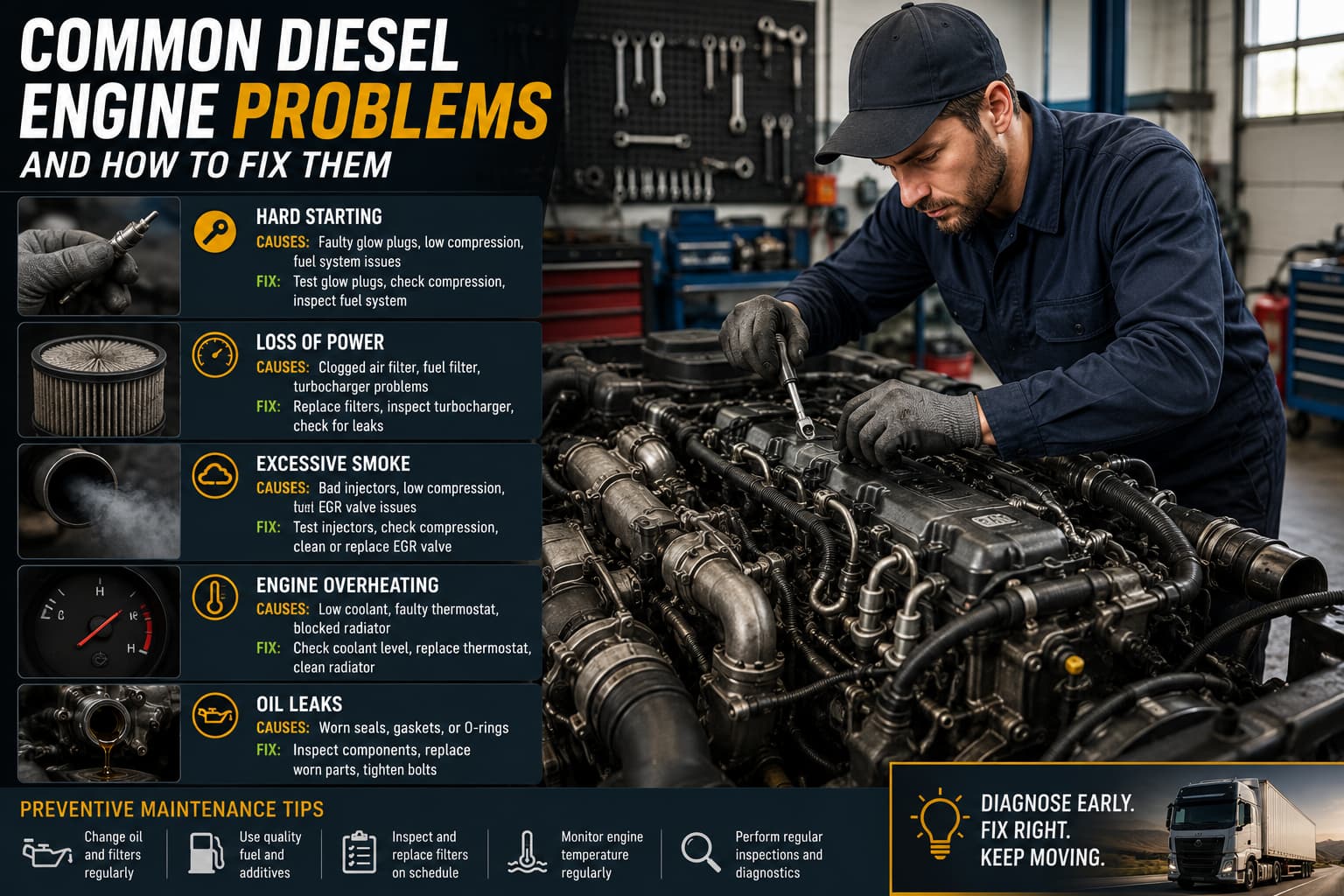
Top 7 Problems and Their Root Causes
Below is a consolidated overview of the issues we encounter most frequently in fleet workshops and independent repair facilities.
| Problem | Primary Cause | Severity | Typical Repair Cost (USD) |
|---|---|---|---|
| Hard starting / no start | Glow plug failure, low compression | High | $200–$1,500 |
| Excessive black smoke | Clogged air filter, injector wear | Medium | $100–$800 |
| Loss of power | Turbocharger issues, restricted exhaust | High | $500–$3,000 |
| Overheating | Coolant leak, thermostat failure | Critical | $150–$2,000 |
| Fuel injector failure | Contaminated fuel, carbon deposits | High | $300–$2,500 |
| Oil contamination | Blown head gasket, worn seals | Critical | $800–$4,000 |
| Rough idling / knocking | Injector timing, air in fuel lines | Medium | $150–$1,200 |
Hard Starting and Cranking Difficulties
What Causes It
Compression-ignition systems rely on extreme cylinder pressure to generate heat. When glow plugs degrade or compression drops below 350 PSI, the air-fuel mixture fails to ignite—especially in cold climates. Weak batteries and corroded wiring also contribute to sluggish cranking speed.
Diagnostic Steps
Start with a cranking-speed test using a multimeter on the starter circuit. Next, perform a compression test across all cylinders. A variance greater than 10% between cylinders indicates worn rings or valve seats. Finally, check glow plug resistance; readings outside the 0.5–2.0 Ω range signal replacement is needed.
The Fix
Replace faulty glow plugs as a set rather than individually to ensure uniform heating. If compression is low, a top-end rebuild or ring replacement restores proper sealing. For fleet operators seeking diesel maintenance tips specific to cold-weather starts, installing block heaters and using winter-grade lubricants significantly reduces wear during ignition cycles.
Excessive Smoke Emissions
Black Smoke
Black exhaust indicates incomplete combustion—too much fuel relative to available air. The most common culprits are clogged air filters, worn injector nozzles, or an over-fueling condition in the injection pump. A restricted intake can reduce airflow by up to 30%, dramatically shifting the air-fuel ratio.
White and Blue Smoke
White smoke at startup typically points to coolant entering the combustion chamber through a cracked head or failed gasket. Blue smoke signals oil burning past worn valve guides or piston rings. Both conditions worsen fuel economy and accelerate catalytic converter degradation.
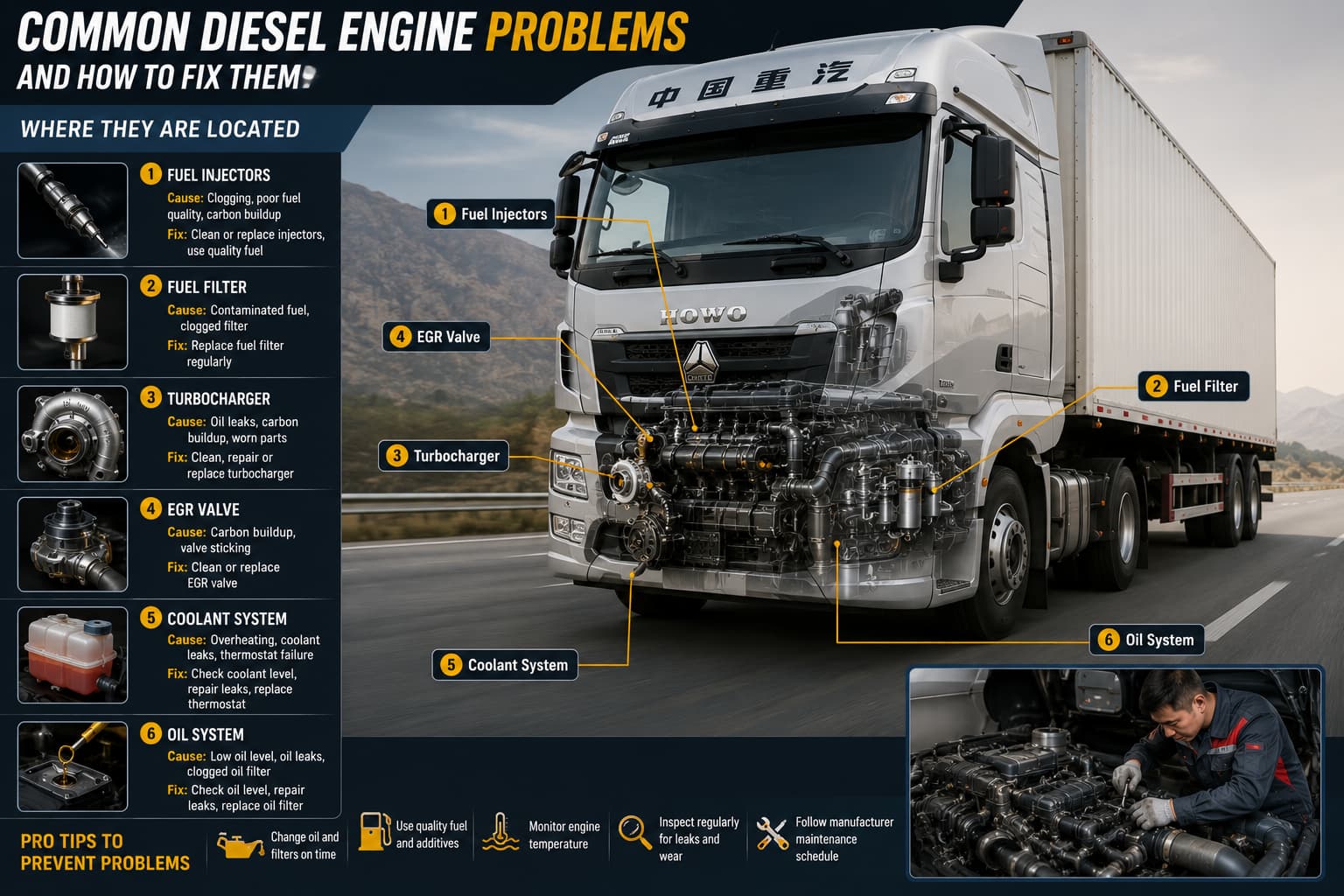
Resolution
Replace air filters at manufacturer-specified intervals—typically every 15,000–30,000 miles for heavy-duty applications. For injector-related smoke, ultrasonic cleaning or nozzle replacement restores proper spray patterns. Browse our product category system page to find fuel system components matched to your powertrain model.
Power Loss and Turbocharger Failures
Symptoms
Drivers notice sluggish acceleration, inability to maintain highway speed under load, or audible turbo whine changes. These symptoms often appear gradually, making early detection challenging without boost-pressure monitoring.
Root Cause Analysis
Turbocharger issues account for roughly 22% of power-loss complaints in heavy trucks, based on data from a 2025 European commercial vehicle reliability study. Carbon buildup in the variable-geometry vanes, oil starvation to the turbo bearings, or intercooler leaks all reduce boost pressure. When comparing diesel engine vs gasoline engine efficiency 2026 benchmarks, compression-ignition units still lead by 25–30% in thermal efficiency—but only when the forced-induction system operates within spec.
Repair Strategy
Inspect the turbo for shaft play (axial and radial). If play exceeds 0.003 inches, rebuild or replace the cartridge. Clean or replace the intercooler if pressure-drop testing reveals leaks. Ensure oil feed lines are clear of carbon deposits. For sourcing OEM-equivalent turbo assemblies, check our product category brand listings for trusted manufacturers.
Engine Overheating: Causes and Prevention
Why It Happens
Understanding engine overheating causes is critical because sustained temperatures above 230°F can warp cylinder heads and destroy gaskets within minutes. Common triggers include coolant leaks at hose connections, failed water pumps, clogged radiator cores, and malfunctioning thermostats that remain closed.
Step-by-Step Troubleshooting
- Verify coolant level and inspect for visible leaks at hoses, the water pump weep hole, and radiator tanks.
- Pressure-test the cooling system to 15 PSI and monitor for drop-off over 10 minutes.
- Check the thermostat by submerging it in heated water—it should open fully at its rated temperature (typically 180–195°F).
- Inspect the radiator for external blockage (bugs, debris) and internal scaling that restricts flow.
Corrective Actions
Replace degraded hoses and clamps before they fail catastrophically. Flush the cooling system every 50,000 miles or per OEM guidelines. A high-quality water pump with ceramic seals outlasts budget alternatives by 2–3 times. Our technical support team can help you identify the correct cooling components for your specific application.
Fuel System Contamination and Injector Wear
Modern common-rail systems operate at pressures exceeding 30,000 PSI. Even microscopic particles—as small as 4 microns—can score injector internals and disrupt spray patterns. Water contamination is equally destructive, causing corrosion and microbial growth inside tanks.
Preventive measures include installing quality fuel-water separators, draining water traps daily in humid climates, and sourcing fuel from reputable suppliers. When injectors do fail, replace them in matched sets to maintain balanced cylinder performance. This approach aligns with diesel engine fuel consumption reduction methods that fleet managers use to lower operating costs by 8–12% annually.
For genuine replacement injectors and fuel system parts, explore our Truck parts catalog, which covers major Chinese and European heavy-duty platforms.
Oil Contamination and Lubrication Failures
Milky or frothy oil on the dipstick signals coolant intrusion—usually from a compromised head gasket or cracked block. Fuel dilution, where unburned fuel washes past rings into the crankcase, reduces oil viscosity and accelerates bearing wear. Both conditions demand immediate attention.
Perform oil analysis every 250 hours of operation or at each drain interval. Spectrometric testing reveals elevated sodium or potassium (coolant markers) or fuel percentage above 2%. Early detection through oil sampling has been shown to prevent 60% of catastrophic lower-end failures in commercial fleets.
Diesel Engine Maintenance Tips for Trucks: A Preventive Schedule
| Interval | Service Action | Purpose |
|---|---|---|
| Daily | Check coolant, oil level, belt tension | Catch leaks early |
| Every 10,000 mi | Replace oil and filters | Maintain lubrication integrity |
| Every 15,000 mi | Inspect air filter, fuel filter | Ensure clean air and fuel supply |
| Every 30,000 mi | Test injectors, check valve clearance | Preserve combustion efficiency |
| Every 50,000 mi | Flush coolant, inspect turbo | Prevent overheating and boost loss |
| Every 100,000 mi | Top-end inspection, replace timing components | Extend overall service life |
Following this schedule closely contributes to the diesel engine lifespan and reliability comparison advantage these powertrains hold over gasoline alternatives—often exceeding 500,000 miles in commercial service when properly maintained.
Real-World Case: Fleet Downtime Reduction
A logistics company operating 45 Sinotruk HOWO units across Southeast Asia experienced recurring injector failures and overheating events, averaging 3.2 unplanned stops per truck per month. After partnering with our team, they implemented a structured preventive maintenance program and switched to OEM-specification replacement parts.
Within six months, unplanned downtime dropped by 67%, and fuel costs decreased by 9.4% fleet-wide. The key changes included proper fuel filtration upgrades, scheduled coolant flushes, and sourcing quality components through our verified supply chain. Read more success stories on our cooperative-case page.
When to Seek Professional Diesel Engine Troubleshooting Help
Not every issue can be resolved with basic tools. Seek specialist assistance when you encounter persistent misfires after injector replacement, metal particles in oil samples, or crankcase pressure exceeding 3 inches of water column. These symptoms suggest internal damage requiring precision measurement equipment and machining capabilities.
Our engineering team offers remote diagnostics and parts identification support. Visit our about us page to learn about our 15+ years of experience serving global heavy-duty markets, or contact us directly for personalized assistance.
Conclusion
Compression-ignition powertrains remain the most efficient and durable option for commercial transport, but they are not maintenance-free. By understanding common failure modes—from injector wear to cooling system breakdowns—operators can shift from reactive repairs to proactive prevention. The result is lower total cost of ownership, reduced downtime, and extended asset life.
Invest in quality replacement parts, follow structured service intervals, and address warning signs immediately. These three principles separate fleets that thrive from those that struggle with chronic reliability issues.
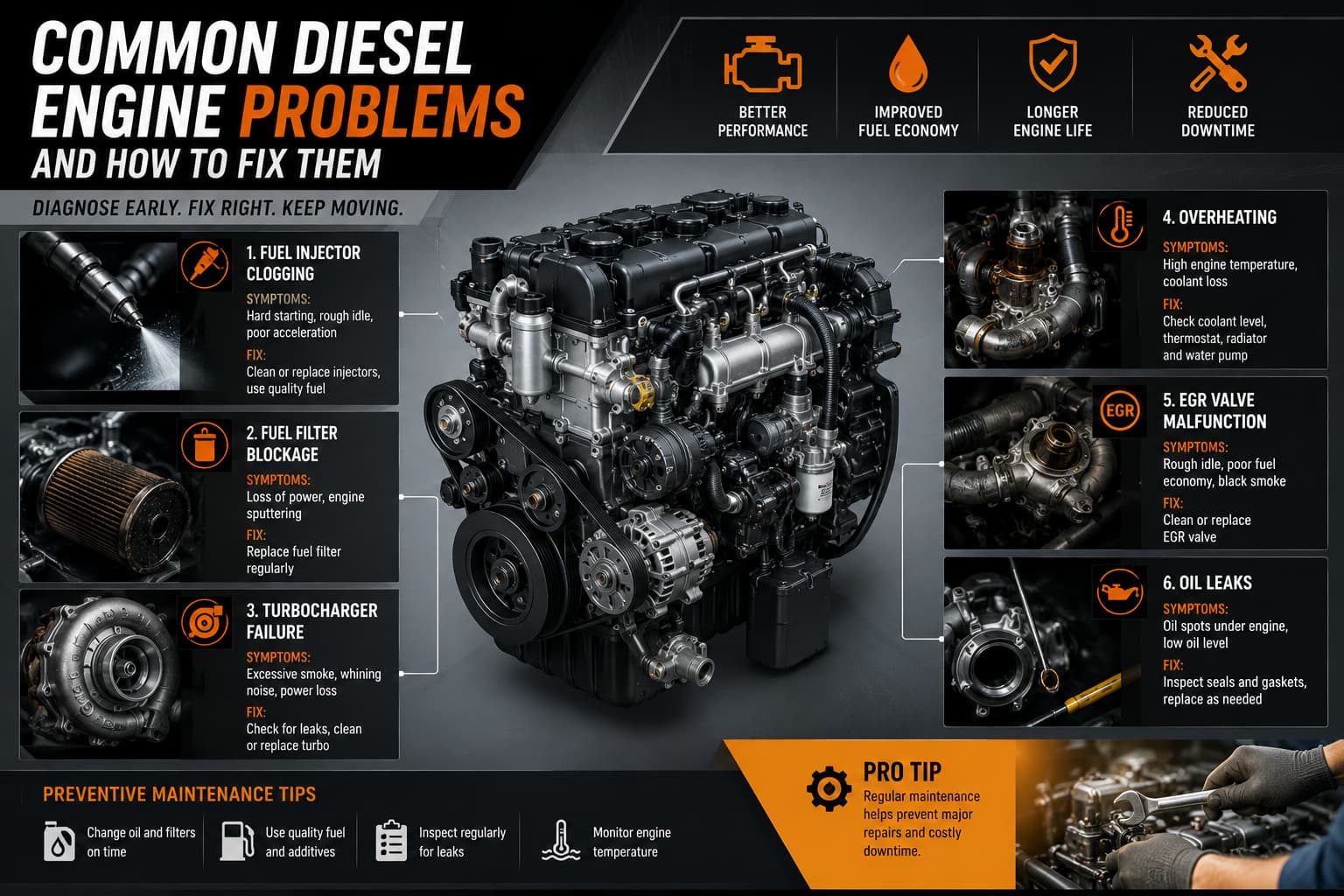
Frequently Asked Questions
What is the most common reason a diesel truck won’t start in cold weather?
Failed glow plugs are the leading cause. These pre-heating elements degrade over time and lose their ability to raise cylinder temperature sufficiently for combustion. Replacing them as a complete set, combined with using the correct cold-weather oil viscosity, resolves the majority of cold-start failures.
How can I tell if my fuel injectors need replacement?
Watch for rough idling, uneven exhaust smoke, increased fuel consumption, and a noticeable drop in power under load. A professional back-leak test or electronic injector balance test confirms whether one or more units are outside specification. Replacing injectors in matched sets ensures balanced cylinder performance.
How often should I change the oil in a heavy-duty compression-ignition truck?
Most manufacturers recommend oil changes every 10,000–15,000 miles or 250–500 engine hours, depending on duty cycle severity. Severe-duty applications—frequent stops, heavy loads, dusty environments—should use the shorter interval. Oil analysis can help extend intervals safely when conditions allow.
What causes white smoke from the exhaust at startup?
White smoke typically indicates unburned fuel vapor (common in cold starts and usually harmless) or coolant entering the combustion chamber through a failed head gasket or cracked cylinder head. If white smoke persists after the engine reaches operating temperature, a cooling system pressure test and combustion gas analysis should be performed immediately.
How do I reduce fuel consumption on my fleet vehicles?
Focus on maintaining clean air and fuel filtration, ensuring proper injector spray patterns, keeping tires at correct inflation, and training drivers on efficient operating techniques. Addressing even minor boost leaks or dragging brakes can improve economy by 5–10%. Regular preventive maintenance remains the single most effective strategy for controlling fuel costs across a fleet.


