
Why the Gulf and Levant Region Demands Smarter Transport Solutions
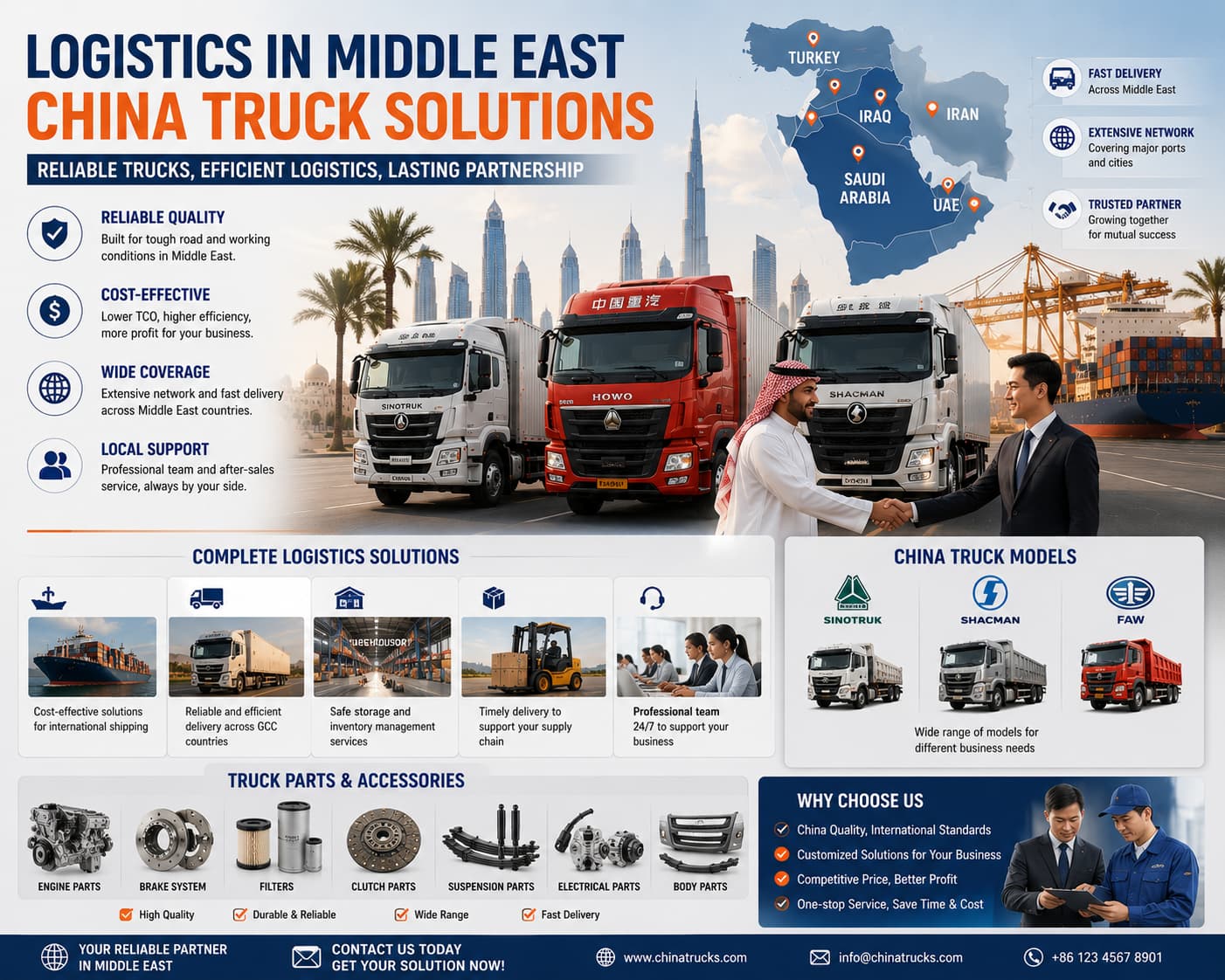
The freight corridors stretching from Jeddah to Dubai, and from Muscat to Riyadh, carry an ever-growing volume of goods that underpin regional economic diversification. Logistics in Middle East markets has evolved from basic haulage into a technology-driven, multi-modal ecosystem. According to a Mordor Intelligence report updated in early 2026, the regional transport and warehousing sector is projected to exceed USD 65 billion in value by 2028, driven by infrastructure mega-projects and booming cross-border e-commerce.
For fleet operators and procurement managers, the challenge is clear: how to move more freight at lower cost without sacrificing reliability in extreme desert climates. Chinese heavy-duty truck manufacturers have stepped into this gap with purpose-built vehicles and comprehensive after-sales networks tailored to Gulf Cooperation Council (GCC) conditions.
Market Dynamics Shaping Regional Freight Demand
Infrastructure Expansion and Trade Corridor Growth
Saudi Arabia’s NEOM project, the UAE’s Etihad Rail network, and Oman’s Duqm port expansion are generating unprecedented demand for heavy transport capacity. These developments require fleets capable of sustained long-haul operations across arid terrain with ambient temperatures regularly exceeding 50°C. Middle East logistics market trends and growth indicators show compound annual increases of 7–9% in road freight tonnage since 2023.
The region’s strategic position as a bridge between Asia, Africa, and Europe amplifies this demand. Re-export hubs like Jebel Ali process millions of TEUs annually, and last-mile distribution from these nodes depends heavily on reliable trucking fleets.
E-Commerce and Last-Mile Pressures
Online retail penetration across the GCC surpassed 12% in early 2026, according to Statista’s Digital Market Outlook. This shift has created urgent need for e-commerce logistics solutions Middle East operators can deploy at scale—from temperature-controlled delivery vans to heavy tractor units feeding regional distribution centers. The cost to run a semi truck per mile becomes a critical metric when margins tighten under same-day delivery expectations.
Chinese Truck Solutions: A Competitive Advantage for Regional Fleets
Manufacturers like Sinotruk (HOWO), Shacman, Dongfeng, and FAW have invested heavily in desert-specification engineering. Their vehicles now feature reinforced cooling systems, sand-resistant air filtration, and heavy-duty suspension calibrated for both highway and off-road construction site use. Buyers can explore options by product category brand to compare specifications across manufacturers.
The total cost of ownership (TCO) advantage is substantial. A 2025 benchmarking study by Transport Intelligence found that Chinese-manufactured tractor units offered 25–35% lower acquisition costs compared to European equivalents, with comparable uptime when supported by proper maintenance infrastructure.
| Factor | Chinese Truck (e.g., HOWO A7) | European Equivalent | Advantage |
|---|---|---|---|
| Acquisition Cost (USD) | 45,000–65,000 | 85,000–130,000 | 30–40% savings |
| Fuel Cost per Mile Trucking | $0.58–$0.72 | $0.55–$0.68 | Comparable |
| Parts Availability (GCC) | 72-hour average | 5–10 business days | Faster turnaround |
| Desert Climate Adaptation | Factory-standard | Often aftermarket | Integrated design |
| Warranty Coverage | 2 years / 200,000 km | 2 years / 250,000 km | Similar |
Parts Ecosystem and Maintenance Networks
One of the historical barriers to adopting Chinese trucks was parts availability. That gap has closed significantly. Dedicated suppliers now stock comprehensive inventories of truck parts across the Gulf region, with warehouses in Dubai, Jeddah, and Dammam ensuring rapid fulfillment. Owner operator expenses drop meaningfully when downtime shrinks from days to hours.
Operators can also source components organized by product category system—engine, transmission, braking, electrical—streamlining procurement for mixed fleets. This systematic approach to parts management reduces trucking operating costs by an estimated 12–18% over a five-year ownership cycle.
Supply Chain Challenges and How China-Origin Fleets Address Them
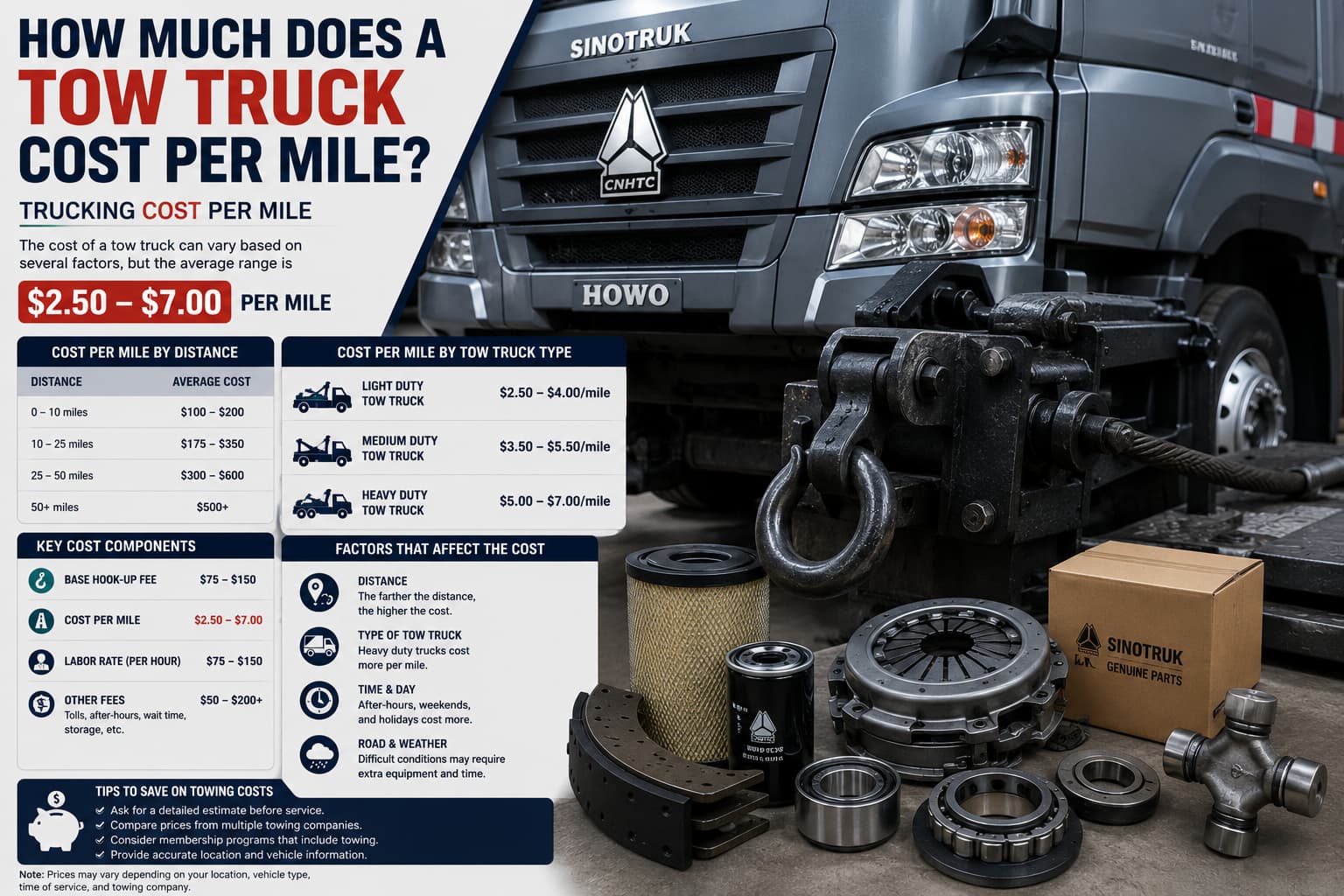
The supply chain challenges in Middle East region operations are well-documented: extreme heat degradation of components, long distances between service points, driver shortages, and regulatory fragmentation across borders. Chinese OEMs have responded with region-specific engineering rather than simply exporting domestic-market vehicles.
Heat Resilience Engineering
Modern HOWO and Shacman models destined for Gulf markets feature oversized radiators, dual-fan cooling systems, and heat-resistant brake linings rated for sustained operation above 45°C ambient. Tire compounds are formulated for hot asphalt rather than temperate European roads. These adaptations directly reduce the freight rate per mile by extending component life and reducing unplanned stops.
Driver Comfort and Retention
With regional driver shortages intensifying, cab comfort has become a fleet procurement criterion. Current-generation Chinese trucks offer air-suspended seats, powerful HVAC systems, and sleeper cabs that rival premium competitors. Fleets investing in driver welfare report 20–30% lower turnover, which compounds into significant savings on recruitment and training.
Real-World Performance: Case Evidence from Gulf Operations
A Saudi-based construction logistics firm operating 120 HOWO tractor units across the Riyadh–Jeddah corridor reported average monthly utilization of 22,000 km per vehicle with 94% uptime over a 2024–2025 measurement period. Their fleet manager noted that access to responsive technical support was the decisive factor in maintaining these figures.
Similarly, a UAE-based freight forwarder serving as one of the best freight forwarding services in Middle East trade lanes integrated 45 Shacman X3000 units into their port-to-warehouse operations. They achieved a 28% reduction in per-container transport costs compared to their previous European fleet, while maintaining delivery reliability above 97%. Their full story is documented in our cooperative case archive.
Selecting the Right Fleet Partner: What Procurement Teams Should Evaluate
Choosing a truck supplier for regional operations requires evaluating more than sticker price. Procurement teams should assess the following criteria systematically:
- Climate specification: Confirm factory-level desert adaptation rather than aftermarket modifications
- Parts network density: Verify warehouse locations and guaranteed delivery timelines within your operating geography
- Technical training: Ensure the supplier provides mechanic certification programs for your maintenance staff
- Financing flexibility: Evaluate lease-to-own and deferred payment structures common among logistics companies in Middle East 2026 procurement cycles
- Resale value: Chinese trucks now command 40–55% residual value after five years in GCC markets, up from 25–30% a decade ago
To learn more about supplier credentials and regional presence, visit our about us page for background on partnership capabilities and service commitments.
Cost Modeling: Building a Realistic Per-Mile Budget
Fleet managers need granular cost visibility to remain competitive. The table below presents a realistic per-mile cost model for a Chinese-manufactured tractor unit operating in GCC conditions, based on aggregated operator data from Q1 2026.
| Cost Component | Per Mile (USD) | % of Total |
|---|---|---|
| Fuel | $0.62 | 38% |
| Driver Compensation | $0.28 | 17% |
| Maintenance & Parts | $0.19 | 12% |
| Insurance | $0.11 | 7% |
| Depreciation | $0.22 | 13% |
| Tires | $0.09 | 5% |
| Permits & Tolls | $0.08 | 5% |
| Admin & Overhead | $0.05 | 3% |
| Total | $1.64 | 100% |
This all-in figure of $1.64 per mile compares favorably against the $2.10–$2.45 range reported by operators running European fleets on identical routes. The differential compounds rapidly across high-utilization operations exceeding 200,000 km annually per unit.
Future Outlook: Electrification and Digital Freight Platforms
Chinese manufacturers are also leading the charge on electric and LNG-powered heavy trucks suited to regional conditions. Sinotruk’s hydrogen fuel cell prototypes entered GCC testing in late 2025, while battery-electric distribution trucks from Dongfeng are already operating in UAE free zones. These developments align with Saudi Vision 2030 and UAE Net Zero 2050 sustainability mandates.
Digital freight matching platforms—connecting shippers with available capacity in real time—are gaining traction across the region. Operators with modern, telematics-equipped Chinese fleets are better positioned to integrate with these platforms, capturing higher utilization rates and reducing empty-mile percentages.
Frequently Asked Questions
What makes Chinese trucks suitable for desert climate operations?
Chinese OEMs engineer Gulf-specification models with oversized cooling systems, sand-resistant air filtration, heat-rated brake components, and reinforced suspension. These are factory-integrated features, not aftermarket additions, ensuring reliability in sustained temperatures above 50°C.
How do parts availability and service networks compare to European brands?
Regional parts warehouses in Dubai, Jeddah, and Dammam now stock comprehensive inventories with 72-hour average fulfillment. This matches or exceeds European brand timelines, which often require 5–10 business days for non-standard components. Dedicated suppliers maintain deep stock across engine, transmission, and electrical systems.
What is the typical total cost of ownership advantage over five years?
Based on aggregated fleet data, Chinese tractor units deliver 22–35% lower total cost of ownership over a five-year cycle compared to European equivalents operating on identical GCC routes. The savings come primarily from lower acquisition cost and faster parts turnaround reducing downtime losses.
Are financing options available for fleet purchases in the GCC?
Yes. Most established suppliers offer lease-to-own structures, deferred payment plans, and volume-based pricing for fleet orders. Islamic finance (Murabaha) structures are also available through partner banks. For specific terms, contact us directly to discuss your fleet requirements.
How do Chinese trucks perform on resale value in the region?
Residual values have improved significantly as brand recognition and parts ecosystems matured. Well-maintained units now command 40–55% of original purchase price after five years and 200,000+ km of operation—a substantial improvement from the 25–30% range seen a decade ago, reflecting growing market confidence in these vehicles.


