
Why Engine Vibration Demands Immediate Attention
Abnormal engine vibration in a semi truck is more than a comfort issue — it signals mechanical stress that can escalate into catastrophic failure. After 15 years diagnosing drivetrain problems across long-haul fleets, I can confirm that early detection saves thousands in repair costs. Vibration left unchecked damages mounts, loosens fasteners, and accelerates wear on every connected component.
According to the American Trucking Associations’ 2025 fleet maintenance report, unplanned downtime costs carriers an average of $1,200 per day per vehicle. A significant portion of those breakdowns trace back to vibration-related fatigue failures that could have been caught during routine inspection. Understanding the root causes empowers owner-operators and fleet managers to act before minor tremors become major expenses.
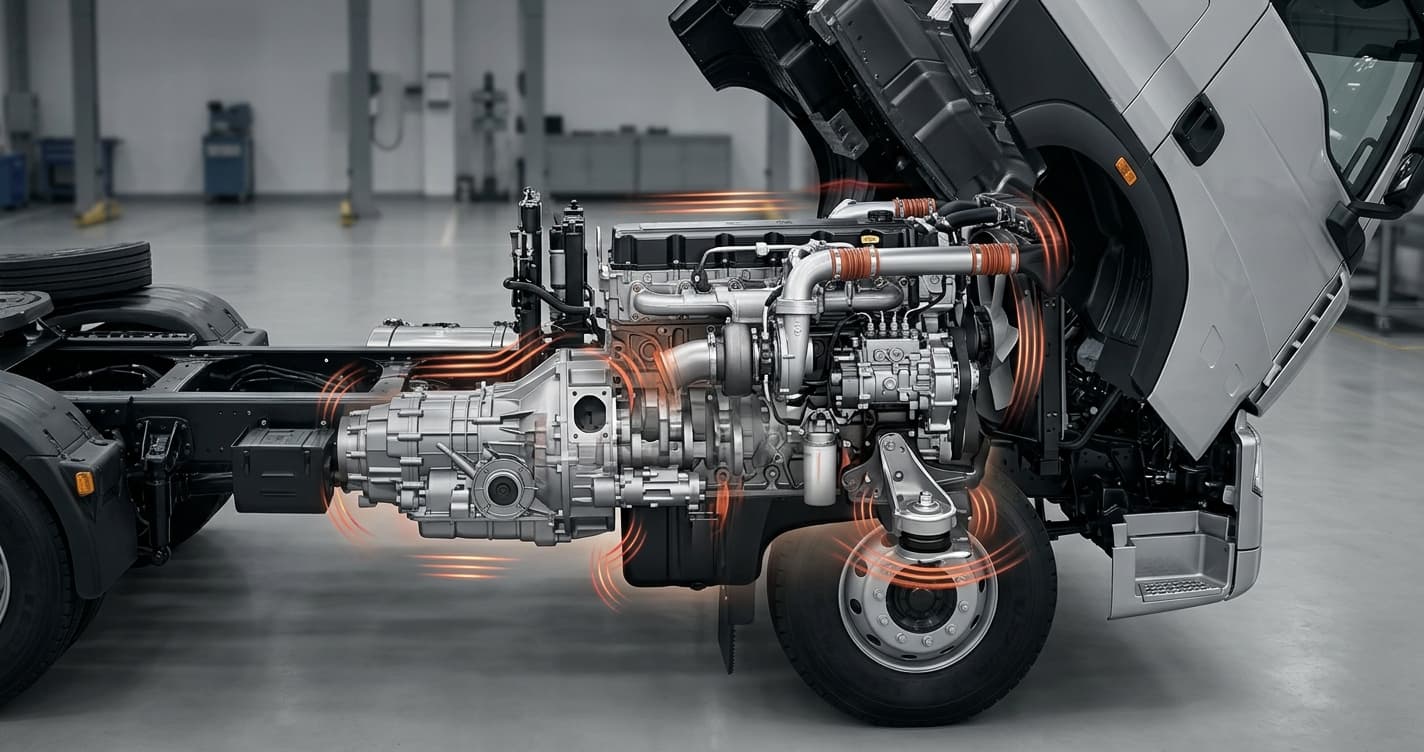
Primary Causes of Engine Vibration in Heavy-Duty Trucks
1. Worn or Collapsed Engine Mounts
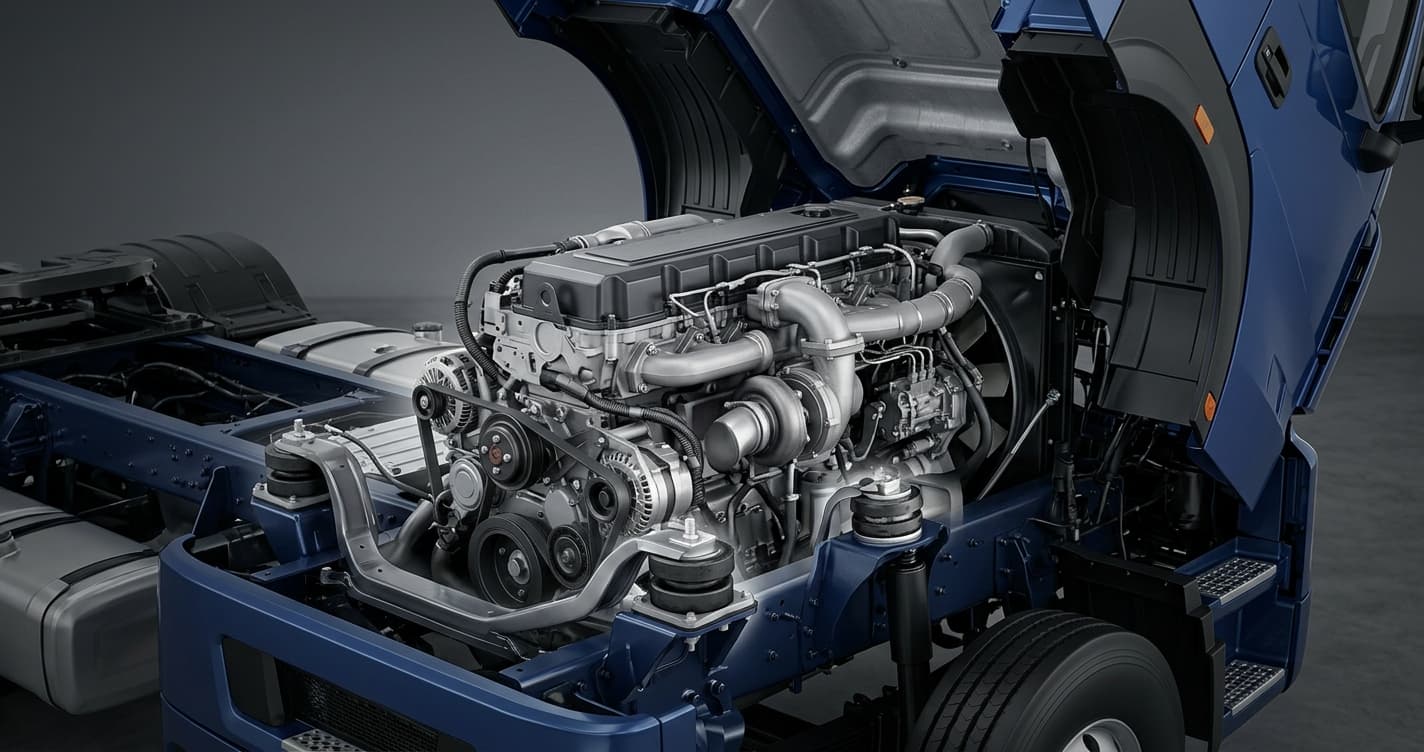
Engine mounts absorb vibration and isolate the powertrain from the chassis. When rubber deteriorates or metal brackets crack, vibration transmits directly into the cab and frame. This is the single most common cause I encounter during fleet inspections.
Symptoms include visible movement of the engine block during acceleration, unusual clunking at idle, and misaligned drivetrain angles. Replacement intervals vary, but mounts on Class 8 vehicles typically degrade after 400,000–600,000 miles depending on operating conditions.
2. Misfiring Cylinders and Fuel System Faults
A misfiring cylinder creates an imbalance in the firing order, producing rhythmic shaking that worsens under load. Common culprits include failing injectors, low fuel pressure, and compromised compression. Modern electronic engines log fault codes, but older mechanical units require manual cylinder-cut testing.
Diesel injector degradation accelerates when fuel quality is inconsistent — a frequent issue for drivers searching for the best semi truck for owner operators who run cross-country routes through regions with variable fuel standards.
3. Harmonic Balancer Failure
The harmonic balancer (crankshaft damper) counteracts torsional vibration inherent to the combustion cycle. When its internal rubber ring separates or the outer ring shifts, vibration spikes dramatically. This failure can destroy the crankshaft if ignored.
4. Clutch and Flywheel Imbalance
A warped flywheel or unevenly worn clutch disc generates vibration that intensifies with engine speed. Clutch disc wear patterns often indicate deeper issues such as oil contamination or pilot bearing failure. Drivers may also notice clutch slipping symptoms — RPM rising without proportional speed increase — as a companion warning sign.
5. Drivetrain Component Wear
U-joints, carrier bearings, and driveshaft imbalance can all feed vibration back into the engine. A transmission grinding noise during gear changes often accompanies these issues. Proper clutch pedal adjustment should be verified before assuming internal transmission damage.
6. Turbocharger Shaft Play
Excessive radial play in the turbocharger shaft creates high-frequency vibration and audible whine. This is especially prevalent in high-mileage units exceeding 800,000 miles without turbo rebuild.
| Vibration Source | Typical Frequency | Key Diagnostic Indicator | Urgency Level |
|---|---|---|---|
| Engine mounts | Low (idle-dominant) | Visual engine movement | High |
| Cylinder misfire | Rhythmic / RPM-linked | Fault codes, exhaust smoke | High |
| Harmonic balancer | Broad spectrum | Wobbling pulley, belt wear | Critical |
| Clutch/flywheel | Speed-dependent | Vibration changes with clutch engagement | Medium-High |
| Driveshaft/U-joints | Speed-dependent | Vibration absent at idle | Medium |
| Turbocharger | High frequency | Whine, oil in intake piping | Medium |
Step-by-Step Diagnostic Approach
Phase 1: Characterize the Vibration
Document when vibration occurs — idle only, under load, at specific RPM ranges, or speed-dependent. This single observation narrows the suspect list by 60%. Idle-only vibration points to mounts or misfires; speed-dependent vibration implicates rotating components downstream of the flywheel.
Phase 2: Visual and Physical Inspection
Check engine mounts for cracking, separation, or fluid leaks (on hydraulic mounts). Inspect the harmonic balancer for wobble with the engine running. Look for loose bolts on the bell housing and transmission crossmember. Verify that no aftermarket accessories have altered the balance of the front accessory drive.
Phase 3: Electronic Diagnostics
Pull ECM data for misfire counts, injector trim values, and turbo boost deviation. On modern platforms, cylinder-specific contribution tests isolate misfiring units without physical disconnection. For those evaluating how much does a semi truck cost in 2026, note that newer models with advanced telematics simplify this phase considerably.
Phase 4: Component-Level Testing
Perform a cylinder cut test on older engines. Measure driveshaft runout with a dial indicator. Check flywheel housing bore concentricity if heavy duty clutch replacement was recently performed — improper alignment during installation is a frequent post-repair vibration source.
Real-World Case: Fleet of 23 Tractors
A Midwest carrier operating 23 Class 8 tractors experienced recurring vibration complaints across multiple units after switching fuel suppliers. Diagnostic investigation revealed injector tip erosion from high-sulfur contamination, causing intermittent misfires. Replacing injectors and reverting to the original fuel source eliminated the issue fleet-wide.
This case underscores why drivers pursuing semi truck driving jobs no experience should receive training on pre-trip vibration awareness — catching problems early prevented an estimated $47,000 in secondary damage across that fleet. Detailed examples like this are documented in our cooperative cases section.
Proven Solutions and Component Recommendations
Engine Mount Replacement
Always replace mounts in pairs (left and right) to maintain balanced isolation. OEM-specification mounts with proper durometer ratings prevent premature recurrence. Aftermarket mounts that are too stiff transfer vibration; those too soft allow excessive movement.
Injector and Fuel System Service
Use calibrated injectors matched to the engine’s ECM programming. Flow-test all injectors simultaneously to identify outliers. Fuel system components should meet OE specifications — sourcing from a reliable product category system ensures compatibility and longevity.
Clutch and Flywheel Service
Resurface or replace the flywheel whenever the clutch assembly is serviced. Verify pilot bearing condition and input shaft spline wear. Quality replacement parts from trusted brands — browse options by product category brand — reduce comeback rates significantly.
Drivetrain Balancing
Driveshafts should be dynamically balanced after U-joint replacement. Carrier bearing alignment must be verified against factory specifications. Even minor angular errors compound into noticeable vibration at highway speeds.
Sourcing Quality Replacement Parts
Component quality directly determines repair longevity. Inferior parts may temporarily resolve vibration but fail prematurely under the thermal and mechanical stress of heavy-duty applications. For operators searching for a semi truck for sale near me or maintaining existing equipment, investing in OE-grade components pays dividends in uptime.
We supply genuine and OE-equivalent parts for major Chinese heavy-duty platforms. Our sinotruk truck parts inventory covers engine mounts, injectors, clutch assemblies, harmonic balancers, and drivetrain components — all critical to vibration resolution. Understanding semi truck insurance requirements by state also motivates keeping vehicles in proper mechanical condition, as insurers may deny claims on poorly maintained equipment.
Our engineering team provides technical support for part identification, fitment verification, and installation guidance. Learn more about us or contact us directly for fleet-volume pricing and expedited shipping.
Preventive Maintenance Schedule for Vibration Control
| Component | Inspection Interval | Replacement Trigger |
|---|---|---|
| Engine mounts | Every 50,000 miles | Visible cracking, deflection >3mm |
| Harmonic balancer | Every 100,000 miles | Wobble, rubber separation |
| Injectors | Every 300,000 miles | Trim values >±10%, misfire codes |
| Clutch assembly | Every clutch service | Disc thickness below minimum, hot spots |
| U-joints | Every 100,000 miles | Play detected, grease loss |
| Turbocharger | Every 200,000 miles | Shaft play >0.003″, oil leakage |
Frequently Asked Questions
What is the most common cause of engine vibration in Class 8 trucks?
Worn engine mounts account for approximately 35–40% of vibration complaints based on fleet maintenance data. They degrade from heat cycling, oil contamination, and age. Replacement is straightforward and immediately noticeable in ride quality improvement.
Can engine vibration damage the transmission?
Yes. Sustained vibration accelerates wear on input shaft bearings, synchronizers, and gear teeth. It also stresses the bell housing and flywheel bolts. Addressing vibration promptly protects the entire drivetrain from secondary failures.
How do I distinguish engine vibration from tire or wheel imbalance?
Engine-sourced vibration is present at idle and changes with RPM regardless of vehicle speed. Tire or wheel imbalance only manifests at specific road speeds and disappears when the vehicle is stationary. A simple idle test differentiates the two immediately.
Is it safe to drive with noticeable engine vibration?
Short distances at reduced speed may be acceptable for reaching a service facility, but continued operation risks mount failure, bolt fatigue, and potential drivetrain separation. The safest approach is immediate inspection once abnormal vibration is detected.
How much does it typically cost to diagnose and repair vibration issues?
Diagnostic labor ranges from $150–$400 depending on complexity. Repair costs vary widely: mount replacement runs $500–$1,500, injector service $2,000–$5,000, and flywheel/clutch work $3,000–$6,000 including parts and labor. Early detection consistently reduces total repair expense by catching problems before they cascade.


