Why Thermal Failures Remain a Top Concern for Heavy-Duty Trucks
Truck engine overheating is one of the most common yet potentially catastrophic failures in commercial transport operations. According to fleet maintenance data compiled through early 2026, thermal-related breakdowns account for roughly 22% of all unscheduled roadside stops for heavy-duty vehicles. The consequences range from minor coolant loss to complete cylinder head warping and seized pistons.
With over 15 years of experience diagnosing powertrain failures across Chinese and European truck platforms, I have seen how a single overlooked symptom can escalate into a five-figure repair bill. This guide walks you through the primary failure mechanisms, systematic diagnostic procedures, and actionable solutions—including component recommendations that restore reliable diesel engine performance.
Primary Causes of Excessive Engine Temperature
1. Cooling System Failures
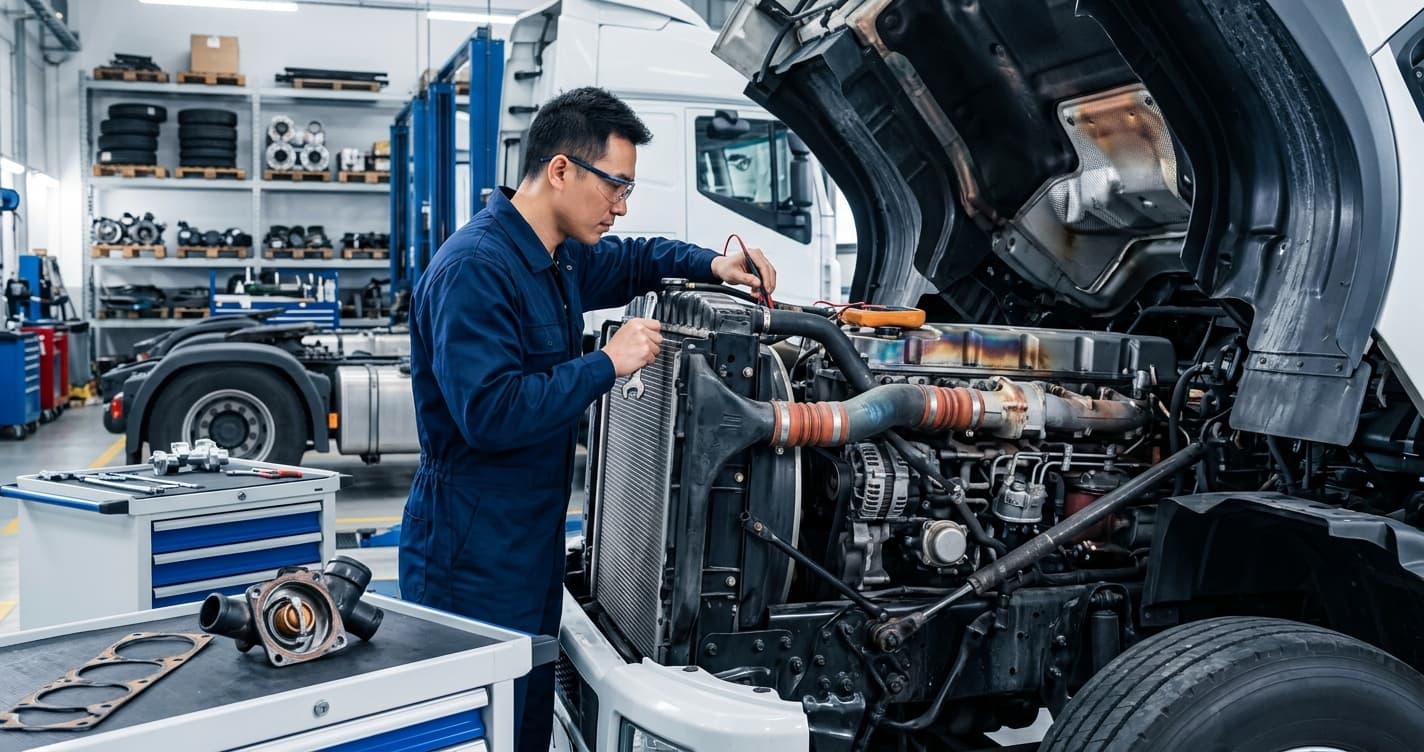
The cooling circuit is the first line of defense against thermal damage. Failures here are responsible for over 60% of high-temperature events in heavy-duty truck mileage applications. Common culprits include degraded radiator cores, collapsed hoses, and stuck thermostats.
Coolant degradation is often underestimated. When the antifreeze mixture loses its corrosion inhibitors—typically after 3–4 years without replacement—internal scale builds up and reduces heat transfer efficiency. This is especially problematic in fleet fuel management scenarios where trucks run extended hours under load.
2. Water Pump Malfunction
The water pump circulates coolant through the block and radiator. Impeller erosion, bearing seizure, or a slipping drive belt can reduce flow rates below the threshold needed to dissipate combustion heat. Operators sometimes notice a diesel engine knocking sound at idle before the temperature gauge spikes—this can indicate cavitation within the pump housing.
3. Thermostat Failure (Closed Position)
A thermostat stuck in the closed position blocks coolant flow to the radiator entirely. The engine temperature climbs rapidly, often within minutes of reaching operating load. This failure mode is particularly dangerous because it gives the driver very little reaction time.
4. Radiator Blockage and Airflow Restriction
External debris—mud, insects, grain dust—clogs radiator fins and reduces airflow. Internal blockage from sediment or failed head gasket material is harder to detect. Both conditions compromise the system’s ability to reject heat to the atmosphere, especially in sinotruk howo 371 fuel consumption per km scenarios where engines sustain high output for extended periods.
5. Fan Clutch or Electric Fan Failure
The cooling fan provides forced airflow at low vehicle speeds and during stationary idling. A failed viscous fan clutch or a burned-out electric fan motor means the radiator receives no supplemental airflow when it is needed most—during hill climbs, heavy towing, or stop-and-go traffic.
6. Head Gasket Breach
A compromised head gasket allows combustion gases to pressurize the cooling system or permits coolant to enter the combustion chamber. Symptoms include white exhaust smoke, coolant loss without visible leaks, and bubbles in the expansion tank. Combustion chamber pressure leaking into the water jacket overwhelms the radiator cap’s pressure rating.
7. Fuel System and Injection Timing Issues
Incorrect fuel injector timing causes late combustion, which dumps excess heat into the exhaust and cylinder walls rather than converting it to mechanical work. This is a common root cause when operators report elevated temperatures after injector service—specifically, diesel engine knocking after fuel injector replacement often accompanies this thermal issue.
Systematic Fault Diagnosis Approach
Step 1: Visual Inspection
Begin with a cold-engine inspection of all hoses, clamps, the radiator core, and the expansion tank. Look for coolant residue, swelling hoses, or corroded connections. Check the fan belt tension and condition. This basic step resolves approximately 30% of cases without any instrumentation.
Step 2: Pressure Testing the Cooling System
Apply a calibrated pressure tester to the radiator cap opening. A system that cannot hold rated pressure (typically 0.9–1.2 bar for heavy trucks) has a leak. If pressure drops without visible external leakage, suspect an internal head gasket failure.
Step 3: Thermostat Function Test
Remove the thermostat and submerge it in heated water with a thermometer. It should begin opening at its rated temperature (usually 82–88°C) and be fully open within 10°C above that. A thermostat that remains closed is replaced immediately.
Step 4: Coolant Flow Verification
With the engine running and thermostat open, observe coolant movement in the expansion tank or use an infrared thermometer to verify temperature differential across the radiator. A delta below 8°C suggests restricted flow or a weak water pump.
Step 5: Combustion Gas Leak Detection
Use a block tester (chemical color-change fluid) at the radiator filler neck. If the fluid changes color, combustion gases are entering the cooling system—confirming a head gasket or cracked head issue. This test is definitive and inexpensive.
Step 6: Injection System Analysis
If cooling components test normal, investigate the fuel system. Check injection timing with a timing light or diagnostic scanner. Verify that the cetane number of the fuel meets specifications. Poor fuel quality or mistimed injection increases exhaust gas temperatures dramatically, contributing to how to reduce truck fuel consumption challenges as well.
Diagnostic Summary Table
| Symptom | Likely Cause | Diagnostic Method | Urgency |
|---|---|---|---|
| Rapid temp rise under load | Thermostat stuck closed | Thermostat bench test | High |
| Gradual temp creep, no leaks | Internal radiator blockage | Flow test / IR thermometer | Medium |
| Coolant loss, white exhaust | Head gasket breach | Block tester / pressure test | Critical |
| High temp at idle only | Fan clutch / fan motor failure | Visual fan speed check | Medium |
| High temp + knocking noise | Injection timing error | Timing light / scanner | High |
| Coolant discoloration / sludge | Coolant degradation / contamination | Coolant test strips | Medium |
| Squealing belt + high temp | Water pump belt slip | Belt tension gauge | High |
Proven Solutions and Component Recommendations
Cooling System Overhaul
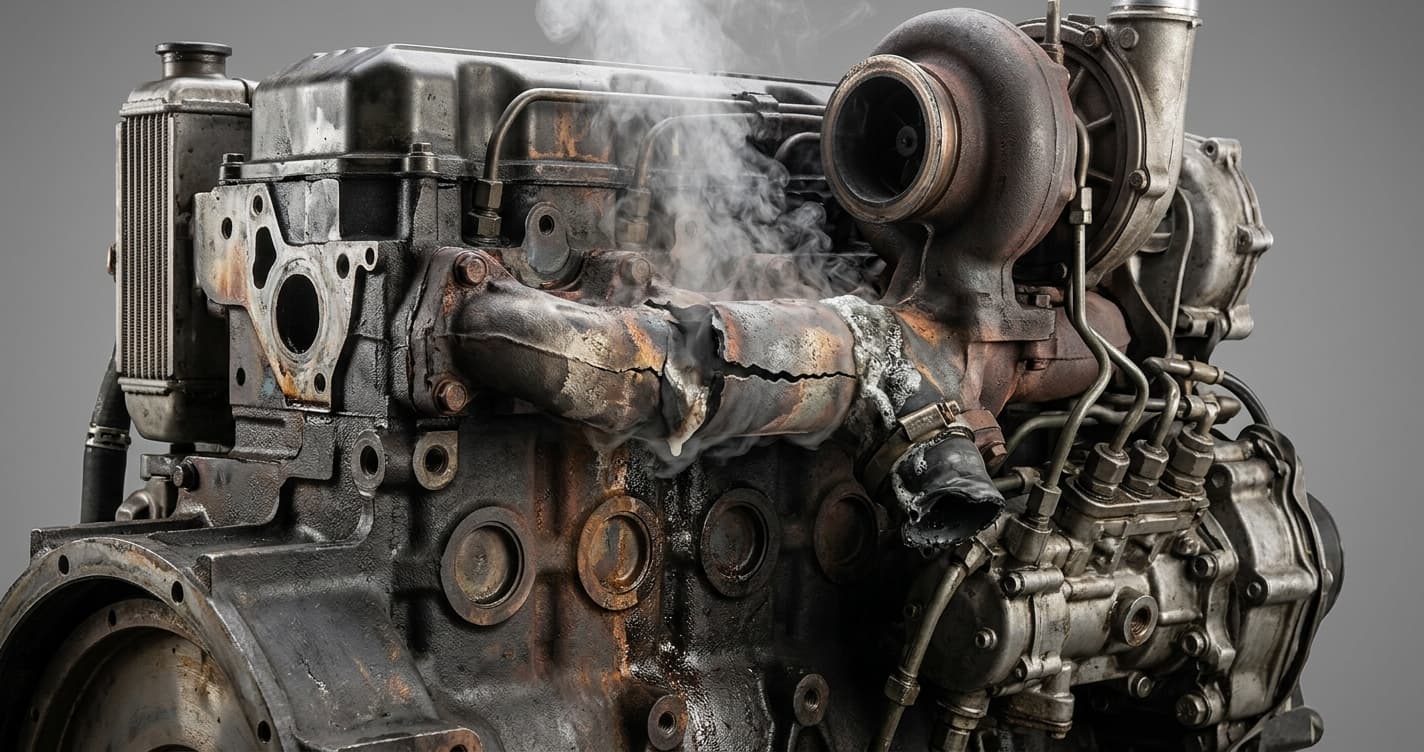
Replace the thermostat, water pump, and radiator cap as a set during any major thermal event. Using OEM-specification parts ensures correct flow rates and pressure ratings. For HOWO and Sinotruk platforms, we supply complete cooling kits matched to specific engine models—browse our product category system page for application-specific listings.
Radiator Replacement or Reconditioning
If the radiator core shows more than 20% fin damage or internal flow restriction, replacement is more cost-effective than repair. Aluminum-core units offer superior diesel fuel efficiency in heat rejection compared to older copper-brass designs. Our inventory covers major Chinese truck operating costs-conscious platforms including HOWO 6×4 tippers and A7 tractors.
Injection System Correction
When diagnosis points to fuel system causes, replace worn injectors and verify pump timing. Operators running howo dump truck diesel consumption rate 2025 benchmarks have reported 8–12% fuel savings after correcting injection drift—a fix that simultaneously resolves thermal issues. Diesel truck fuel additives reviews consistently show that quality cetane boosters can supplement but not replace proper mechanical timing.
For connecting rod bearing wear or piston slap identified during deeper teardowns, we recommend sourcing genuine-specification internal engine components. Visit our product category brand page to find parts by manufacturer.
Preventive Maintenance Protocol
- Flush and replace coolant every 2 years or 200,000 km
- Inspect fan clutch engagement at every oil change interval
- Clean radiator fins externally every 500 operating hours
- Test system pressure annually
- Monitor injection timing every 100,000 km
Following this schedule dramatically reduces the risk of unplanned thermal failures. Fleet operators tracking sinotruk howo a7 fuel efficiency tips have found that disciplined cooling system maintenance also improves fuel consumption optimization by maintaining optimal operating temperatures.
Real-World Case: HOWO 371 Fleet Recovery
A logistics company operating 28 HOWO 371 6×4 tippers experienced recurring high-temperature shutdowns during summer operations. Our diagnostic team identified three concurrent issues: degraded coolant (pH below 7.0), partially blocked radiators, and fan clutches engaging late due to silicone fluid leakage.
After replacing all thermostats, fan clutches, and performing radiator chemical flushes, the fleet recorded zero thermal shutdowns over the following 14 months. The howo 6×4 tipper truck fuel cost per kilometer also dropped by approximately 6% due to engines consistently running at optimal temperature. This cooperative case demonstrates how systematic diagnosis outperforms part-swapping guesswork.
The sinotruk howo 420 hp fuel consumption liters per 100km figures for this fleet improved from 38 L/100km to 35.7 L/100km—a meaningful reduction in heavy-duty vehicle mileage cost. Proper thermal management directly supports truck fuel efficiency tips 2026 best practices.
When to Seek Professional Assistance
If pressure testing reveals internal leakage, if diesel engine knocking under load causes persist after basic checks, or if the temperature gauge fluctuates erratically, professional diagnosis with specialized equipment is warranted. Sinotruk diesel engine performance issues sometimes require factory-level diagnostic software to read ECU fault codes accurately.
Our technical support team provides remote diagnostic guidance and can recommend the correct replacement components for your specific truck model and engine configuration. For diesel engine knocking when cold start symptoms that accompany thermal problems, a combined fuel-and-cooling system evaluation is essential.
Understanding Fuel System Interactions
Thermal management and fuel economy are deeply interconnected. An engine running above optimal temperature suffers from reduced volumetric efficiency, increased oil consumption, and accelerated wear. Operators using a truck fuel cost per mile calculator often discover that chronic mild overheating adds 4–7% to their per-mile fuel expense.
The best fuel cards for truck drivers cannot offset mechanical inefficiency. Addressing root thermal causes delivers compounding savings across fuel, maintenance, and vehicle longevity. How to fix diesel engine knocking noise often begins with verifying that the cooling system maintains the correct operating temperature window—many knock-related complaints disappear once thermal stability is restored.
Frequently Asked Questions
What is the most common cause of high engine temperature in heavy trucks?
Cooling system failures—particularly thermostat malfunction, coolant degradation, and radiator blockage—account for the majority of cases. These are also the least expensive to repair when caught early, making regular inspection critical for commercial truck diesel applications.
Can I continue driving if the temperature gauge enters the red zone?
No. Continuing to operate with critically elevated temperatures risks catastrophic damage including warped cylinder heads, blown head gaskets, and seized pistons. Pull over safely, shut down the engine, and allow it to cool before investigating. Even five minutes of operation in the red zone can cause irreversible harm.
How does injection timing affect engine temperature?
Late injection timing causes fuel to burn during the exhaust stroke rather than the power stroke. This generates excessive heat in the exhaust manifold and cylinder walls without producing useful work. Correcting timing restores normal thermal balance and improves howo truck fuel efficiency simultaneously.
How often should coolant be replaced in a heavy-duty truck?
Standard ethylene glycol coolant should be replaced every 2 years or 200,000 km, whichever comes first. Extended-life coolants (OAT formulations) may last up to 5 years or 800,000 km with supplemental additive testing. Always follow the engine manufacturer’s specification for your specific platform.
Where can I source reliable cooling system components for HOWO and Sinotruk trucks?
We supply OEM-specification thermostats, water pumps, radiators, fan clutches, and gaskets for the full range of HOWO and Sinotruk platforms. Learn more about us and our quality assurance process, or contact us directly for application-specific recommendations and bulk pricing for fleet operators.


