
Why Monitoring Inflation Levels on Commercial Trucks Is Non-Negotiable
Underinflated or overinflated tires remain the leading preventable cause of roadside breakdowns for heavy-duty vehicles. According to the American Trucking Associations’ 2025 fleet maintenance report, improper inflation accounts for roughly 30% of all tire-related failures on Class 8 trucks. Understanding how to truck check tirepressure correctly can save fleet operators thousands of dollars annually in fuel, tread wear, and emergency service calls.
A single PSI deviation from the manufacturer’s specification reduces tread life by approximately 2% and increases rolling resistance measurably. For owner-operators running 120,000 miles per year, that translates to hundreds of dollars in wasted diesel. The good news: verifying and correcting air levels takes less than ten minutes per axle when you follow a systematic process.
Essential Equipment for Accurate Readings
Choosing the Right Tire Pressure Gauge
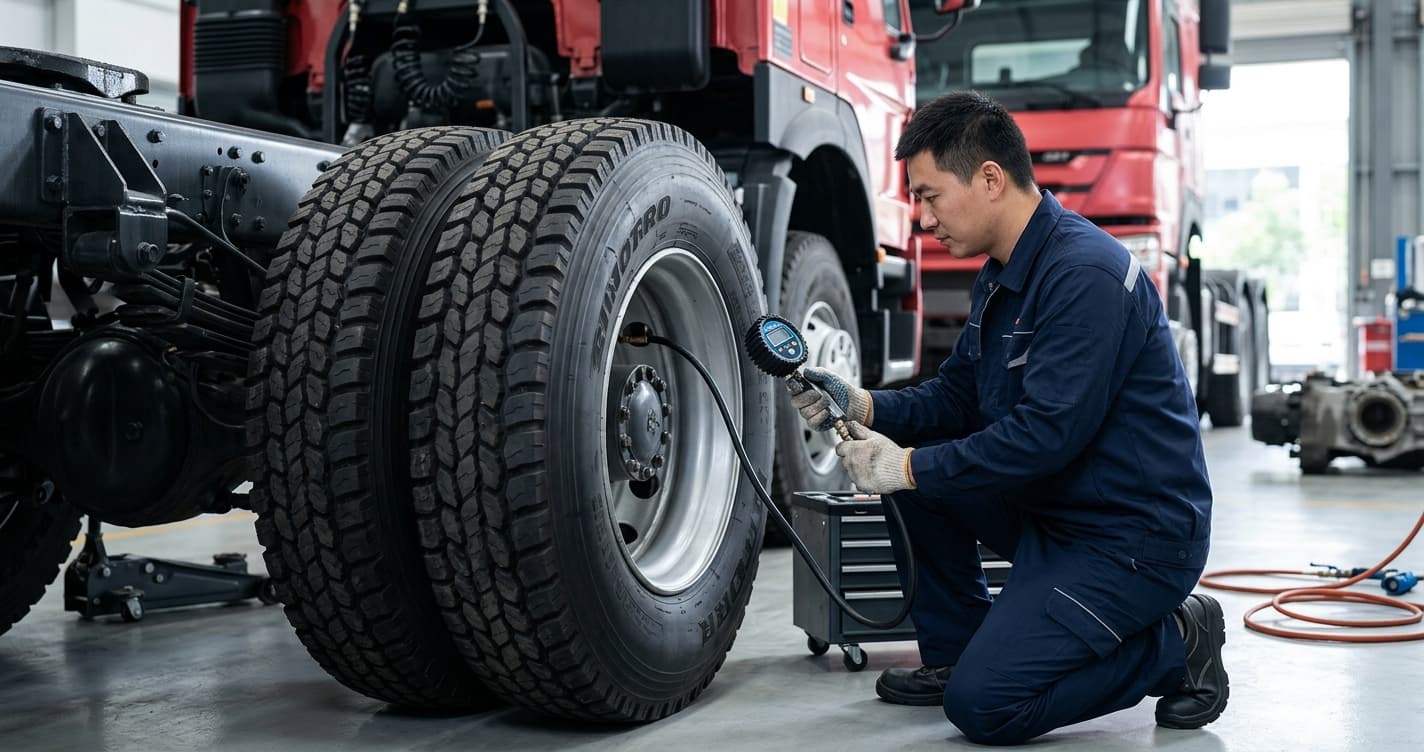
Not every gauge is suited for heavy commercial applications. The best tire pressure gauge for commercial trucks features a dual-head chuck, a range of 10–150 PSI, and ANSI B40.1 Grade B accuracy (±2%). Digital models with backlit displays simplify readings in low-light conditions at truck stops or loading docks.
When selecting a tool, consider whether you need a digital tire pressure gauge on truck tires or a calibrated analog dial. Digital units offer faster readings and memory functions, while analog dials require no batteries and tolerate extreme temperatures better. Either type should be recalibrated every 12 months against a certified reference.
| Gauge Type | Accuracy | Best For | Approx. Cost |
|---|---|---|---|
| Digital (backlit) | ±1 PSI | Night inspections, quick reads | $25–$60 |
| Analog dial (4″) | ±2 PSI | Extreme temps, no-battery reliability | $15–$40 |
| Pencil-style | ±3 PSI | Emergency backup only | $5–$12 |
On-Board TPMS Sensors
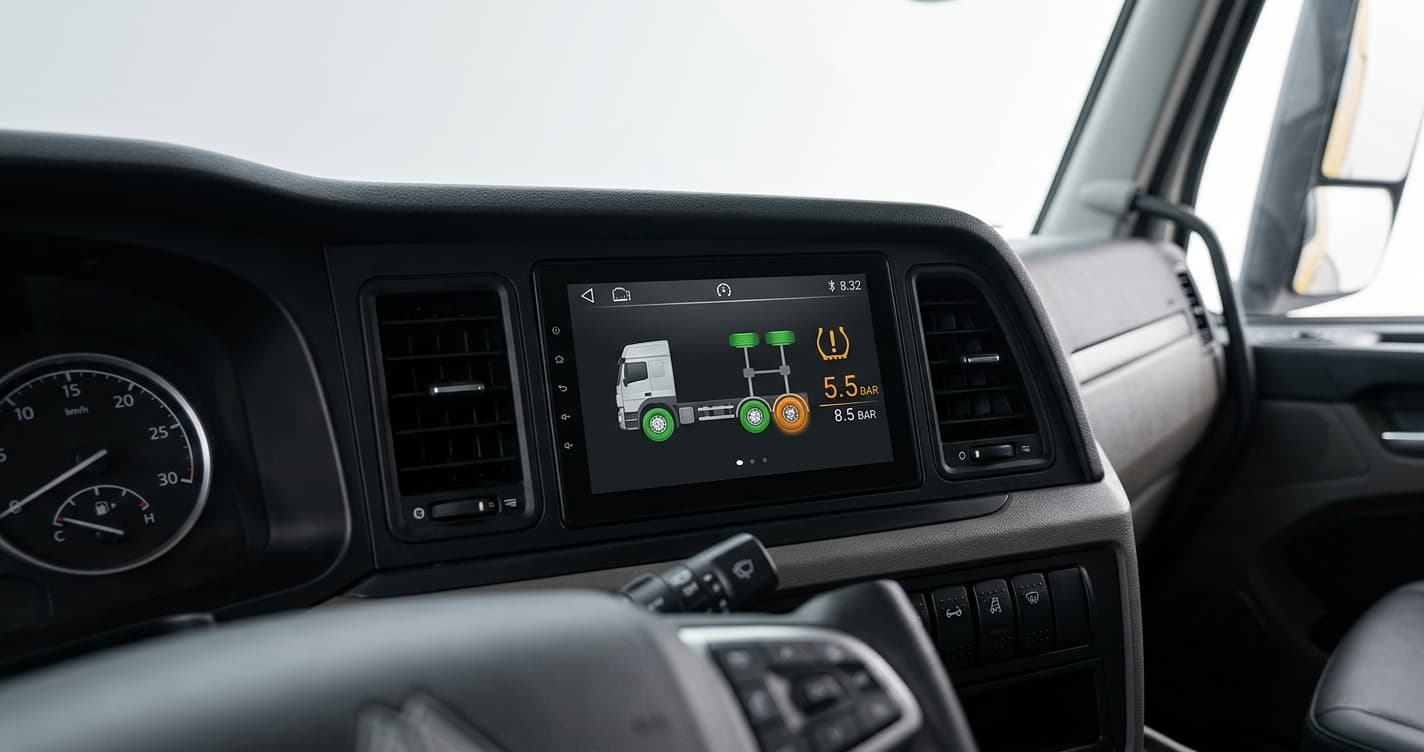
Modern fleets increasingly rely on tire-pressure monitoring systems that transmit real-time data to the cab. A TPMS sensor mounted on each valve stem alerts the driver when pressure drops below a preset threshold—typically 10% under target. These systems complement manual checks but should never fully replace them, because sensor drift and battery degradation can produce false readings over time.
For fleets evaluating integrated monitoring solutions, exploring a reliable product category system can streamline procurement and ensure compatibility across mixed trailer pools.
Step-by-Step Process for Verifying Air Pressure on Heavy Trucks
1. Inspect Tires Cold
Always measure before driving or after the vehicle has been stationary for at least three hours. Heat generated during travel raises internal pressure by 5–10 PSI, which masks genuine under-inflation. Early-morning pre-trip inspections yield the most reliable baseline.
2. Locate the Recommended PSI
The correct tire pressure for 18 wheeler tires varies by axle position and load. Steer tires on a typical Class 8 tractor are commonly set at 100–110 PSI, while drive and trailer positions range from 95–105 PSI depending on the manufacturer’s load-inflation table. Always reference the tire sidewall maximum and the vehicle placard—never guess.
| Axle Position | Typical PSI Range | Key Consideration |
|---|---|---|
| Steer | 100–110 | Handling precision, even wear |
| Drive (tandem) | 95–105 | Traction, fuel economy |
| Trailer | 95–100 | Load distribution, casing life |
3. Remove the Valve Cap and Attach the Gauge
Press the chuck firmly onto the valve stem until the hissing stops. Hold for two seconds to allow the gauge to stabilize. Record the reading and compare it against the PSI recommendation for that position. If the value is more than 5 PSI below target, inflate immediately using a calibrated air source.
4. Inflate or Deflate as Needed
Add air in short bursts, rechecking after each addition. Over-inflation is just as damaging as under-inflation—it reduces the contact patch and accelerates center-tread wear. After reaching the target inflation level, replace the valve cap securely to prevent debris contamination.
5. Document and Schedule
Log every reading in your maintenance system. Industry best practice suggests verifying air levels at least once per week for line-haul trucks and before every trip for regional delivery vehicles. Knowing how often to check tire pressure on a truck depends on mileage, climate swings, and load variability.
Common Mistakes That Lead to Inaccurate Readings
- Checking after highway driving: Heat-induced pressure rise masks true cold inflation.
- Using a worn gauge: Gauges lose calibration over time; replace or recalibrate annually.
- Ignoring inner duals: The inside tire on a dual assembly is often neglected, leading to uneven loading.
- Relying solely on visual inspection: A tire can be 20% underinflated and still appear normal to the eye.
Avoiding these pitfalls is part of comprehensive tire maintenance that extends casing life and protects retreading eligibility.
When a Tire Needs More Than Air: Roadside Replacement Basics
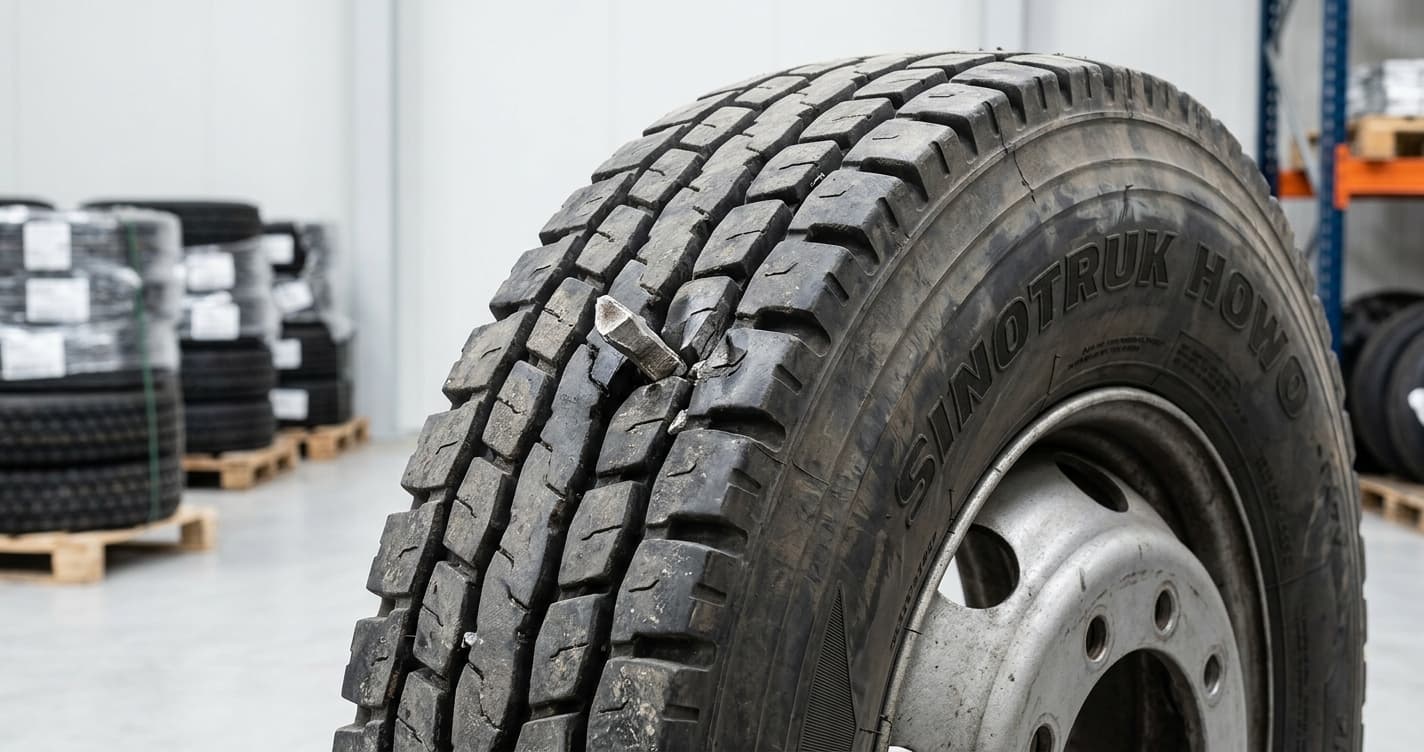
Sometimes a pressure check reveals irreparable damage—sidewall cuts, exposed cords, or bead separation. In those cases, a roadside tire change becomes necessary. Knowing how to change a truck tire by yourself is a valuable skill, though it demands proper safety precautions and the right equipment.
A change truck tire step by step guide typically involves securing the vehicle on level ground, loosening lug nuts in a star pattern, positioning the hydraulic jack placement point under the axle, and mounting the spare. The best tools to change a truck tire include a 1-inch impact wrench, a 25-ton bottle jack, wheel chocks, and a torque wrench rated for heavy-duty lug nut torque specifications (450–500 ft-lbs on most Class 8 wheels).
For emergency scenarios where equipment is limited, some drivers ask whether they can change truck tire without jack alternatives. While not recommended, ramp-style tire cradles exist for dual-tire removal on flat ground—but these are niche solutions. A proper jack remains the safest approach.
Regarding cost, how much does it cost to change a truck tire varies by location and tire size. National averages in early 2026 range from $50–$80 for shop-based service and $150–$350 for mobile roadside assistance, excluding the tire itself. Investing in spare tire mounting hardware and basic tools pays for itself after two or three self-service changes.
Leveraging Technology for Fleet-Wide Pressure Management
Leading carriers now integrate cloud-based platforms that aggregate data from every TPMS-equipped trailer in their network. These dashboards flag anomalies, predict slow leaks, and generate compliance reports automatically. If your operation is exploring such solutions, Mettlead offers monitoring products designed for commercial vehicle applications.
Pairing hardware with professional guidance accelerates ROI. The technical support resources available from specialized vendors help fleets calibrate sensors correctly and interpret trend data. Real-world deployments documented in published cooperative case studies show fuel savings of 1.5–3% fleet-wide after implementing automated monitoring.
When evaluating brands, reviewing a curated product category brand listing simplifies comparison across sensor manufacturers, gauge suppliers, and integrated platform providers.
Industry Data: The Cost of Neglecting Pressure Checks
| Metric | Properly Inflated | 10% Under-Inflated | 20% Under-Inflated |
|---|---|---|---|
| Tread life reduction | Baseline | −16% | −25% |
| Fuel penalty per mile | $0.00 | +$0.01 | +$0.03 |
| Annual cost impact (120k mi) | $0 | ~$1,200 | ~$3,600 |
| Blowout risk increase | Baseline | +40% | +150% |
These figures, drawn from TMC RP 235 guidelines and fleet telemetry aggregates published in early 2026, underscore why routine verification is the single highest-ROI activity in any truck tire replacement and maintenance program.
Frequently Asked Questions
How frequently should I verify air levels on a commercial rig?
For long-haul operations, a weekly cold-pressure inspection is the minimum standard. Regional and vocational trucks that encounter varied loads or rough terrain benefit from checks before every dispatch. Seasonal temperature swings of 30°F or more can shift readings by 3–5 PSI overnight.
Can I rely entirely on a TPMS instead of manual gauges?
No. While monitoring systems provide excellent real-time alerts, sensor batteries degrade, and calibration can drift. Manual verification with a certified gauge remains the gold standard for accuracy. Use TPMS as a supplement, not a replacement.
What is the ideal PSI for steer tires versus drive tires?
Steer axles typically require 100–110 PSI to maintain responsive handling and even shoulder wear. Drive axles run slightly lower—95–105 PSI—to optimize the contact patch for traction. Always consult the tire manufacturer’s load-inflation chart for your specific casing.
Does ambient temperature affect my readings significantly?
Yes. For every 10°F change in ambient temperature, tire pressure shifts by approximately 1–2 PSI. A truck parked overnight in freezing conditions may read 5+ PSI lower than it did the previous afternoon. This is why cold checks are essential.
Where can I get professional help with monitoring equipment selection?
Specialized vendors offer consultation services tailored to fleet size and route profiles. You can contact us for personalized recommendations, or visit the about us page to learn more about industry-specific expertise available to owner-operators and large carriers alike.


