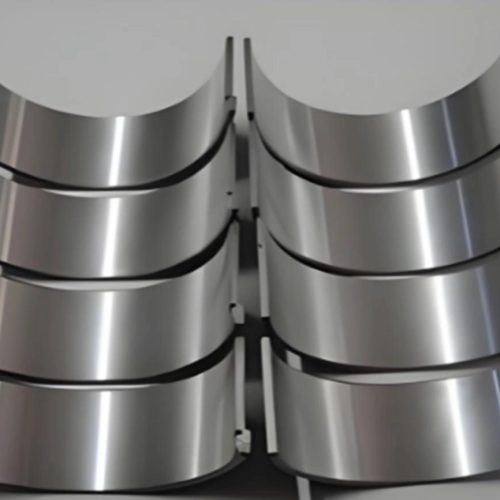
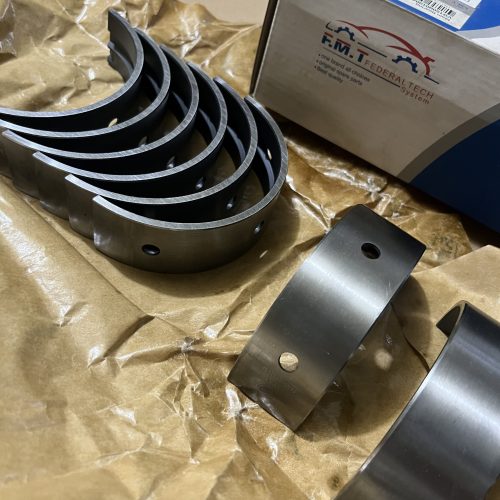
The crankshaft bearing is a core component of truck engines, working closely with the connecting rod bearing to support the crankshaft and ensure its smooth, stable rotation under high-speed and heavy-load conditions. As a key part of the engine’s power transmission system, it directly affects the engine’s service life, operational stability, and fuel efficiency—making its reliability critical for global truck fleets, whether operating long-haul routes, construction sites, or urban deliveries.
Common crankshaft bearing issues include wear, corrosion, and fatigue damage. These problems usually arise from improper maintenance, low-quality lubricants, harsh working environments (such as high temperatures, dust, or extreme cold), or long-term overloading. If left unaddressed, they can gradually worsen, leading to crankshaft damage, abnormal engine operation, and even complete engine failure—resulting in costly downtime and repair expenses for fleets.
As a professional Chinese truck parts supplier and exporter, we produce high-standard crankshaft bearings made of premium alloy materials. Our products undergo strict quality testing, including wear resistance, corrosion resistance, and fatigue resistance checks, to ensure stable performance in diverse global environments. To browse our full range of crankshaft bearings and find the right fit for your truck model, visit ourproduct page.
This article shares practical maintenance tips and failure prevention methods, tailored for fleet managers, drivers, and technicians, to help you protect your engine, extend crankshaft bearing service life, and reduce operational costs. For personalized maintenance advice tailored to your fleet’s specific operating conditions, feel free to contact our technical team.
Crankshaft bearing installation in truck engine
Common Crankshaft Bearing Failures & Prevention Tips
Understanding common crankshaft bearing failures and their prevention methods is key to avoiding costly engine damage and downtime. Below are the main failures and actionable tips for global fleets.
1. Bearing Wear and Corrosion
Wear and corrosion are the most frequent crankshaft bearing failures. Wear is caused by insufficient lubrication, oil impurities (such as dust or metal particles), or poor oil quality. Corrosion, on the other hand, results from acidic substances in degraded engine oil that erode the bearing surface over time. These issues lead to increased friction, abnormal engine noise, and reduced power. Regular oil changes and high-quality oil filters are essential to prevent this. For compatible high-quality oil filters, visit our oil filter product page.
2. Bearing Fatigue Damage
Long-term high pressure and repeated impact during engine operation cause fatigue in the bearing material, leading to small surface cracks that can expand and cause bearing breakage. Key causes include long-term overloading, unstable engine speed (such as frequent start-stops), and improper installation. Our crankshaft bearings undergo strict fatigue resistance testing to ensure they can withstand long-term heavy-load use. Learn more about our testing process on our quality control page.
3. Bearing Loosening or Seizure
Bearing loosening occurs due to improper torque during installation, leading to crankshaft misalignment and abnormal wear. Seizure is caused by severe overheating (from insufficient lubrication or blocked oil passages) or prolonged heavy loading, which fuses the bearing to the crankshaft journal—stopping the engine immediately. Both issues cause serious damage. For urgent replacements, contact our sales team; learn about our emergency delivery service on our support page.
Loose bearings can lead to crankshaft misalignment, while seizure can stop the engine immediately. For urgent replacement needs, contact our sales team for fast delivery.
⚙️ 1. How Crankshaft Bearings Work in Diesel Engines
Crankshaft bearings do not rely on direct metal contact during normal operation. Instead, they function through a hydrodynamic lubrication system, where engine oil forms a thin pressurized film between the crankshaft and bearing surface.
This oil film acts as a dynamic cushion that separates metal surfaces while supporting extremely high rotational forces generated during combustion cycles. The stability of this lubrication layer determines whether the bearing operates smoothly or begins to experience wear.
When oil pressure drops, viscosity degrades, or contamination enters the system, the oil film becomes unstable. Once this happens, metal-to-metal contact begins, leading to rapid friction increase and thermal damage inside the bearing housing.
⚠️ 2. Early Warning Signs of Crankshaft Bearing Wear
Crankshaft bearing failure rarely occurs suddenly. Instead, it develops through a series of subtle mechanical changes that gradually become more noticeable over time.One of the earliest indicators is a low-frequency knocking sound coming from the lower engine area, particularly during cold starts or sudden acceleration. This noise is caused by increased clearance between the crankshaft and bearing surface.
As wear progresses, oil pressure may begin to fluctuate, especially under high-load driving conditions. This is often an early sign that the lubrication film is no longer stable.In addition, drivers may notice increased engine vibration, reduced smoothness during operation, or a general decline in power consistency. These symptoms often appear before any ECU warning is triggered, making manual observation extremely important.
🔍 3. Root Causes of Crankshaft Bearing Failure
Crankshaft bearing damage is rarely caused by a single factor. Instead, it usually results from a combination of lubrication issues, mechanical stress, and operational conditions.One of the most common causes is insufficient or unstable oil supply. This can result from low oil levels, oil pump wear, or internal blockage in lubrication channels. When oil flow is disrupted, the protective oil film breaks down and friction increases rapidly.
Another major factor is oil contamination. Dust, combustion residues, or metal particles circulating in the oil system act as abrasive agents that gradually damage the bearing surface.Engine overheating also plays a significant role. High temperatures reduce oil viscosity, weakening its ability to maintain a stable lubrication layer under high load conditions.
Over time, these factors work together and accelerate wear until bearing clearance exceeds safe operating limits.
🔧 4. Maintenance Strategy for Fleet Operations
Effective crankshaft bearing maintenance is not based solely on reactive repair but on preventive system management. In fleet operations, maintenance must be adjusted according to load intensity, driving environment, and operating cycles.Regular oil changes using correct viscosity grade oil are essential to maintaining lubrication stability. Clean oil ensures proper hydrodynamic film formation under varying engine loads.
Equally important is monitoring oil pressure trends over time. Any gradual deviation from normal pressure levels may indicate early bearing wear or lubrication inefficiency.For fleets operating in harsh environments such as construction or mining, maintenance intervals should be shortened, as dust and heat significantly accelerate oil degradation and bearing stress.
👨🔧 5. Maintenance Responsibilities: Drivers, Technicians, and Fleet Managers
Crankshaft bearing protection is not the responsibility of a single role—it requires coordination across different levels of fleet operation.Drivers play the first line of detection. They can observe early symptoms such as abnormal noise, vibration, or performance loss during daily operation. Immediate reporting of these signs is critical.
Technicians are responsible for system-level diagnosis, including oil analysis, pressure testing, and mechanical inspection of the crankshaft assembly. Their role is to identify whether wear is in early or advanced stages.
Fleet managers focus on preventive planning. This includes setting maintenance schedules, ensuring oil quality standards, and implementing monitoring systems that reduce the risk of unexpected bearing failure.When all three roles work together, the risk of severe crankshaft damage can be significantly reduced.
💰 6. Cost Impact of Bearing Failure in Fleet Operations
Crankshaft bearing failure is one of the most costly engine-related problems because it often leads to secondary damage beyond the bearing itself.Once lubrication failure occurs, the crankshaft surface may become scored or deformed, requiring machining or full replacement. In severe cases, metal debris can circulate through the entire lubrication system, affecting multiple engine components.
For fleet operators, this results not only in repair costs but also in vehicle downtime, missed deliveries, and reduced operational efficiency.Therefore, preventive maintenance is always significantly more cost-effective than reactive engine repair.
Effective Maintenance Methods for Crankshaft Bearings
Proactive maintenance is the best way to extend crankshaft bearing life and avoid failures. Follow these simple, effective steps to protect your engine.
1. Choose High-Quality Crankshaft Bearings
High-quality, OEM-grade bearings are the foundation of reliable engine operation. Cheap, low-grade bearings wear out quickly and increase failure risks. Our crankshaft bearings meet international OEM standards, made of premium alloys for durability. Find the right fit for your truck model on our OEM-grade product page.
2. Adhere to Regular Lubrication Maintenance
Clean, high-quality engine oil forms a protective film that reduces friction and prevents wear. Follow the manufacturer’s recommendations to change oil at regular intervals, use the correct viscosity oil for your climate, and replace oil filters timely to keep the lubrication system clean.
3. Ensure Professional Installation and Inspection
Improper installation is a major cause of early failure. Have professional technicians install bearings per manufacturer torque specifications.
Regularly inspect bearings during routine maintenance for wear, corrosion, or looseness to catch issues early.
4. Avoid Long-Term Overloading and Harsh Operation
Long-term overloading and harsh driving (frequent acceleration, deceleration) increase bearing stress, accelerating wear and fatigue. Maintain stable speeds and avoid overloading to extend bearing service life.
Why Choose Our Crankshaft Bearings for Global Fleets
With rich experience in truck parts export, we offer crankshaft bearings recognized for stability, durability, and cost-effectiveness.
Our products adapt to diverse global environments—high-temperature, cold, and dusty—and we provide stable supply and fast international delivery.
Learn more about our crankshaft bearings on our official websiteor contact our sales team for a quote today.
❓ Frequently Asked Questions (FAQ)
What is the main function of a crankshaft bearing?
The crankshaft bearing serves as a precision interface between the crankshaft and the engine block, allowing controlled rotation under extremely high combustion forces. Its primary function is not to support static load like a traditional mechanical bracket, but to maintain a stable hydrodynamic oil film that separates two high-speed metal surfaces.
During engine operation, the crankshaft rotates at thousands of revolutions per minute while simultaneously being subjected to fluctuating combustion pressure from each cylinder. Without the bearing system, this metal-to-metal contact would generate immediate friction, overheating, and structural failure.
The bearing material itself is designed with a soft-layer structure that can absorb minor debris and adapt to micro-load variations. However, its real durability depends almost entirely on oil film stability rather than physical hardness. This is why lubrication quality is far more important than the bearing material alone.
What causes crankshaft bearing failure in diesel engines?
Crankshaft bearing failure is usually the result of a progressive lubrication breakdown rather than a single mechanical fault. In most heavy-duty diesel engines, failure begins with subtle changes in oil behavior such as reduced viscosity, contamination, or pressure instability.
When engine oil loses its ability to maintain a consistent hydrodynamic film, the crankshaft begins to make intermittent contact with the bearing surface. At first, this contact may be microscopic and invisible in performance metrics, but over time it leads to localized overheating and surface fatigue.
Contaminants such as metal particles, carbon deposits, or dust accelerate this process by acting as abrasive elements inside the lubrication layer. At the same time, high engine temperatures reduce oil thickness, making it harder for the oil film to maintain separation under heavy load conditions.
In fleet environments where engines operate continuously under variable load, these factors combine and gradually reduce bearing clearance until mechanical failure becomes unavoidable.
What are the early signs of crankshaft bearing problems?
Early-stage crankshaft bearing wear is often subtle and easy to misinterpret, which is why many failures are detected too late. One of the earliest indicators is a low-frequency knocking sound originating from the lower engine block, especially noticeable during cold starts or sudden acceleration.
This noise occurs because increased bearing clearance allows slight movement between the crankshaft and bearing surface during combustion cycles. Although the engine may still operate normally at this stage, internal wear has already begun.
As degradation progresses, oil pressure stability becomes affected. Instead of maintaining a consistent range, pressure may fluctuate depending on engine speed and load. This indicates that the lubrication system is no longer maintaining an optimal film thickness.
Drivers may also notice reduced engine smoothness and slight vibration changes, particularly under heavy load conditions. These symptoms often appear before any electronic warning system is triggered, making mechanical observation essential for early detection.
Can crankshaft bearing damage be repaired without engine overhaul?
Whether crankshaft bearing damage can be repaired without a full engine overhaul depends entirely on the severity and duration of the wear process. In early-stage cases where damage is limited to bearing surface wear without crankshaft deformation, replacement of the bearing set combined with crankshaft polishing may be sufficient.
However, once metal-to-metal contact has continued for an extended period, the crankshaft journal often develops scoring, uneven wear patterns, or heat discoloration. At this stage, simple bearing replacement is no longer enough because the surface geometry required for stable oil film formation has been permanently altered.
In more severe cases, metal debris from damaged bearings can circulate throughout the lubrication system, affecting oil pumps, camshafts, and other rotating components. This transforms a localized bearing issue into a system-wide engine contamination problem, often requiring a complete overhaul.
What are the early signs of crankshaft bearing problems?
Crankshaft bearing problems usually begin with very subtle mechanical changes that gradually become more noticeable as wear progresses. One of the earliest signs is a deep knocking noise coming from the lower engine region, particularly during cold starts or when the engine is under load.
This noise is caused by increased clearance between the crankshaft and bearing surface, which allows slight impact movement during combustion cycles. As wear continues, oil pressure may begin to fluctuate because the system can no longer maintain a stable hydrodynamic film under varying load conditions.
In addition to mechanical noise and pressure changes, drivers may also experience reduced engine smoothness and subtle vibration increases. These symptoms are often progressive rather than sudden, which is why they are frequently ignored until significant damage has already occurred.
How can fleet operators prevent crankshaft bearing failure?
Preventing crankshaft bearing failure requires maintaining stable lubrication conditions across the entire engine lifecycle. The most important factor is oil quality, including correct viscosity selection, contamination control, and timely replacement cycles.
In practical fleet operations, engines rarely fail because of a single issue; instead, failure develops through long-term exposure to suboptimal operating conditions such as high load stress, temperature fluctuation, and extended oil degradation intervals.
Therefore, preventive maintenance should focus not only on scheduled oil changes but also on monitoring oil pressure trends, engine temperature behavior, and load patterns over time. This allows early detection of lubrication instability before physical wear begins.
Fleet operators also benefit from adapting maintenance schedules based on real operating environments rather than fixed mileage intervals, especially for vehicles operating in construction, mining, or long-distance freight conditions.
Why is crankshaft bearing failure so expensive to repair?
Crankshaft bearing failure becomes expensive not because of the bearing component itself, but because of the cascading damage it causes within the engine system. Once lubrication failure occurs, the crankshaft surface is often directly affected, requiring machining or complete replacement depending on severity.
At the same time, metal particles generated during bearing failure circulate through the oil system, contaminating other precision components such as the oil pump, camshaft journals, and sometimes even cylinder surfaces. This turns a single-point failure into a multi-component repair scenario.
Additionally, repair complexity increases significantly due to the need for full engine disassembly and reassembly, which is labor-intensive and time-consuming. For fleet operators, this also translates into vehicle downtime costs, delayed logistics schedules, and reduced operational efficiency, making early prevention far more economical than post-failure repair.