In the demanding world of heavy-duty trucking, every component plays a critical role in operational efficiency and driver comfort. Among these, the window regulator, though seemingly minor, is essential for ventilation, communication, and overall cab environment. A malfunctioning window regulator can quickly become a significant nuisance, impacting driver focus and even posing safety risks. As a premier supplier of high-quality truck parts, specializing in components for Chinese heavy-duty brands like Sinotruk (HOWO), Shacman, FAW (Jiefang), Foton, and Dongfeng, we understand the intricacies of these systems. This comprehensive guide delves into the common problems associated with truck window regulators, helping fleet managers, maintenance technicians, and owner-operators diagnose issues accurately and implement effective solutions. Our focus is on providing robust, reliable parts that meet the rigorous demands of commercial trucking, ensuring your fleet remains operational and your drivers comfortable.
Understanding the Truck Window Regulator: Beyond the Basics
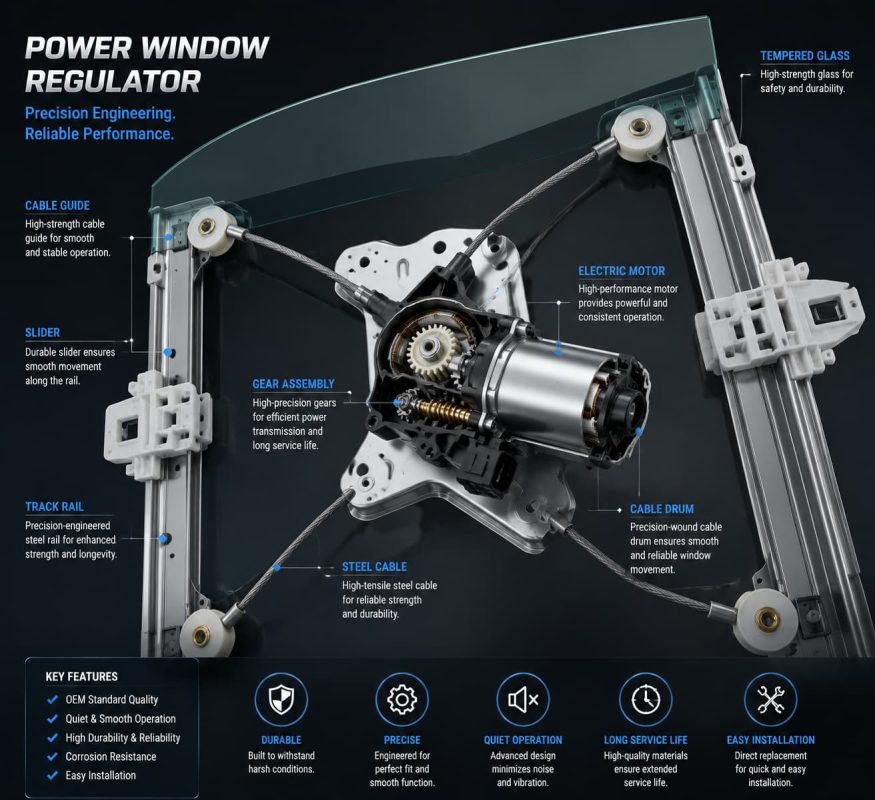
The window regulator is the mechanical assembly that moves a vehicle’s window glass up and down. While its function is straightforward, the engineering behind it, especially in heavy-duty trucks, involves robust design to withstand constant use and varying environmental conditions. Unlike passenger vehicles, truck window regulators often handle larger, heavier glass panes and are subjected to more vibration and dust. Understanding its fundamental operation is the first step in effective troubleshooting.
Types of Window Regulators in Heavy-Duty Trucks
Heavy-duty trucks primarily utilize two main types of window regulators, each with its own operational characteristics and common failure points:
- Cable-Driven Regulators: These systems use a motor to wind a cable, which in turn pulls the window glass along tracks. They are common due to their compact design and flexibility in routing. However, cables can fray, stretch, or snap, and plastic guides can wear out.
- Scissor-Type (Arm-Type) Regulators: These employ one or two arms that pivot to raise and lower the window. They are generally more robust and can handle heavier glass but can suffer from worn pivots, bent arms, or stripped gears in the manual crank mechanism.
Modern trucks predominantly feature power windows, where an electric motor is integrated into the regulator assembly. This motor, often a permanent magnet DC motor, receives commands from the window switch and provides the torque necessary to move the window. The interaction between the motor, gears, cables/arms, and the window glass itself is a delicate balance, and failure in any part of this chain can lead to operational issues.
Unmistakable Symptoms of a Failing Window Regulator
Identifying the early signs of a failing window regulator can prevent more extensive damage and costly repairs. Drivers are often the first to notice these symptoms, which can range from minor annoyances to complete window immobilization. Prompt diagnosis is key to maintaining fleet uptime and driver satisfaction.
Window Movement Issues
- Slow or Labored Movement: The window moves sluggishly, requiring excessive effort from the motor. This often indicates increased friction, a weakening motor, or a binding mechanism.
- Jerky or Uneven Movement: The window moves in fits and starts, or one side moves faster than the other, causing the glass to tilt. This is a classic symptom of worn or broken cables, damaged guides, or misaligned tracks.
- Window Falls Down or Won’t Stay Up: A critical safety concern. If the window drops on its own or refuses to stay in the up position, it typically points to a broken cable, a stripped gear, or a failed clutch mechanism within the motor assembly.
- Window Doesn’t Move at All: This could be a complete electrical failure (switch, wiring, motor) or a mechanical seizure (broken cable, jammed mechanism).
Audible Cues and Other Indicators
- Grinding, Clicking, or Popping Noises: These sounds during window operation are strong indicators of mechanical wear. Grinding often suggests stripped gears, while clicking or popping can signal a fraying cable or a broken plastic guide.
- Motor Runs, But Window Doesn’t Move: This clearly isolates the problem to the mechanical components of the regulator (cables, arms, guides) rather than the electrical system or motor itself. The motor is receiving power and attempting to operate, but the mechanical linkage to the window glass is compromised.
- Window Is Crooked or Misaligned: If the window glass appears to be off-track or sits unevenly in its frame, it’s a sign of damaged or detached guides, or a bent regulator arm. This can lead to improper sealing, wind noise, and water leaks.
Common Causes Behind Regulator Failures
Understanding the root causes of window regulator failure is crucial for both effective repair and preventative maintenance. Heavy-duty trucks operate in diverse and often harsh environments, which can accelerate wear and tear on these components.
Mechanical Wear and Tear
- Worn or Frayed Cables: Over time, the constant tension and movement can cause cables to stretch, fray, or snap, especially in cable-driven systems. This is exacerbated by dirt and debris entering the cable housing.
- Stripped Gears: In both power and manual regulators, the gears can become stripped due to excessive force, age, or manufacturing defects. This leads to a loss of engagement and inability to move the window.
- Broken Plastic Guides/Clips: Many regulators use plastic components to guide the window glass or to connect the glass to the regulator arms. These plastic parts can become brittle with age, extreme temperatures, or simply break under stress.
- Bent or Damaged Arms/Tracks: Physical impact, forcing a stuck window, or even prolonged vibration can bend the metal arms or tracks, causing the window to bind or jam.
Electrical System Malfunctions
- Faulty Window Motor: The electric motor can fail due to internal wear (carbon brushes), overheating, or electrical shorts. A common symptom is the motor making a humming sound but failing to move the window.
- Defective Window Switch: The switch itself can fail due to internal corrosion, worn contacts, or physical damage. This would prevent power from reaching the motor.
- Wiring Issues: Broken wires, corroded connectors, or short circuits in the wiring harness leading to the window regulator can interrupt power supply or control signals.
- Thermal Overload Protection: Many window motors have a thermal cutout that temporarily shuts off power if the motor overheats (e.g., when trying to move a stuck window). While a safety feature, repeated activation indicates an underlying mechanical issue.
Environmental Factors and Usage Habits
- Dust, Dirt, and Debris Ingress: Truck windows are exposed to more environmental contaminants. Dust and dirt can accumulate in the tracks and regulator mechanism, increasing friction and accelerating wear.
- Extreme Temperatures: Both extreme heat and cold can affect the materials. Plastics can become brittle in cold, and lubricants can thicken. Heat can degrade electrical components and rubber seals.
- Water Ingress and Corrosion: Leaky window seals can allow water into the door panel, leading to rust on metal components of the regulator and corrosion on electrical connectors.
- Improper Use: Forcing a frozen or stuck window, or repeatedly operating a window with excessive resistance, puts undue stress on the regulator components, leading to premature failure.
Diagnosing Window Regulator Problems: A Systematic Approach
Effective diagnosis requires a systematic approach, combining visual inspection, functional testing, and electrical checks. This ensures that the root cause is identified accurately, preventing unnecessary parts replacement.
Initial Visual Inspection
- Listen Carefully: Before disassembly, try to operate the window and listen for any unusual noises (grinding, clicking, motor hum). This can provide clues about mechanical vs. electrical issues.
- Check Window Movement: Observe how the window moves. Is it slow, jerky, or completely unresponsive? Does it tilt?
- Inspect Window Switch: Ensure the switch feels normal and operates correctly. Sometimes, the switch itself is the culprit.
Door Panel Removal and Mechanical Inspection
Once the door panel is removed, a more thorough mechanical inspection can be performed:
- Inspect Regulator Mechanism: Look for obvious signs of damage: broken cables, stripped gears, bent arms, or cracked plastic guides.
- Check Window Tracks: Ensure the window glass is properly seated in its tracks and that the tracks themselves are clean and free of obstructions. Lubricate tracks if necessary.
- Test Motor (Mechanically): If the motor runs but the window doesn’t move, manually try to move the window glass. If it’s completely jammed, the mechanical components are likely seized.
Electrical System Testing
For power windows, electrical testing is critical:
- Power to Switch: Use a multimeter to check for power at the window switch. If no power, trace the wiring back to the fuse box or main power source.
- Power from Switch to Motor: With the switch activated, check for power at the window motor connector. If power is present but the motor doesn’t run, the motor is likely faulty. If no power, the switch or wiring between the switch and motor is the issue.
- Ground Connection: Ensure the motor has a good ground connection. A poor ground can prevent the motor from operating correctly.
- Motor Bypass Test: In some cases, you can directly apply 12V power to the motor (observing polarity for direction) to confirm if the motor itself is functional. This bypasses the switch and wiring.
Effective Fix Solutions and Replacement Strategies
Once the problem is accurately diagnosed, implementing the correct fix is paramount. For heavy-duty trucks, reliability and durability are non-negotiable, making the choice of replacement parts critical.
Repair vs. Replacement: Making the Right Call
While some minor issues like loose connections or dirty tracks can be repaired, severe mechanical failures (broken cables, stripped gears, bent arms) usually necessitate replacing the entire window regulator assembly. Attempting to repair complex mechanical failures often leads to recurring problems and wasted labor. As a trusted supplier, we advocate for complete unit replacement with high-quality parts to ensure long-term reliability and driver satisfaction. This approach minimizes downtime and provides a lasting solution.
The Replacement Process: Key Considerations
Replacing a truck window regulator requires attention to detail and proper tools. While specific steps vary by truck model, general principles apply:
- Safety First: Disconnect the battery to prevent accidental power surges. Secure the window glass in the up position using tape or suction cups before removing the old regulator.
- Door Panel Removal: Carefully remove the interior door panel, noting the location of all clips, screws, and electrical connectors.
- Disconnect Electrical: Unplug the window motor’s electrical connector.
- Remove Old Regulator: Unbolt the regulator from the door frame and detach the window glass from the regulator’s mounting points. Carefully extract the old unit.
- Install New Regulator: Position the new regulator in the door, attach it to the window glass, and bolt it securely to the door frame. Ensure all mounting points are aligned.
- Reconnect Electrical & Test: Plug in the new motor’s electrical connector. Before reinstalling the door panel, reconnect the battery and test the window’s operation (up, down, smooth movement, full travel).
- Reinstall Door Panel: Once satisfied with the operation, reinstall the door panel, ensuring all clips and screws are properly secured.
Quality Matters: Sourcing Reliable Window Regulators
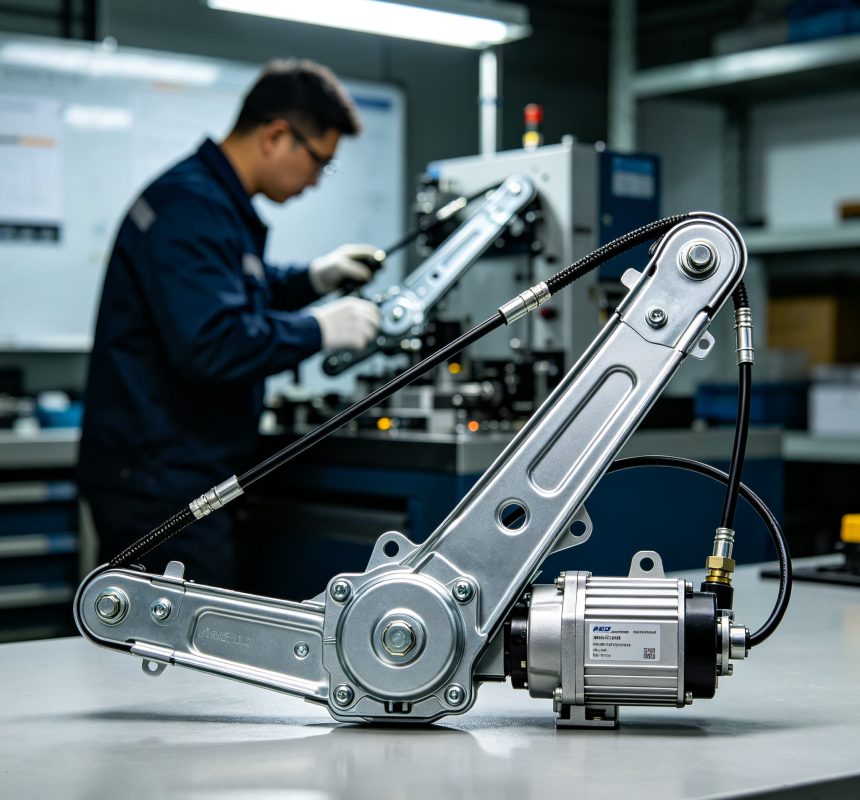
The longevity and performance of a replacement window regulator are directly tied to its quality. As a leading supplier of heavy-duty truck parts, we emphasize sourcing components that meet or exceed OEM specifications. Our inventory includes robust window regulators specifically designed for the demanding environments faced by Chinese trucks like HOWO, Shacman, FAW, Foton, and Dongfeng. We understand that a truck’s operational cycle is unforgiving, and our commitment is to provide parts that ensure maximum uptime and driver comfort. We rigorously vet our manufacturers, focusing on material strength, motor durability, and precision engineering to deliver components that you can trust. Our expertise in the supply chain ensures that you receive parts that are not only compatible but also built to last, reducing the total cost of ownership for your fleet.
Preventative Maintenance and Longevity Tips
Proactive maintenance can significantly extend the lifespan of truck window regulators and prevent unexpected failures, saving time and money in the long run.
Regular Inspection and Cleaning
- Clean Window Tracks: Periodically clean the window tracks to remove accumulated dirt, dust, and debris. Use a non-abrasive cleaner and a soft cloth.
- Lubricate Moving Parts: Apply a silicone-based lubricant to the window tracks and any visible moving parts of the regulator mechanism (if accessible). Avoid petroleum-based lubricants, which can attract dirt.
- Inspect Seals: Check the window seals (weatherstripping) for cracks or damage. Healthy seals prevent water and debris from entering the door panel, protecting the regulator.
Smart Usage Habits
- Avoid Forcing Stuck Windows: If a window is frozen or stuck, do not force the switch. This can strip gears or break cables. Instead, try to gently free it or allow it to thaw.
- Operate Smoothly: Avoid rapid, jerky movements of the window. Smooth, controlled operation reduces stress on the motor and mechanical components.
- Address Issues Promptly: Any signs of slow movement, unusual noises, or misalignment should be addressed immediately. Ignoring minor symptoms can lead to more severe and costly failures.
The Value of Comprehensive Technical Support
Choosing the right window regulator is just one part of the equation; having access to expert technical support is equally vital. As your dedicated partner in heavy-duty truck parts, we offer more than just components. Our team possesses in-depth knowledge of various truck systems, including the specific nuances of Chinese brands. Whether you need assistance with diagnosing a complex issue, identifying the correct part number for a specific FAW model, or understanding the installation best practices for a Dongfeng truck, our technical support team is ready to assist. We bridge the gap between high-quality parts and practical application, ensuring that our clients not only receive the best products but also the expertise to utilize them effectively. This commitment to comprehensive support minimizes guesswork, reduces downtime, and ultimately contributes to the long-term success of your operations. Visit our Technical Support page for more resources.
Why Partner with a Specialized Supplier?
In the competitive landscape of heavy-duty truck parts, partnering with a specialized supplier offers distinct advantages. We don’t just sell parts; we provide solutions tailored to the unique demands of the global trucking industry, with a strong focus on Chinese heavy-duty vehicles. Our extensive product catalog covers a wide range of components, from engine parts to braking systems, ensuring you can find everything you need in one place. Explore our Product Brand Page and Product System Page to see our comprehensive offerings. We pride ourselves on our rigorous quality control processes, ensuring that every window regulator, every gear, and every seal meets stringent performance standards. Our global logistics network ensures timely delivery, minimizing disruptions to your supply chain. Furthermore, our commitment to customer success is reflected in our Customer Success Stories, showcasing how we’ve helped businesses like yours thrive. For direct inquiries or to discuss your specific needs, please don’t hesitate to Contact Us. Learn more about our company and mission on our About Us page, or visit our Homepage.

Frequently Asked Questions (FAQ) about Truck Window Regulators
Q1: How can I tell if my truck’s window regulator is failing, or if it’s just the motor?
A1: A key diagnostic indicator is whether you hear the motor running when you press the window switch. If you hear a humming or whirring sound but the window doesn’t move, or moves very slowly/jerky, it’s highly likely the mechanical regulator assembly (cables, gears, arms) is at fault. If there’s no sound at all, the issue could be electrical (switch, wiring, fuse) or a completely seized motor. Our technical support team can guide you through specific tests to pinpoint the exact cause, especially for complex systems found in Shacman or Foton trucks.
Q2: Are aftermarket window regulators as good as OEM parts for heavy-duty trucks?
A2: The quality of aftermarket window regulators varies significantly. As a specialized supplier, we meticulously vet our manufacturers to ensure that our aftermarket parts meet or exceed OEM specifications in terms of material strength, motor durability, and precision engineering. For heavy-duty applications, choosing a reputable supplier is paramount to avoid premature failure. Our focus is on providing robust, reliable alternatives that offer exceptional value and performance for brands like HOWO and FAW.
Q3: What are the most common causes of window regulator failure in heavy-duty trucks?
A3: The most frequent culprits are mechanical wear and tear (frayed cables, stripped gears, broken plastic guides), electrical malfunctions (faulty motor or switch), and environmental factors (dust, dirt, water ingress leading to corrosion). Heavy use and exposure to harsh conditions accelerate these issues. Understanding these common causes helps in implementing effective preventative maintenance strategies.
Q4: Can I repair a broken window regulator, or should I always replace the entire unit?
A4: While minor issues like loose connections or dirty tracks can sometimes be repaired, significant mechanical failures (e.g., snapped cables, severely stripped gears, bent arms) generally warrant a complete replacement of the regulator assembly. Attempting to repair complex mechanical damage often results in recurring problems and additional labor costs. For optimal reliability and safety in heavy-duty trucks, a high-quality replacement unit is almost always the recommended solution.
Q5: How can I prevent my truck’s window regulator from failing prematurely?
A5: Preventative maintenance is key. Regularly clean and lubricate the window tracks with a silicone-based lubricant to reduce friction. Inspect window seals for damage to prevent water ingress. Avoid forcing stuck or frozen windows, as this puts immense stress on the mechanism. Promptly address any signs of sluggish movement or unusual noises. Choosing high-quality replacement parts from a trusted supplier also plays a crucial role in long-term durability.
Q6: What specific considerations should I have when sourcing window regulators for Chinese truck brands like HOWO or Shacman?
A6: When sourcing for Chinese truck brands, it’s vital to ensure precise fitment and electrical compatibility. While many international designs are adapted, specific mounting points, motor connectors, and even window glass dimensions can vary. Partnering with a supplier who specializes in these brands, like us, ensures you receive parts that are not only high-quality but also guaranteed to be a perfect match for your Sinotruk (HOWO), Shacman, or Dongfeng fleet, minimizing installation headaches and maximizing operational reliability.


