It is a crucial component for preventing oil leakage in key truck parts. Its quality directly affects the vehicle’s safe and stable operation.
It is widely used in core truck systems, including transmission input shaft, differential, balance shaft, crankshaft, and camshaft.
Each position has matching specifications. Proper maintenance and selection reduce fault risks and extend component life.
This saves unnecessary maintenance costs for truck owners and maintenance personnel.
This article details practical maintenance skills, fault solutions, and selection criteria, offering professional guidance.
1. Basic Introduction to Truck Oil Seal
First, understand its core role. As a professional sealing component, it is installed between the truck’s moving and fixed parts.
Its main function is to prevent leakage of lubricating oil, hydraulic oil, and other key media.
It also blocks external dust, impurities, and water from entering internal components.
This avoids premature wear and damage caused by pollution. This small component is irreplaceable for the truck’s power and transmission systems.
Common types include transmission input shaft, differential, balance shaft, crankshaft, and camshaft seals.
Among them, transmission input shaft and differential seals are most frequently used. They are also the most prone to failure.
They bear long-term high-speed operation and heavy load pressure. They are easily affected by oil quality, installation accuracy, and working environment.
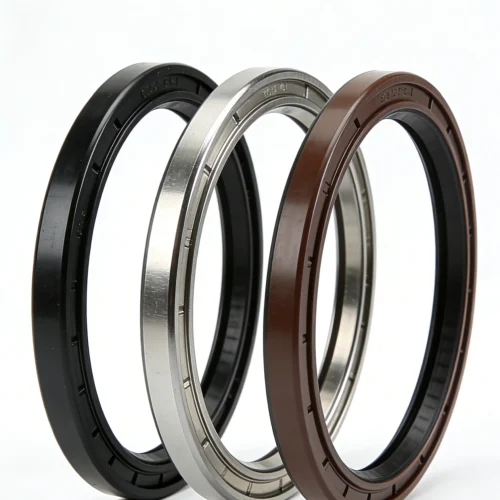
Truck Oil Seal (Transmission Input Shaft/Differential/Balance Shaft)
2. Common Faults of Truck Oil Seal and Troubleshooting
2.1 Common Fault Phenomena
Its most common fault is oil leakage, which has obvious, easy-to-identify signs. For example, oil stains appear around the truck’s transmission, differential, or balance shaft.
The corresponding system’s oil level drops significantly over time. Severe wear or damage may cause abnormal noise during truck operation.
This noise is usually accompanied by an oil smell. It results from insufficient lubrication and impurity entry.
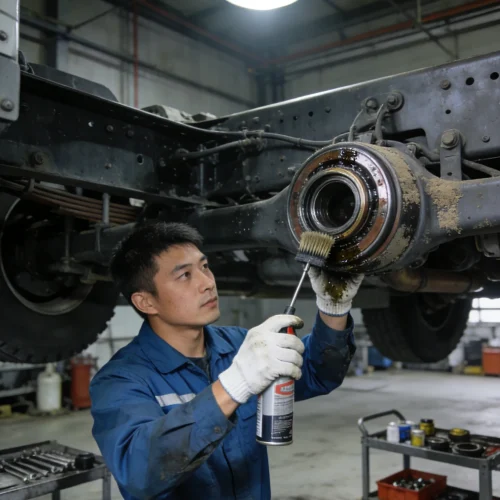
2.2 Simple Troubleshooting Methods
When oil leakage is found, first check it for obvious damage, aging, or deformation.
If it becomes hard or cracked or the lip is worn, replace it promptly. This avoids further damage to truck components.
Also check its matching parts (such as the shaft surface) for scratches or wear. These problems also cause oil leakage and affect sealing.
For minor leakage from slight wear, clean it and the shaft surface first. Then apply a small amount of professional sealant to temporarily fix the issue.
Regular maintenance is key to extending its service life. During routine truck maintenance, check it regularly. Focus on oil leakage, damage, or aging.
Especially after long-distance transportation or harsh working environments (high temperature, humidity, or dust), increase inspection frequency.
This helps find potential problems early. Keep it and its surroundings clean.
Avoid dust and impurities adhering to its lip, which accelerates wear and reduces sealing.
In addition, choose the correct lubricating oil for your truck model and its type. Improper lubricating oil reduces lubrication and corrodes it.
This leads to premature aging and damage. Avoid long-term truck overloading. Excessive load increases pressure on it, causing deformation or wear.
Choosing a high-quality one ensures sealing performance and service life. First, select products matching your truck model and installation position.
For example, transmission input shafts and differential seals have different specifications. They cannot be mixed
Second, pay attention to its material. High-quality ones use nitrile rubber or fluorine rubber.
These materials have excellent wear resistance, high-temperature resistance, and oil resistance. They adapt to harsh truck working environments.
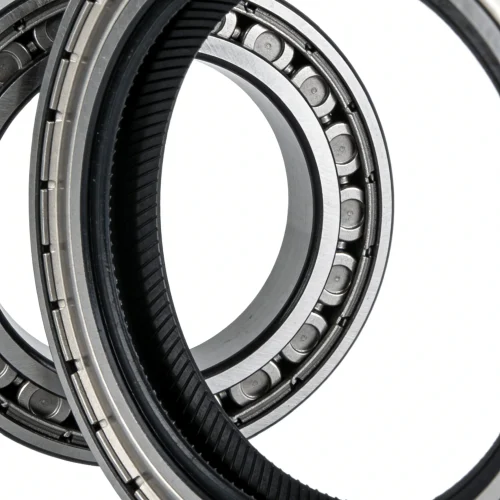
Also check its manufacturing process. A good one has a smooth surface, uniform thickness, and tight lip-skeleton combination. This ensures better sealing and longer service life.
Premium Truck Oil Seal
In addition, choose products from regular, reliable manufacturers. These manufacturers have strict quality control.
They offer stable quality and perfect after-sales service. This avoids trouble from inferior products