It is a core component for heavy-duty truck lubrication. It delivers lubricating oil to engines, transmissions, and other key parts smoothly and stably.
It directly determines the stability and service life of truck power systems, which is crucial for long-distance truck transportation.
Many truck users ignore its maintenance due to busy schedules and heavy transportation tasks.
This oversight easily leads to frequent faults, increased repair costs, and even unexpected breakdowns on the road, affecting transportation efficiency.
This article summarizes practical maintenance skills, fault handling methods, and selection criteria tailored for it, helping users reduce troubles.
1. Basic Introduction to Truck Oil Pump
First and foremost, understand its core function.
As a key truck lubrication component, it transports clean lubricating oil from the oil tank to every moving part of the truck, including the engine crankshaft, connecting rod, and transmission gears.
It reduces friction and wear between components, preventing overheating, jamming, and even component damage.
Its precision structure is specially designed to adapt to the harsh working environment of heavy trucks, such as high load, high speed and frequent start-stop cycles.
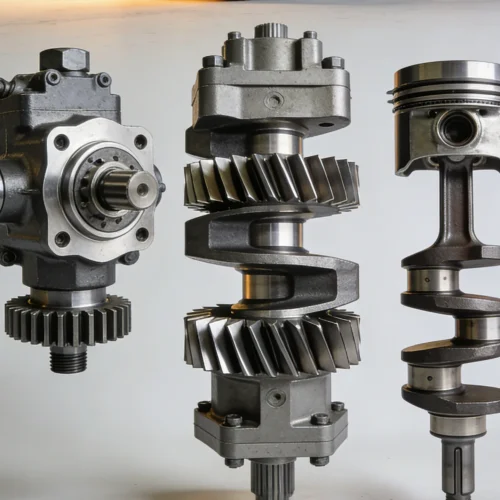
Common types include gear-type, vane-type, and piston-type. They are matched according to different truck models and engine specifications.
Gear-type ones are widely used in heavy trucks due to their simple structure and strong load-bearing capacity.
Vane-type ones have stable oil delivery and low noise, suitable for medium-duty trucks. Piston-type ones offer high pressure and precise control, ideal for special working conditions.
Truck Oil Pump (Gear/Vane/Piston)
2. Common Faults of Truck Oil Pump and Troubleshooting
2.1 Common Fault Phenomena
Long-term high-load operation and harsh working environments (such as high temperature, dust and bumpy roads) make it prone to various faults.
Common ones are insufficient oil pressure, oil leakage, abnormal noise and reduced oil delivery.
These faults not only affect the normal operation of the truck but also may cause serious damage to the engine and transmission if not handled in time, leading to greater economic losses.
2.2 Practical Troubleshooting Methods
When faults occur, stop the truck first to avoid further damage to the engine or transmission.
For insufficient oil pressure, check if it is blocked by impurities or if the lubricating oil is insufficient or deteriorated.
Clean the oil pump thoroughly and add qualified lubricating oil in time. For oil leakage, carefully inspect the seal of the oil pump and its connecting parts, and replace damaged seals or gaskets promptly.
For professional troubleshooting, consult our technical support team and refer to our professional truck oil pump repair guide.
3. Daily Maintenance Tips for Truck Oil Pump
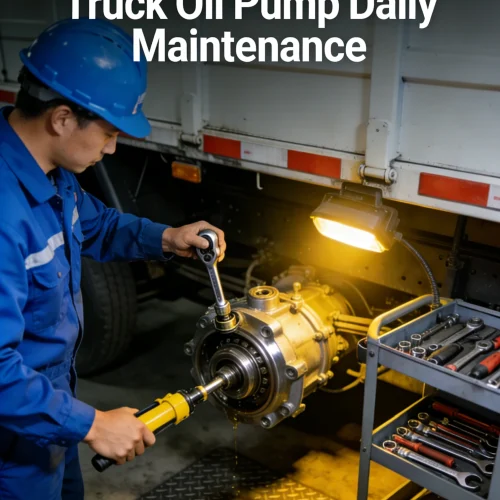
Regular maintenance is the key to extending its service life. Check it carefully during routine truck maintenance, focusing on the wear of gears, vanes or pistons and the tightness of seals.
Use high-quality lubricating oil that matches the truck model and replace the oil regularly.
This avoids oil deterioration, which can cause blockage or wear to it and affect its normal operation.
Additionally, keep it and its surroundings clean. Avoid dust and impurities entering it. This prevents wear and blockage.
Truck Oil Pump Daily Maintenance
Furthermore, avoid long-term truck overloading, as excessive load will greatly increase the pressure on it and accelerate internal wear.
For more detailed maintenance skills, consult ourprofessional maintenance teamand browse our professional truck lubrication guide.
Which covers comprehensive knowledge about truck lubrication and component maintenance.
4. How to Select High-Quality Truck Oil Pump
Choosing a high-quality one ensures stable truck operation and reduces later maintenance costs.
Select products that strictly match the truck model and engine specifications, as incorrect specifications will cause poor lubrication, equipment failure, and even damage to related components.
Secondly, pay attention to its material and manufacturing process.
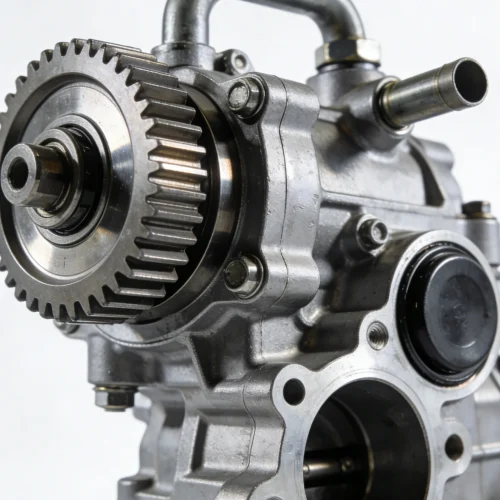
High-quality ones use high-strength alloy materials and precision machining technology, which can withstand high pressure, high temperature, and long-term wear.
They have good wear resistance, high temperature resistance, and pressure resistance, ensuring stable operation in harsh truck working environments.
High-Quality Truck Oil Pump Close-Up
Choose products from regular, reliable manufacturers with complete qualification certificates.
These manufacturers have strict quality control systems, ensuring stable product quality and perfect after-sales service.
It is an indispensable core component for heavy-duty truck operation, and its performance directly affects the safety and efficiency of truck transportation.