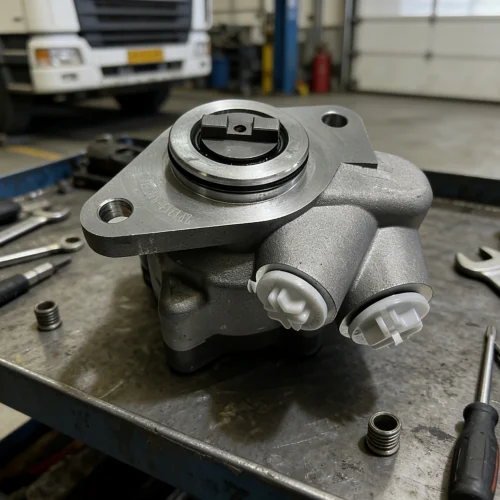
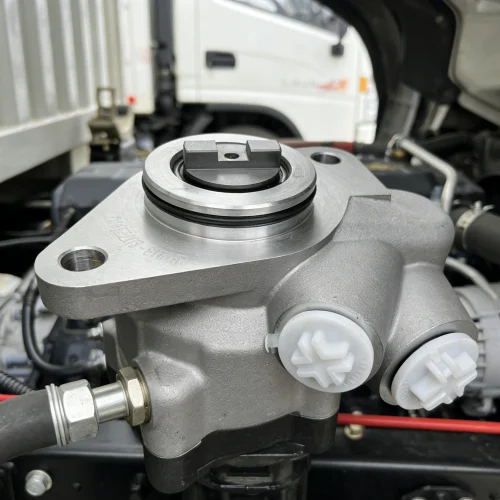
The power steering pump’s primary role is to convert engine mechanical energy into stable hydraulic pressure.
This pressure provides necessary power support for the entire steering system. It generates consistent pressure via the engine’s belt drive.
This lets drivers steer flexibly and effortlessly, even with full loads or on rough roads.
Moreover, it closely coordinates with the steering gear. This ensures smooth, stable operation of the entire steering system.
Its built-in pressure regulation mechanism controls hydraulic pressure within safe limits.
This prevents excessive pressure from damaging steering system components.
Truck Power Steering Pump
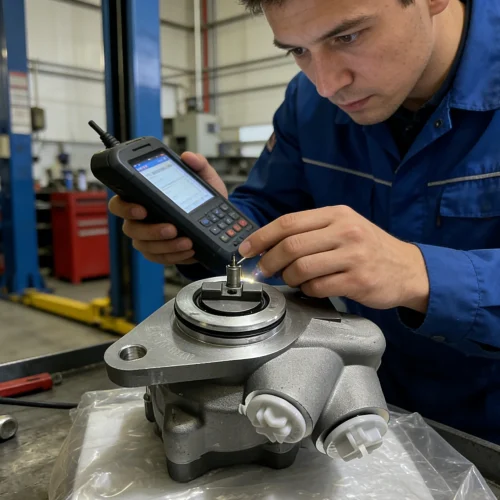
2. Fault Diagnosis of Power Steering Pumps
Timely identifying and handling pump faults is key to avoiding safety hazards. It also helps reduce maintenance costs.
Common faults include abnormal operating noise, insufficient hydraulic pressure, and fluid leakage. Each of these has clear warning signs that are easy to detect.
For example, a harsh whining sound when turning may mean low hydraulic fluid. It could also indicate worn internal components.
If the steering wheel feels stiff, it may be due to low pressure or blocked oil circuits. Visible fluid under the vehicle may signal seal or pipe issues.
3. Maintenance of Power Steering Pumps
3.1 Daily Inspection and Maintenance
Regular inspection and routine maintenance prevent pump failures. They also extend the pump’s service life.
First, check hydraulic fluid level and quality regularly. Ensure it meets the vehicle’s operating requirements.
If fluid is discolored, turbid, or impure, replace it promptly. This avoids damaging internal components.
Meanwhile, inspect the drive belt for wear, cracks, or looseness. Adjust or replace it in time to keep the pump working normally.
Common faults include abnormal operating noise, insufficient hydraulic pressure, and fluid leakage. Each of these has clear warning signs that are easy to detect.
3.2 Key Maintenance Notes
Avoid overloading the power steering pump. Strictly follow the truck’s rated load limits. Excessive load accelerates internal component wear and shortens service life.
Additionally, keep the pump’s air vents unobstructed. This prevents pressure buildup inside the pump. Regularly clean the oil filter to avoid blockages.
When choosing a power steering pump for heavy-duty trucks, prioritize compatibility and quality.
First, it must match the truck’s model, engine parameters, and steering system. This ensures it provides enough hydraulic pressure for full-load steering needs.
Regular inspection and routine maintenance prevent pump failures. They also extend the pump’s service life.
Second, choose products with reliable quality, complete certification, and good after-sales service.
These pumps have better wear resistance and stability. They can adapt to harsh truck working environments. Also, check the pump’s pressure-bearing capacity and oil delivery efficiency.
The power steering pump is an indispensable core part of the truck’s steering system.
Its stable operation directly affects driving safety, efficiency, and smoothness. Master its core functions and fault diagnosis methods.
Adhere to scientific maintenance habits and select the right pump model. This reduces failure risks, extends service life, and ensures safe, stable truck operation.
First, it must match the truck’s model, engine parameters, and steering system. This ensures it provides enough hydraulic pressure for full-load steering needs.