Inter-Axle vs. Inter-Wheel Differentials: Understanding the Differences

In the demanding world of heavy-duty trucking, where vehicles navigate diverse terrains and carry immense loads, the ability to effectively manage power distribution to the wheels is paramount. At the heart of this power management system lies the differential, a sophisticated mechanical component designed to allow wheels on the same axle or different axles to rotate at varying speeds. This seemingly simple function is, in reality, a complex engineering marvel that dictates a truck's traction, maneuverability, and overall operational efficiency. For fleet managers, maintenance professionals, and procurement specialists, a deep understanding of differential technology is not just beneficial—it's essential for optimizing vehicle performance and ensuring safety.

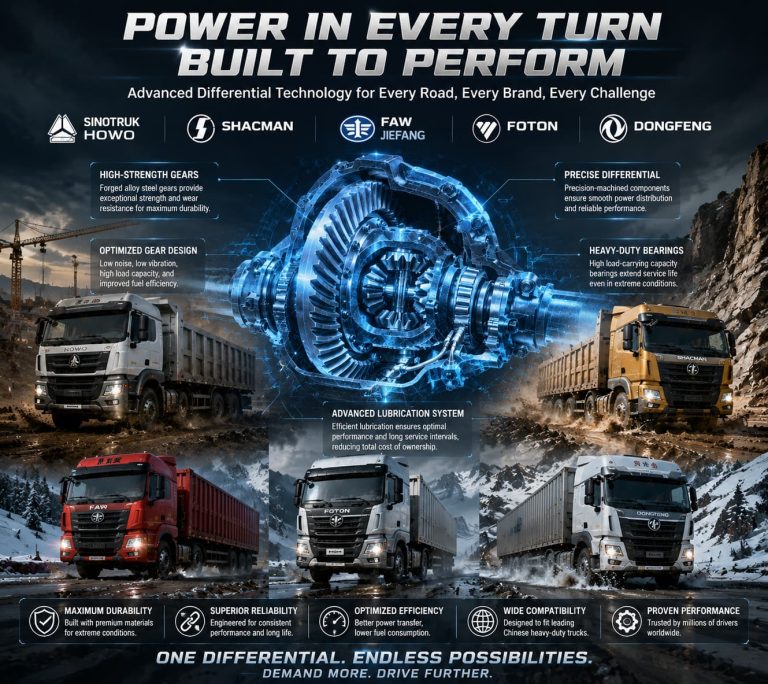
As a specialized supplier of premium truck components, we understand that the choice and maintenance of differentials significantly impact a commercial vehicle's capability, especially in challenging conditions. This comprehensive guide delves into the critical distinctions between two fundamental types of differentials crucial for multi-axle heavy-duty trucks: the inter-axle differential and the inter-wheel differential. We will explore their unique functions, operational principles, and the specific scenarios where each excels. Our aim is to equip you with the technical insights needed to make informed decisions, ensuring your fleet, whether it comprises robust Sinotruk (HOWO) models, versatile Shacman trucks, or reliable FAW (Jiefang), Foton, and Dongfeng vehicles, operates at its peak. For a broader overview of the essential drivetrain components we provide, we encourage you to explore our .

The Fundamental Role of Differentials in Heavy-Duty Trucks

Before dissecting the differences, it's crucial to grasp why differentials are indispensable in heavy-duty truck drivelines. Without a differential, wheels connected to the same drive axle would be forced to rotate at the same speed. This creates immense stress and wheel slippage when turning, as the outer wheel needs to travel a greater distance than the inner wheel. Similarly, in multi-drive axle configurations, each axle needs to accommodate different rotational speeds, especially during turns or when encountering varying traction conditions.

Accommodating Rotational Speed Differences

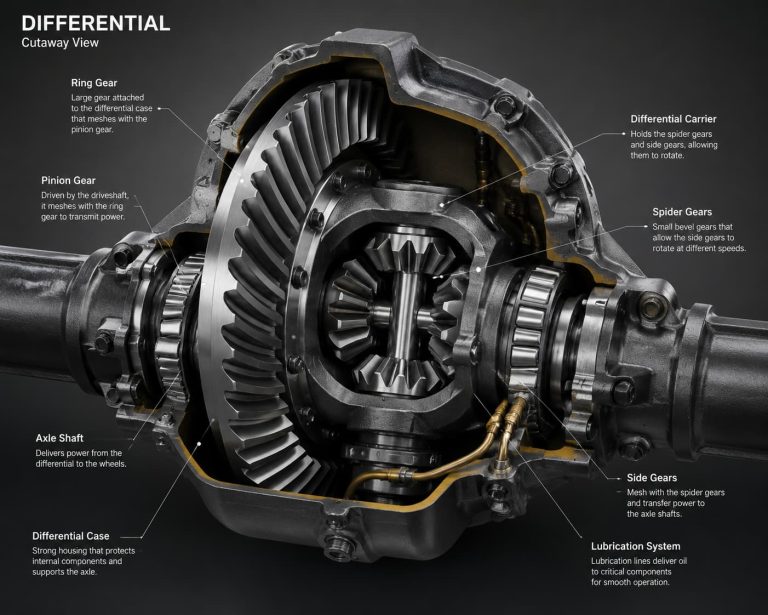
The primary function of any differential is to allow wheels to rotate at different speeds while still transmitting torque. This is achieved through a planetary gear set (spider gears and side gears) housed within a differential case. When a truck turns, the differential allows the outer wheel to spin faster than the inner wheel, preventing tire scrub, reducing wear, and improving maneuverability. In a multi-drive axle truck, this principle extends to managing speed differences between the drive axles themselves.

Torque Distribution and Traction Management

Beyond accommodating speed differences, differentials play a pivotal role in distributing engine torque. In a standard open differential, torque is always split equally between the two output shafts (wheels or axles). However, this equal split can become a disadvantage when one wheel loses traction. If one wheel is on a slippery surface, it will spin freely, and the other wheel, despite having traction, will receive no torque, effectively immobilizing the vehicle. This inherent limitation led to the development of more advanced differential designs, particularly critical for heavy-duty applications that frequently encounter challenging road conditions. For a comprehensive look at the brands we support, visit our .

Inter-Wheel Differential: Mastering Traction at Each Wheel

The inter-wheel differential, often simply referred to as the “differential,” is found within each drive axle, positioned between the left and right wheels. Its primary function is to allow the left and right wheels on the same axle to rotate at different speeds, which is essential for turning.

Operational Principle of an Open Inter-Wheel Differential

An open inter-wheel differential is the most basic type. It consists of a ring gear driven by the driveshaft, which in turn drives a differential case. Inside the case, a set of spider gears (pinion gears) mesh with two side gears (axle gears), which are connected to the half-shafts leading to each wheel. When the truck drives straight, all gears rotate as a unit. When turning, the spider gears rotate on their own axes, allowing the outer wheel to spin faster and the inner wheel slower. While ingenious, the open differential has a significant drawback: it always sends equal torque to both wheels. If one wheel loses traction (e.g., on ice, mud, or loose gravel), it will spin freely, absorbing all the torque, while the wheel with traction receives no power, effectively immobilizing the vehicle. This is a common scenario that heavy-duty trucks, especially those operating off-road or in challenging conditions, frequently encounter.
Limited-Slip Differentials (LSDs) and Lockers

To overcome the traction limitations of open differentials, various types of limited-slip differentials (LSDs) and differential lockers have been developed. LSDs use clutches, gears, or viscous fluids to automatically transfer a portion of the torque to the wheel with better traction when slippage occurs. They are a compromise, offering improved traction without completely sacrificing the ability to differentiate wheel speeds during turns. Common types include clutch-type LSDs, Torsen (torque-sensing) differentials, and viscous coupling differentials.

Differential lockers, on the other hand, provide maximum traction by mechanically locking the two wheels on an axle together, forcing them to rotate at the same speed. This is typically engaged manually by the driver (e.g., via an air-actuated switch in heavy-duty trucks). When engaged, a locker ensures that both wheels receive equal torque, regardless of traction differences. However, lockers must be disengaged on paved surfaces during turns, as they eliminate the differential action, leading to driveline wind-up, tire scrub, and potential damage to the axle components. The choice between an open differential, LSD, or a locker for inter-wheel application depends heavily on the truck's intended use, the terrain it will encounter, and the driver's operational expertise. For expert advice on compatibility and selection, do not hesitate to .

Inter-Axle Differential: Balancing Power Across Drive Axles

In heavy-duty trucks with multiple drive axles (e.g., 6x4, 8x4 configurations), an inter-axle differential is essential. This differential is located within the transfer case or between the tandem drive axles. Its purpose is to allow the front drive axle and the rear drive axle(s) to rotate at different speeds, which is crucial for preventing driveline wind-up and excessive tire wear, especially during turns or when one axle encounters different traction conditions than another.

The Necessity in Multi-Drive Axle Systems

Consider a tandem-axle truck (two drive axles). When the truck turns, the front drive axle travels a slightly different path and distance than the rear drive axle. Without an inter-axle differential, both axles would be forced to rotate at the same speed, leading to severe stress on the driveshafts, universal joints, and tires. This stress, known as driveline wind-up, can cause premature component failure and significantly reduce fuel efficiency. The inter-axle differential effectively manages these speed discrepancies, ensuring smooth power delivery across all drive axles.

Inter-Axle Differential Lock (IADL)

Similar to inter-wheel differentials, inter-axle differentials can also be equipped with a locking mechanism, known as an inter-axle differential lock (IADL). An IADL allows the driver to manually lock the differential, forcing both drive axles to rotate at the same speed. This is invaluable in extreme low-traction situations, such as when one drive axle loses traction completely (e.g., stuck in mud or sand). By locking the inter-axle differential, torque is distributed equally to both drive axles, ensuring that the axle with traction continues to receive power, thereby helping the truck regain mobility.

However, like inter-wheel lockers, the IADL must be disengaged on firm, high-traction surfaces. Operating with the IADL engaged on dry pavement will cause severe driveline wind-up, leading to excessive tire wear, increased fuel consumption, and potential damage to the differential and other drivetrain components. Proper driver training and understanding of when and where to engage/disengage the IADL are critical for maximizing its benefits and preventing costly repairs. Our offers extensive resources on optimal differential usage.

Technical Compatibility and Global Standards

The distinction between inter-axle and inter-wheel differentials is fundamental to understanding heavy-duty truck drivetrain design and operation. While both serve to manage rotational speed differences, their placement and primary function address different aspects of traction and power distribution.

Adapting International Standards for Chinese Truck Excellence

Chinese heavy-duty truck manufacturers, such as Sinotruk (HOWO), Shacman, FAW, Foton, and Dongfeng, design their vehicles for a wide range of applications, from long-haul highway transport to demanding off-road construction and mining. The strategic deployment of inter-axle and inter-wheel differentials is a cornerstone of their drivetrain engineering. These brands often utilize or adapt international technology standards (such as those pioneered by Haldex, Bendix, or Wabco) to ensure their vehicles meet global performance benchmarks.

As a specialized supplier, our expertise lies in bridging these global technical standards with the specific requirements of Chinese truck models. We provide differential components that are precisely engineered to match the original specifications and operational demands of these renowned brands. Whether you need a high-precision ring and pinion set for a Shacman dump truck or a robust inter-axle differential lock for a HOWO tractor, our parts ensure seamless integration and optimal performance. For a comprehensive look at the brands we support, visit our .

Strategic Application in Multi-Axle Vehicles

The strategic deployment of inter-axle and inter-wheel differentials is essential for the versatility of Chinese heavy-duty trucks. For instance, a truck destined for rugged mining operations might feature both an inter-axle differential lock and inter-wheel differential locks on its drive axles to ensure maximum traction in extreme conditions. Conversely, a truck primarily used for highway logistics might prioritize the efficiency and reduced tire wear offered by open differentials. Understanding these application-specific requirements is where our expertise truly shines. We provide components that are not just generic replacements but are precisely matched to the operational demands of your specific fleet. For more insights into our quality assurance processes, visit our .

Strategic-Application-in-Chinese-Heavy-Duty -Trucks-differential

Advanced Differential Technologies and Maintenance

The evolution of differential technology continues, with advancements aimed at improving traction, durability, and fuel efficiency. Proper maintenance is paramount to ensuring the longevity and optimal performance of these critical drivetrain components.

Material Science and Manufacturing Precision

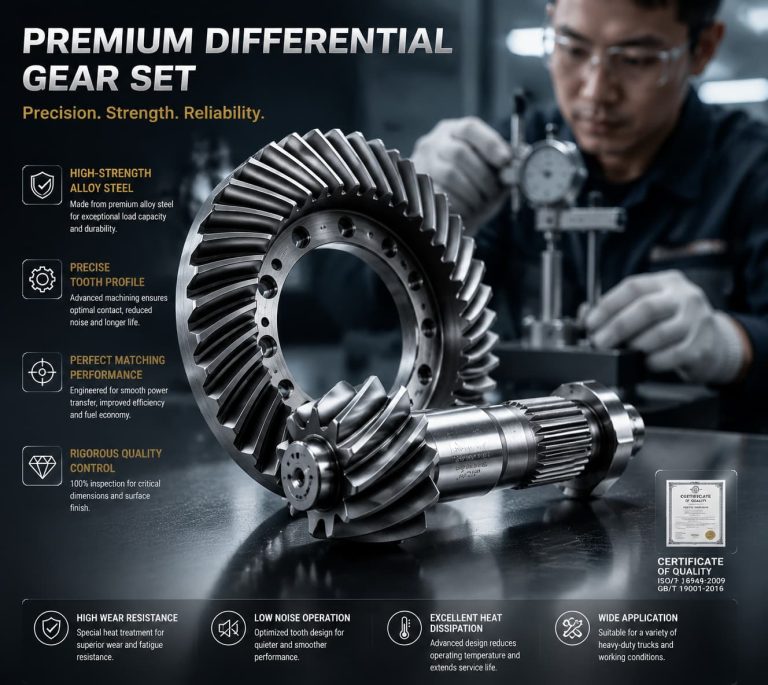
A premium differential component starts with superior material science. The gears, shafts, and housing must be forged from high-strength alloy steels, precisely heat-treated to achieve optimal hardness and toughness. The machining tolerances are incredibly tight, ensuring perfect gear mesh and minimal backlash. We meticulously vet our supply partners, focusing on those who employ advanced metallurgical processes and state-of-the-art CNC machining to produce components that can withstand the continuous torque, shock loads, and thermal cycles inherent in heavy-duty truck operation. This unwavering focus on material integrity and manufacturing precision is what sets our offerings apart.

The Critical Role of Differential Fluid

The differential housing contains a complex array of gears, bearings, and seals that operate under immense pressure and heat. The differential fluid (gear oil) plays a critical role in lubricating these components, dissipating heat, and preventing wear. Using the correct type and viscosity of gear oil, as specified by the truck manufacturer, is non-negotiable. Regular inspection and replacement of differential fluid, according to the vehicle's maintenance schedule, are essential preventative measures. Contaminated or degraded fluid can lead to accelerated wear, overheating, and ultimately, differential failure. Our highlight successful maintenance strategies implemented by our clients.

Ensuring Longevity and Performance: Our Commitment to Quality

In the demanding world of heavy-duty trucking, the differential is a workhorse that endures immense stress. The longevity and reliable performance of this component are directly tied to its manufacturing quality and the precision of its materials. As a specialized supplier, our commitment extends beyond merely providing parts; we ensure that every differential component we offer meets the rigorous standards required for commercial vehicle applications.

The Value of Comprehensive Technical Support

Navigating the complexities of differential selection, especially for a diverse fleet of Chinese heavy-duty trucks, requires more than just a parts catalog. It demands deep technical expertise and a reliable supply chain. Our team of specialists possesses extensive knowledge of differential systems across various Sinotruk, Shacman, FAW, Foton, and Dongfeng models. We can assist with cross-referencing specific part numbers, advising on optimal differential ratios for different applications, and providing guidance on installation best practices. Our efficient global supply chain ensures timely delivery of high-quality components, minimizing your vehicle downtime and maximizing operational efficiency. By partnering with us, you gain a trusted advisor and a reliable source for all your differential needs. Do not hesitate to .

Our Quality Assurance and Service Advantage

Every differential component we supply undergoes a stringent quality control process. We understand that a single point of failure in a differential can lead to catastrophic driveline damage and significant vehicle downtime. Our robust quality assurance protocols are designed to eliminate such risks, providing you with peace of mind and components that you can trust to perform reliably mile after mile. We take pride in our ability to provide not just the right part, but the right technical solution, backed by professional service and a deep understanding of the global truck parts market. For more information on how we can support your business, visit our .

Ensuring-Longevity-and-Performance-Our-Commitment-to-Quality-differential

Frequently Asked Questions (FAQ) about Heavy-Duty Truck Differentials

This section addresses common technical queries regarding heavy-duty truck differentials, their types, functions, and maintenance, compiled from years of professional interaction with fleet managers and technicians.

What is the primary difference between an inter-axle and an inter-wheel differential?

An inter-wheel differential is located within each drive axle (between the left and right wheels) and allows the wheels on that single axle to rotate at different speeds, primarily during turns. An inter-axle differential is found in multi-drive axle trucks (e.g., 6x4, 8x4) and is located between the drive axles, allowing them to rotate at different speeds to prevent driveline wind-up, especially when turning or on uneven terrain.

Why do heavy-duty trucks need both types of differentials?

Heavy-duty trucks often operate with multiple drive axles and frequently encounter varying traction conditions. Inter-wheel differentials manage speed differences between wheels on the same axle, crucial for cornering and preventing tire scrub. Inter-axle differentials manage speed differences between different drive axles, preventing stress on the entire drivetrain when axles travel different distances. Together, they ensure optimal traction, maneuverability, and component longevity across diverse operating conditions.

What are the signs of a failing differential?

Common symptoms of a failing differential include unusual noises (whining, howling, clunking, especially during acceleration, deceleration, or turns), vibrations felt through the floorboard or steering wheel, fluid leaks from the differential housing, and excessive backlash or play in the drivetrain. Ignoring these signs can lead to catastrophic differential failure and significant repair costs.

How often should differential fluid be changed in a heavy-duty truck?

The service interval for differential fluid (gear oil) varies significantly based on the truck manufacturer's recommendations, the type of differential, and the operating conditions. Generally, it is recommended to inspect differential fluid levels and condition at every major service interval and replace it every 50,000 to 100,000 miles, or as specified in the vehicle's maintenance manual. Using the correct type and viscosity of gear oil is paramount.

What is a differential lock and when should it be used?

A differential lock (either inter-wheel or inter-axle) is a mechanism that mechanically locks the differential, forcing the wheels or axles to rotate at the same speed. It is used in extreme low-traction situations (e.g., mud, snow, sand) to ensure that torque is delivered to all wheels/axles, preventing a single spinning wheel from immobilizing the vehicle. It must be disengaged on firm, high-traction surfaces (like dry pavement) to prevent driveline wind-up, tire wear, and potential damage to the differential.

How does a specialized supplier ensure the right differential for my Chinese truck fleet?

As a specialized supplier, we possess in-depth knowledge of the specific requirements and configurations of Chinese heavy-duty truck brands like Sinotruk, Shacman, FAW, Foton, and Dongfeng. We maintain extensive cross-reference databases and understand the nuances of different axle ratios, spline counts, and housing designs. By providing us with your vehicle's specific details (VIN, model, year) or the original part number, our technical team can precisely match you with a high-quality differential component that ensures optimal performance, compatibility, and longevity for your fleet. We focus on delivering solutions that enhance your operational efficiency and safety. For more insights into our quality assurance processes, visit our .

LEAVE A MESSAGE FOR ANY QUESTIONS