In the intricate ecosystem of a heavy-duty truck engine, few components are as vital yet as susceptible to extreme conditions as the engine valves. These precision-engineered parts are the gatekeepers of the combustion chamber, meticulously controlling the flow of air, fuel, and exhaust gases. Their flawless operation is fundamental to engine performance, fuel efficiency, and emissions control. For the demanding applications of heavy-duty trucking, whether it’s the robust engines of Sinotruk (HOWO), the powerful units in Shacman trucks, or the reliable powerplants of FAW (Jiefang), Foton, and Dongfeng, the integrity of each engine valve is paramount. As a specialized exporter of high-quality Chinese heavy-duty truck parts to a global clientele, we understand the critical role these components play. This comprehensive guide will delve into the essential functions of engine valves, explore the common problems they encounter, and provide expert insights into diagnosis and replacement strategies, ensuring your fleet maintains optimal performance and longevity.
The Indispensable Role of Engine Valves in Heavy-Duty Trucks
Engine valves are crucial for the four-stroke cycle that powers internal combustion engines. They are precisely timed to open and close, orchestrating the intake of the air-fuel mixture and the expulsion of exhaust gases. This rhythmic dance is controlled by the camshaft, which dictates the exact moment and duration of valve lift. In heavy-duty diesel engines, these valves operate under immense pressure and extreme temperatures, making their design and material composition critical for durability.
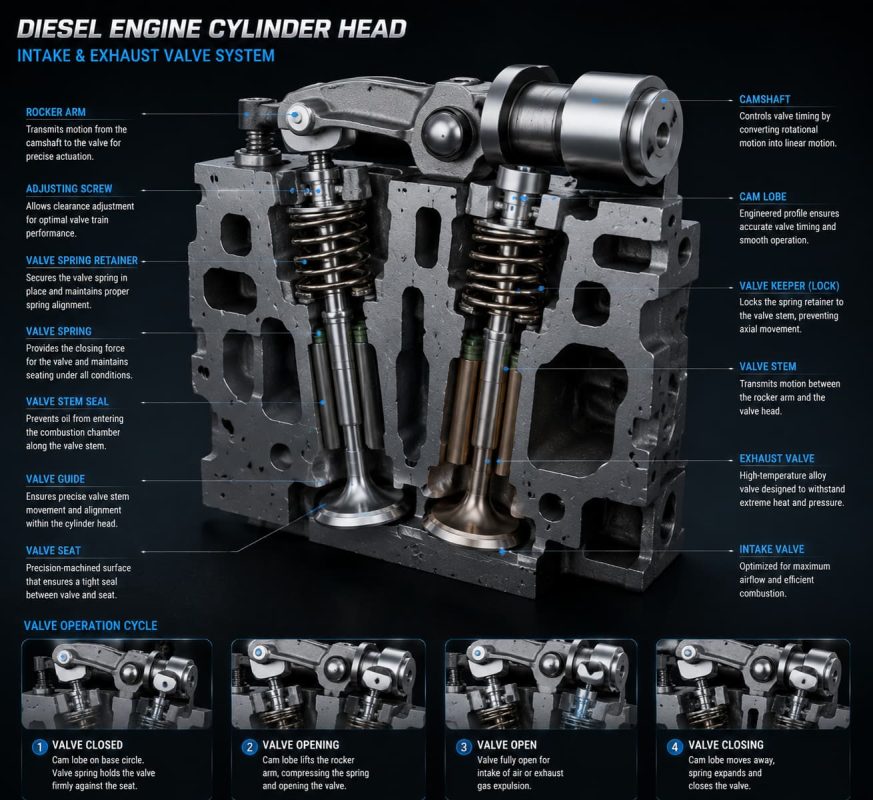
Types and Anatomy of Engine Valves
Most engine valves are of the poppet-style design, characterized by a mushroom-shaped head and a slender stem. There are two primary types:
- Intake Valves: These are typically larger than exhaust valves and are responsible for allowing the air-fuel mixture (or just air in diesel engines) to enter the combustion chamber during the intake stroke. They operate at relatively lower temperatures due to the cooling effect of the incoming charge.
- Exhaust Valves: These valves facilitate the exit of hot combustion gases from the cylinder during the exhaust stroke. They are subjected to significantly higher temperatures and corrosive gases, requiring specialized heat-resistant materials.
An engine valve consists of several key parts:
- Valve Head: The wide, flat or slightly domed portion that seals against the valve seat in the cylinder head. The valve head is engineered to withstand direct combustion forces and high temperatures.
- Valve Face: The angled surface of the valve head that contacts the valve seat. This surface is critical for creating a tight seal and preventing combustion gases from escaping. Damage to the valve face, such as pitting or burning, directly compromises engine compression.
- Valve Stem: The slender shaft that guides the valve within the valve guide and connects to the valve train components (e.g., rocker arm, lifter). The stem must be perfectly straight and smooth to ensure precise movement and minimize friction.
- Keeper Groove: A groove near the top of the stem where valve keepers (collets) lock the valve spring retainer in place. This mechanism securely holds the valve spring, which is essential for closing the valve.
- Valve Tip: The very end of the stem that interacts with the rocker arm or cam follower. This area is subjected to repetitive impact and wear, often requiring hardening treatments.
Modern heavy-duty engines often feature multiple valves per cylinder (e.g., 4 valves per cylinder) to enhance airflow and improve combustion efficiency. This multi-valve design allows for larger total valve area, facilitating better breathing for the engine. The materials used for valves are carefully selected to withstand the harsh operating environment. Intake valves might be made from chrome, nickel, or tungsten steel, which provide sufficient strength and durability at moderate temperatures. Exhaust valves, due to their exposure to extreme heat and corrosive exhaust gases, often incorporate heat-resistant alloys like Inconel or are sodium-filled for improved cooling. Sodium-filled valves contain a hollow cavity in the stem filled with metallic sodium, which melts at operating temperatures and transfers heat from the valve head to the stem and then to the valve guide and cylinder head, effectively cooling the valve.
Common Problems Affecting Heavy-Duty Truck Engine Valves
Given the extreme conditions under which they operate, engine valves are prone to several types of failures. Recognizing these issues early can prevent catastrophic engine damage and costly repairs.
1. Burned or Pitted Valves
This is one of the most common valve problems, particularly for exhaust valves. Excessive heat, often caused by improper valve seating, lean air-fuel mixtures, prolonged high-load operation, or incorrect valve timing, can lead to the valve face or edge literally burning away. Pitting occurs when small pieces of material erode from the valve face due to repeated impact and high temperatures. This compromises the valve’s ability to seal the combustion chamber effectively. Symptoms include:
- Loss of compression, leading to reduced engine power and poor acceleration.
- Engine misfires or rough idling, as the affected cylinder cannot generate adequate combustion pressure.
- Increased fuel consumption due to inefficient combustion.
- Popping sounds from the intake (backfiring) or exhaust (afterfiring), indicating combustion gases escaping past the valve.
- Overheating of the cylinder head in the vicinity of the affected valve.
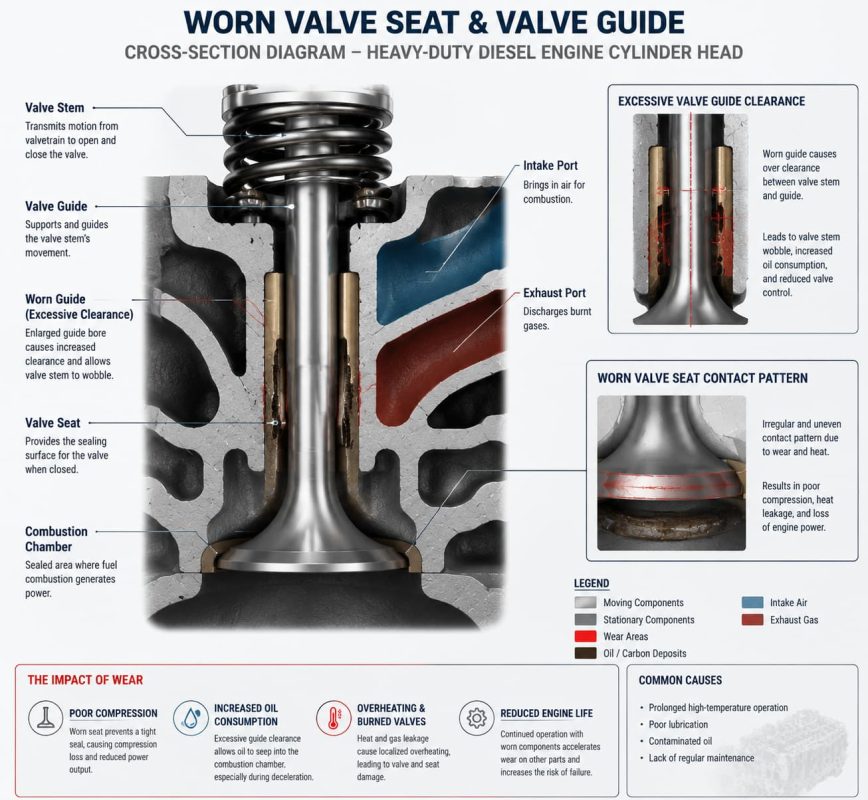
2. Worn Valve Seats and Guides
The valve seat is the precisely machined surface in the cylinder head against which the valve head seals. The valve guide is a cylindrical sleeve that supports and guides the valve stem, ensuring its linear movement. Both are subject to wear over time due to constant friction, impact, and thermal cycling. Worn valve seats lead to poor sealing, allowing combustion gases to escape, causing burned valves and compression loss. Worn valve guides can cause excessive oil consumption (oil seeping past the stem into the combustion chamber), improper valve alignment, and accelerated wear on the valve stem and seat. Symptoms often include:
- Blue smoke from the exhaust, especially during engine startup or deceleration, indicating oil burning.
- Loss of compression and engine power, as the valve cannot seal properly.
- Increased oil consumption, requiring frequent top-ups.
- Valve train noise (ticking or clattering) due to excessive clearance between the valve stem and guide.
- Uneven engine running and potential misfires.
3. Bent or Broken Valves
Bent or broken valves are usually the result of severe mechanical stress or impact, often leading to immediate and severe engine damage. This can occur due to:
- Timing Belt/Chain Failure: If the timing belt or chain breaks or slips, the camshaft and crankshaft lose synchronization, causing pistons to collide with open valves (a common issue in interference engines). This can bend or break multiple valves.
- Valve Spring Failure: A broken or weak valve spring can prevent the valve from closing quickly enough, allowing it to be struck by the rapidly ascending piston. This can also lead to valve float at high RPMs.
- Over-revving the Engine: Exceeding the engine’s maximum RPM can cause valve float, where the valves cannot follow the cam lobe profile, leading to piston-to-valve contact.
- Foreign Object Ingestion: If a foreign object (e.g., a broken glow plug tip, a piece of carbon, or debris from a failed turbocharger) enters the combustion chamber, it can strike and damage the valves.
- Improper Valve Adjustment: Incorrectly adjusted valves can lead to contact with the piston or other valve train components.
Symptoms are typically severe and immediate, including sudden engine shutdown, severe metallic engine noise, complete loss of compression in affected cylinders, and visible damage to the cylinder head or piston crowns upon inspection.
4. Carbon Buildup
Excessive carbon deposits on the valve heads, stems, and valve seats can interfere with proper valve seating, leading to compression loss and burned valves. Carbon buildup can also restrict airflow through the intake and exhaust ports, reducing engine efficiency and power output. This issue is often exacerbated by poor fuel quality, excessive oil consumption (due to worn valve stem seals or piston rings), prolonged idling, or incomplete combustion. Symptoms are similar to those of burned valves, including reduced performance, misfires, and increased emissions.
5. Valve Stem Seal Leaks
Valve stem seals are small rubber or synthetic components that prevent engine oil from entering the combustion chamber along the valve stem. Over time, these seals can harden, crack, or wear out due to heat and age, leading to oil leakage. The primary symptom is blue smoke from the exhaust, especially during engine startup (after the engine has sat for a while, allowing oil to seep past the seals) or during deceleration (when engine vacuum is high). Increased oil consumption is another clear indicator.
Diagnosing Engine Valve Problems: A Systematic Approach
Accurate diagnosis is paramount to avoid unnecessary repairs and ensure the longevity of the engine. A systematic approach combining observation, testing, and inspection is essential.
1. Initial Observation and Listening
- Engine Performance: Note any loss of power, rough idling, misfires, hesitation during acceleration, or difficulty starting. These are general indicators of combustion inefficiency.
- Exhaust Smoke: Observe the color of the exhaust smoke. Persistent blue smoke indicates oil burning, often linked to worn valve guides or stem seals. White smoke could indicate coolant burning, potentially from a cracked cylinder head or head gasket affecting valve seats.
- Unusual Noises: Listen for ticking, tapping, or clattering sounds from the valve train, which could indicate excessive valve clearance, worn lifters, or damaged valves/springs. A distinct popping sound from the intake manifold (backfire) or exhaust pipe (afterfire) is a strong indicator of a leaking valve, as combustion gases are escaping during the wrong stroke.
2. Compression Test
A compression test measures the sealing integrity of each cylinder. Low compression in one or more cylinders can indicate issues with the valves (burned, bent, or poorly seating), valve seats, or head gasket. A ‘wet’ compression test (adding a small amount of oil to the cylinder) can help differentiate between piston ring issues (compression improves with oil) and valve issues (compression does not significantly improve with oil).
3. Leak-Down Test
This test is more precise than a compression test. It involves injecting compressed air into the cylinder (with the piston at top dead center on the compression stroke) and measuring the percentage of air that leaks out. By listening for escaping air at different locations (intake manifold for intake valve leaks, exhaust pipe for exhaust valve leaks, oil filler cap/dipstick tube for piston ring leaks, or radiator/coolant reservoir for head gasket leaks), the exact source of the leak can be identified. This test provides definitive evidence of valve sealing integrity.
4. Visual Inspection (Borescope/Cylinder Head Removal)
- Borescope Inspection: A borescope (endoscope camera) can be inserted through the spark plug or injector hole to visually inspect the valve faces, valve seats, and piston tops for signs of burning, pitting, carbon buildup, or impact marks without disassembling the engine. This non-invasive method can provide valuable preliminary insights.
- Cylinder Head Removal: For definitive diagnosis and repair, the cylinder head must be removed. This allows for direct visual inspection of the valves, valve seats, valve guides, and springs. Valves can be checked for straightness, and valve seats for wear patterns, cracks, or damage. This is often the final step in confirming the extent of valve damage.
Effective Solutions and High-Quality Replacement Parts
Once an engine valve problem is accurately diagnosed, selecting the correct repair strategy and sourcing high-quality replacement parts are crucial for restoring engine performance and ensuring long-term reliability. For heavy-duty trucks, the choice of parts directly impacts uptime and operational costs.
Repair vs. Replacement
Minor issues like excessive carbon buildup can sometimes be addressed through chemical cleaning or mechanical decarbonization. However, for physical damage such as burned, pitted, bent, or severely worn valves, replacement is almost always the recommended solution. Attempting to salvage severely damaged valves or valve seats often leads to recurring problems, compromises engine integrity, and can result in costly repeat repairs. For critical components like engine valves in high-performance heavy-duty engines, such as those found in Sinotruk (HOWO), Shacman, and FAW (Jiefang) trucks, opting for new, high-quality replacement parts is the most reliable approach. This ensures optimal sealing, proper heat transfer, and restores the engine to its designed performance specifications, providing peace of mind and maximizing operational efficiency.
Characteristics of High-Quality Engine Valves
When sourcing replacement engine valves, consider the following attributes to ensure maximum durability and performance:
- Material Composition: High-quality valves are made from specific alloys tailored for their function and the extreme conditions they face. Intake valves often use chrome-nickel alloys for strength and corrosion resistance. Exhaust valves, due to their exposure to extreme heat and corrosive exhaust gases, require superior heat resistance, often employing specialized alloys like Inconel (a nickel-chromium-based superalloy) or featuring sodium-filled stems for enhanced cooling. The sodium inside the hollow stem melts at operating temperatures and efficiently transfers heat from the valve head to the stem, then to the valve guide and cylinder head, preventing localized overheating.
- Precision Machining and Surface Finish: The valve face angle, stem diameter, and overall dimensions must be precisely machined to microscopic tolerances to ensure perfect seating against the valve seat, proper clearance within the valve guide, and optimal heat transfer. A smooth surface finish on the stem reduces friction and wear within the valve guide.
- Surface Treatment and Hardening: Many high-quality valves undergo specialized surface treatments (e.g., nitriding, chrome plating, or stellite facing on the valve face) to enhance wear resistance, reduce friction, and improve corrosion resistance, particularly in the stem and tip areas. The valve tip, which repeatedly contacts the rocker arm or cam follower, is often induction hardened for increased durability.
- Heat Treatment: Proper heat treatment during manufacturing ensures the valve has the correct hardness, tensile strength, and metallurgical structure to withstand the continuous thermal and mechanical stresses without deforming, fracturing, or losing its properties over time.
- Brand Compatibility and Adaptability: Ensure the replacement valves are specifically designed and tested for your truck’s engine model and application. Our extensive range of engine valves is meticulously selected and rigorously tested to ensure perfect fitment and performance for leading Chinese heavy-duty truck brands like Foton and Dongfeng, guaranteeing compatibility and maximizing engine reliability.
The Replacement Process: Key Steps
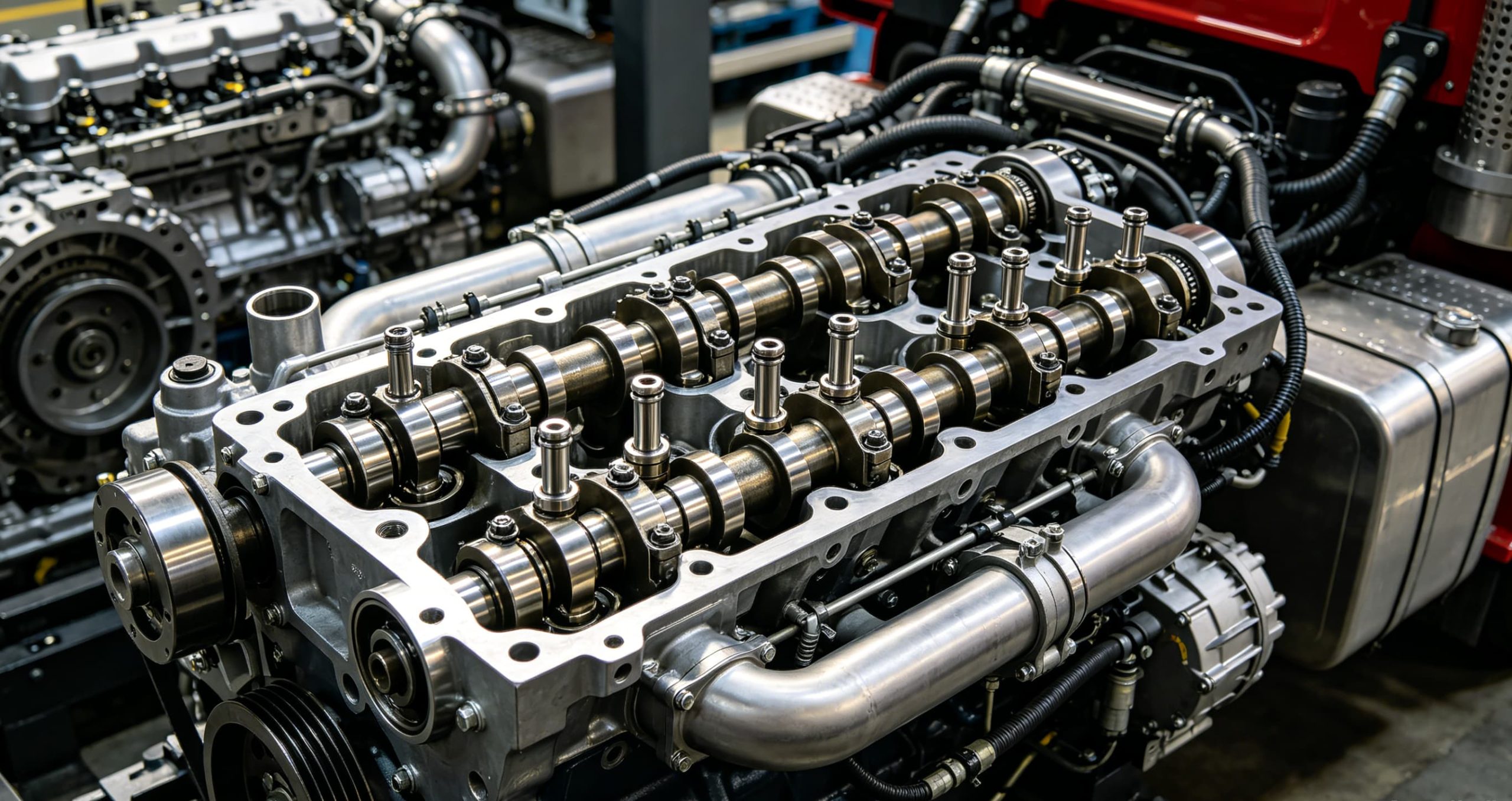
Replacing engine valves is a complex procedure that typically requires cylinder head removal and specialized tools. It is a task best performed by experienced technicians. Key steps include:
- Cylinder Head Removal: The cylinder head must be carefully removed from the engine block, often requiring the removal of intake/exhaust manifolds, fuel injectors, and other ancillary components.
- Disassembly of Valve Train: Valve springs, retainers, and keepers are removed using a valve spring compressor tool to allow for valve extraction. The camshaft (if OHC) and rocker arms are also typically removed.
- Inspection of Associated Components: Thorough inspection of valve guides, valve seats, valve springs, and camshaft (if OHC) for wear, cracks, or damage. Valve guides may need to be pressed out and replaced, and valve seats may require machining (re-facing or grinding) or replacement (inserting new seats) to ensure a perfect seal with the new valves.
- Installation of New Valves: New valves are carefully installed into their respective guides, ensuring proper lubrication of valve stems.
- Valve Lapping/Grinding: The valve face and seat are often lapped or ground together using fine abrasive paste to ensure a perfect, airtight seal, which is critical for compression.
- Assembly and Clearance Adjustment: Valve springs, retainers, and keepers are reinstalled. Valve clearances (also known as valve lash) must be precisely adjusted according to manufacturer specifications using feeler gauges. Incorrect clearance can lead to premature wear or improper valve operation.
- Cylinder Head Reinstallation: The cylinder head is reinstalled onto the engine block with a new head gasket, following strict torque specifications and sequences (often a multi-step process involving specific angles) to ensure even clamping force and prevent warping.
- Engine Reassembly and Testing: All ancillary components are reassembled, and the engine is filled with fresh oil and coolant. A thorough test run is performed to check for leaks, proper operation, and optimal performance.
Preventive Maintenance for Engine Valve Longevity
Proactive maintenance is the most effective strategy to extend the lifespan of engine valves and prevent premature failures, thereby minimizing downtime and operating costs for your heavy-duty truck fleet. Regular, diligent maintenance can significantly reduce the likelihood of costly valve-related repairs.
1. Adhere to Manufacturer-Recommended Service Intervals
- Oil Changes: Regular oil changes with high-quality engine oil are crucial. Clean oil ensures proper lubrication of all valve train components (camshaft, lifters, rocker arms, valve stems) and helps dissipate heat from these critical areas. Contaminated or degraded oil accelerates wear.
- Coolant Maintenance: Maintain the correct coolant level and quality. A healthy cooling system prevents engine overheating, which is extremely detrimental to valves and valve seats, leading to burning and warping. Ensure the coolant is mixed to the correct concentration to provide adequate corrosion protection and freezing/boiling point.
- Fuel Filter Replacement: Ensure clean fuel delivery by regularly replacing fuel filters. Contaminants in fuel can lead to improper combustion, pre-ignition, or detonation, which severely stresses valves and can cause burning or pitting.
- Air Filter Replacement: A clean air filter ensures optimal air-fuel mixture, preventing excessive carbon buildup on valves and maintaining combustion efficiency.
2. Monitor Engine Performance and Sounds
Pay close attention to any changes in engine sound, power output, or exhaust emissions. Early detection of ticking noises (indicating excessive valve clearance), misfires (poor combustion due to leaking valves), or unusual smoke (oil or coolant burning) can indicate developing valve problems, allowing for timely intervention before minor issues escalate into major failures. Regular diagnostic scans can also help identify subtle performance deviations.
3. Ensure Proper Valve Clearance Adjustment
For engines with mechanically adjustable valve clearances, regular inspection and adjustment are vital. Incorrect valve lash (too loose or too tight) can lead to premature wear of valve train components, burned valves (if too tight, preventing full closure), or reduced engine performance (if too loose, reducing valve lift). While many modern heavy-duty engines use hydraulic lifters that self-adjust, mechanical systems still require periodic checks and adjustments according to the manufacturer’s service manual.
4. Avoid Engine Over-revving and Detonation
Operating the engine beyond its recommended RPM limits can cause valve float, where the valve springs cannot control the valve movement, leading to uncontrolled valve motion and potential piston-to-valve contact. Similarly, preventing engine detonation (often caused by poor fuel quality, incorrect ignition timing, or excessive boost pressure) is crucial, as the extreme pressures and temperatures generated during detonation can severely damage valves, valve seats, and pistons.
5. Use High-Quality Fuel and Lubricants
Using clean, high-quality fuel helps ensure complete and efficient combustion, which reduces carbon buildup on valves and minimizes thermal stress. Similarly, using lubricants that meet or exceed manufacturer specifications provides optimal protection for valve train components, reducing friction and wear.
The Advantage of Partnering with a Specialized Parts Exporter
Choosing the right supplier for heavy-duty truck engine valves is as important as the quality of the parts themselves. As a dedicated exporter of Chinese heavy-duty truck components, we offer more than just products; we provide comprehensive solutions backed by expert knowledge and a commitment to quality. Our team possesses an in-depth understanding of the specific requirements and nuances of engines from leading Chinese brands like Sinotruk (HOWO), Shacman, FAW (Jiefang), Foton, and Dongfeng. Whether you need assistance with precise part identification, technical specifications, or troubleshooting complex engine issues, our technical support team is ready to assist. We bridge the gap between high-quality manufacturing and practical application, ensuring our clients receive not only superior products but also the expertise to utilize them effectively, thereby minimizing downtime and enhancing operational efficiency. Visit our Technical Support page for more resources.
Our commitment extends to ensuring a seamless and reliable supply chain for international buyers. We maintain an extensive inventory of engine valves and related components, all subjected to rigorous quality control to meet or exceed international industry standards. Our efficient global logistics network is designed for prompt and timely delivery, minimizing your fleet’s downtime and ensuring parts are available when you need them most. Explore our Product Brand Page and Product System Page to discover our comprehensive offerings across various truck systems. Our Cooperative Cases highlight our successful partnerships and demonstrate our unwavering commitment to client satisfaction and long-term collaboration. For any direct inquiries, technical consultations, or to discuss your specific needs, please do not hesitate to Contact Us. Learn more about our company philosophy, our dedication to quality, and our mission to support global heavy-duty trucking operations on our About Us page, or visit our Homepage for a complete overview of our services and products.
Frequently Asked Questions (FAQ) about Truck Engine Valves
Q1: What are the primary functions of engine valves in a heavy-duty truck?
A1: Engine valves are critical for controlling the precise flow of gases into and out of the combustion chamber. Intake valves allow the air-fuel mixture (or pure air in diesel engines) to enter the cylinder during the intake stroke, while exhaust valves permit the expulsion of hot combustion gases during the exhaust stroke. Their precise timing, controlled by the camshaft, and their ability to form a perfect seal are essential for maintaining optimal engine compression, maximizing combustion efficiency, and effectively controlling emissions. For engines in HOWO or Shacman trucks, these functions are vital for handling heavy loads and demanding operational cycles with maximum power and efficiency.
Q2: What are the most common signs of a failing engine valve?
A2: Common signs of failing engine valves include a noticeable loss of engine power, frequent misfires, rough or unstable idling, increased fuel consumption, and abnormal exhaust smoke. Blue smoke typically indicates oil burning (often due to worn valve guides or stem seals), while popping sounds from the intake manifold (backfiring) or exhaust pipe (afterfiring) are strong indicators of a leaking valve. You might also hear distinct ticking or clattering noises from the valve train, suggesting excessive valve clearance or worn components. Early detection of these symptoms is crucial to prevent more severe engine damage, especially for high-performance engines in FAW or Dongfeng trucks.
Q3: Can a damaged engine valve be repaired, or does it always need replacement?
A3: The feasibility of repairing a damaged engine valve depends on the nature and extent of the damage. Minor issues like excessive carbon buildup can often be resolved through cleaning or decarbonization. However, for physical damage such as burned, pitted, bent, or severely worn valves, replacement is almost always the necessary and most reliable solution. Attempting to repair severely compromised valves or valve seats often leads to recurring problems, compromises engine reliability, and can result in costly repeat repairs and extended downtime. For heavy-duty truck applications, we strongly recommend replacing damaged valves with high-quality new parts to ensure optimal engine performance, longevity, and peace of mind.
Q4: Why is valve material important for heavy-duty truck engines?
A4: Engine valves in heavy-duty trucks operate under some of the most extreme thermal and mechanical stresses within the engine. The choice of valve material directly impacts their ability to withstand these conditions and thus their durability and performance. Exhaust valves, in particular, are exposed to extremely high temperatures and corrosive exhaust gases, necessitating specialized heat-resistant alloys like Inconel or designs with sodium-filled stems for enhanced cooling. Intake valves, while operating at lower temperatures, still require robust materials like chrome-nickel alloys for strength and corrosion resistance. Using the correct, high-quality materials ensures the valves can endure the demanding conditions of engines in Foton and other heavy-duty trucks, preventing premature failure, maintaining engine efficiency, and extending overall engine life.
Q5: What preventive maintenance steps can extend the life of engine valves?
A5: Key preventive maintenance steps for extending engine valve life include strictly adhering to regular oil and coolant change schedules using high-quality fluids that meet manufacturer specifications. Regularly monitoring engine performance for any unusual sounds (like ticking or popping) or power loss is also vital. Ensuring proper valve clearance adjustment (for engines with mechanical lifters) and avoiding engine over-revving or detonation are critical. Furthermore, using clean, high-quality fuel helps prevent carbon buildup on valves and ensures efficient combustion. These practices are crucial for all heavy-duty truck engines, including those from Sinotruk and Shacman, to maximize valve lifespan and engine reliability.
Q6: What other components should be inspected when replacing engine valves?
A6: When replacing engine valves, it’s essential to conduct a comprehensive inspection of all related components to ensure the repair is thorough and long-lasting. This includes meticulously checking valve guides for wear, valve seats for damage or improper sealing, valve springs for fatigue or breakage, and valve stem seals for hardening or leaks. The camshaft and rocker arms should also be inspected for wear. Furthermore, the cylinder head itself should be thoroughly examined for any cracks, warping, or other damage that could compromise the new valves’ performance. Often, valve guides and valve stem seals are replaced as a matter of course during a valve job. Ensuring all associated components are in optimal condition is vital for the proper functioning of the new valves and the overall health and longevity of the engine.


