The cylinder head is a critical component at the heart of any heavy-duty truck engine. It forms the top of the combustion chamber, enduring immense thermal and mechanical stresses, while also housing the intake and exhaust valves, valve train mechanisms, fuel injectors, and intricate passages for coolant and lubricating oil. The integrity of the cylinder head directly impacts engine performance, fuel efficiency, and overall lifespan. For heavy-duty trucks traversing demanding terrains, such as the long-haul workhorses from Sinotruk (HOWO), the robust mining trucks from Shacman, or the versatile logistics vehicles from FAW (Jiefang), Foton, and Dongfeng, any failure in the cylinder head can lead to significant operational downtime and costly repairs. As a leading exporter of high-quality Chinese heavy-duty truck parts to international buyers, we understand the complexities of cylinder head failures and their profound impact on fleet operations. This comprehensive guide will delve into the common signs of heavy-duty truck cylinder head failure, explore their underlying causes, and outline effective solutions, aiming to equip fleet managers, maintenance technicians, and owner-operators with the knowledge to accurately diagnose issues and implement reliable repair strategies.
The Core Function of the Cylinder Head and Its Structural Challenges
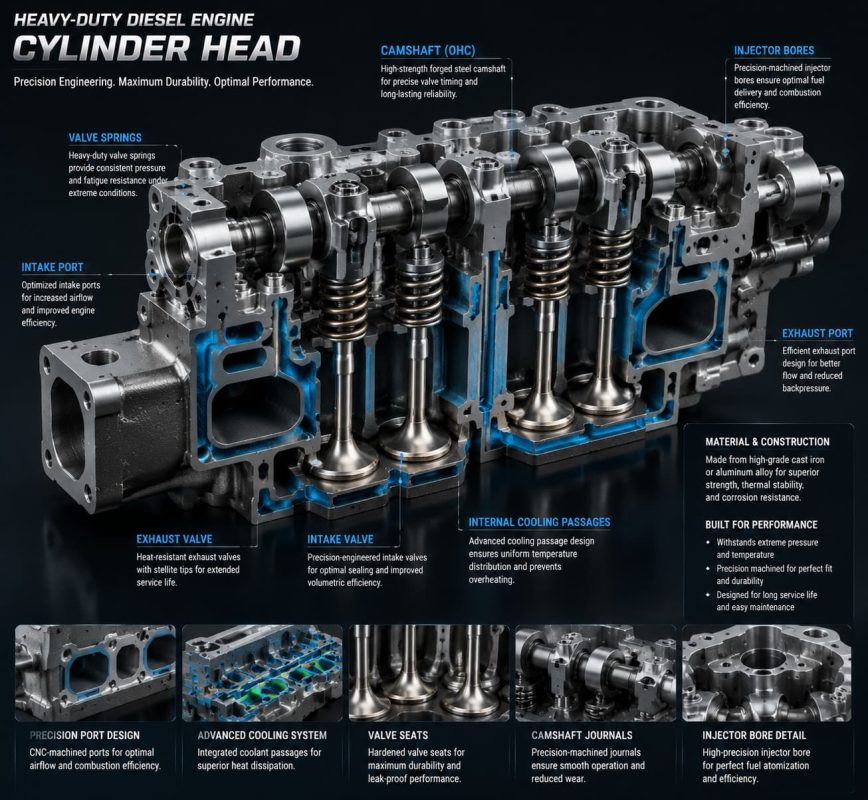
The cylinder head is an integral part of the engine’s valve train and combustion chamber. Its primary functions include:
- Sealing the Combustion Chamber: Together with the cylinder block and head gasket, it forms a sealed combustion space, preventing the escape of combustion gases.
- Housing the Valve Train: It accommodates valves, valve seats, valve guides, and the camshaft (in overhead camshaft designs), controlling the opening and closing of intake and exhaust valves.
- Heat Dissipation and Lubrication: Internal passages for coolant and lubricating oil effectively remove the substantial heat generated during combustion and lubricate the valve train components.
- Mounting Fuel System Components: In diesel engines, the cylinder head typically mounts the fuel injectors, which directly spray fuel into the combustion chamber.
Heavy-duty truck cylinder heads are commonly made from cast iron or aluminum alloy. Cast iron cylinder heads offer high strength and resistance to thermal deformation but are heavier. Aluminum alloy cylinder heads provide better thermal conductivity and are lighter, but have a higher thermal expansion coefficient, demanding more precise manufacturing and material specifications. Regardless of the material, the cylinder head must withstand extreme operating conditions: combustion temperatures reaching thousands of degrees Celsius, combustion pressures of several hundred bar, and continuous thermal cycling. These harsh conditions make the cylinder head one of the engine components most susceptible to thermal fatigue and mechanical damage.
Unmistakable Early Warning Signs of Cylinder Head Failure
Timely identification of early signs of cylinder head failure is crucial to prevent further engine damage. The following are common warning signs that demand immediate attention:
1. Engine Overheating
Engine overheating is one of the most common and dangerous symptoms of cylinder head failure. Damage to the cylinder head or head gasket can lead to coolant leaking into the combustion chamber or externally, thereby reducing the efficiency of the cooling system. Furthermore, combustion gases can enter the cooling system through a damaged head gasket, forming air pockets that impede coolant circulation and exacerbate overheating. Persistent overheating not only accelerates the deformation and cracking of the cylinder head itself but can also cause irreversible damage to other engine components like pistons and cylinder liners. If your truck’s temperature gauge consistently reads high, or if high-temperature alarms frequently trigger under normal driving conditions, you should immediately stop and inspect the engine.
2. Abnormal Exhaust Smoke
- White Smoke: If the exhaust pipe continuously emits a large amount of white smoke, especially after the engine reaches operating temperature, it typically indicates that coolant is entering the combustion chamber and being burned. Burning coolant produces steam, which appears as white smoke. This is often a clear sign of a damaged head gasket or a cracked cylinder head.
- Blue Smoke: While blue smoke is primarily associated with oil burning, severe internal cracks in the cylinder head can also allow oil to seep into the combustion chamber, leading to blue smoke.
3. Abnormalities in Engine Oil or Coolant
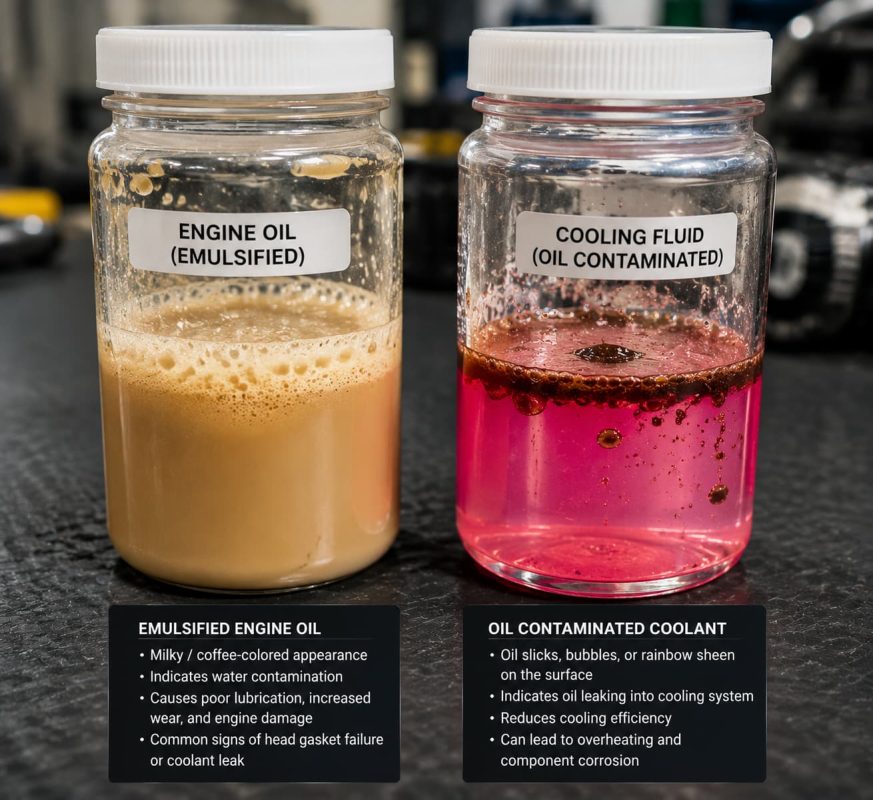
- Milky Oil (”Milkshake” Appearance): Check the dipstick or oil filler cap. If the engine oil appears milky white or resembles a ”milkshake,” it indicates that coolant has mixed with the engine oil. A damaged head gasket or internal cracks in the cylinder head are common causes of this mixture. Emulsified oil severely degrades lubrication performance, accelerating engine wear.
- Oil in Coolant: Conversely, if oil slicks or a film of oil appear in the coolant expansion tank, it signifies that engine oil has mixed with the coolant. This is also evidence of a failed head gasket or cylinder head seal.
- Rapid Coolant Loss: If the coolant level continuously drops rapidly without any external leaks, it is highly probable that coolant is leaking into the combustion chamber or engine oil.
4. Decreased Engine Performance
- Loss of Power: A compromised seal in the cylinder head or head gasket leads to insufficient compression pressure in the combustion chamber, affecting combustion efficiency and significantly reducing engine power output. The truck will struggle during uphill climbs or acceleration.
- Engine Misfires or Rough Idling: If the sealing of a cylinder is compromised, it can lead to poor combustion or misfires in that cylinder, causing unstable idling and increased engine vibration.
- Poor Fuel Economy: Reduced combustion efficiency directly results in increased fuel consumption.
5. Abnormal Cooling System Pressure
Inspect the coolant expansion tank. If the coolant continuously boils or large bubbles appear, even if the engine temperature is not excessively high, it could indicate that combustion gases are entering the cooling system through a damaged head gasket or cylinder head crack, leading to excessive pressure in the cooling system. This phenomenon is often particularly noticeable shortly after the engine starts.
In-Depth Analysis of Cylinder Head Failure Causes
Understanding the root causes of cylinder head failure is critical for implementing correct preventive and repair measures. These causes are often interrelated, working in conjunction to lead to component failure.
1. Thermal Stress and Thermal Fatigue
The cylinder head operates under immense temperature variations, from the high temperatures of the combustion chamber to the relatively cooler coolant. This repeated thermal cycling generates significant thermal stress, leading to material fatigue. Over time, this thermal fatigue can cause micro-cracks to appear within or on the surface of the cylinder head, especially in areas with concentrated thermal loads such as around valve seats, injector bores, and exhaust ports. Heavy-duty trucks operating under prolonged high-load conditions are particularly susceptible to thermal stress fatigue.
2. Head Gasket Failure
The head gasket is the seal between the cylinder head and the cylinder block, primarily responsible for sealing the combustion chamber, coolant, and lubricating oil passages. Head gasket failure is one of the most common causes of cylinder head-related problems. Reasons for failure include:
- Overheating: Engine overheating is the number one killer of head gaskets. High temperatures cause the gasket material to age, harden, or even burn out, leading to a loss of sealing capability.
- Improper Installation: Insufficient or uneven torque on cylinder head bolts, uneven cylinder head surfaces, or incompatible head gasket types can all lead to poor head gasket sealing.
- Material Aging: As engine mileage accumulates, head gasket materials naturally age, losing elasticity and reducing sealing performance.
- Detonation/Pre-ignition: Persistent engine detonation or pre-ignition generates abnormally high pressures, causing impact damage to the head gasket.
3. Cooling System Malfunctions
The cooling system is vital for maintaining the cylinder head’s optimal operating temperature. Any cooling system malfunction can directly lead to cylinder head overheating and damage:
- Insufficient Coolant or Leaks: Low coolant levels are a direct cause of overheating.
- Clogged Radiator: Internal blockages in the radiator restrict coolant flow, reducing heat dissipation efficiency.
- Water Pump Failure: A malfunctioning water pump cannot effectively circulate coolant, leading to localized overheating.
- Thermostat Failure: A stuck thermostat (closed position) prevents coolant from flowing to the radiator.
- Cooling Fan Failure: If the cooling fan does not operate correctly, especially at low speeds or idle, it can lead to insufficient heat dissipation.
4. Cylinder Head Deformation or Cracking
Beyond thermal fatigue, the cylinder head itself can deform or crack due to the following reasons:
- Severe Overheating: A single severe overheating event can cause permanent deformation (warping) or cracking of the cylinder head. Aluminum alloy cylinder heads are particularly sensitive to this.
- External Impact: Accidental mechanical impact can also damage the cylinder head.
- Manufacturing Defects: In rare cases, cylinder heads may have casting defects that manifest after prolonged operation.
- Improper Repair: Incorrect procedures during cylinder head removal or installation, such as using excessive force or improper tools, can also cause damage.
5. Valve Train Issues
Malfunctions in the valve train can also indirectly affect the health of the cylinder head:
- Burned Valves or Worn Valve Seats: Long-term carbon buildup, improper valve clearance, or fuel injection problems can lead to burned valves or worn valve seats, affecting cylinder sealing and potentially causing localized overheating.
- Worn Valve Guides: Worn valve guides can result in excessive clearance between the valve stem and guide, affecting valve sealing and potentially allowing oil to enter the combustion chamber.
Professional Diagnostic Methods for Cylinder Head Failure
Accurate diagnosis of cylinder head failure requires a combination of professional techniques and tools. Here are some common diagnostic steps and methods:
1. Initial Inspection and Observation
- Visual Inspection: Check the engine exterior for signs of coolant or oil leaks. Inspect the coolant expansion tank for coolant color, level, and the presence of oil slicks or bubbles. Check the dipstick for milky oil.
- Odor Check: Smell the exhaust for a sweet odor (burning coolant).
- Auditory Check: Start the engine and listen for abnormal noises, such as hissing (gas leaks) or knocking.
2. Cooling System Pressure Test
Use a professional cooling system pressure tester to pressurize the cooling system and observe if the pressure gauge reading drops. A rapid pressure drop indicates a leak in the cooling system. Simultaneously, check the engine exterior, radiator, hoses, and other components for external leaks. If there are no external leaks but the pressure drops, it is likely an internal leak (head gasket or cylinder head).
3. Combustion Gas Leak Test (CO2 Test)
This is a chemical test used to detect the presence of combustion exhaust gases in the coolant. Test fluid is introduced into a device connected to the coolant expansion tank. If combustion gases (carbon dioxide) are present in the coolant, the test fluid will change color. This is an effective method for diagnosing internal head gasket or cylinder head leaks.
4. Cylinder Compression Test and Leak-Down Test
- Cylinder Compression Test: Remove spark plugs or injectors, connect a pressure gauge to the cylinder bore, and measure the compression pressure of each cylinder. If the pressure in one cylinder is significantly lower than others, or below the manufacturer’s specifications, it indicates a sealing problem in that cylinder, possibly due to damaged valves, head gasket, or cylinder head.
- Cylinder Leak-Down Test: Position the piston at top dead center, inject compressed air into the cylinder, and use a leak-down tester to measure the percentage of air leakage. Simultaneously, listen through the intake manifold, exhaust pipe, oil filler cap, and coolant expansion tank to pinpoint the exact location of the leak (e.g., intake valve, exhaust valve, piston rings, or head gasket/cylinder head).
5. Post-Removal Cylinder Head Inspection
If the above tests indicate cylinder head failure, the cylinder head needs to be removed for a more detailed inspection:
- Cylinder Head Flatness Check: Use precision measuring tools to check the flatness of the cylinder head’s bottom surface. Any warping must be addressed by machining or replacement.
- Crack Inspection: Perform magnetic particle inspection or dye penetrant inspection on the cylinder head to detect micro-cracks invisible to the naked eye, especially around valve seats, injector bores, and coolant passages.
- Valve Seat and Valve Guide Inspection: Check valve seats for burning, wear, or looseness, and valve guides for excessive wear.
Effective Solutions for Cylinder Head Failure and High-Quality Parts Selection
Once cylinder head failure is accurately diagnosed, selecting the correct repair solution and high-quality replacement parts is paramount. For heavy-duty trucks, reliability and durability are non-negotiable.
Repair vs. Replacement: Making the Right Decision
For minor cylinder head warping, professional machining can sometimes rectify the issue. However, if the cylinder head has severe cracks, extensively damaged valve seats, or has reached its machining limit after multiple repairs, replacing the entire cylinder head assembly is a safer and more reliable option. Attempting to repair severely damaged cylinder heads often leads to recurring problems and potentially greater losses in the future. As professional heavy-duty truck parts suppliers, we always recommend opting for high-quality new replacement parts for critical components to ensure the engine’s long-term stable operation and fleet efficiency. This is especially crucial for trucks like Sinotruk (HOWO), Shacman, and FAW (Jiefang), which frequently operate in high-intensity work environments.
Characteristics of High-Quality Cylinder Heads
When selecting high-quality replacement cylinder heads, consider the following aspects:
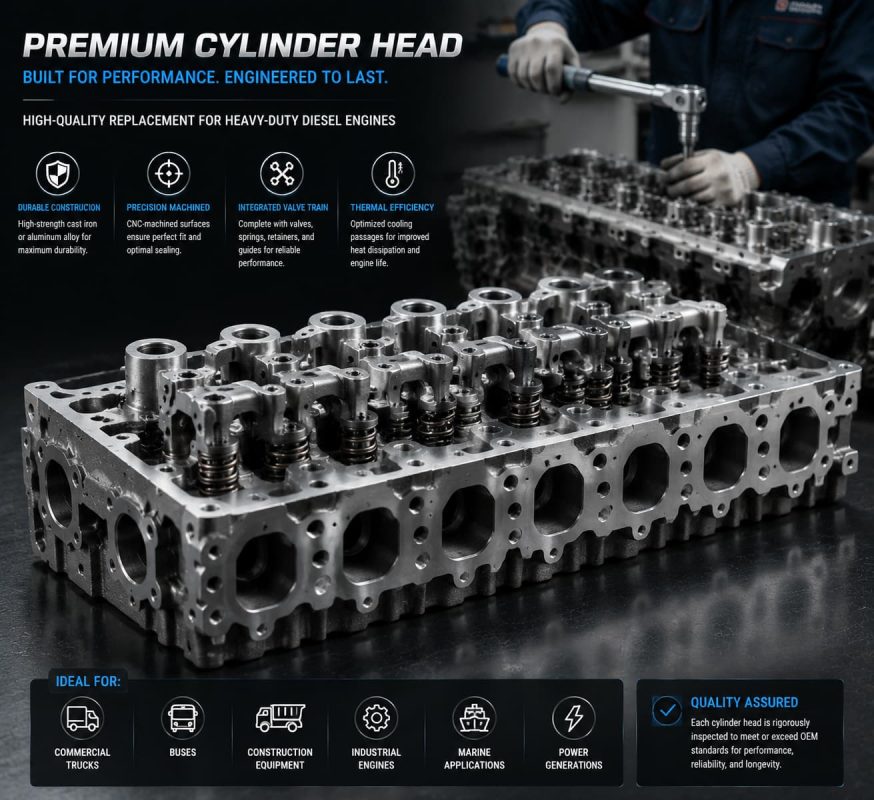
- Material and Casting Process: Premium cylinder heads utilize high-strength cast iron or advanced aluminum alloy materials, processed through precise casting techniques to ensure uniform internal structure, free from defects, and capable of withstanding high temperatures and pressures. For instance, some high-performance diesel engine cylinder heads use advanced materials like Compacted Graphite Iron (CGI) to enhance strength and thermal fatigue resistance.
- Machining Precision: The flatness of the cylinder head, and the machining precision of valve seats and valve guides directly impact engine sealing and valve train performance. High-quality parts should have strict dimensional tolerances and surface finishes.
- Cooling and Lubrication Passage Design: Efficient design of coolant and lubrication oil passages ensures effective heat dissipation and lubrication in critical areas, preventing localized overheating.
- Quality of Valve Seats and Valve Guides: Pre-installed valve seats and valve guides should be made from wear-resistant, high-temperature-resistant materials and precisely pressed to ensure long-term reliability.
- Brand Compatibility and Adaptability: Ensure that the selected parts are fully compatible with your truck brand and engine model. Our supplied cylinder head parts are rigorously screened and perfectly adapted for mainstream Chinese heavy-duty truck brands like Foton and Dongfeng, ensuring hassle-free installation and excellent performance.
Installation Considerations
Correct cylinder head installation is as important as part quality:
- Thorough Cleaning: Before installation, thoroughly clean the top surface of the cylinder block and the bottom surface of the cylinder head, ensuring no residue or scratches.
- Use New Head Gasket: A new head gasket must always be used whenever the cylinder head is removed.
- Follow Torque Specifications: Strictly follow the manufacturer’s specified torque and tightening sequence for cylinder head bolts. Many modern engines use a ”torque-to-yield” or ”torque-angle” tightening method, requiring specialized tools.
- Inspect Bolts: Cylinder head bolts are often single-use or have a limited lifespan. They should be inspected and replaced as needed.
- Cooling System Bleeding: After installation, the cooling system must be thoroughly bled of air to ensure unobstructed coolant circulation.
Preventive Maintenance: Key to Extending Cylinder Head Lifespan
Preventive maintenance is the most economical and effective way to avoid cylinder head failure and reduce operating costs. Here are some key maintenance recommendations:
1. Strictly Follow Cooling System Maintenance Schedule
- Regular Coolant Checks: Periodically check coolant level, color, and freezing point. Ensure the use of high-quality coolant that meets manufacturer specifications and replace it on schedule.
- Inspect Radiator and Hoses: Ensure the radiator is clean and free of blockages, and hoses are free from aging, cracks, or leaks.
- Check Water Pump and Thermostat: Regularly check if the water pump is operating correctly and if the thermostat opens on time.
- Clean Cooling System: Periodically flush and clean the cooling system to remove scale and rust.
2. Maintain Normal Engine Operating Temperature
Avoid prolonged engine overheating or undercooling. Ensure the cooling system is functioning correctly and address any abnormal temperature readings immediately. For heavy-duty trucks, especially under high-load or extreme weather conditions, pay close attention to the temperature gauge.
3. Regular Engine Oil Quality and Level Checks
Use high-quality engine oil that meets manufacturer specifications and strictly adhere to the service interval for oil changes. Periodically check the oil level and color, ensuring no signs of emulsification or fuel dilution. Good lubrication is crucial for the internal valve train components of the cylinder head.
4. Avoid Engine Detonation and Overloading
Ensure fuel quality is up to standard and regularly inspect the fuel system to prevent engine detonation. Avoid prolonged overloading of the truck or operating under high load in inappropriate gears, as this increases the engine’s thermal load and mechanical stress.
5. Emphasize Professional Installation and Repair
Any repair work involving the cylinder head should be performed by experienced professional technicians, strictly following the manufacturer’s repair manual and torque specifications. Unprofessional repairs are a common cause of secondary cylinder head damage.
The Value of Professional Technical Support and High-Quality Parts
In the heavy-duty truck parts industry, choosing a trustworthy partner is paramount. We not only provide high-quality cylinder heads and related components but also offer comprehensive technical support to help our clients solve practical problems. Our team possesses in-depth understanding of Chinese heavy-duty truck engine systems, such as those found in Sinotruk (HOWO), Shacman, FAW (Jiefang), Foton, and Dongfeng. Whether you need assistance diagnosing complex engine failures or sourcing specific model parts, our experts can provide timely and professional guidance. We are committed to bridging the gap between high-quality parts and practical application, ensuring that our clients not only receive superior products but also effective technical support, thereby minimizing downtime and enhancing operational efficiency. Visit our Technical Support page for more resources.
We understand that for international buyers, procuring heavy-duty truck parts involves not only considering quality but also supply chain stability and service reliability. Our extensive product line covers various systems, including engine, transmission, and braking, ensuring you can find everything you need in one place. Explore our Product Brand Page and Product System Page to see our comprehensive offerings. We pride ourselves on rigorous quality control processes, ensuring that every cylinder head, every head gasket, and every seal meets or exceeds OEM standards. Our efficient global logistics network ensures timely delivery, minimizing disruptions to your supply chain. Furthermore, our commitment to customer success is reflected in our Cooperative Cases, showcasing how we’ve helped businesses like yours thrive. For any inquiries or to discuss your specific needs, please do not hesitate to Contact Us. Learn more about our company philosophy and mission on our About Us page, or visit our Homepage.
Frequently Asked Questions (FAQ) about Heavy Duty Truck Cylinder Head Failure
Q1: How can I determine if my truck’s engine overheating is related to cylinder head failure?
A1: Engine overheating is a common symptom of cylinder head failure. If your engine frequently overheats under normal driving conditions, accompanied by rapid coolant loss, white smoke from the exhaust, bubbles in the coolant expansion tank, or milky engine oil, then cylinder head or head gasket failure is highly probable. It is recommended to perform a cooling system pressure test and a combustion gas leak test to confirm any internal leaks. For heavy-duty trucks like HOWO or Shacman, their engines experience higher thermal loads, demanding more robust cooling systems and cylinder head integrity.
Q2: What is the difference between a cracked cylinder head and a damaged head gasket, and how are they diagnosed?
A2: A damaged head gasket typically results from overheating or improper installation, leading to sealing failure, manifesting as coolant mixing with oil, coolant loss, and white exhaust smoke. A cracked cylinder head is more severe, usually a consequence of long-term thermal fatigue or severe overheating, with cracks potentially appearing in valve seats, injector bores, or coolant passages. For diagnosis, a combustion gas leak test primarily detects head gasket issues, while a cylinder compression/leak-down test combined with post-removal flatness and crack inspection of the cylinder head provides a more accurate assessment of the cylinder head itself. These diagnostic methods are equally applicable to engines from brands like FAW and Dongfeng.
Q3: Why are heavy-duty truck cylinder heads more prone to failure?
A3: Heavy-duty truck engines operate under high load, high RPM, and high-temperature conditions for extended periods, subjecting cylinder heads to greater thermal stress, mechanical stress, and vibration compared to passenger car engines. Frequent thermal cycling accelerates material fatigue. Additionally, heavy-duty trucks typically accumulate high mileage, and improper maintenance or the use of substandard coolant and engine oil can accelerate the aging and damage of cylinder heads and head gaskets. Therefore, for heavy-duty trucks from brands like Foton, selecting high-quality parts and adhering to strict preventive maintenance schedules are particularly crucial.
Q4: After cylinder head repair, what precautions should I take to prevent recurrence of failure?
A4: After cylinder head repair, the primary task is to ensure the cooling system is thoroughly bled of air and filled with the correct coolant. During the initial startup, closely monitor water temperature, oil pressure, and exhaust color. During the break-in period, avoid prolonged high-load engine operation. Regularly check coolant and oil levels, and watch for any abnormal signs. Ensure all cylinder head bolts are re-torqued to the correct specifications and sequence. Choosing high-quality cylinder heads and head gaskets, such as those we provide for brands like Sinotruk, is key to ensuring the longevity of the repair.
Q5: There are many types of cylinder head parts on the market; how do I choose the right one for my truck?
A5: When selecting cylinder head parts, first ensure complete compatibility with your truck brand (e.g., HOWO, Shacman, FAW, Foton, Dongfeng) and engine model. Second, pay attention to the part’s manufacturing material, machining precision, and quality certifications. High-quality cylinder heads typically use premium cast iron or aluminum alloy, have high surface flatness, and reasonable internal passage designs. It is advisable to choose suppliers with a good reputation and professional technical support, as they can provide rigorously quality-controlled parts and expert selection advice. Avoid unknown sources or low-priced inferior parts, which can lead to more severe engine problems.
Q6: Besides the cylinder head itself, what other related components should be inspected or replaced simultaneously?
A6: When addressing cylinder head failure, the head gasket should typically be inspected and replaced. Additionally, cylinder head bolts (often recommended for replacement), valve stem seals, valve seats, valve guides, camshaft bearings (if the cylinder head integrates the camshaft), and all associated seals and O-rings should be thoroughly inspected. The cooling system components, including the water pump, thermostat, radiator, and hoses, should also be comprehensively checked to eliminate the root causes of cylinder head failure. Ensuring the health of these related components is essential for the thoroughness and longevity of the cylinder head repair.


