Starter Motor Not Working in Trucks? Common Causes and Solutions

Table of Contents

In the demanding world of heavy-duty logistics, a truck that won't start is more than just a minor inconvenience—it's a direct threat to operational efficiency, delivery schedules, and overall profitability. At the heart of this critical moment lies the starter motor, a powerful electric motor designed to crank the internal combustion engine and initiate the combustion cycle. When this component fails, the entire vehicle remains immobilized, regardless of its horsepower or payload capacity. For fleet managers, owner-operators, and maintenance professionals, understanding the intricacies of starter motor failure, from electrical issues to mechanical wear, is essential for minimizing downtime and ensuring the reliability of their fleet.
As a specialized provider of premium heavy-duty truck components, we recognize that the starting system is a complex interplay of electrical and mechanical systems. A failure can stem from a variety of sources, ranging from a simple battery issue to a complex internal fault within the starter motor itself. This comprehensive guide delves into the common causes of starter motor failure in commercial vehicles, providing expert diagnostic insights and practical solutions. Our goal is to empower you with the technical knowledge needed to identify problems early and make informed decisions, ensuring that your fleet, whether it comprises robust Sinotruk (HOWO) models, versatile Shacman trucks, or reliable FAW (Jiefang), Foton, and Dongfeng vehicles, is always ready for the road. For a broader look at the drivetrain and electrical systems we support, we encourage you to visit our .

Understanding the Truck Starting System: A Technical Overview

Before diagnosing a failure, it's crucial to understand how the starting system operates. In a heavy-duty truck, the system typically consists of the battery, the ignition switch, a starter relay or solenoid, and the starter motor itself. When the driver turns the ignition key or presses the start button, a small electrical current is sent to the starter solenoid. This solenoid acts as a powerful electromagnetic switch, performing two critical functions: it closes the high-current circuit between the battery and the starter motor, and it mechanically engages the starter's pinion gear with the engine's flywheel ring gear.

Once engaged, the starter motor draws immense current from the battery to generate the torque necessary to rotate the heavy engine components against compression. Once the engine starts and reaches a self-sustaining speed, the driver releases the ignition, the solenoid de-energizes, the pinion gear retracts, and the starter motor stops. This entire process occurs in a matter of seconds, but it subjects the components to significant electrical and mechanical stress. For a comprehensive look at the brands we support, visit our .

The Physics of Engine Cranking

Cranking a large-displacement diesel engine requires overcoming significant forces. These include the compression of the air in the cylinders, the friction between the pistons and cylinder walls, the resistance of the oil film on moving parts (which is higher in cold weather), and the inertia of the heavy flywheel and crankshaft assembly. A typical 12-liter diesel engine might require a starter motor to generate over 100 Nm of torque and draw upwards of 800-1,200 amperes during the initial "breakaway" phase. Understanding these physical demands highlights why the starting system is so sensitive to electrical resistance and mechanical wear.

Gear-Reduction vs. Direct-Drive Technology

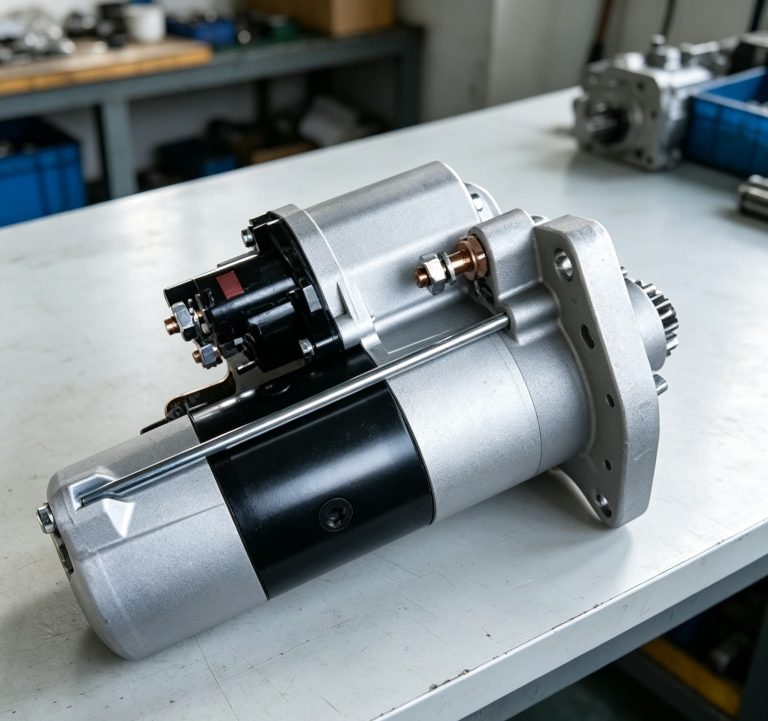
Modern heavy-duty trucks predominantly use gear-reduction starter motors. Unlike older direct-drive units where the pinion gear is mounted directly on the armature shaft, gear-reduction starters use an internal planetary gear set. This allows the electric motor (armature) to spin at much higher speeds—where it is more efficient—while the gears multiply the torque delivered to the pinion. This design results in a smaller, lighter starter motor that provides superior cranking power, especially in cold weather, and places less strain on the batteries. Our selection of starter motors for Sinotruk and Shacman predominantly features this advanced gear-reduction technology.

Internal-Anatomy- Gear-Reduction-starter-motor

Common Electrical Causes of Starter Motor Failure

Electrical issues are the most frequent culprits when a truck starter motor fails to operate. Given the high current demands of the starting process, even minor resistance or a weak connection can prevent the motor from generating sufficient torque.

Battery and Connection Issues: The Silent Killers

The most common reason for a starter motor not working is a weak or discharged battery. Heavy-duty trucks often use multiple 12V batteries connected in series or parallel to provide the necessary 24V or high-amperage 12V power. If the batteries are aged, have low electrolyte levels, or are not being properly charged by the alternator, they may lack the "cranking amps" required to turn the engine. Furthermore, corroded, loose, or damaged battery terminals and ground cables are frequent sources of high resistance. A simple visual inspection and a voltage drop test can often reveal these issues. Ensuring clean, tight connections is a fundamental step in any starting system diagnosis. If you need expert advice on electrical compatibility, feel free to .

Solenoid and Relay Failures: The Critical Gatekeepers

The starter solenoid is a high-wear component. Its internal contacts must handle hundreds of amperes every time the engine is started. Over time, these contacts can become pitted, burnt, or welded together, leading to intermittent operation or total failure. A common symptom of a failing solenoid is a loud "click" or a series of rapid clicks when attempting to start, indicating that the solenoid is attempting to engage but cannot complete the high-current circuit to the motor. In some cases, the solenoid's internal plunger may become stuck due to dirt or lack of lubrication, preventing the pinion gear from engaging the flywheel. Our offers detailed guides on solenoid testing and replacement.

The Impact of Voltage Drop on Starter Torque

Voltage drop is the enemy of cranking power. Every millivolt lost across a poor connection or a corroded cable is a millivolt that doesn't reach the starter motor. Because the power output of an electric motor is proportional to the square of the voltage, even a small drop (e.g., from 24V to 22V) can result in a significant loss of cranking torque. This is why professional diagnostics always include a voltage drop test under load, rather than just a simple static voltage measurement.

Mechanical Wear and Internal Starter Faults

While electrical issues are common, mechanical wear and internal faults within the starter motor itself are also significant contributors to failure, especially in high-mileage commercial vehicles.

Pinion Gear and Flywheel Engagement Issues

The mechanical interface between the starter's pinion gear and the engine's flywheel ring gear is a high-stress area. If the pinion gear teeth become worn, chipped, or broken, they may fail to engage properly with the flywheel, leading to a loud grinding noise during cranking. Similarly, wear or damage to the flywheel ring gear itself can prevent engagement. This can be caused by repeated attempts to start the engine while it is already running or by a faulty starter solenoid that doesn't fully extend the pinion gear. In extreme cases, a "flat spot" on the flywheel can cause the starter to fail to engage only when the engine stops in a specific position.

Internal Component Wear: Brushes and Commutators

Inside the starter motor, carbon brushes press against a rotating commutator to transfer electrical power to the armature. Over time, these brushes wear down, and the commutator can become burnt or grooved. As the brushes shorten, their contact pressure decreases, leading to increased resistance, sparking, and a significant loss of motor torque. A starter motor with worn brushes may crank the engine very slowly or not at all, even with a fully charged battery. Furthermore, internal short circuits or open circuits within the armature or field windings can lead to total motor failure. These internal faults often require professional rebuilding or complete replacement of the starter unit. For more insights into our quality assurance processes, visit our .

Bearing and Bushing Failure

The armature of a starter motor rotates at several thousand RPM. To support this rotation, it relies on high-quality bearings or bushings. Over time, these components can wear, leading to shaft play. If the play becomes excessive, the armature can actually "drag" against the field poles, creating immense friction and potentially short-circuiting the motor. A starter that sounds "labored" or "heavy" even with good batteries may be suffering from worn internal bearings.

Adapting International Standards for Chinese Truck Excellence

Chinese heavy-duty truck manufacturers, including Sinotruk (HOWO), Shacman, FAW, Foton, and Dongfeng, have significantly advanced their starting system designs, often incorporating technology that meets or exceeds international standards. These vehicles are designed to operate in diverse and often extreme environments, from the frigid temperatures of northern regions to the sweltering heat of tropical climates.

Engineering for Diverse Global Climates

A starter motor destined for a HOWO truck operating in the Russian winter requires different lubrication and sealing than one destined for a Shacman truck in the Sahara. As a specialized supplier, we ensure that our components are engineered to handle these extremes. This includes using low-temperature greases that won't solidify in the cold and high-quality seals that prevent dust and moisture ingress in harsh environments. We understand the specific mounting configurations and electrical connectors used by these Chinese brands, ensuring a "plug-and-play" experience for our customers.

The Bridge Between Global Tech and Local Performance

As a specialized supplier, our expertise lies in providing starter motors and components that are precisely engineered for these Chinese brands. We understand that a starter motor for a HOWO tractor needs to be exceptionally robust to handle frequent starts in demanding logistics operations, while a unit for a Shacman dump truck must be well-sealed against dust and moisture. We source components that adhere to rigorous quality standards, ensuring they provide the reliable cranking power and durability that international fleet operators expect. For a comprehensive look at the brands we support, visit our .

Diagnostic Procedures for a Non-Starting Truck

When faced with a truck that won't start, a systematic diagnostic approach is essential to avoid unnecessary part replacement and minimize downtime.

Preliminary Checks and Visual Inspection: The First Line of Defense

Start with the basics: ensure the truck is in neutral (for manual transmissions) or park (for automatics). Check the battery voltage and the condition of the battery terminals and cables. Look for signs of corrosion, fraying, or loose connections. A simple "headlight test"—observing if the headlights dim significantly when attempting to start—can provide a quick indication of battery strength and the load being placed on the system. If the lights stay bright and there's no sound from the starter, the issue is likely in the control circuit (ignition switch, relay, or solenoid wiring).

Advanced Electrical Testing: Voltage Drop and Current Draw

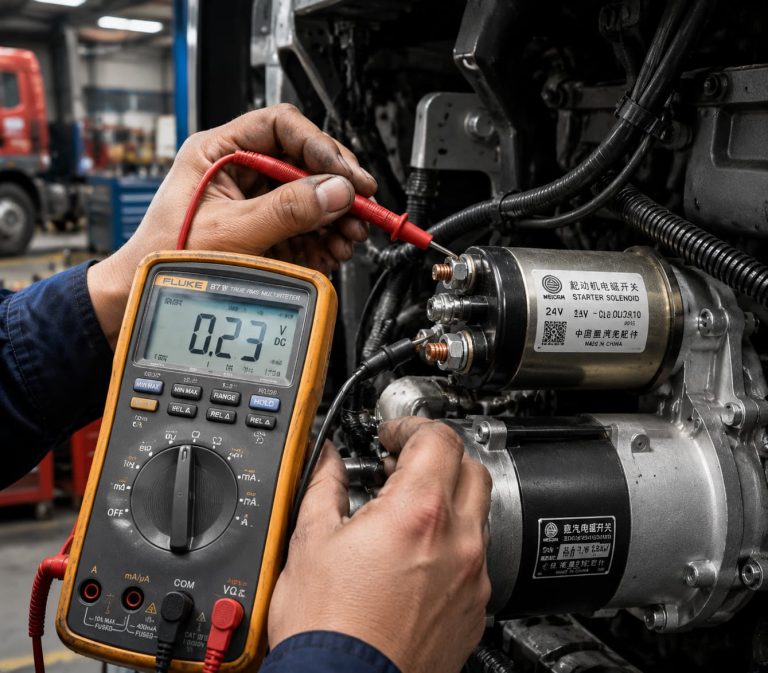
For a more precise diagnosis, use a multimeter to perform voltage drop tests across the various components of the starting circuit. This involves measuring the voltage difference between two points in a circuit while it is under load (i.e., while attempting to start). A high voltage drop indicates excessive resistance, often caused by a poor connection or a damaged cable. Furthermore, measuring the current draw of the starter motor during cranking can reveal internal faults. A very high current draw might indicate a partially seized engine or an internal short in the motor, while a very low draw could point to worn brushes or an open circuit. Our highlight how these diagnostic techniques have helped our clients identify and resolve complex starting issues.

Advanced-Electrical-Testing- Voltage-Drop-and-Current-Draw-starter-motor

The "Bypass" Test: Is it the Starter or the Wiring?

A common field diagnostic is the bypass test, where a technician uses a heavy-gauge jumper wire to momentarily connect the battery positive terminal directly to the starter motor terminal (bypassing the solenoid and control circuit). If the starter motor cranks the engine during this test, the fault lies in the solenoid, relay, or ignition wiring. If it still doesn't crank, the starter motor itself is defective. Note: This test must be performed with extreme caution and only by trained professionals, as it involves high currents and moving parts.

Environmental Factors and Their Impact on Starter Health

The environment in which a truck operates plays a massive role in the lifespan and reliability of its starter motor. Understanding these factors allows for better preventative maintenance and part selection.

Cold Weather Challenges: The "Frozen" Start

In sub-zero temperatures, several factors conspire against the starting system. Battery capacity drops significantly, engine oil becomes thick and viscous (increasing cranking resistance), and the starter motor itself must work harder to achieve the required RPM. We provide starter motors with enhanced torque ratings and specialized low-temperature lubricants to ensure reliable starting for fleets operating in cold climates like Northern Europe or Central Asia.

High-Humidity and Corrosive Environments

For trucks operating in coastal regions or areas with high humidity, corrosion is the primary enemy. Salt spray and moisture can quickly degrade electrical connections and penetrate the starter motor housing, leading to internal short circuits and seized components. Our premium starter motors for Foton and Dongfeng often feature enhanced corrosion-resistant coatings and superior sealing to mitigate these risks.

Quality Matters: Sourcing Reliable Starter Motors

In the commercial vehicle industry, the cost of a failed starter motor far exceeds the price of the part itself. It includes the cost of a service call, potential towing, lost revenue from a missed delivery, and the frustration of a stranded driver. Therefore, sourcing high-quality starter motors and components is a critical business decision.

The Value of Professional Technical Support

Navigating the diverse range of starting system components for different Sinotruk, Shacman, FAW, Foton, and Dongfeng models requires specialized knowledge. Our team of technical experts is dedicated to providing comprehensive support, from identifying the correct part number for your specific engine configuration to offering guidance on installation and troubleshooting. We understand the nuances of different starter motor designs, such as gear-reduction versus direct-drive units, and can advise on the best option for your operational needs. By partnering with us, you gain access to a wealth of technical expertise and a reliable supply chain that prioritizes your fleet's uptime. For more information on how we can support your business, visit our .

Our Commitment to Quality Assurance and Service

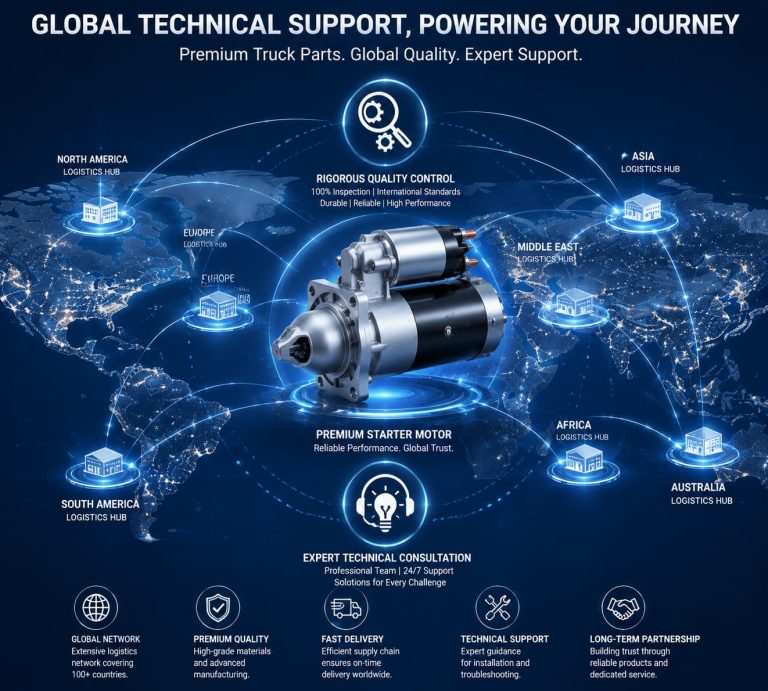
Every starter motor and component we supply undergoes rigorous quality control testing to ensure it meets our exacting standards for performance and durability. We focus on providing parts that offer a perfect fit, reliable operation, and a long service life. Our efficient logistics network ensures that you receive the parts you need, when you need them, wherever your fleet operates globally. We pride ourselves on being more than just a parts supplier; we are a strategic partner committed to the success of your logistics operations. For any inquiries or technical assistance, please .

Quality-Matters-Sourcing-Reliable-Starter-Motors

Frequently Asked Questions (FAQ) about Truck Starter Motors

This section addresses common technical queries regarding heavy-duty truck starter motors, their failure modes, diagnosis, and maintenance, based on our extensive experience in the global truck parts market.

What is the most common cause of a starter motor failing to crank?

The most frequent cause is a weak or discharged battery, or poor electrical connections at the battery terminals or ground points. These issues create high resistance, preventing the starter from receiving the immense current it needs to generate cranking torque. Always start your diagnosis by ensuring the batteries are fully charged and the connections are clean and tight.

What does a rapid "clicking" sound mean when I try to start my truck?

A rapid clicking sound usually indicates that the starter solenoid is attempting to engage but there is insufficient voltage or current to keep it engaged or to turn the motor. This is often caused by a weak battery or a high-resistance connection in the starting circuit. It can also be a sign of a failing solenoid with burnt internal contacts.

Can a faulty ignition switch cause starter motor problems?

Yes, the ignition switch is the primary control for the starting circuit. If its internal contacts are worn or damaged, it may fail to send the necessary signal to the starter relay or solenoid. Symptoms can include intermittent starting or a total lack of response when the key is turned, even if the rest of the electrical system seems functional.

What is the difference between a gear-reduction starter and a direct-drive starter?

A direct-drive starter has its pinion gear directly on the armature shaft, meaning it must rotate at the same speed as the engine's cranking speed. A gear-reduction starter uses a set of internal gears to allow the armature to spin faster while providing more torque to the pinion gear. Gear-reduction starters are generally smaller, lighter, and more efficient, making them very common in modern heavy-duty trucks.

How can I tell if the problem is the starter motor or the engine itself?

If the starter motor makes a single loud click or a low humming sound but the engine doesn't turn, and you've confirmed the battery and connections are good, the problem could be a seized starter motor or a mechanically seized engine. You can attempt to turn the engine manually using a breaker bar on the crankshaft bolt. If the engine turns freely, the fault lies within the starter motor.

Why should I choose your company for my HOWO or Shacman starter motor needs?

As a specialized supplier, we offer deep technical expertise specifically tailored to Chinese truck brands like Sinotruk (HOWO), Shacman, FAW, Foton, and Dongfeng. We don't just sell parts; we provide verified technical solutions. We ensure that our starter motors are precisely matched to your vehicle's specifications, sourced from high-quality manufacturers, and backed by our professional technical support and efficient global logistics. Our focus is on maximizing your fleet's reliability and minimizing your total cost of ownership. For more insights into our quality assurance processes, visit our .

LEAVE A MESSAGE FOR ANY QUESTIONS